| Author |
 Replies: 52 / Views: 7,303 Replies: 52 / Views: 7,303 |
|
Valued Member
United States
28 Posts |
|
|
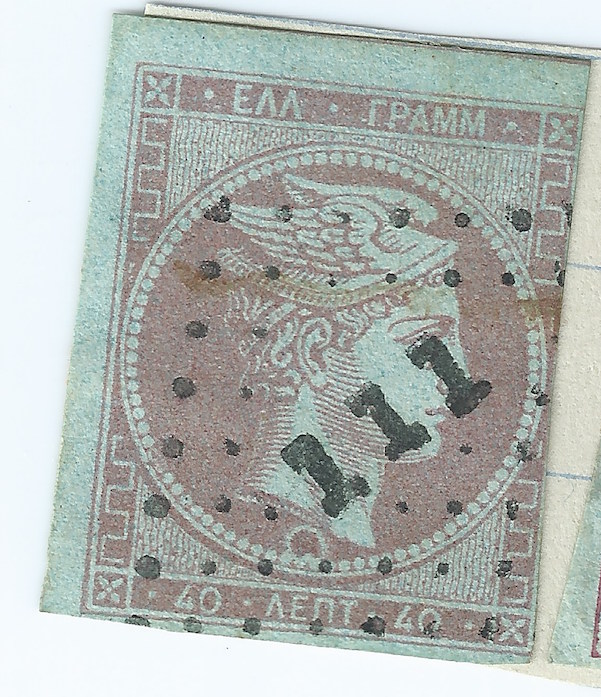
Does anyone else see the blue circle under Hermes neck? None of my other Hermes stamps have it. Has anyone come across this before? 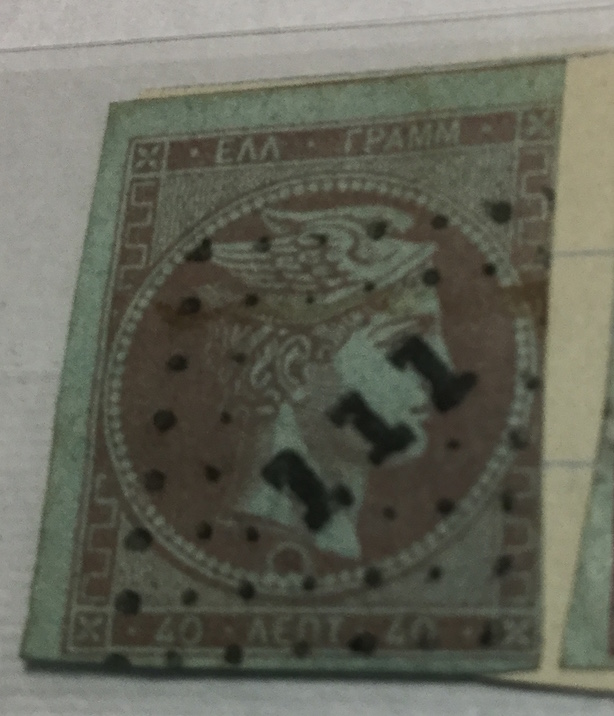 |
|
Send note to Staff
|
|
|
|
|
Pillar Of The Community
United States
8956 Posts |
|
|
I see it, but not very clear at all. Can you re-post this with a better picture or better yet a scan?
Oh yes, and a very welcome to this forum!
Peter |
Send note to Staff 
|
|
|
Pillar Of The Community
United States
8626 Posts |
|
|
A drop of oil onto water base ink or a drop of water on oil base ink will do that .Welcome to the chat board . |
|
Send note to Staff
|
|
|
Valued Member
United States
28 Posts |
|
|
Pillar Of The Community
United States
8956 Posts |
|
|
Wow, that is much better. It looks to me like it is some sort of printing variety, like something round was stuck to the printing plate and left your circle unprinted. Of course, Floortrader could very well be correct.
Interesting EFO though.
Peter |
|
Send note to Staff
|
|
|
Valued Member
United States
28 Posts |
|
|
It's my belief that certain people in the printing industry would incorporate into the design of the stamp their beliefs in a subversive way. Much in the way contemporary graphic designers may include hidden meanings in their art. You only need to look at the camel cigarette pack to see hidden sexual meanings. This is not new. Graphic designers have been doing this since the beginning of printing. Under a magnifier I can see a detailed upside down devil head. Is there any documented writing that has ever been put online as to hidden meanings in this stamp's design? |
|
Send note to Staff
|
|
|
Pillar Of The Community
United States
8956 Posts |
|
|
Not that I know of. The one thing I do know is that something this obvious was certainly not done on purpose. No, this is a printing freak.
Peter |
|
Send note to Staff
|
|
|
Valued Member
United States
28 Posts |
|
|
This is the best quality I could get to the actual magnifier. I will try getting better quality examples up soon. The circle is really not that obvious and the profile of the head is even less noticeable to the untrained eye. 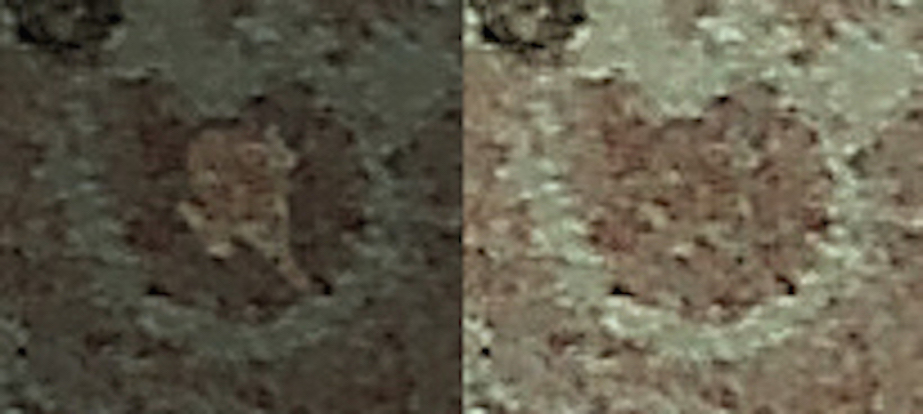 |
|
Send note to Staff
|
|
|
Valued Member
United States
28 Posts |
|
|
Pillar Of The Community
Canada
6525 Posts |
|
|
This has come up before. That is called, in the printing industry, an ink hickey. A piece of dirt was stuck to the plate, as Peter has said, and you get a white shadow, or donut. Not overly rare, I don't think, but I do notice some collectors getting excited by them. |
|
Send note to Staff
|
|
|
Valued Member
United States
28 Posts |
|
|
jamesw - I just searched the forum for the term ink hickey and got one post besides this one where the stamp had a white spot. This is very different in that mine has a white outline of a circle filled in with the color of the stamp and not completely filled in with white. I can see the face very clearly under the magnifier and will try to get quality images posted soon. Can you provide a link with any examples of the white ring that look like the one on this Hermes head stamp? |
|
Send note to Staff
|
| Edited by WCStamps - 06/07/2016 12:38 am |
|
|
Moderator

United States
12330 Posts |
|
|
WC,
Welcome. Try searching on the term donut. I concur with the other opinions, what you have is a printing flaw.
If your theory was correct, that this was intentionally put into the stamp design, then it would be consistent or constant across many, many stamps. The fact that no other example exactly the same has ever been found pretty much proves it is a printing flaw and not an intentional design.
Don
APS #094826
|
|
Send note to Staff
|
|
|
Pillar Of The Community
Norway
1661 Posts |
|
|
 WCstamps, No doubt a printing flaw/freak, these lads posting above know their stuff  Quite a cool flaw though. The losenge postmark is as beautiful as the stamp itself, anybody know where '111' was used? |
|
Send note to Staff
|
|
|
Pillar Of The Community
Canada
6525 Posts |
|
|
WC, here's a scan from a book called Production for the Graphic Designer (James Craig, Watson Guptill, 1974). In a chapter on printing problems, this is what Mr Craig writes.  The post you mention may be a paper hickey, and described in the last paragraph shown here. Apologies to Mr Craig and the publishers for posting this. This is an incredibly informative book, though some of the information is out of date regarding production (computers and all that), but much of the printing information still holds true. |
|
Send note to Staff
|
| Edited by jamesw - 06/07/2016 11:51 am |
|
|
Valued Member
United States
28 Posts |
|
|
51studebaker - Not necessarily. This could be an incredibly rare stamp from a one of a kind sheet or even one stamp per a limited amount of sheets. Could a Master Printer have placed a tiny circular engraving depicting a hidden symbol much in the way a piece of dirt got involved to create that circle?
Blaamand - Can anyone provide any photographic evidence of a donut that matches this size?
jamesw - I see the similarities but they don't match the size and I don't see any as perfectly positioned as the one in my stamp.
I am definitely interested in fully understanding what this stamp means. I searched donut and didn't see anything that matches the size of the circle on my stamp.
|
|
Send note to Staff
|
| Edited by WCStamps - 06/07/2016 1:09 pm |
|
|
Pillar Of The Community
Canada
6525 Posts |
|
|
There is no standard size for an ink hickey. It's just dirt! Not every one will be identical. Remember, these come from an analogue world. It's what ever is floating around the print shop and falls on the plate. |
|
Send note to Staff
|
|
|
Replies: 52 / Views: 7,303 |
|



 Posted 06/06/2016 8:13 pm