|
This page may contain links that result in small commissions to keep this free site up and running.

Welcome Guest! Registering and/or logging in will remove the anchor (bottom) ads. It's Free!
To participate in the forum you must log in or register.
| Author |
 Replies: 6 / Views: 1,692 Replies: 6 / Views: 1,692 |
|
|
Pillar Of The Community
Australia
1042 Posts |
|
|
Looking here at the rate plus the fact that they wrote England in the address I am wondering where this letter is from. It appears to be a place called Collingwood. Can anyone work out the origin and also id the postmark? Thanks for the help I just was not sure with this one. 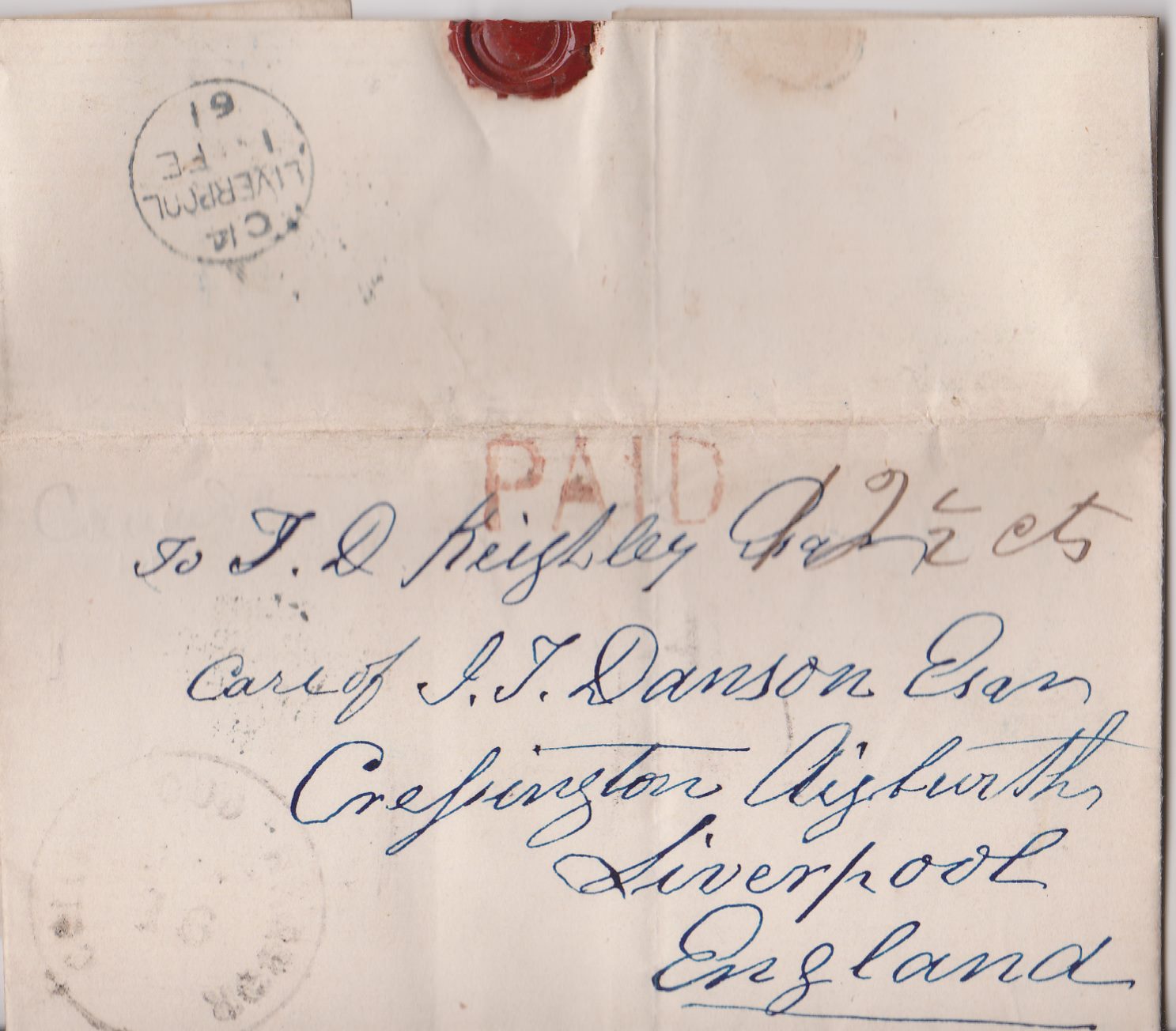 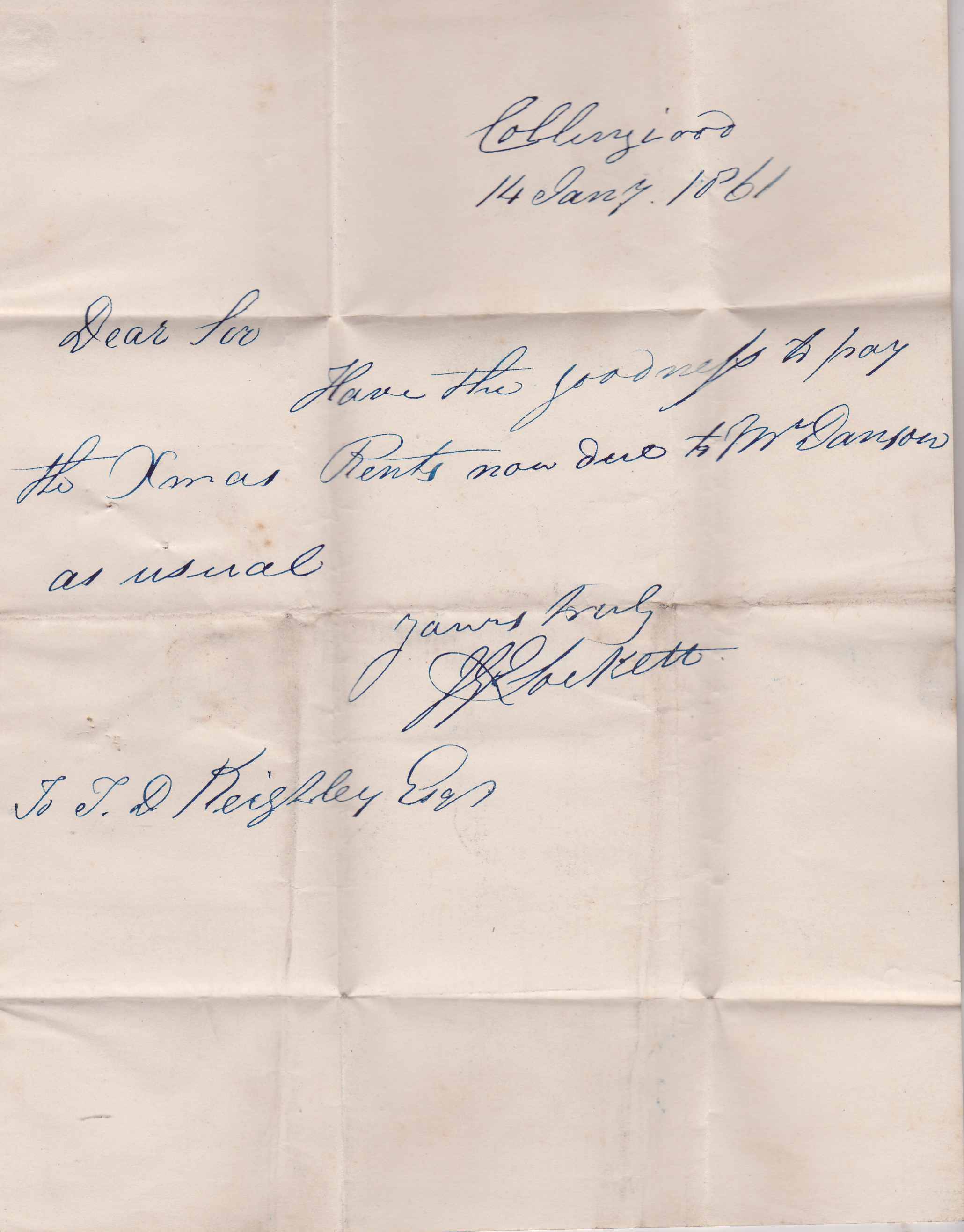 |
|
Send note to Staff
|
|
|
|
|
Pillar Of The Community
1213 Posts |
|
|
Is the second word in the postmark "HARBOR"? There is a place called Collingwood Harbor in Ontario, Canada. It is a port town on Georgian Bay in Lake Huron. It was the terminus of a railroad and served as a trans-shipping center with the cargo ships plying the Great Lakes. If so, this would make the cover one that likely traveled to some eastern Canadian city and then on a ship across the Atlantic to Liverpool and then to its destination. I am not an expert on ship letters, but I tend to be a bit conservative and so while I would agree that this was carried on a ship across the Atlantic I might be hesitant to call this an actual 'ship letter' (or even a 'packet letter') since the British Ship Letter Office began in 1799 and ended in 1847. This letter seems to have been sent in 1861. By the way, packet letters were carried by ships that were owned by the British Post Office while ship letters were carried by non-post office owned ships. |
Send note to Staff 
|
|
|
Pillar Of The Community
United States
1868 Posts |
|
|
Harbor is likely correct, or Collingwood Corner in Nova Scotia, for the indistinct departure CDS. Either way, the handwritten rate is correct for transatlantic ship letters from Canada to England in this period; both NS and the Province of Canada had issued stamps for the (today) odd rate of 12 1/2 cents by 1860. Note that the letter was written on the 14th, a Saturday, apparently too late to be posted, as the CDS is dated for the 16th, the following Monday.
Funny how letters in this period so often are about unpaid debts. Twelve cents wasn't cheap, but a wealthy property owner seeking to collect Christmas rents due on distant estates would have had no issue. "Bah, humbug," in effect!
|
|
Send note to Staff
|
|
|
Pillar Of The Community
1213 Posts |
|
|
Thanks for adding the great details, cjpalermo! My thought about it being Collingwood Harbor rather and Corner is from what I can see on my monitor the last three letters in seem to be BOR, but my eyes may be playing tricks on me. Also, the town itself is currently called just Collingwood so this reinforces my thought. Collingwood Corner may be correct though. |
|
Send note to Staff
|
|
|
Rest in Peace
Canada
5701 Posts |
|
|
The Collingwood Harbor (Ontario) cancel is interesting in that it is spelt the American way, rather than Harbour, the Canadian way. That is because it was made by Edmund Hoole of New York, more commonly known for fabricating American cancels in the 1850's and 60's, and railway baggage tags.
The Collingwood Harbor cancel has an earliest recorded date of Aug 14, 1856, and last known Dec 5, 1867. [ref Postal History Society of Canada website]
|
|
Send note to Staff
|
|
|
|
Pillar Of The Community
Australia
1042 Posts |
|
|
Thanks all for the help I knew it was transatlatic simply from the rate and the fact they wrote Liverpool England and not just Liverpool but was not sure where it was from. I am glad you've all now identified as from Collingwood Harbor Canada. The pen used on the letter looks remarkably like a modern style pen. |
|
Send note to Staff
|
|
|
Pillar Of The Community
1213 Posts |
|
|
I think the spelling 'harbor' is more than just because the cancellation device was made by an American - that is the original spelling. In looking around the internet I find that there are a great many references from Canadian sources in the mid 1800s to the town being spelled Collingwood Harbor. Here is just one of the many examples - this one is the text from an article on page 3 of the Ontario Globe of June 25, 1853:
We observe that the Sale of Lands laid out by Sheriff Smith at Collingwood Harbor, it to take place at Wakefield's Auction Mart on Thursday next the 30th instant. A fair opportunity is afforded to speculators in the purchase of lots at a location which, according to all precedent, must grow into a place of considerable extent and importance, not only by its connexion [sic] with the Northern Railroad, but also from the locality being one which scarcely stands second to any in the province as an agricultural district. The picturesque scenery of Lake Huron is the admiration of all; the country around has a fertile soil; the County of Simcoe in which it is situated is growing in importance, and the facility of communication and transport by means of the Railroad, unites to make Collingwood a most promising place for the settler.
|
|
Send note to Staff
|
|
| |
Replies: 6 / Views: 1,692 |
|
|
To participate in the forum you must log in or register. | |
 Show Your US 1851-57 Imperforate Stamps Help With A 1 Cent Franklin From The Philippines Optical Instruments: Microscopes, Binoculars, Sextans, Theodolits, Hand Scopes Cover Calendar For Month And Day -Pics Pushing 330,000 All Different Worldwide Stamps In One Collection . Postmarks.day By Day Experimenting With A Phone As Attached Scanner Turn On The Light! Candles, Lamps, Torches, Candelights, Bedside Lamps. Fan, Éventail, Abanico, Fächer, Leque Linn's To Return To Printed Issues Minkus Supreme Global Albums (The Big Red Thread) Soviet Union Stamp Engravers Czech Stamp Engravers Collecting By Engraver 1851-57 12c Washington Canada 742 Color Shift Error? Stamps Made Of Cloth, Polymer, Metal, Wood Etc Art & Paintings On Stamps Need Help With Swedish Stamp And Postmark Living Persons Portrayed On Stamps If You Have A Design You Like, Might As Well Stick With It! Newfoundland 82 Imperf Cover Please Identify - USSR Stamps US Half Cent Postage Dues On Cover Pottery, Ceramics, Porcelain, And Other Clayware Show Your US 1851-57 Imperforate Stamps Help With A 1 Cent Franklin From The Philippines Optical Instruments: Microscopes, Binoculars, Sextans, Theodolits, Hand Scopes Cover Calendar For Month And Day -Pics Pushing 330,000 All Different Worldwide Stamps In One Collection . Postmarks.day By Day Experimenting With A Phone As Attached Scanner Turn On The Light! Candles, Lamps, Torches, Candelights, Bedside Lamps. Fan, Éventail, Abanico, Fächer, Leque Linn's To Return To Printed Issues Minkus Supreme Global Albums (The Big Red Thread) Soviet Union Stamp Engravers Czech Stamp Engravers Collecting By Engraver 1851-57 12c Washington Canada 742 Color Shift Error? Stamps Made Of Cloth, Polymer, Metal, Wood Etc Art & Paintings On Stamps Need Help With Swedish Stamp And Postmark Living Persons Portrayed On Stamps If You Have A Design You Like, Might As Well Stick With It! Newfoundland 82 Imperf Cover Please Identify - USSR Stamps US Half Cent Postage Dues On Cover Pottery, Ceramics, Porcelain, And Other Clayware
Disclaimer: While a tremendous amount of effort goes into ensuring the accuracy of the information contained in this site, Stamp Community assumes no liability for errors. Copyright 2005 - 2026 Stamp Community Family - All rights reserved worldwide. Use of any images or content on this website without prior written permission of Stamp Community or the original lender is strictly prohibited.
Privacy Policy / Terms of Use Advertise Here |
| Stamp Community Forum |
© 2007 - 2026 Stamp Community Forums |
| It took 0.17 seconds to lick this stamp. |
 |
|
|
|


 Posted 07/03/2016 7:36 pm


