| Author |
 Replies: 18 / Views: 2,968 Replies: 18 / Views: 2,968 |
|
Rest in Peace
7742 Posts |
|
|
Hi guys..Take a look at my block of 86's...Top right hand corner stamp has an extra island..Probably a one off. Robert  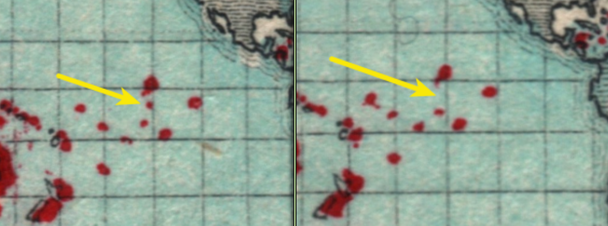 |
|
Send note to Staff
|
|
|
|
|
Pillar Of The Community

United States
5472 Posts |
|
|
Moderator
United States
5109 Posts |
|
|
Rest in Peace
Canada
5701 Posts |
|
|
Robert, that is an interesting variety, it could be constant. There is a book available on the subject:
Bradley, Whitney L. The Canadian Map Stamp of 1898 : A Plating Study. Reprinted 1999 ed.
|
Send note to Staff 
|
|
|
|
Rest in Peace
7742 Posts |
|
|
Quote:
The Canadian Map Stamp of 1898 : A Plating Study. Reprinted 1999 ed. BeeSee, where is the easiest route to get this book..? Robert |
|
Send note to Staff
|
|
|
Pillar Of The Community
United States
8956 Posts |
|
|
Robert, that was a reprint. They found where Atlantis was and drew it in!
Peter |
|
Send note to Staff
|
|
|
Rest in Peace
Canada
5701 Posts |
|
|
Valued Member
Canada
228 Posts |
|
|
Robert,
Really nice block!
I can tell you that the Bradley book is excellent. It allows you to plate almost every map stamp from each of the red/black plate combinations. This issue is a goldmine for a flyspecker such as yourself since virtually every plate position is slightly different.
Your block is of positions 69, 70, 79, and 80 from black plate 5 and red plate B. There are some significant differences to the red plate at each of these positions. Notice the very large extra island appearing at position 80 a bit below Japan.
If you email me at my address on FlySpecker.com, I can provide you with a scan of the plate information for these four positions. |
|
Send note to Staff
|
|
| Edited by Scottamer - 10/20/2016 2:23 pm |
|
|
Rest in Peace
Canada
5701 Posts |
|
|
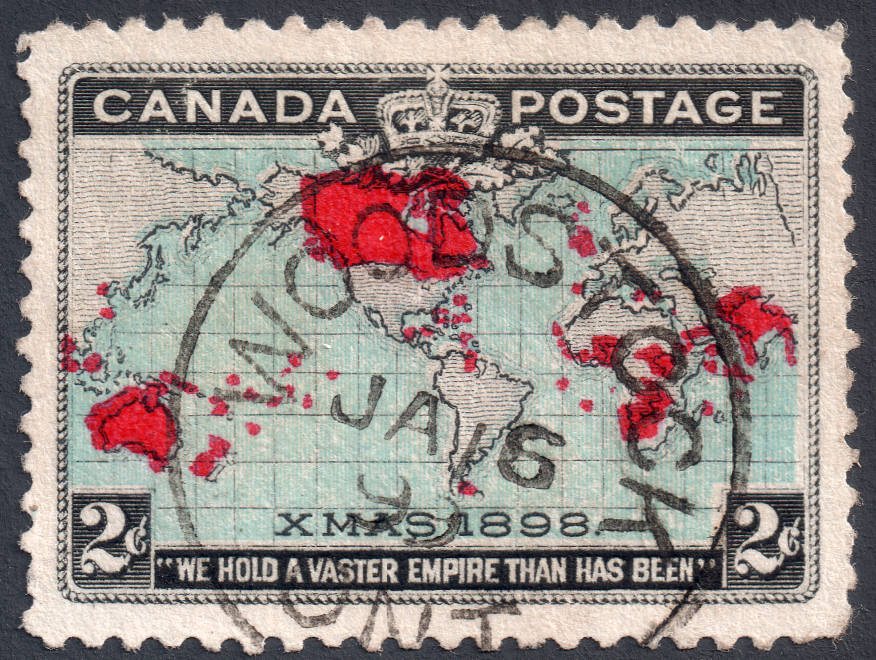
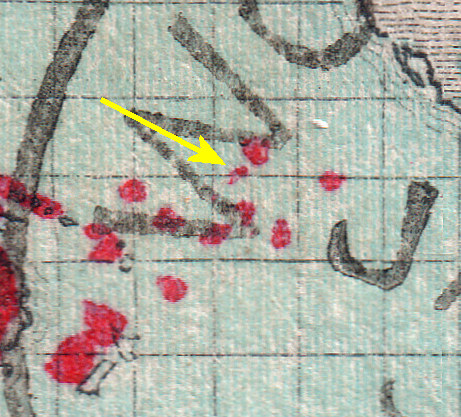
Wow, that extra island below Japan is bigger than the one Robert found! How did you miss it Robert?  |
|
Send note to Staff
|
|
| Edited by BeeSee - 10/19/2016 5:31 pm |
|
|
Rest in Peace
7742 Posts |
|
|
Th Quote:
ey found where Atlantis was and drew it in! Peter...haha Quote:
Robert, the book is available here: Thanks BeeSee Quote:
Your block is of positions 69, 70, 79, and 80 from black plate 5 and red plate B Thanks for that info Scottamer Robert |
|
Send note to Staff
|
|
|
Rest in Peace
Canada
5701 Posts |
|
|
Rest in Peace
Canada
5701 Posts |
|
|
Interesting on my stamp the blue water seems to consist of vertical lines, while Robert's is solid. |
|
Send note to Staff
|
|
|
|
Rest in Peace
7742 Posts |
|
|
BeeSee..great you found one to..Could very well be a constant..lets see if we get another collector finding out what we have found..
I got about 25 of them, I will check closer.
Robert |
|
Send note to Staff
|
|
|
Valued Member
Canada
228 Posts |
|
|
As I alluded to earlier, the extra island that Robert found on his block is definitely constant at position 70 of plate5B. Many other constant red plate varieties on that stamp and the others in the block make identification of the position a virtual certainty.
The extra island on BeeSee's stamp is not located in the same position as the one on Robert's stamp. It also does not have some of the other characteristics of position 70, plate 5B. However there are at least 6 positions on the various plates that show an extra island near this position. I have not been able to plate BeeSee's stamp because the postmark obscures some of the other relevant areas in Asia and Africa that would confirm the position.
Note that the map stamps have many, many constant varieties on the red plates that can make identification of the plate position possible. The printing technique used for the red colour on these stamps often leads to other printing anomalies that are not constant so the collector needs a good reference such as the Whitney Bradley book to identify them with any certainty.
The blue vertical lines that show in the oceans of many copies are also normal. It is not known how many blue plates were used or whether there is any distinct difference in their layout. Most of the different plate combinations and blue shades exist both with and without these lines. The solid blue oceans are likely to be just the normal ink overflow from the vertical lines of the relief plate used in the typographic printing process that was used.
Scott. |
|
Send note to Staff
|
|
| Edited by Scottamer - 10/20/2016 11:48 pm |
|
|
Rest in Peace
7742 Posts |
|
|
Scott..I am working on material to send to you for you website..I got about 20 so far..If you want them..?
Robert
|
|
Send note to Staff
|
|
|
Rest in Peace
Canada
5701 Posts |
|
|
The lower left stamp in Robert's block also has a missing island in the Indian Ocean. Scott, is that constant too? 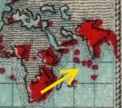 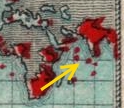 Some of those dots represent the Maldive Islands, and the furthest south probably Chagos, which in 1898 was part of Seychelles Colony, but now part of the British Indian Ocean Territory. I am not sure what the two furthest east dots are though. They seem too far east to be part of the Maldives. |
|
Send note to Staff
|
|
|
|
Replies: 18 / Views: 2,968 |
|




 Posted 10/19/2016 12:52 pm