| Author |
 Replies: 9 / Views: 3,204 Replies: 9 / Views: 3,204 |
|
|
Valued Member
United States
60 Posts |
|
|
I have a stamped envelope Scott #U352 that is supposed to be white but the envelope is buff or tan. I do not think that it is foxing but a error I know the envelope is old but it is the same color inside and out. I need another pair of eyes to examine this envelope, pics attached. What is it that you see? What type of error is it? I am sorry I did not say that it had been identified by APS Quick I.D. as to the specifics but he did say that it was white and could only account for the color difference with the possible age of the envelope. The size of the envelope is 6 1/4 x 3 3/8. Thanks for your help! 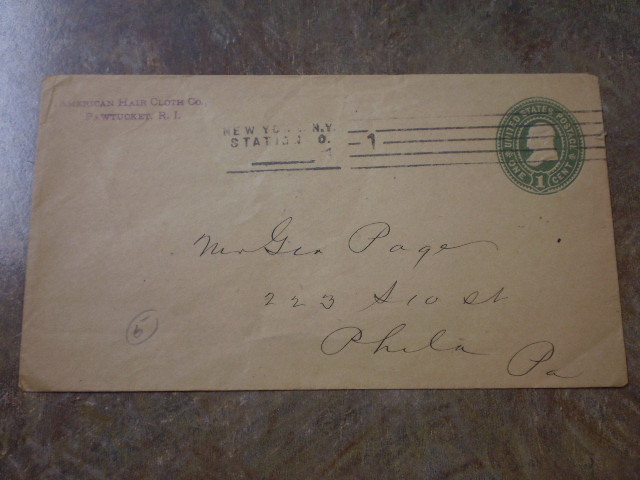 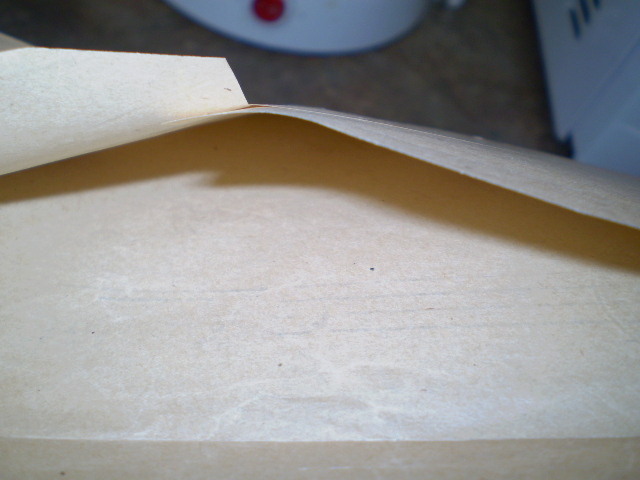 *** Moved by Staff to a more appropriate forum. *** *** Moved by Staff to a more appropriate forum. ***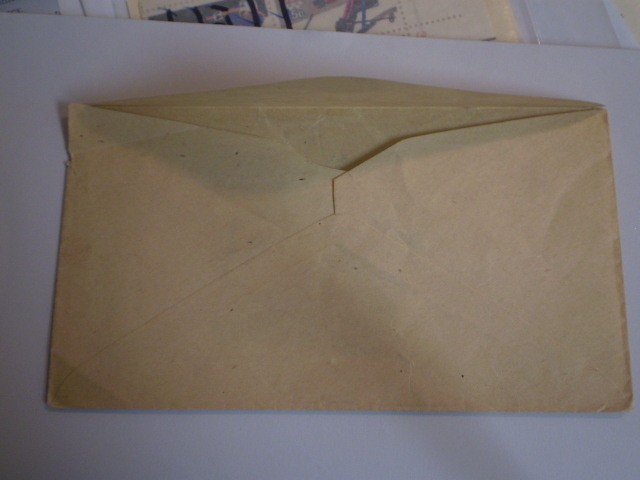 |
|
Send note to Staff
|
| Edited by sharons25 - 10/25/2016 5:25 pm |
|
|
|
|
Moderator

United States
5106 Posts |
|
|
Be sure to check your Scott Specialized. That design (U77) is shown as U352 through U356 (and W357). Colors are white, amber, oriental buff, blue and manila. |
Send note to Staff 
|
|
|
Moderator

United States
12330 Posts |
|
|
Colors are difficult to determine using images. What appears as one color on my monitor might appear differently on yours. And of course how the image was generated can influence how it appears. If you feel strongly that the APS "Quick ID" service did not identify it correctly, your best option is to send it to them so they have the item in hand. When dealing with something really unusual getting opinions using images will always leave room for doubt. This is especially true with color determinations. One of our resident experts US postal stationary is Thomas Galloway, perhaps he might log in and give you his opinion. He has previously posted this image on colors.  This image has value in that you can compare each of the colors to one another in the same image. But trying to match the image with something that you have in hand is very dicey. A toned white cover can look very close to one of the other shades. Don APS #094826 |
|
Send note to Staff
|
|
|
Pillar Of The Community
621 Posts |
|
|
I agree with everything said so far (except maybe the "resident expert" part - we have APEX examiners here, too. Better save the "expert" term for them).
The top image might hint at being manila, but I would still bet on white.
The second image appears to be washed out with strong light (as opposed to the first image, with too little light), so trying to judge the color is pretty hopeless. However, I'm interested in the knife (shape of the envelope blank). The second image shows a sharp angle on the right flap. Could we see a complete image of the back of the envelope? With the top flap held open, if possible. And the measurements (length and width), please?
There have not been any paper errors reported for this issue, so that's a low probability.
|
|
Send note to Staff
|
|
|
Pillar Of The Community
621 Posts |
|
|
The OP tells us the envelope is a UPSS size 10.
Also, the third image (recently added to the first post) seems to show an ungummed flap. The sharp corner I alluded to earlier is from the knife being slightly over the edge of the stack of paper when the blanks were cut.
In the catalog, all of the manila entries are size 10, ungummed.
Also in the catalog, the white entries come in many sizes, but one (UPSS # 1188a-13) is size 10 ungummed and is listed as "Second quality". Its catalog value, used, is $1.00.
The catalog value of the manila entries range from $3.00 to $250.00, depending on the watermark. |
|
Send note to Staff
|
| Edited by ThomasGalloway - 10/26/2016 09:11 am |
|
|
Valued Member
United States
60 Posts |
|
|
Thank you so much for your examination but is this a error and where would I find the watermark? |
|
Send note to Staff
|
|
|
Pillar Of The Community
United States
8956 Posts |
|
|
Well, the watermark could be somewhere in the paper. Hold it up to the light and look if you can see something. Do this by carefully opening the envelope and look in the inside.
Again, if you strongly feel this is something special, re-read Studebaker's post. He suggests to send it back to the APS. One reason it is difficult to tell for us is evident in your pictures. On the second and third picture the colors are so different, it could be two separate covers. If you can scan the cover it would be somewhat better but still not certain!
Peter |
|
Send note to Staff
|
| Edited by Petert4522 - 10/26/2016 2:22 pm |
|
|
Pillar Of The Community
1213 Posts |
|
|
Determining color on such an old, used and rather worn/natty cover is going to be very difficult at best. The chances of something being an ordinary piece of postal stationery as opposed to some uncatalogued rarity is pretty close to zero. If you feel strongly that this is something rare and never seen before then you would need to submit it for formal expertizing (there is a cost for this). As the others have mentioned, telling slight shades on a computer monitor is not going to be possible given how every camera is going to render colors slightly differently and then every computer monitor is going to add to those differences on top of this having so many years of oxidizing and wear and tear in the mail stream and then in some musty attic or basement and then in some collection. |
|
Send note to Staff
|
|
|
Pillar Of The Community
621 Posts |
|
|
Here is an example of someone looking at an envelope for its watermark:  Any number of light sources could be used. Some watermarks are more easily read than others. This example (wmk 7) is one of the more friendly ones. |
|
Send note to Staff
|
|
|
Pillar Of The Community
United States
604 Posts |
|
|
There were a number of varieties of white paper that are not always perceived as white by today's collectors. If you feel strongly about your paper color error thesis please send the item to APEX where myself and several other US postal stationery experts will examine your item in person. Color identification from a scan can be tricky. |
|
Send note to Staff
|
Bill Lehr
US Postal Stationery Specialist |
|
| |
Replies: 9 / Views: 3,204 |
|



 Posted 10/24/2016 10:42 pm


