| Author |
 Replies: 1,928 / Views: 193,419 Replies: 1,928 / Views: 193,419 |
|
|
|
Pillar Of The Community
Australia
1214 Posts |
|
|
Bedrock Of The Community
Australia
38679 Posts |
|
|
Quote:
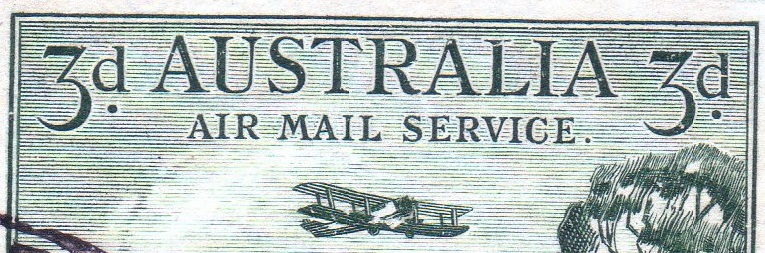
The left stamp has a larger white area on front of plane thoughts anyone (I don't see any thinning etc) If it be scuffing, or face detachment, would not a UV lamp, indicate this ? |
Send note to Staff 
|
|
|
Pillar Of The Community
Australia
1692 Posts |
|
|
Hi Frank I would like to correct some information I gave you which I have now found to be incorrect. Quote:
The photo is definitely a true 1930 production specimen and the dot is not a speck of foreign material, as the photo has been enlarged the dot will look out of place (If it were not a true production specimen Arthur Gray would have mentioned it on the card he created to house the photo in), I have added the card mount showing Gray's information and personal rubber stamp. The marking which I assumed to be a booklet dot was indeed a fleck of foreign matter. The photo itself is a very scarce, original 1930 image belonging to the Department of the Interior. |
|
Send note to Staff
|
| Edited by Rob041256 - 12/05/2017 6:28 pm |
|
|
Pillar Of The Community
Canada
879 Posts |
|
|
I have started taking copies of any images I can find on the internet. Also, if any other readers have copy of this stamf - SG115 or Scott Carpenter - with the inter-stamp dots, perhaps you could post an image for us to examine.
Rod:
I found an image of a booklet pane. The image was far from good but it looked as if only one row of stamps had dots.
All the dots I have seen look pretty equal in diameter. In your images, the dot above the S in the photograph is Obote twice the size of those on the stamps or at least to much to be accounted for by their different sizes.
You probably have enough to trump me on this one, but I haven't seen anything in ACSC to suggest two long wing varieties in a pane. I read there description as, "there is one example of the variety in Position 2 on one pane in the sheet."
Frank. |
|
Send note to Staff
|
|
|
Pillar Of The Community
Australia
1692 Posts |
|
|
Hi Frank
Received the answers to your questions.
Ques. Is it in a fixed place, or does it move around depending where in the sheet it is printed?
Ans. It is fixed near the centre, if the paper slips or shrinks it may end up being situated off its intended placement.
Ques. And how was the dot added to the plates? As part of the die or manually added after the die impressions?
Ans. It was added to the Master Plate so therefore all the dots will be in a fixed position on the paper. |
|
Send note to Staff
|
| Edited by Rob041256 - 12/05/2017 6:35 pm |
|
|
Pillar Of The Community
Canada
879 Posts |
|
|
I have started taking copies of any images I can find on the internet. Also, if any other readers have copy of this stamp - SG115 or Scott Carpenter - with the inter-stamp dots, perhaps you could post an image for us to examine.
Rob:
I found an image of a booklet pane. The image was far from good but it looked as if only one row of stamps had dots.
All the dots I have seen look pretty equal in diameter. In your images, the dot above the S in the photograph is Obote twice the size of those on the stamps or at least too much to be accounted for by their different sizes.
You probably have enough to trump me on this one, but I haven't seen anything in ACSC to suggest two long wing varieties in a pane. I read there description as, "there is one example of the variety in Position 2 on one pane in the sheet."
Frank. |
|
Send note to Staff
|
|
|
Pillar Of The Community
Canada
879 Posts |
|
|
Rob:
Your latest great came in as I was trying to post my previous. I used the Quick Reply angel. When I pressed the Submit Reply button it greyed out but the message wouldn't go so I had to move everything across to the Full Answer panel. That's not happened to me before.
Anyway, it all makes a great story.
Frank. |
|
Send note to Staff
|
|
|
Pillar Of The Community
Australia
1692 Posts |
|
|
Quote:
All the dots I have seen look pretty equal in diameter. In your images, the dot above the S in the photograph is Obote twice the size of those on the stamps or at least too much to be accounted for by their different sizes.
You probably have enough to trump me on this one, but I haven't seen anything in ACSC to suggest two long wing varieties in a pane. I read there description as, "there is one example of the variety in Position 2 on one pane in the sheet." In my last post I mentioned that I made a mistake in stating that the photograph was of the booklet version, it was, as you so accurately suspected may have been caused by some foreign material. Here is a copy of the page where it mentions one pane having two of the extended wing varieties, and that the variety can be found in the Type A pane, both wrong. 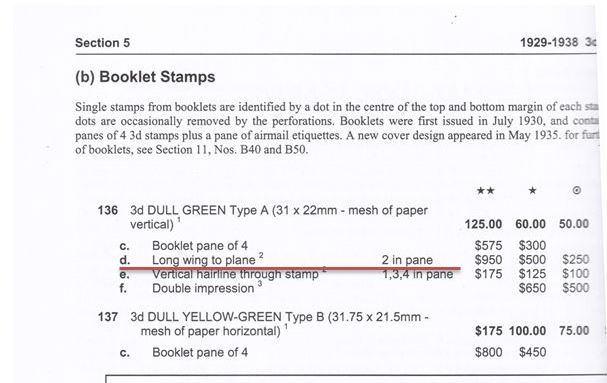
ACSC 2014. Page 5/14. Section 5Rob |
|
Send note to Staff
|
| Edited by Rob041256 - 12/05/2017 7:12 pm |
|
|
Pillar Of The Community
United Kingdom
3220 Posts |
|
|
Hi Rob,
Your ACSC extract says "2 in pane" which I read as position 2 in the pane, i.e only one stamp in the pane shows the variety.
This parallels "1,3,4 in pane" for 136e which relates to positions 1, 3, and 4 (i.e. three stamps in the pane have similar hairline varieties).
|
|
Send note to Staff
|
Nigel |
|
|
Pillar Of The Community
Australia
1692 Posts |
|
|
Quote:
Your ACSC extract says "2 in pane" which I read as position 2 in the pane, i.e only one stamp in the pane shows the variety.
This parallels "1,3,4 in pane" for 136e which relates to positions 1, 3, and 4 (i.e. three stamps in the pane have similar hairline varieties). The pre-decimal specialist explained that it referred to 2 extended wing varieties in one pane, and that the ACSC even got it wrong with the pane type. Some of the information from ACSC can leave one bemused. I forgot to ask about the hairline variety, will find out later today. CORRECTION: I was given incorrect information about the booklet issues. Pane A is the pane with the variety, not Pane B as earlier mentioned. The correct information is the variety can only be found in Pane A, and not all panes will have that very scarce variety. |
|
Send note to Staff
|
| Edited by Rob041256 - 12/06/2017 01:08 am |
|
|
Pillar Of The Community
Australia
1214 Posts |
|
|
Quote:
If it be scuffing, or face detachment, would not a UV lamp, indicate this ? Rod I try to keep clear of my UV light because it doesn't mix with my Lupus. |
|
Send note to Staff
|
|
|
Bedrock Of The Community
Australia
38679 Posts |
|
|
Pillar Of The Community
Australia
1692 Posts |
|
|
The vertical hairlines (roller flaws) in Pane A are normally found closer to where the staple of the booklet is, when the booklet was made little care was used causing the roller flaws to occur. |
|
Send note to Staff
|
| Edited by Rob041256 - 12/06/2017 5:30 pm |
|
|
Bedrock Of The Community
Australia
38679 Posts |
|
|
Cover not mine. US etiquette perhaps. 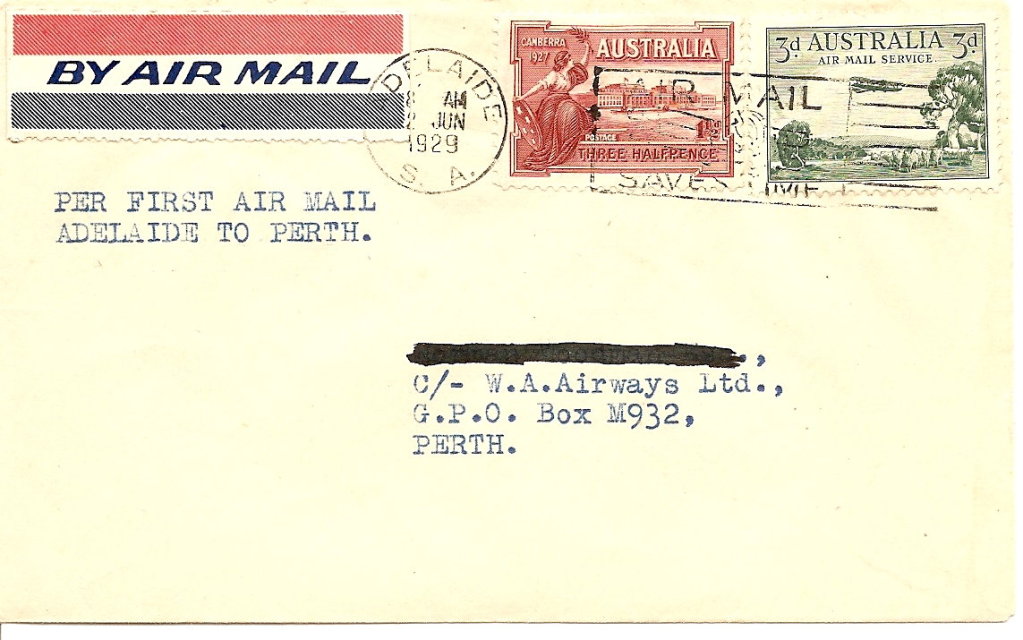 |
|
Send note to Staff
|
| Edited by rod222 - 12/06/2017 5:13 pm |
|
|
Pillar Of The Community
Australia
1692 Posts |
|
|
Very nice airmail cover you have there Rod, with both the first commemorative and the first airmail stamps attached.
Rob |
|
Send note to Staff
|
|
|
Replies: 1,928 / Views: 193,419 |
|




 Posted 12/05/2017 6:17 pm