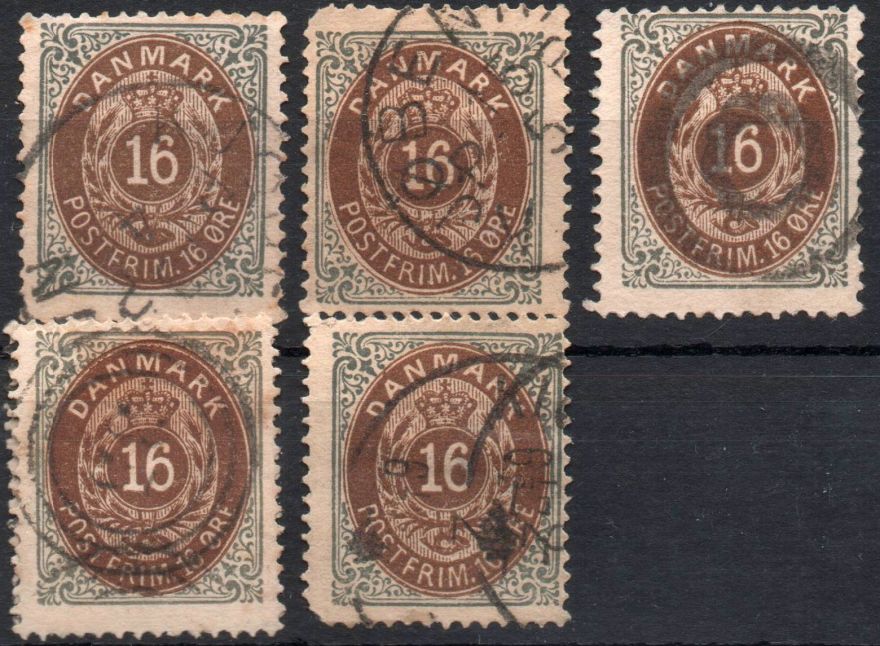
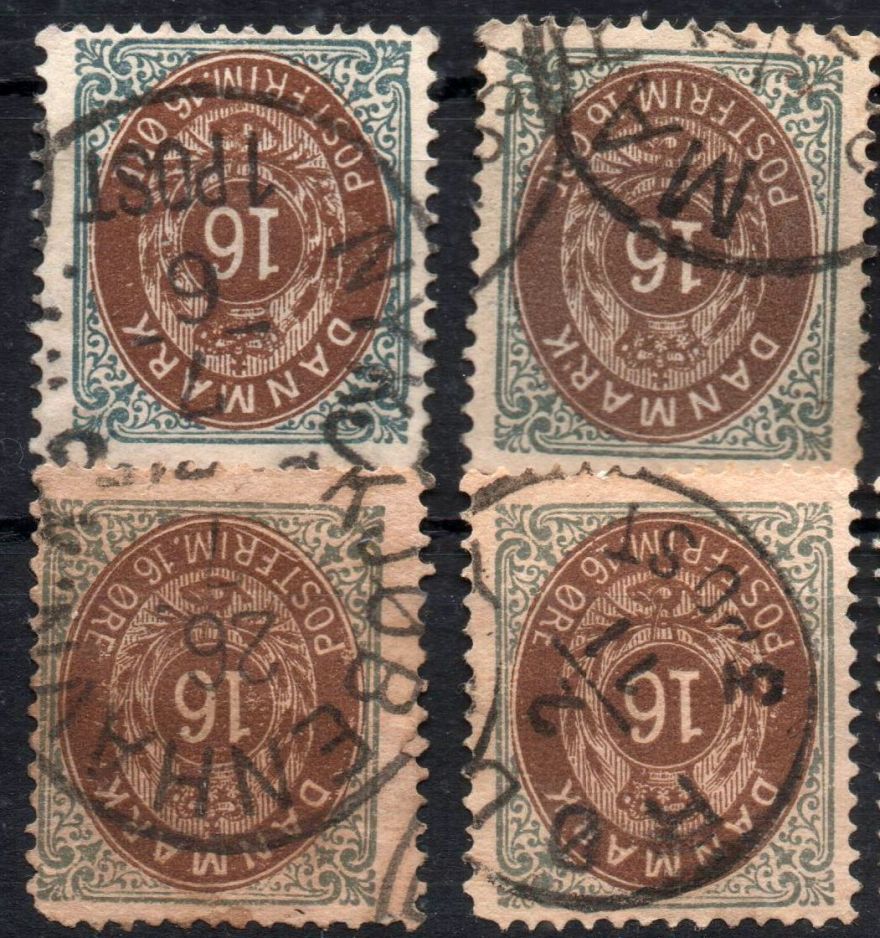
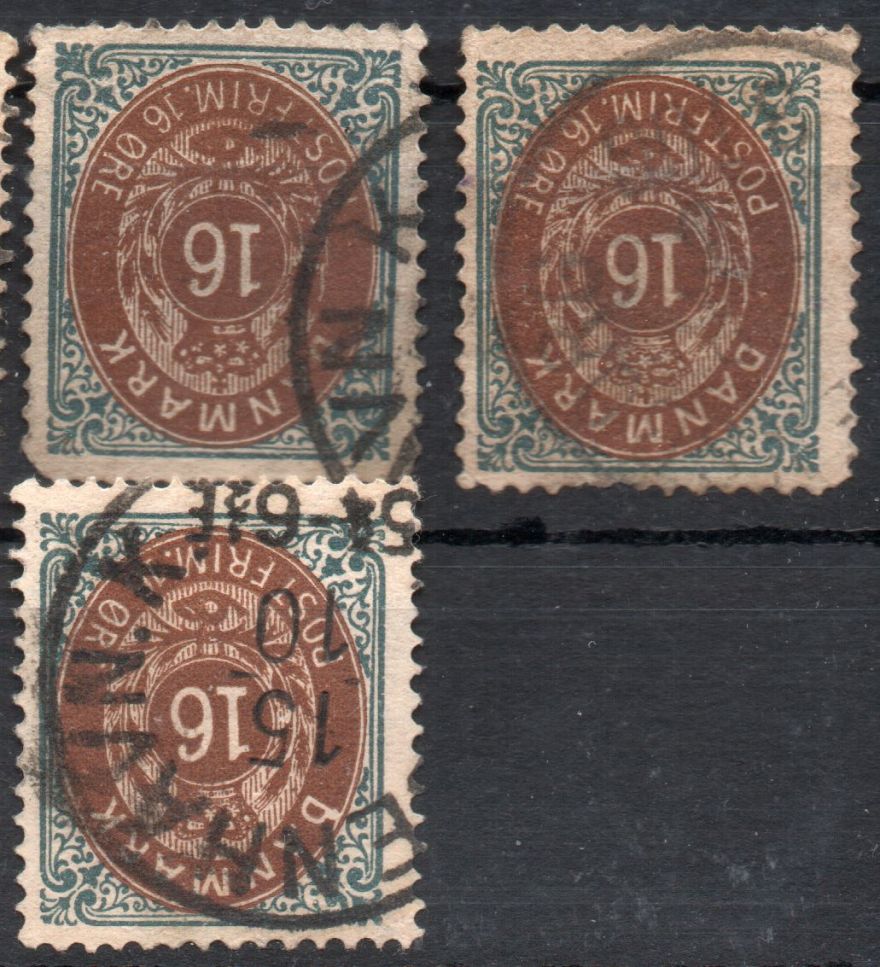
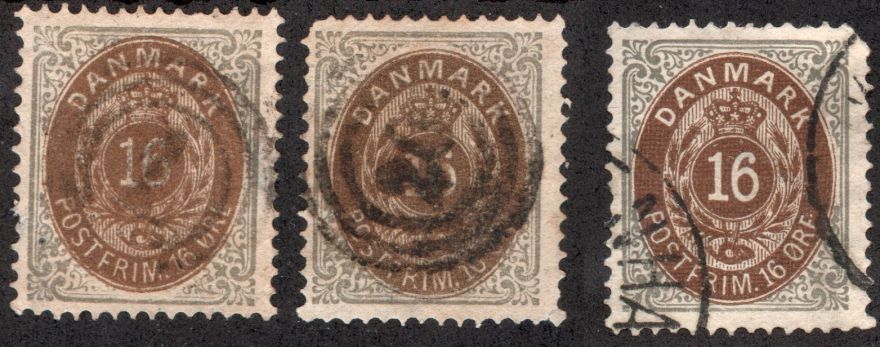
i'm a teacher for a living, so I should somehow be able to teach you to do this :)
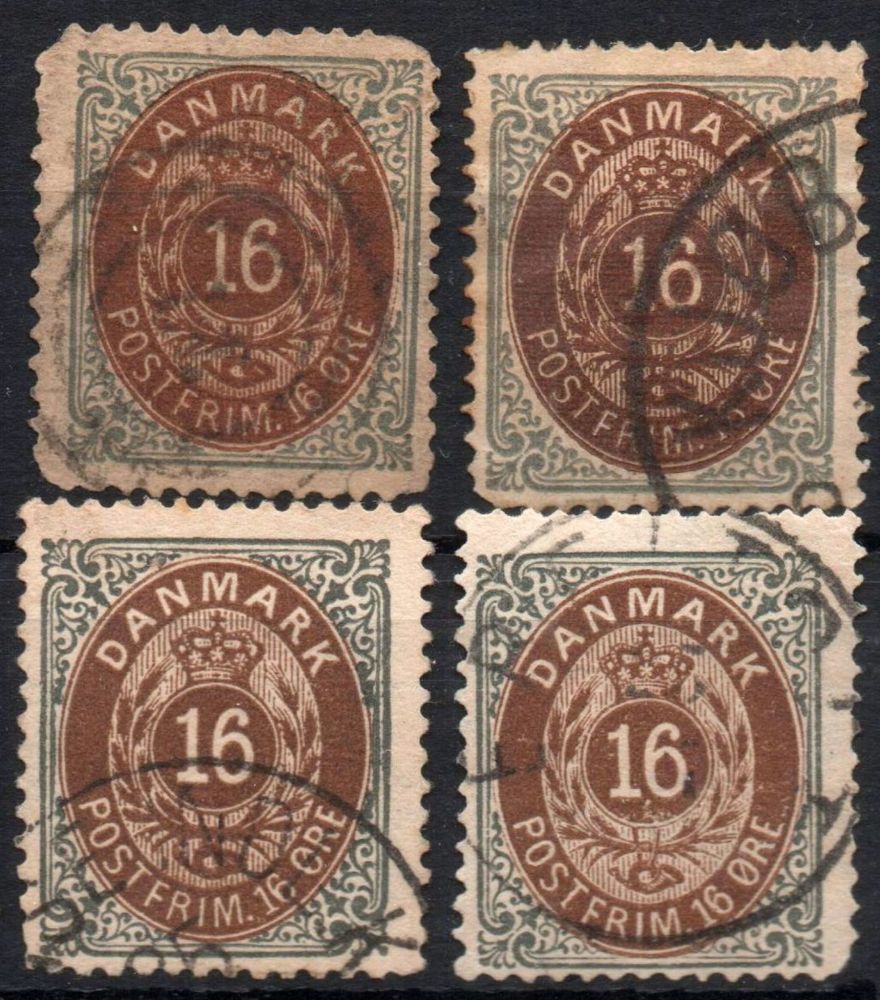
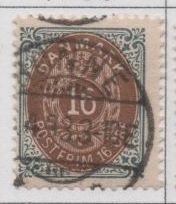
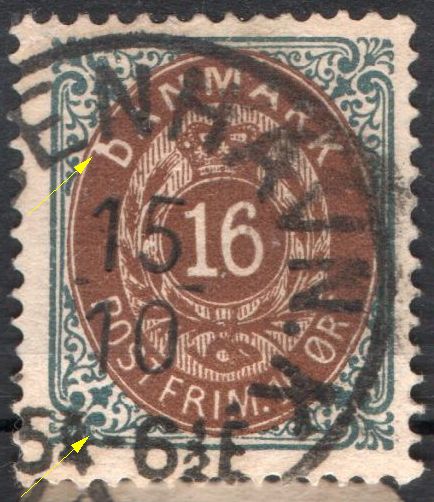
ok, we go back to the beginning - first - you've discovered something that could be an ovalflaw.. the white spot over D... we know it's 16øre maingroup 4 inverted frame.
in time you'll learn which maingroups are used for which prints, but that doesn't concern us right now, we need to know if this is an ovalflaw that is registered (16øre is really well covered) so to do this we open tofdata.
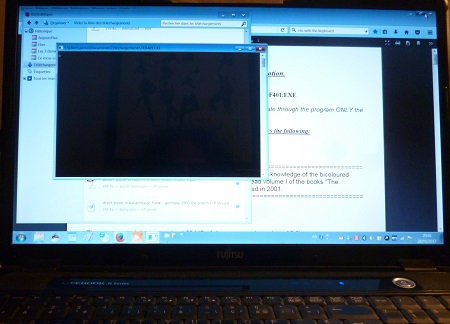
type in 16ø in the value
(Værdi) and it tells us there are prints 1 to 33.
Press F7 to get to ovals/frames... if it shows frames first, then press O, and R when you need frames.
(this is ovalseries 1 that shows because the selection was print 1 to 33, if you had selected print 22-28 ovalseries 2 would have appeared.)now you can use arrow left and right to change between these ovals until you find an ovalflaw that looks like yours.
on page 6 of 9 we find one that looks exactly like yours.. it's referred to as ovalflaw 1.40
we do not yet know which print it is... so back to F3.
we can now in OF type in 1.40 we also know it's an inverted frame, so under R/O we can type O for omvendt (danish word for inverted)
and press enter... we then get a result like this.

and unfortunately the ovalflaw in print 12 and 13 are both in the same position (not common this happens).
we now press F6 to get the prints. if the selection is still print 1-33 you'll land in print 1, press T then type 12 to go to print 12. press P for position and type 41
and it'll look like this

it shows the stamp should have a little dot in the SW part, and your stamp also has that, so at least now we know that it can't be print 14.
but is it print 12 or 13?
in theory you should write 16øre print 12/13 position 41 frameflaw 28.60 ovalflaw 1.40 and leave it for now, you have 3 other stamps that look like this one in oval and frame color, all of which are maingroup 4 and inverted.. so likely to be from the same print.
if you plate those, you'll know which print the one you, for now, can't determine completely.
explaination of the numbers.
1.40 stands for "ovalseries 1 flaw 40
(it's just numbers given to them by Lasse Nielsen, usually due to it being the 40th ovalflaw discovered by others over the last 140years)28.60 refers to the clichéposition (60) that's confusing since this is position 41, but the frame is inverted and if you turn it 180degrees position 41 is now position 60.
28 stands for "setting 28" everytime the frames are put together in a different way than before we call it a new setting.. so this series of different values who use this setting is called the 106 series (referring to the HUGE frame dent I showed earlier).. so 106 series setting 28.
all this will make alot more sense later on





 Posted 01/24/2017 5:35 pm