| Author |
 Replies: 14 / Views: 11,379 Replies: 14 / Views: 11,379 |
|
|
Pillar Of The Community
United States
2115 Posts |
|
|
|
I have some Sweden stamps and am using an album with separate spaces for fluorescent and regular paper stamps. I don't have a UV light. Is there some way to tell which is which? I just do not see the difference with my naked eye. Is there any?
*** Moved by Staff to a more appropriate forum. ***
|
|
Send note to Staff
|
|
|
|
|
Pillar Of The Community
United States
8956 Posts |
|
|
No, there is not. That is why they make UV lights. A cheap light is offered by http://uvtools.com . This unit is sold by many other outlets but usually much more expensive. Peter |
Send note to Staff 
|
|
|
Pillar Of The Community

United States
1951 Posts |
|
|
Stamps, Look on ebay. You can find some cheaper ones there. I saw one where girls use a lamp to dry their fingernails for less than $7-. But most of the UV lamps look like their going for about $25-. Jack Kelley |
|
Send note to Staff
|
|
|
Pillar Of The Community
United States
2115 Posts |
|
|
Thanks for replies.
I also collect Great Britain. The phosphor lines on some issues are visible if the stamp is held at an angle under a light. I suspect my Swedish stamps are printed on paper that has the material mixed in during its manufacture. |
|
Send note to Staff
|
|
|
Pillar Of The Community
United States
8956 Posts |
|
|
You are correct - hence the name fluorescent paper. And you are also correct that sometimes you can actually see the fluorescence, but this is at best difficult. On stamps that have the tagging applied in lines as you mentioned above or like here in the US as a block you might see it but not as a rule.
As mentioned in earlier posts, you will need a light. Here in the States you need a short wave UV light for tagging, and a long wave UV light for paper varieties. The uvtools portable light mentioned above comes with both bulbs.
Peter |
|
Send note to Staff
|
|
|
Valued Member
Austria
283 Posts |
|
|
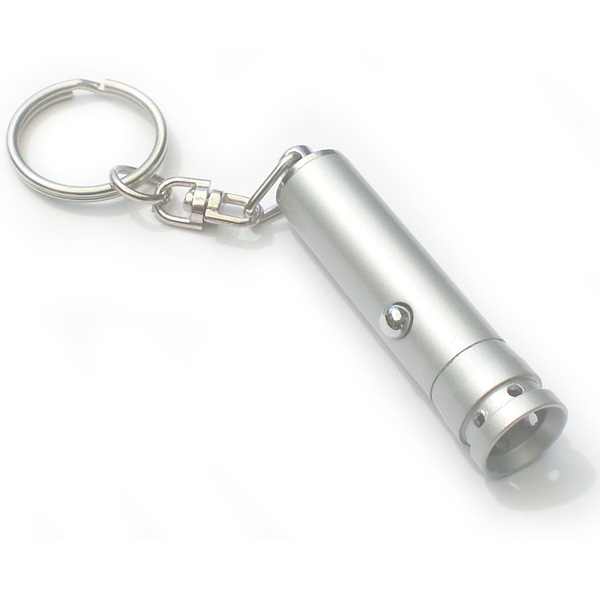
I tried an one Euro Chinese UV keyfob for testing banknotes - and it's working quite perfect on German fluorencent stamps. |
|
Send note to Staff
|
|
|
Pillar Of The Community
United States
8956 Posts |
|
|
Valued Member
Austria
283 Posts |
|
|
Pillar Of The Community
United Kingdom
1361 Posts |
|
|
Thanks for raising this topic as it was something that I was meaning to do.
I use an LED 'torch' type which works fine and I quickly went through my collection and found some surprises including a 1961 Michel 481 pair on the rare trial 'gold fleck' paper and a 338Ay 1kr 40 (1968) which is also another really difficult stamp to find.
This UV torch also has no issue showing yellow/white/blue fluorescence on later issues. |
|
Send note to Staff
|
| Edited by AnthonyUK - 01/19/2017 08:22 am |
|
|
Valued Member
United States
128 Posts |
|
|
I have another convenient tool - it helps with fluorescent paper and also with other diagnostic needs. It is small digital microscope that is conveniently clipping to smart phone for instant image view or capture: "Beileshi 60x Zoom Microscope Magnifier LED + Uv Light Clip-on" ( Amazon ~$8.00). Microscope is equipped with two LED light sources: White and UV. I have three images attached: German stamps in normal light and images taken by smart phone with attached microscope in UV light. Last image shows green fluorescent paper. I also use the same microscope for paper type diagnostic (for example Normal paper vs. Coated)    |
|
Send note to Staff
|
|
|
New Member
2 Posts |
|
|
Regarding Swedish fluorescent paper. Scott provides no information on paper types. If you have Lighthouse Swedish pages, they will provide one spot for "fluorescent" and one spot for "ordinary." However, several of these stamps have three types:
1. Bright, yellow fluorescence
2. Dull, whitish fluorescence
3. No fluorescence
If you examine your stamps under short-wave UV, the yellow fluorescence stands out like a beacon. The dull, whitish fluorescence can be more difficult to see, but becomes apparent when compared to a stamp with ordinary paper. |
|
Send note to Staff
|
|
|
Pillar Of The Community
2013 Posts |
|
|
Valued Member
United States
129 Posts |
|
|
I hope to bump this topic instead of starting a new one.
I want a light that will help me identify Danish and Swedish fluorescent types. Is there a recommendation? I read the info on "long wave" and "short wave" lights and want to make sure I purchase the right kind. |
|
Send note to Staff
|
|
|
Pillar Of The Community
United States
8956 Posts |
|
|
It would help if you can find out the wavelenghts of the tagging used in the countries you are interested in.
Here in the States short wave is used for tagging, long wave for paper brighteners,
Peter |
|
Send note to Staff
|
|
|
Pillar Of The Community
United States
775 Posts |
|
|
Here is an article explaining Scandanavian tagging: https://www.jaysmith.com/Resource/A...escence.htmlLooks like you may need long wave for Swedish stamps. I would also like to add that you can make your own longwave lamp. I bought a standard 17 inch long BLB UV bulb at a home center and inserted it into a standard 17 inch fluorescent fixture. It produces a much brighter light than anything you can buy from a stamp supply house. The bulb needs to be a BLB, not a BL. You don't want the bulb to put out any visible light. |
|
Send note to Staff
|
| Edited by Germania - 04/22/2021 2:39 pm |
|
| |
Replies: 14 / Views: 11,379 |
|




 Posted 01/15/2017 3:16 pm