| Author |
 Replies: 69 / Views: 8,051 Replies: 69 / Views: 8,051 |
|
|
|
Pillar Of The Community
Norway
1661 Posts |
|
|
John and SPQR - Thanks a lot for your corrections. Good information about the postage rates. As it is confirmed that both the sender and receiver were located in New Brunswick, postage paid by the receiver makes sense. (I figured it was paid by the sender, if not it should have postage paid in cents, based on the assumption the receiver was in US).
At this moment in history, when prepaid postage by use of postage stamps were a new invention, a lot of the postage were still being paid by the receiver. |
Send note to Staff 
|
|
|
Pillar Of The Community
6361 Posts |
|
|
If the postage had been paid by the sender it would clearly have been marked "paid" The currency used means nothing and cancel color is very shaky ground too. The availability of stamps vs the use of stamps are also shaky ground. There was no mass change in habit, especially when prepayment was not mandatory until many years later. |
|
Send note to Staff
|
|
|
Pillar Of The Community
Canada
1449 Posts |
|
|
John Becker,
What do you mean by your post on my father's bought stampless (prephilatetic) cover as discussed by many members. I would give you the history of the Postal Offices at the time but it would not change the cancel marks, which I know have not been modified, as well as the payment for the route from Edmundston to Lincoln, New Brunswick (same Province), close to 200 miles, using the old road route (route 2)).???
The currency paid as it appears on the cover is well explained by the fact that Canada was under the British Colonies at the time. Confederation of our Country was in 1867 and this year marks the 150th Anniversary of CANADA ! Yeh
Paid or "collect: is in fact of interest, but was not to my dad in the 80s as he did not have access to the info.....he was busy raising 6 kids and running a Newspaper and printing shop as well as a store. Life is life...
Regards to you...
Rene
Origin of "Dollar" and "Pound"
The word "dollar" originates from the German
word thaler, the name given to a silver coin first
minted in Joachimsthal, Bohemia in 1519.
"Cent" comes from the Latin centum, meaning
hundred. The origin of the dollar sign "$" is
obscure but is widely believed to have been
derived from a symbol denoting Spanish pesos.
"Pound" and its symbol "£" come from the
Latin libra, the value of a troy pound of silver.
"Shilling" is believed to come from the old
Scandinavian word skilling, meaning division. Its
symbol "s." refers to the Latin solidus, a Roman
coin. "Pence," or pennies, comes from the
Old English word pennige. Its symbol "d." refers
to the denarius, another Roman coin.
Before decimalization, one pound was equal to
20 shillings, with one shilling equal to 12 pence.
See Davies (2002) and Wikipedia (2005). |
|
Send note to Staff
|
| Edited by Renden - 02/26/2017 6:43 pm |
|
|
Pillar Of The Community
6361 Posts |
|
|
All mail is rated at the point of origin. The 3d in a circle is the rate marking which is due by the recipient as opposed to a "3 paid" marking which is paid by the sender. Most mail in that era is sent collect. Yours is specifically not marked as "paid", therefore it is collect. |
|
Send note to Staff
|
|
|
Pillar Of The Community
Norway
1661 Posts |
|
|
John, thanks again.
Looking at the amount of letters that were sent as collect (stampless) even years after introduction of postage stamps, it is quite obvious that the change to compulsory prepayment took many years to establish. It seems some countries were quicker to make the change than others. At least that's my feeling when comparing stampless covers available on the market. It seems to me UK for instance have less stampless covers than German States and France, as if the later used more time from stamps were issued until prepayment became compulsory. However this is just me doing assumptions. Would be nice if anyone have facts to enlighten us.
What year were the fist postage stamp issued and what year did the use of them become compulsory, for different countries? |
|
Send note to Staff
|
|
|
Pillar Of The Community
Norway
1661 Posts |
|
|
Renden, your father did well  And as I understand his notes, he correctly described the cover as stampless, and not prephilatelic. Interesting with the historic aspect of the currencies |
|
Send note to Staff
|
|
|
Pillar Of The Community
2340 Posts |
|
|
As far as I know, the dolar symbol "$" an "S" with two vertical bars, comes from the old Spanish arms taht you can see on this 1937 local stamp from Castellterçol (Catalonia) 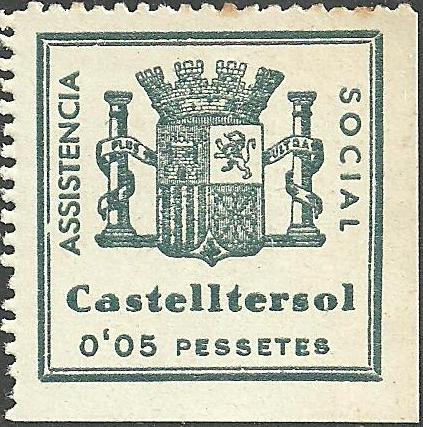 There, the columns are the Two Herakles Pillars that separe the Mediterranean sea from the Atlantic Ocean: Gibraltar and Jebel Musa in Morocco. On the scroll there used to be inscribed the Latin text "Non Plus Ultra" (Don't go further away). After Columbus "discovery", the Spanish monarchy adopted the two pillars with an scroll inscribed "Plus Ultra" ("Go further)as symbol. 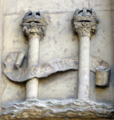 This symbol was also on the Mexican minted silver pesos used by early Americans as valuable currency. Hence, the symbol, pased to the dollar. The two bars come from the pillars and the "S" from the scroll. That's what I've read somewhere... |
|
Send note to Staff
|
|
|
Pillar Of The Community
United States
3525 Posts |
|
|
In the US, prepayment of postage was made compulsory on domestic letter mail as of April 1, 1855. It could be paid by stamps, stamped envelopes or in cash.
After January 1, 1856, all domestic mail in the US had to be prepaid either by stamps or stamped envelopes. This caused a significant increase in demand for stamps. |
|
Send note to Staff
|
|
|
Pillar Of The Community
Norway
1661 Posts |
|
|
Replies: 69 / Views: 8,051 |
|




 Posted 02/26/2017 3:43 pm


