| Author |
 Replies: 20 / Views: 4,144 Replies: 20 / Views: 4,144 |
|
Rest in Peace
Canada
5701 Posts |
|
|
I am trying to figure out what the full sheets of 240 printed by De La Rue for British colonies in the 1860's looked like. Were they 20 x 12 or what? The reason is, I am trying to figure out where wing margins and straight edges appear on the sheets, as shown on these British Columbia stamps. However, I believe the same configuration applies to the stamps of Antigua, Jamaica, and other colonies printed by De La Rue. 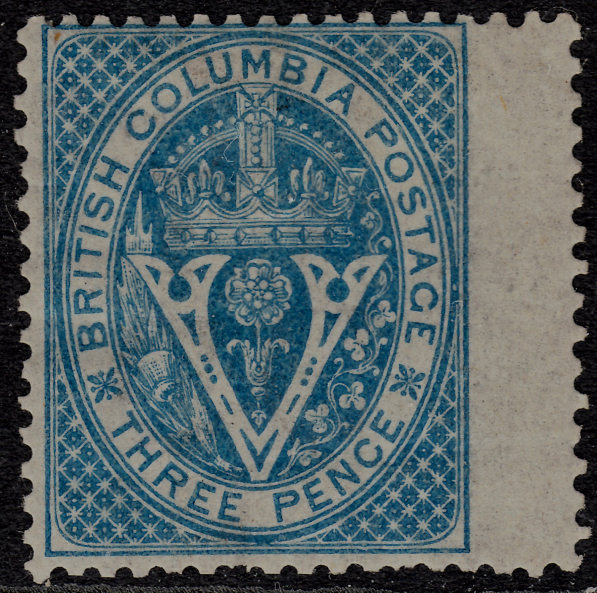 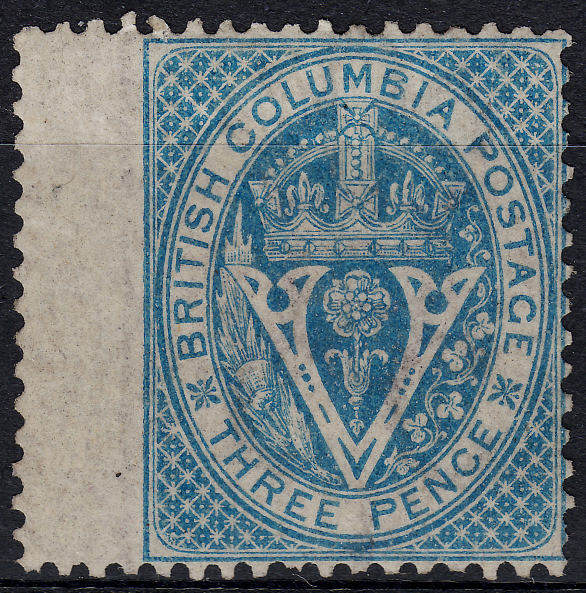 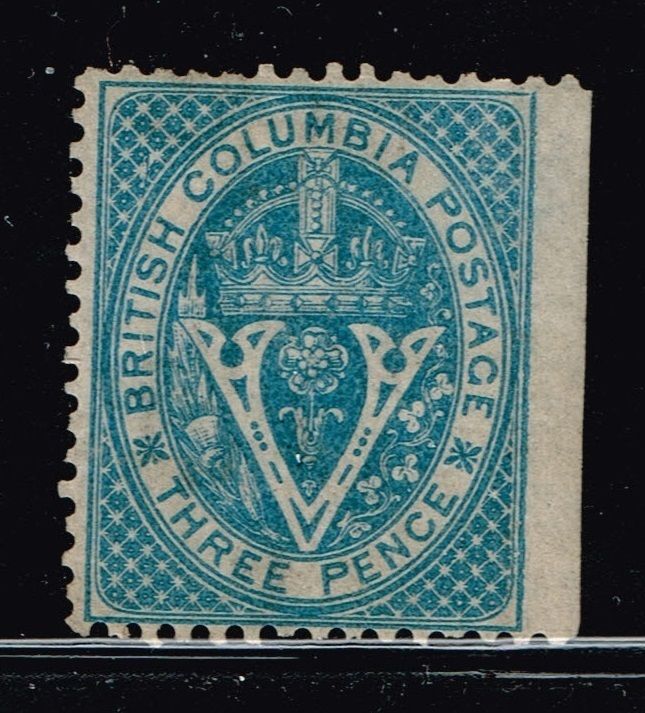 |
|
Send note to Staff
|
|
| Edited by BeeSee - 02/25/2017 8:17 pm |
|
|
|
|
Bedrock Of The Community
Australia
38679 Posts |
|
|
Wow! Lovely stamps Brian. Crown Agents Watermarks set up for the colonies. Unsure if this plate set up is pertinent to B.C. Hope this assists.  |
Send note to Staff 
|
| Edited by rod222 - 02/25/2017 10:02 pm |
|
|
Rest in Peace
Canada
5701 Posts |
|
|
Bedrock Of The Community
Australia
38679 Posts |
|
|
Excellent Brian,
I think this Dandy roll was used in 1904 onwards,
but I think the layout was used by De la Rue prior in the plate format.
|
|
Send note to Staff
|
|
|
Rest in Peace
Canada
5701 Posts |
|
|
I think you are correct Rod. The De La Rue sheets of the crown and CC up until about 1880, when CA replaced the CC. I now believe the sheets were perforated down the center, which created the wing margins. He is a BC example I borrowed from ebay. You can even see the vertical line of the watermark through the stamp. 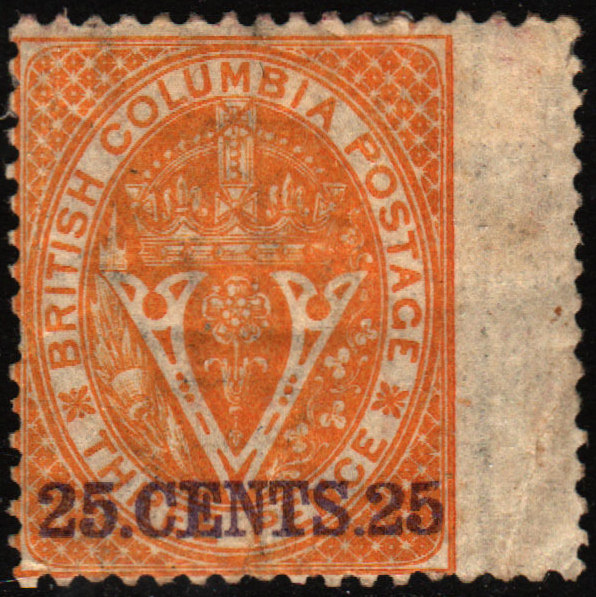 |
|
Send note to Staff
|
|
|
|
Pillar Of The Community
United States
7104 Posts |
|
|
Generally speaking, De La Rue made up Crown CC paper in that same format, with "CROWN COLONIES" across the middle and twice on each side (where it says "CROWN AGENTS FOR THE COLONIES" on the image, above).
Wing margins were created when the panes were split with a single perf line vertically down the center of the sheet. Later, DLR switched to perfing right along the edges of each pane, rather than splitting adjacent panes with one perf line (i.e., 2 vertical perf lines instead of one).
One vertical perf between panes, creating wing margins:
|X|X|X|X|X|X | X|X|X|X|X|X|
Two vertical perfs between panes, no wing margins:
|X|X|X|X|X|X| |X|X|X|X|X|X|
If this isn't right, someone please jump in. This is how I've understood it.
|
|
Send note to Staff
|
|
|
Bedrock Of The Community
Australia
38679 Posts |
|
|
Interesting thread and information.
I gotta say, that first image of the thruppenny blue, is one hell of an handsome stamp.
Do you know the designer?
|
|
Send note to Staff
|
|
|
Pillar Of The Community
United States
7104 Posts |
|
|
I don't know the designer, but I'll have my hands back on my Robson Lowe Canada in a few hours and I can check.
Fun fact, the large V includes as a design feature in each leg the Morse code for the letter V: . . . __ (dot dot dot dash) |
|
Send note to Staff
|
|
|
Rest in Peace
Canada
5701 Posts |
|
|
BC is covered in the Newfoundland BC volume of Robson Lowe. I don't have that one. I have records somewhere, but I believe the designer was in the Royal Navy stationed in Vancouver at the time.
|
|
Send note to Staff
|
|
|
|
Rest in Peace
Canada
5701 Posts |
|
|
Cjd, that is a simple excellent image you created with the keyboard  . It clearly shows how the left and right wing margins would be in the center. Now I wonder how the straight edges fit in. Are the left and right sides of the sheet imperforate? Or are straight edges trimmed wing margins? Here is a example of Jamaica Scott #11 of 1871, with a left straight edge. You can also see the vertical line like on the BC stamp. 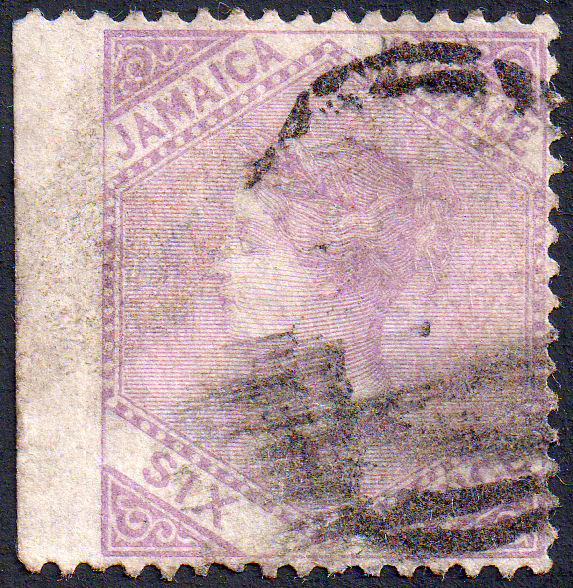 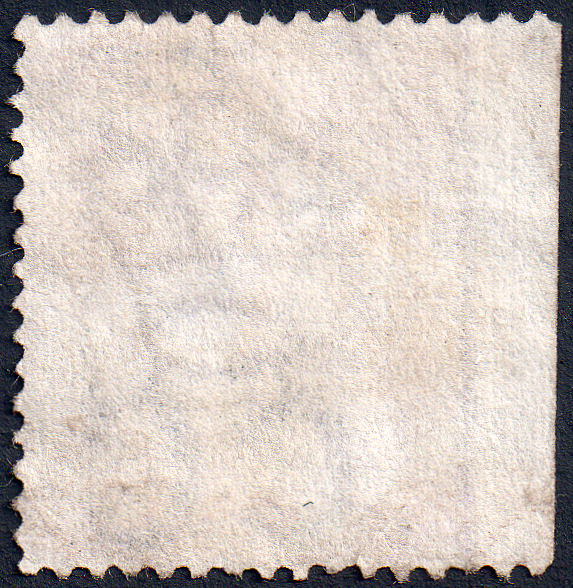 |
|
Send note to Staff
|
|
| Edited by BeeSee - 02/26/2017 7:53 pm |
|
|
Pillar Of The Community
United States
7104 Posts |
|
|
"Thought to have been designed by a Royal Engineer (probably Capt. W.D. Gosset) based on their uniform buttons."
111,360 blue printed; 1,063,440 pale blue printed, but 853,805 destroyed. Robson Lowe says that only one used block of four was known as these were typically sold in strips. They were used as pairs or strips of four, depending on the rate they were paying.
-Vol 5, Encyclopedia of British Empire Postage Stamps |
|
Send note to Staff
|
|
|
Bedrock Of The Community
Australia
38679 Posts |
|
|
Pillar Of The Community
United States
7104 Posts |
|
|
I don't have a specific answer about the straightedge wing margins. I've read that panes were sometimes separated by knife or guillotine instead of using the perfs. I don't recall reading where that was done, or why.
Collectors of old would often cut off wing margins, but it wouldn't make a lot of sense to me to cut off the perfs, only, but leave the wing?
Dunno. |
|
Send note to Staff
|
|
|
Pillar Of The Community
Norway
1661 Posts |
|
|
Rest in Peace
Canada
5701 Posts |
|
|
I think I found the answer about straight edges here: http://www.stamp-collecting-world.c..._spview.htmlScroll down and you will see this note (just as Cjd said): Quote:
NOTE! The way 19th Century British stamps were printed and perforated, there is NO SUCH THING AS A STRAIGHT EDGED stamp. British stamps of this era that are offered as straight edged examples, are actually wing margin examples or mutilated normal examples that have been trimmed! I suspect the same applies to the colony stamps. |
|
Send note to Staff
|
|
| Edited by BeeSee - 02/28/2017 12:15 am |
|
|
Rest in Peace
Canada
5701 Posts |
|
|
Here is a mock-up I did showing how the comb perforation device fits over a row of stamps, with the wing margin examples in the middle. The device would punch the stamps one row at a time down the sheet.  |
|
Send note to Staff
|
|
|
|
Replies: 20 / Views: 4,144 |
|




 Posted 02/25/2017 8:02 pm


