| Author |
 Replies: 24 / Views: 4,687 Replies: 24 / Views: 4,687 |
|
Valued Member
Canada
5 Posts |
|
|
I'm a beginner and need any help I can get to determine if this stamp I have is legit or a fake. I understand that the monetary used changed from shilling to cents back in 1865, which predates the cancel by 3 years! Does the postmark on this stamp make sense as this is a 1861 and the postmark is 1868? Is it possible that this stamp is the real deal or is it clearly a fake? Thanks for any help anyone can give me. 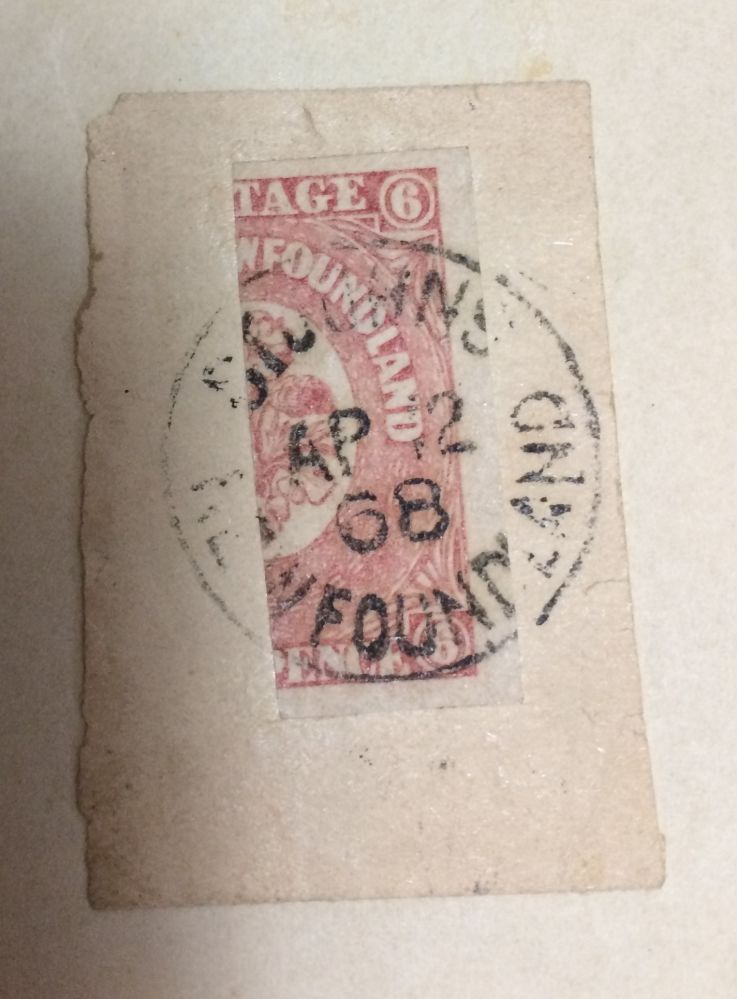 |
|
Send note to Staff
|
|
|
|
|
Pillar Of The Community
Canada
1449 Posts |
|
|
Your Nfld stamp could be a Sc # 6 or 13 or 20a ???(1860) if it was 100% visible. As for the cancel of 1868, looks nice (from St Johns)(see link)I am sure some member of this SCF will come and give his version. What happened to the other half ?looks like a paper or something covered it...... Good luck and Welcome ! link: https://archive.org/stream/cihm_370...n29/mode/2up |
Send note to Staff 
|
| Edited by Renden - 03/02/2017 8:10 pm |
|
|
Pillar Of The Community
United States
6668 Posts |
|
|
My first thought is that it's legitimate only because I can't see a collector slicing up a stamp with margins like that just to try and fool someone. That stamp with those margins alone is a very sought after piece. Hope it's good. |
|
Send note to Staff
|
|
|
Pillar Of The Community
Canada
1449 Posts |
|
|
Slicing a stamp would slice the cancel mark ? and it is not the case here ???? |
|
Send note to Staff
|
|
|
Rest in Peace
7742 Posts |
|
|
grego200350..Welcome to the forum. Your stamp is definitely genuine as you can see where I pointed out parts of it (genuine or fake indicators)...The cancel is still up for ideas..I think it is also genuine, and if there is anyone else to chime in, that would help. Robert 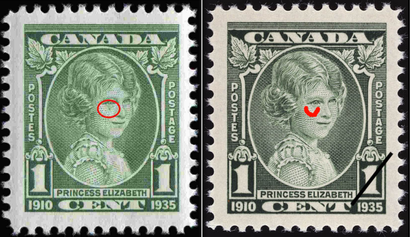 Also where the arrows are pointing and missing ink makes me believe a solid cancel device was used to cancel the letter...That would explain the gaps where I placed the arrows...I believe 95% genuine. 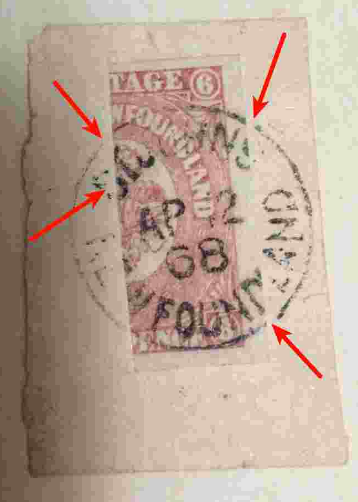 |
|
Send note to Staff
|
| Edited by wert - 03/03/2017 09:50 am |
|
|
Valued Member
Canada
5 Posts |
|
|
I'm a beginner at stamps and know next to nothing. But it has been brought to my attention that the postmark date April 12, 1868 was a Sunday. Is that any concern regarding the validity of the postmark? |
|
Send note to Staff
|
|
|
Pillar Of The Community
United States
6668 Posts |
|
|
Quote:
Slicing a stamp would slice the cancel mark ? and it is not the case here ???? What I meant by slicing the stamps was if it was sliced and affixed by a collector in an attempt to create a philatelic item instead of a genuine bisect done by a postmaster or postal clerk. A collector would value a stamp of that quality much more than a postmaster which is why I believe it might be a genuine bisect. 3¢ was the correct Newfoundland currency rate. As far as a Sunday postmark I don't believe that Sunday became a postal holiday until the 20th century. |
|
Send note to Staff
|
| Edited by stallzer - 03/03/2017 10:18 am |
|
|
Pillar Of The Community
Canada
1449 Posts |
|
|
Now there are 2 threads on same subject - Hope both can be joined in one discussion
p.s. understand what you mean Stallzer - Thanks |
|
Send note to Staff
|
| Edited by Renden - 03/03/2017 3:09 pm |
|
|
Pillar Of The Community
Canada
5821 Posts |
|
|
Quote:
As far as a Sunday postmark I don't believe that Sunday became a postal holiday until the 20th century. That might have been applicable to the United States but perhaps not for Newfoundland which was a British colony until 1949. The Victorians were very strict about keeping Sunday as a day of rest. They took the Ten Commandments written in the Bible very seriously. One of these was that no one should work on a Sunday but keep the day dedicated to the Lord. |
|
Send note to Staff
|
|
|
Pillar Of The Community
United States
925 Posts |
|
|
The cancel is not contemporaneous with the stamp. Pratt does not illustrate that cancel in his Nineteenth Century Postal History of Newfoundland. The closest match is a cancel that was used after 1900. There was a large stock of remainders of the rose stamps when Newfoundland switched to decimal currency. It appears to be a genuine stamp. The cancel may have been made with a genuine devise but if so it was backdated. If genuine it is a philatelic contrivance and not worth anything like a genuine bisect. 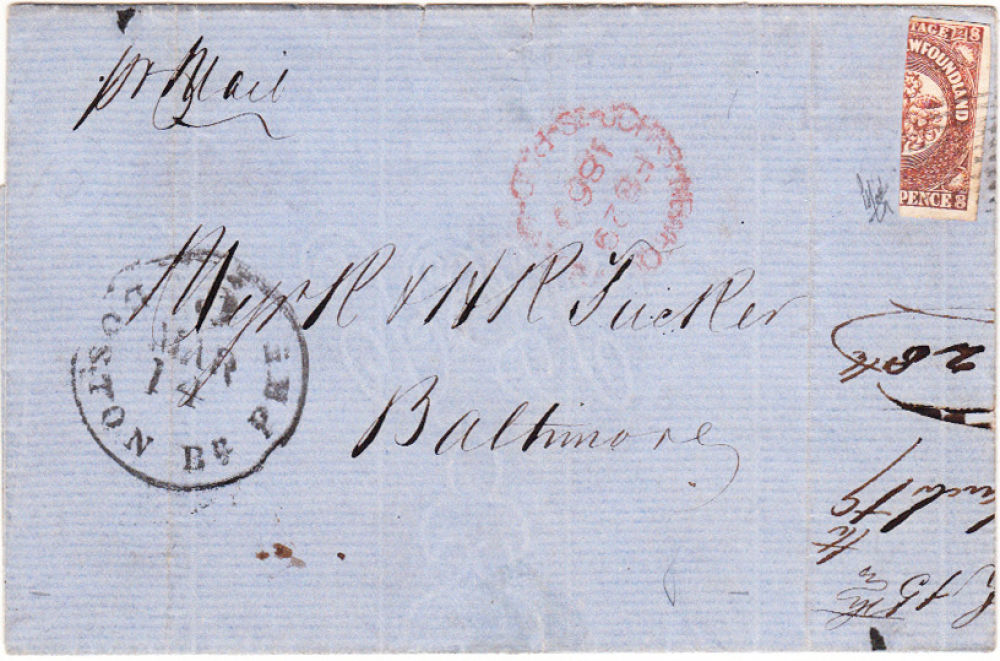 |
|
Send note to Staff
|
|
|
Pillar Of The Community
United States
1565 Posts |
|
|
Newfoundland was a self-governing dominion from 1907 to 1933, not a colony. NF became a non-self-governing dominion about 1934 as a result of the possibility of default on debts incurred during World War I and the Great Depression. The UK took over governance of the territory until NF united with Canada in March, 1949. |
|
Send note to Staff
|
| Edited by Climber Steve - 03/03/2017 7:16 pm |
|
|
Valued Member
Canada
5 Posts |
|
|
SPQR, please excuse my lack of knowledge on this subject but I am brand new at stamp collecting and unfamiliar with just about all of the language that goes with it. My understanding from your post is that although the stamp appears to be genuine, the postmark isn't and therefore the stamp is not a rare collectible worth many hundreds or maybe even thousands of dollars. Do I understand your message correctly? I really appreciate your help and advice. |
|
Send note to Staff
|
|
|
Pillar Of The Community
United States
6668 Posts |
|
|
No it is not worth hundreds or thousands of dollars. IF it were on a full cover and legitimate then worth good money. It's a bisect on piece with nothing telling where it was going or who it was going to. Even if legitimate it's only a curiosity. |
|
Send note to Staff
|
|
|
Pillar Of The Community
United States
925 Posts |
|
|
grego - yes, you understood correctly. Classic era bisect stamps are valuable when they show that a stamp was used to pay a different rate than intended due to a shortage of stamps of the proper denomination or the lack of a stamp of the proper denomination. Thus, the bisected stamp is a "different" stamp. In the cover in my post above, Newfoundland ran out of 4d stamps, so the post office bisected the 8d stamps to make what was essentially a new and different 4d stamp. Another example would be when the rate from New Brunswick and Nova Scotia to England was reduced to 7½d and the only way to pay the rate was to bisect a 3d stamp.
For the Newfound cover in my post above, anyone can take an 8d stamp and cut it in half to make a bisect (actually 2 bisects), so the only way to prove that it is really the special use of half of an 8d stamp to pay a 4d rate is to collect the stamp on the entire cover.
Sometimes, collectors will accept a bisect on piece. However, for it have any value, it needs to be a contemporaneous use -- that is the cancel has to been the correct cancel for the time when the stamps legitimately were being used as bisects to pay a postage rate. On your piece, even if it were used in 1868, it would not be contemporaneous with the use of the stamps. The cancel looks to be of a design used in the early 1900s. It may be a genuine Newfoundland cancel that was backdated, or it may be a bogus cancel - I don't know. Either way, it is not a rare collectible. |
|
Send note to Staff
|
|
|
Valued Member
Canada
5 Posts |
|
|
SPQR: Although disappointed that this stamp is not the find I hoped it might be, I really appreciate that you took the time to provide an explanation of why and how bisected stamps were used. I've learned a valuable lesson here and have especially you to thank but also thanks to everyone else on this site who offer information as I researched the history and value of this stamp. Much appreciated. Greg |
|
Send note to Staff
|
|
|
Pillar Of The Community
Canada
730 Posts |
|
|
A possible theory (although thin) is that the 6 in the year portion of the date was inserted into the cancelling device upside-down and the year of use is actually 1898. |
|
Send note to Staff
|
|
|
Replies: 24 / Views: 4,687 |
|



 Posted 03/02/2017 6:53 pm


