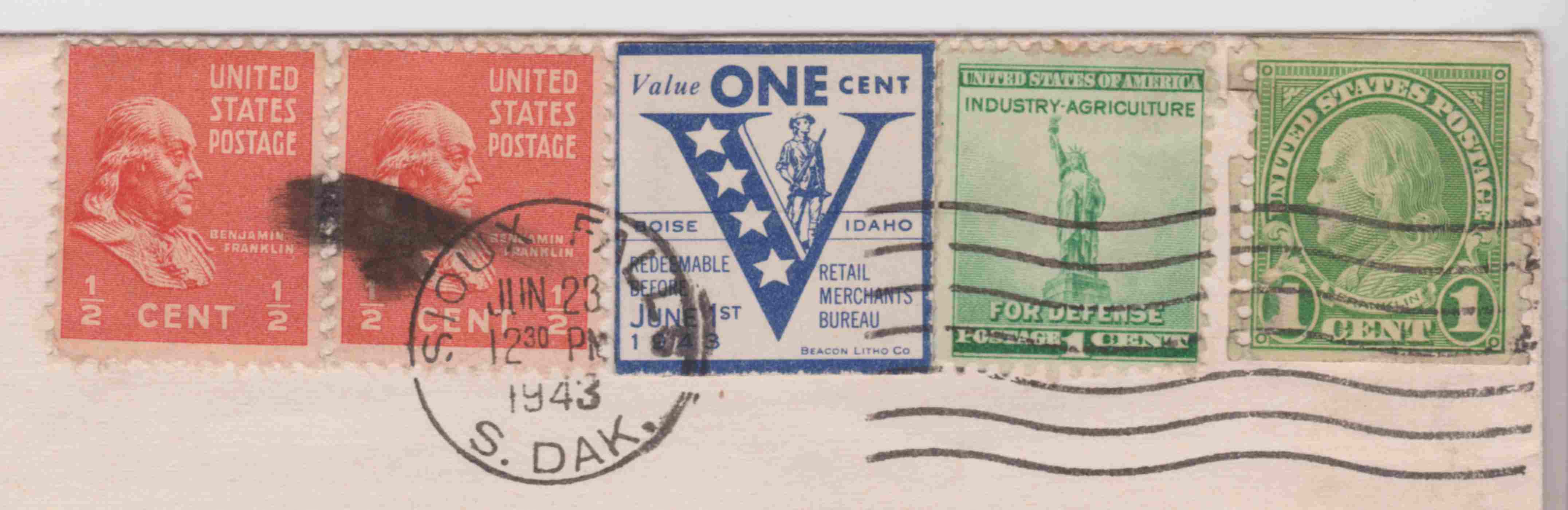
Well, it is not really permitted by postal officials - it just sneaked through. To tell you honestly I had never seen this one before, but the name of the company and the place name sort of gave it away.
US domestic letter rate was 3 cents at this time, thus the letter may be fully paid already, so the P.O. would not care about the extra label. Can we see the entire cover?
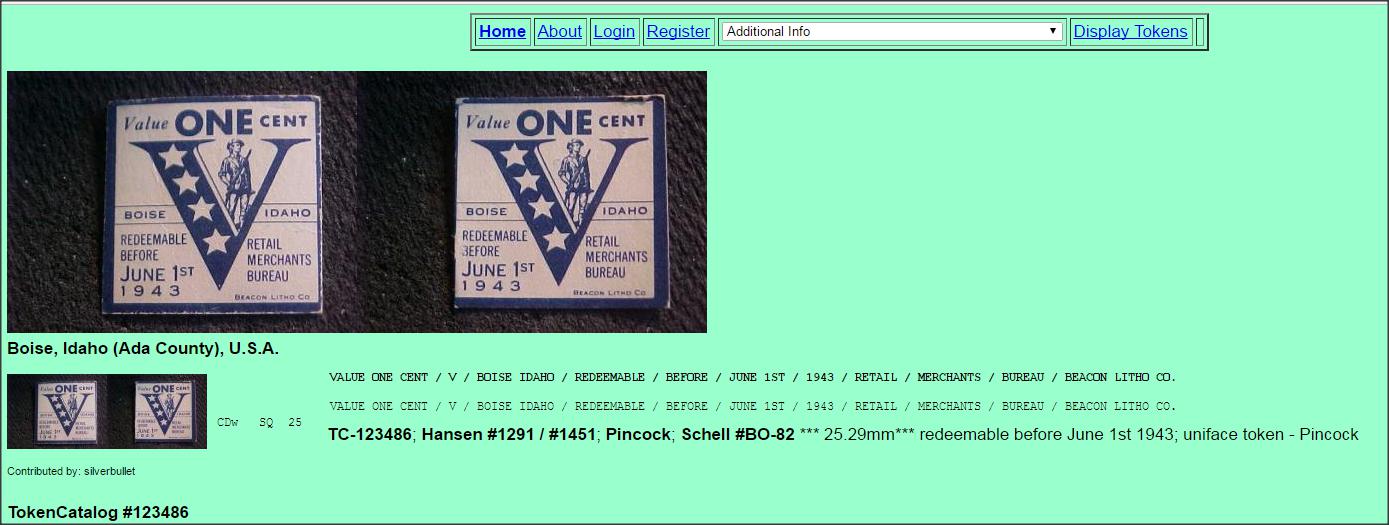
I think that token might be a better description than trading stamp, though the two are similar in some ways. This one appears to be a cardboard token worth 1 cent in trade at various merchants in Boise, Idaho. My guess is that the local merchants were having a hard time acquiring enough pennies to do the business because of the big shortage of copper during the war. Remember that the mint even stopped making copper pennies in 1943 and that year made them out of steel which was more abundant. The businesses likely banded together and decided to make their own cardboard "pennies" to use in giving change to their customers who made purchases that required pennies to make up their change. Their statement on their cardboard "pennies" that they would redeem them before June 1st, 1943 would have been to give their customers some degree of confidence in receiving such cardboard "pennies" and not demand real pennies. Since this is a two-sided token, I would think that the person who put it on this cover must have been a bit perturbed that it was no longer worth a penny when he glued on to the cover on June 23rd, 1943 - 22 days after it became worthless.
Disclaimer: While a tremendous amount of effort goes into ensuring the accuracy of the information contained in this site, Stamp Community assumes no liability for errors. Copyright 2005 - 2026 Stamp Community Family - All rights reserved worldwide. Use of any images or content on this website without prior written permission of Stamp Community or the original lender is strictly prohibited. Privacy Policy / Terms of UseAdvertise Here





 Posted 03/06/2017 9:39 pm