| Author |
 Replies: 55 / Views: 12,998 Replies: 55 / Views: 12,998 |
|
|
|
Bedrock Of The Community
Australia
38679 Posts |
|
|
That's a smashing collection Geoff, not tatty at all.
I'd take them any day.
How are you identifying surfaced /unsurfaced? Any tricks you would like to share?
|
Send note to Staff 
|
|
|
Pillar Of The Community
United Kingdom
8641 Posts |
|
|
Thanks, Rod - too kind, old bean. I noticed when looking at these pages that I haven't got them all right by any means, so I'll have to have another crack. We probably need Steve to chime in, but, having separated the 15 x 14 perfs, where the main challenge lies (at least on the basis of my old catalogue), I tend to look for clarity and quality of printing. I know there are many ways of identifying chalk-surfaced paper, from rubbing the stamp with your granny's silver threepenny bit to touching with your lip, but my limited experience is that the use of chalk-surfaced paper will give a higher quality production on these and other issues, with less white pitting on the sections of solid colour. But others may tell me that's tosh, and I'll have to begin again ... |
|
Send note to Staff
|
|
|
Bedrock Of The Community
Australia
38679 Posts |
|
|
Yes Geoff, that is my route, but I never feel confident.
Sometimes I can see the pitting, other times I use the Micrometer.
Never tried on the Portuguese, they have been over handled and would give dubious results.
Unless the stamp attracts a high price or catalogue variation, I often leave in the "too hard" basket.
If I have several duplicates it makes it easier to discern.
|
|
Send note to Staff
|
|
|
Pillar Of The Community
United Kingdom
8641 Posts |
|
|
Yes, it helps to have a small heap of them. I took them out of the "too hard" pile because they'd have stayed there forever. And if I get them wrong, so what? It's just for my amusement, after all. |
|
Send note to Staff
|
|
|
Pillar Of The Community
India
557 Posts |
|
|
Here are the basic references for Portugal Ceres issue for beginners like Rod.   Portugal Ceres Variedades de Cliché Portugal Ceres Variedades de ClichéJosé Manuel Miranda da Mota and Armando Mário O. Vieira. Afinsa, Lisboa, Portugal 1992 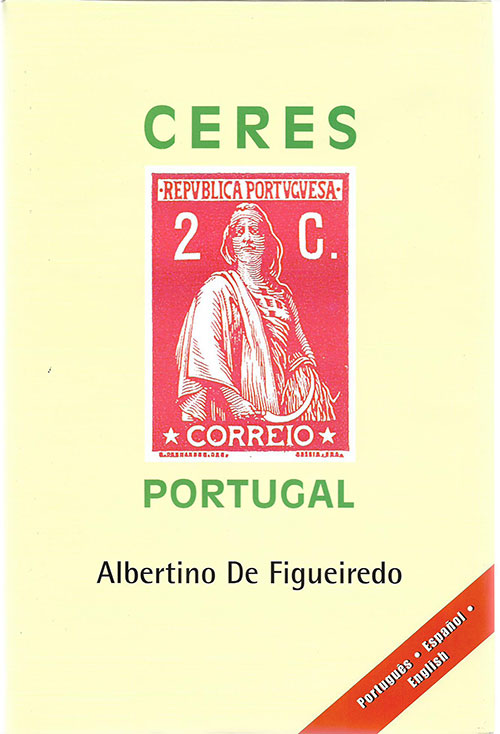 Selos Ceres de Portugal Selos Ceres de PortugalAlbertino de Figueiredo. Fundação Albertino de Figueiredo para a Filatelia, Madrid, España 2003  Os Papéis dos Selos Ceres de Portugal Os Papéis dos Selos Ceres de PortugalJosé Manuel Miranda da Mota. Convenção Filatélica (No.6 9/2003), Póvoa de Varzim, Portugal Also, for Portugal, the best catalog is Mundifil (previously Afinsa). Scotts, SG and Michel just cannot compete with the detail in this field.  Selos Postais e Marcas Pre-Adesivas 2016 Portugal Açores Madeira Selos Postais e Marcas Pre-Adesivas 2016 Portugal Açores MadeiraEd. José Manuel Miranda da Mota. Mundifil, Lisboa, Portugal 2016 An unwanted advise for Rod: Unless a particular stamp is of exceptional rarity or with a scarce postmark, display of mint and used stamps together should be avoided. |
|
Send note to Staff
|
|
|
Bedrock Of The Community
Australia
38679 Posts |
|
|
Thank you very much, Joy,
for taking the time to post those catalogues.
Not seen them prior, I have saved your post.
Most informative.
|
|
Send note to Staff
|
|
|
Bedrock Of The Community
Australia
38679 Posts |
|
|
Luis de Camoens 1924 Steiner Page 19. As is the bane of all collectors, missing the high value. Auctioneers refer to these stamps as the "Key Value" These are the stamps, one finds most elusive, and which empties the wallet at an alarming rate.  |
|
Send note to Staff
|
|
|
Pillar Of The Community
United States
1565 Posts |
|
|
Geoff and Rod: how I think I can determine if a mint Ceres is printed on the chalky, or coated, paper is to hold it up at an angle to light, so that the surface becomes "reflective." The chalky paper should be an off white sort of sheen or glow. Can't describe it any better; I just know it when I see it. Haven't tried that with used/canceled stamps, or with the values that are described as being on "glazed" paper in the Scott catalog. The catalogs that have been uploaded by Joy may be useful. The "Variedades de Cliche" is carried by the ISPP (International Society for Portuguese Philately) based in California. It's probably also available from the PT Society in the UK. Not sure if they have a physical location. One isn't readily visible on the web site. http://pps-uk.net . I've been thinking of joining them. You might also get the Variedades and other catalogs from Joaquim Macas in Lisbon ( http://philatelia.com.pt ). They don't take credit cards from USA or checks. And I don't use Pay Pal. However, I expect to be in Lisbon in September, after a hiking/walking trip, and plan to stop in, with a supply of euros. Noted that at least for me, the English part of their web site is slower than the Portuguese part. |
|
Send note to Staff
|
|
|
Bedrock Of The Community
Australia
38679 Posts |
|
|
Hi Steve,
yes, I know what you mean, I have had success with Mint Machins, in fact most mint
chalky, when I get them, however, getting a page of Portugal, or a glassine, with mixed, soaked, Ceres, is another challenge.
The "flick" of a stamp, to determine paper thickness can also be helpful.
Catalogues can often remain on a wish list, I am a worldwide collector, and the budget runs low, and the desire high, on Philatelic tomes, I still would like a Galvez, Brusden and White Aust stationery, et al.
I snap up the dog eared , when I can, at local auctions.
|
|
Send note to Staff
|
|
|
Pillar Of The Community
India
557 Posts |
|
|
I would strongly recommend joining Portuguese Philatelic Society (I was kicked out for not paying dues  ). The annual subscription may seem steep at £28 but the access to the Members' Area which is a minefield of digitized references, is worth the money. |
|
Send note to Staff
|
|
|
Pillar Of The Community
India
557 Posts |
|
|
Identification of chalk-surfaced paper requires handling and experience. I can tell for Índia Portuguêsa stamps that the chalk-surfaced paper generally (not always for some Ceres issues) feels thicker and smoother when hold and touched in between clean thumb and forefinger. The sureshot process is to see the surface of the paper under 50× or more magnification in which the white marginal part of the stamp shows small craters. Practice and experience will make it easy to conclusively determine the chalk surface. Also under a long wave ultraviolet lamp, the marginal white part of the stamp printed on chalk-surfaced paper appear bright and vibrant white than normal surfaced or gravure-coated paper. I would thus suggest Rod to buy a digital microscope and a long wave UV lamp. http://subscriptions.stanleygibbons...log/SG742842http://www.lighthouse.us/epages/lig...oducts/L92US |
|
Send note to Staff
|
|
|
Pillar Of The Community
United States
1565 Posts |
|
|
Joy: thanks for the references to UV lamp and microscope. The microscope is not in my budget at this time, But will investigate the lamp; I've never owned a UV lamp; after the upcoming long holiday weekend (Memorial Day in USA). |
|
Send note to Staff
|
|
|
Bedrock Of The Community
Australia
38679 Posts |
|
|
Valued Member
United States
30 Posts |
|
|
I am new to the stamp collecting world, and I found this stamp from Portugal. It seems the US stamps are easy to find and identify online. I am having trouble with this one. Can someone help me out? Can you help me identify this stamp and also tell me what the "Republica" stamp across it signifies? Thanks so much!  |
|
Send note to Staff
|
|
|
Bedrock Of The Community
Australia
38679 Posts |
|
|
Quote:
I am new to the stamp collecting world, Hi Ted, Bravo! my man....using tongs...how splendid! That is impressive. Sc#87 1911 Ted Portuguese East Africa Colony In Scott under its own heading Laurenco Marques https://en.wikipedia.org/wiki/Maputo |
|
Send note to Staff
|
| Edited by rod222 - 03/27/2018 9:28 pm |
|
|
Replies: 55 / Views: 12,998 |
|




 Posted 05/20/2017 8:18 pm


