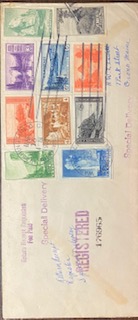
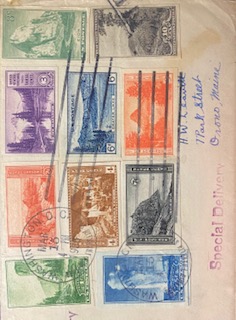
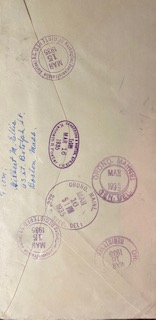
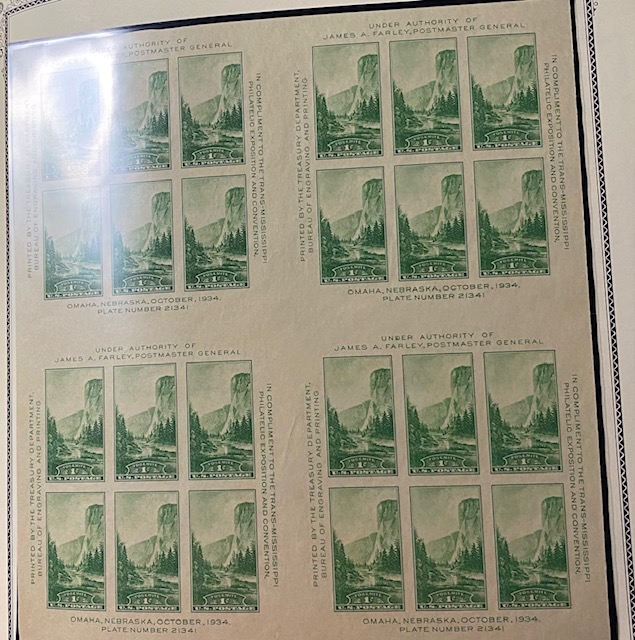
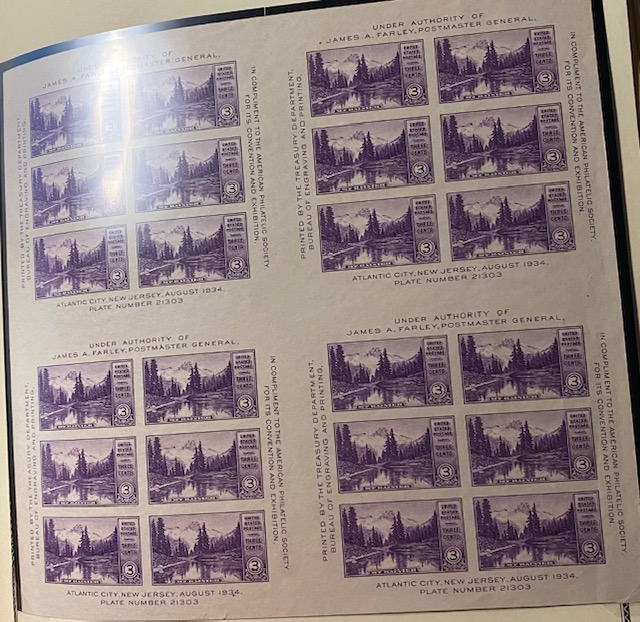
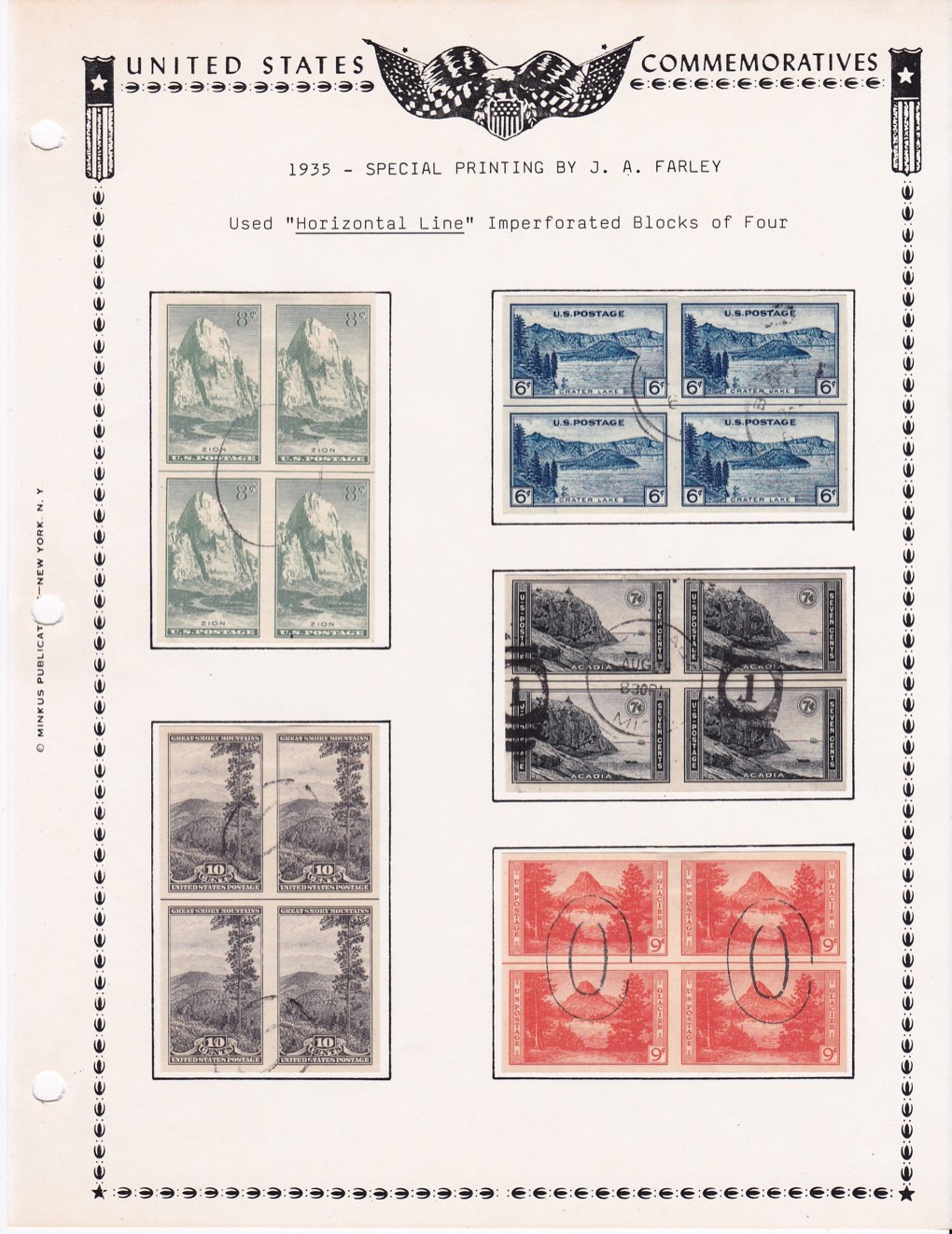
I was just rereading this thread, which I lost sight of for a number of years. The argument about whether or not Farley was legally out of line in obtaining proofs from the BEP is fascinating.
Back in 2018 Stampman2002 wrote:
Quote:
The use of proof presentation albums, such as the Roosevelt proofs, were sanctioned. These were presented to foreign dignitaries, senators and congressmen for one reason or another. There was nothing untoward about these. Similarly, there were some presentation pieces made for the Panama-Pacific set in 1913.
...
I would hesitate to credit this as the reasoning behind why Farley felt comfortable doing as he did, though. If he had just taken the "proof" material he would have violated the law. He paid for it instead.
Let me just provide a little additional evidence that distributing proof material was often sanctioned by the Bureau itself. I have spent many years going through the Smithsonian's digitized collection of BEP Certified Proofs. While these don't encompass postage stamps (those proofs went to the National Postal Museum), they often contain interesting "Easter eggs". I've found numerous notations of proofs that were removed for use in books, most likely presentation albums.
Here's one example, which reads "This subject was cut out for to complete Miss Hayes scrap book. July 27, 1876. J.H."
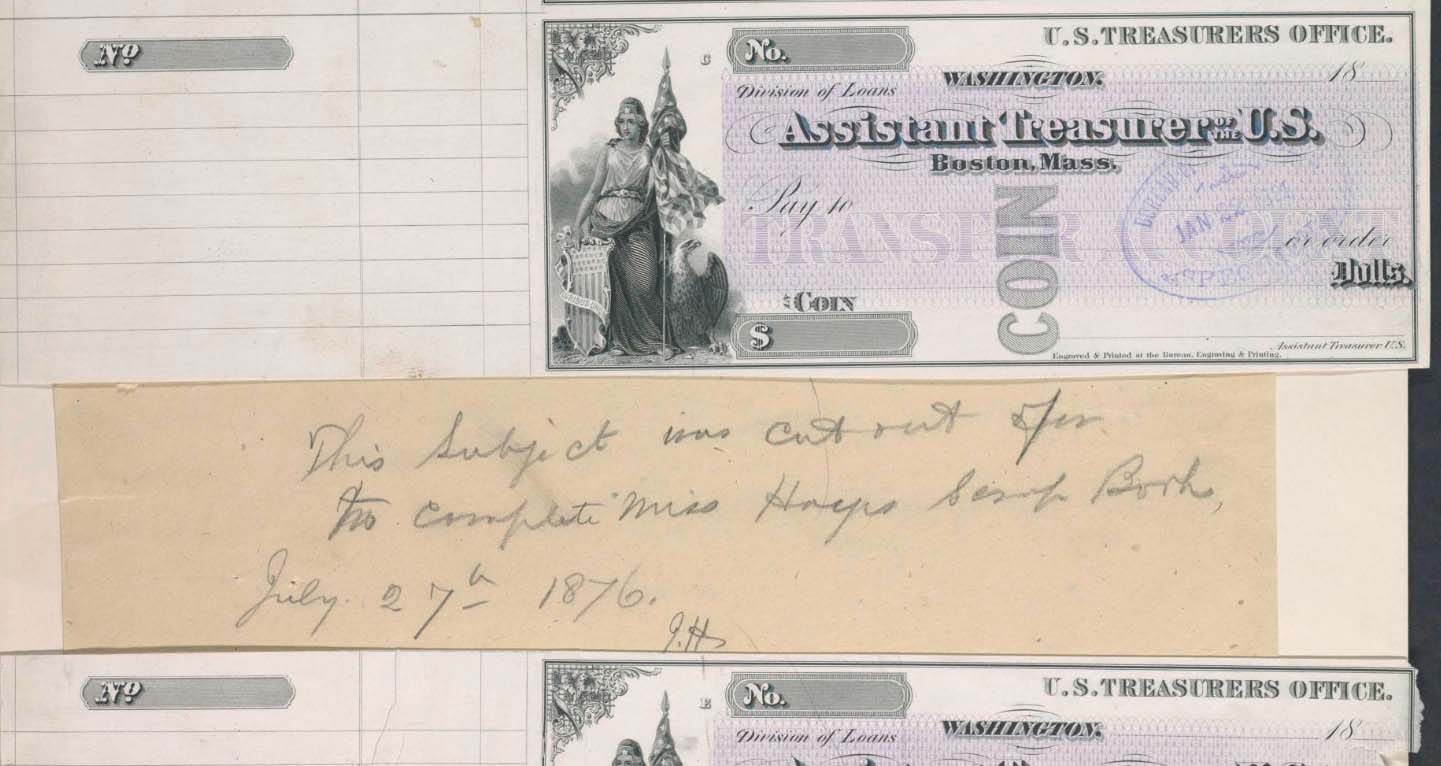 https://americanhistory.si.edu/coll...nmah_1598385
Miss Hayes would be Fanny Hayes, the nine-year-old daughter of then-governor of Ohio and presidential candidate Rutherford Hayes. If this practice had been illegal, it's unlikely someone would have left such a blatant notation, including their initials.
If proofs of currency and other Treasury securities were treated this lightly, proofs of postage certainly would have been, as well. Even in the 1930s, BEP officials would not have had a second thought about this time-honored practice. I find it remarkable that Farley even chose to pay the face value for what were, in fact, proof sheets.





 Posted 07/19/2019 7:17 pm