| Author |
 Replies: 20 / Views: 3,165 Replies: 20 / Views: 3,165 |
|
Valued Member
58 Posts |
|
|
Is this a rare scott #279bd.If not which one is it and any value? Thank You 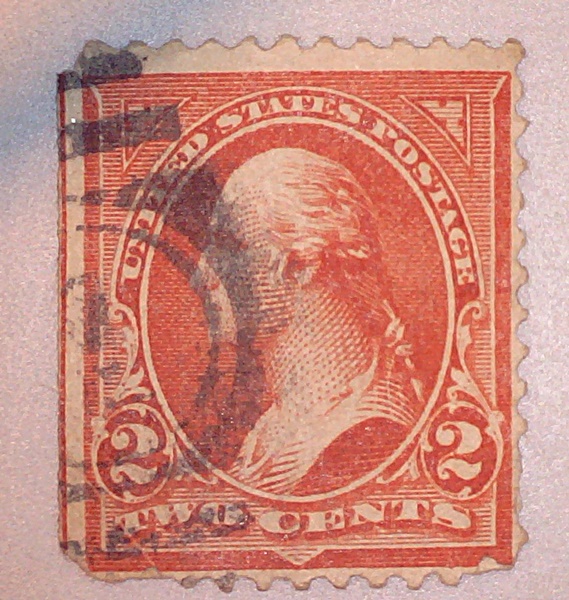 |
|
Send note to Staff
|
| Edited by murty - 09/12/2017 07:48 am |
|
|
|
|
Pillar Of The Community
United States
3306 Posts |
|
|
279Bd is the orange red variety. Scan this one with all other 279Bs that you have, and if it still appears more orange red than red, carmine or rose red it could be 279Bd.
I know my 1996 Scott Specialized is getting old, but IS there a new type among the first bureaus 279B, a type IV? |
Send note to Staff 
|
|
|
Pillar Of The Community
1151 Posts |
|
|
Hi, as I remember it, the type 4 was first described back in the 1930's, do not know when the Scott Catalog first listed it.
I have but cannot find the background information on type 4, if I find it will provide it later.
Stampmaster |
|
Send note to Staff
|
|
|
Valued Member
58 Posts |
|
|
will scan and compare--see below The one on the left seems to be more orange red in comparison to one on right! 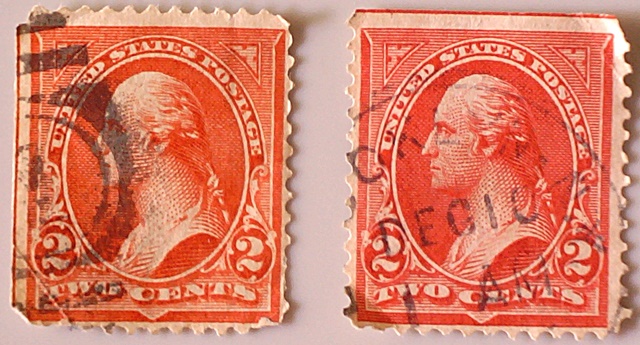 |
|
Send note to Staff
|
| Edited by murty - 09/12/2017 11:00 am |
|
|
Pillar Of The Community
United States
3306 Posts |
|
|
In the footnote on the triangles types, under type is the following statement;
"Two Varieties of Type III are known, but the variations are minor. For further information see the March 1937 "Bureau Specialist"
Is this the type IV? |
|
Send note to Staff
|
|
|
Pillar Of The Community
6366 Posts |
|
|
littleriverphil, please get an up to date US catalog. Yours is still in B&W.
The October 1955 issue of the Bureau Specialist has nice illustrations of the type IV die. (add: By George Brett and Hugh Southworth, and an update to their 1937 discovery work.)
There is a 23-part series by Kenneth Diehl published in the US Specialist between December 1994 and August 1997, titled "The 2c Stamps of the First Bureau Issue". Parts 10-13, January 1996 to May 1996 have particularly useful discussion on the type IV and the proposed catalog changes, many of which occurred. |
|
Send note to Staff
|
| Edited by John Becker - 09/12/2017 12:52 pm |
|
|
Valued Member
58 Posts |
|
|
Pillar Of The Community
1151 Posts |
|
|
Hi littleriverphil, I do not think one member telling another member to get up to date is very useful. We all have different information sources. By the way there is nothing wrong with Black and White images, a lot of us older collectors learned using the Black and White images. In some ways it made up better collectors at the time.
My information is this, Mr. George Brett who is credited with the discovery of Type 4 in the 1930's, described the 17 differences from type 3. Type 4 was a new die, and with a new die there was bound to be major and minor differences.
The Scott Specialized Catalog listed Type 4 for the first time in the 1999 edition.
Type 4 is not concerned with the triangles. The major Pick Up Points are as follows:
1. Hairline differences.
2. The right side of the toga button is larger.
3. Washington's earlobe has many shading dots appears as dashes, while the lobe is virtually white in type 3.
4. The right side of the "T" in "TWO" has been straightened.
There are other PUP, but these are the easy to find, especially number 3.
Stampmaster |
|
Send note to Staff
|
|
|
Pillar Of The Community
6366 Posts |
|
|
Stampmaster, You misquote and misinterpret my post. The point was not the B&W images, the point was that the Scott catalog has made huge strides in the past 20 years in the content. There are many threads on this forum which advocate collectors obtaining a catalog that is 2-5 years old. My own US Specialized is a 2011. |
|
Send note to Staff
|
|
|
Pillar Of The Community
1375 Posts |
|
|
Here you can find images of the things stampmaster mentioned about the type: http://www.theswedishtiger.com/279B-scotts.htmlBut I wonder: on this site the 279Bd and 279Bf are named "scarce" and they should be certified. In my Scott specialized they are valued with 2 USD (used). Which information is not correct, probably the tiger? |
|
Send note to Staff
|
|
|
Pillar Of The Community
United States
3306 Posts |
|
|
Quote:
The Scott Specialized Catalog listed Type 4 for the first time in the 1999 edition. Ah, thank you. Quote:
the point was that the Scott catalog has made huge strides in the past 20 years in the content. Thanks John, good point, and well taken. It IS on the "needed" list. Problem is I keep finding another cover or stamp I want more! Shipping on a catalogue can be several nice covers.  |
|
Send note to Staff
|
| Edited by littleriverphil - 09/12/2017 1:20 pm |
|
|
Pillar Of The Community
6366 Posts |
|
|
I find many collectors (myself included) choose to buy more material and skimp on the literature and society memberships. Nearly every philatelic book will pay for itself by helping identify scarce items at bargain prices and equally important, the pitfalls to avoid. The society journals are extremely useful. As an example, I don't plate early US stamps, but reading through the many threads here shows the pitfalls of buying stamps before investing in (and understanding) the literature on the classic US types up to the civil war. |
|
Send note to Staff
|
| Edited by John Becker - 09/12/2017 1:42 pm |
|
|
Bedrock Of The Community
12808 Posts |
|
|
For years I would never hesitate to pull the trigger on acquiring stamps or covers that I could not do without but hesitate and procrastinate endlessly when it came to buying literature. Now I have a decent philatelic library and if has probably paid fof itself many times over. I just say though StampSmarter in thd old days would have saved me some book cash. |
|
Send note to Staff
|
|
|
Pillar Of The Community
1375 Posts |
|
|
I just had a look at Siegel research and found the 279Bc as the only one getting results like a "scarce" stamp, as I knew before. So I still wonder why the 279Bd and 279Bf are considered as "scarce" and needing certification on the mentioned site. Anyway, with this thread here I myself saw and understood for the first time the type IV really as I took the time to look at the relevant points and some stamps I once placed on a pile "possible type IV". |
|
Send note to Staff
|
|
|
Valued Member
58 Posts |
|
|
Pillar Of The Community
United States
3306 Posts |
|
|
Quote:
So what do I really have?? Quote:
Type 4 is not concerned with the triangles. The major Pick Up Points are as follows:
1. Hairline differences.
2. The right side of the toga button is larger.
3. Washington's earlobe has many shading dots appears as dashes, while the lobe is virtually white in type 3.
4. The right side of the "T" in "TWO" has been straightened. If it fit the above description, it is Type IV, if the ear lobe is white, it's Type III. What Shade is it? That is much harder to determine with computer images, as all systems have a tendency to display color differently, unless they calibrated to a color standard. For what it's worth, it looks red orange to me. |
|
Send note to Staff
|
| Edited by littleriverphil - 09/12/2017 3:07 pm |
|
|
Replies: 20 / Views: 3,165 |
|




 Posted 09/12/2017 07:45 am


