Happy Independence Day to the people of Finland. 
Independence was declared 100 years ago today.
I'm very much a beginner when it come to Finnish stamps and postmarks but I'd like to share a few examples of what I've found so far.
I aim to show some regular Russian stamps used in Finland in a later post but to start by setting the scene with some examples of other stamps and postmarks around that time in Finland.
I think you can see from the stamps and the postmarks signs of the rise of Finnish nationalism and the Russian state seeking to exert more control over the province.
From 1875 onwards Finland used stamps with this arms design:

This has the name of the country in Swedish at the left and Finnish at the right.
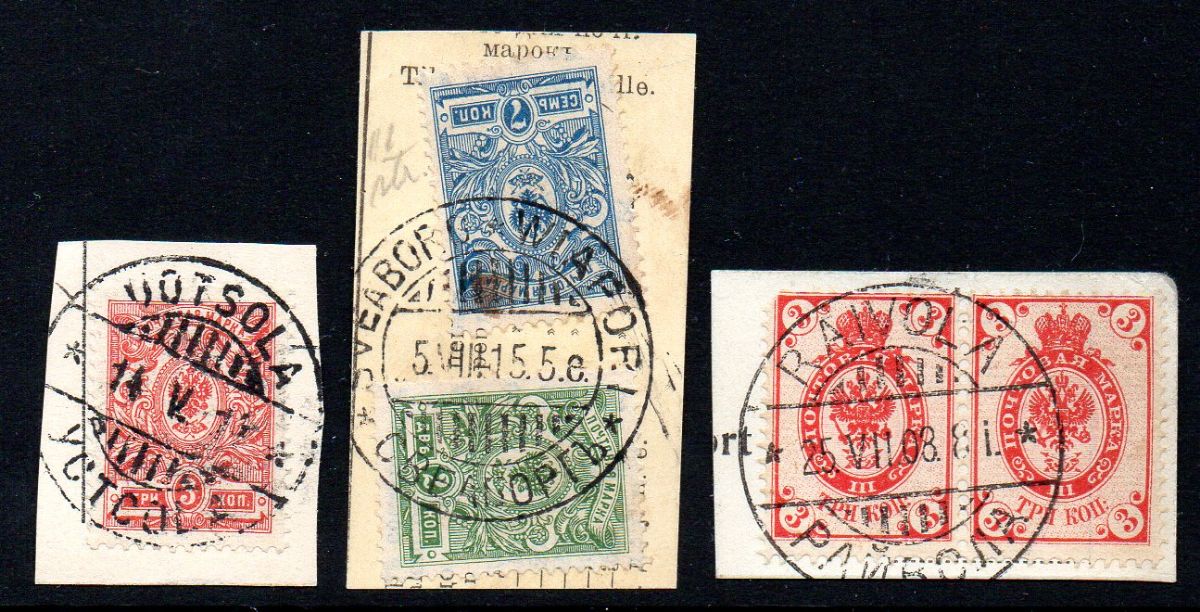
Then in 1889 a new design was introduced which now had the Finnish country name at the top and the Russian version at the right:

We can see here the use of multilingual names on the postmarks too.
The middle stamp has two names: IMATRA (in Finnish and Swedish) at the top and the equivalent Russian spelling at the bottom.
The right hand stamp has parts of the Finnish name PORVOO at the bottom right, the Swedish name BORGÅ at the bottom left and the Russian name at the top left is a Cyrillic spelling of Borgå.
The city of IMATRA in South Karelia is now very close to the Russian border.
The loss of Finnish teritory in 1940 and 1944 behind this border will be reflected a number of postmarks shown here.
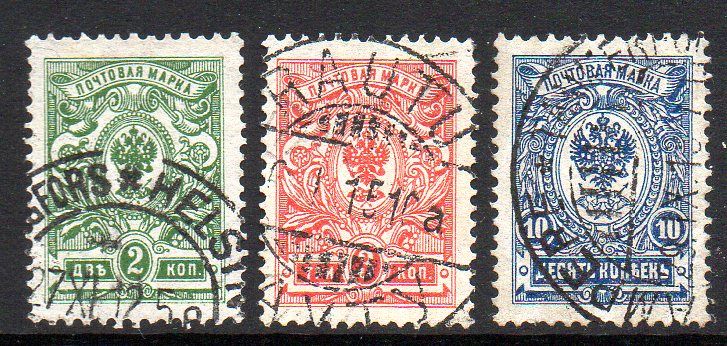
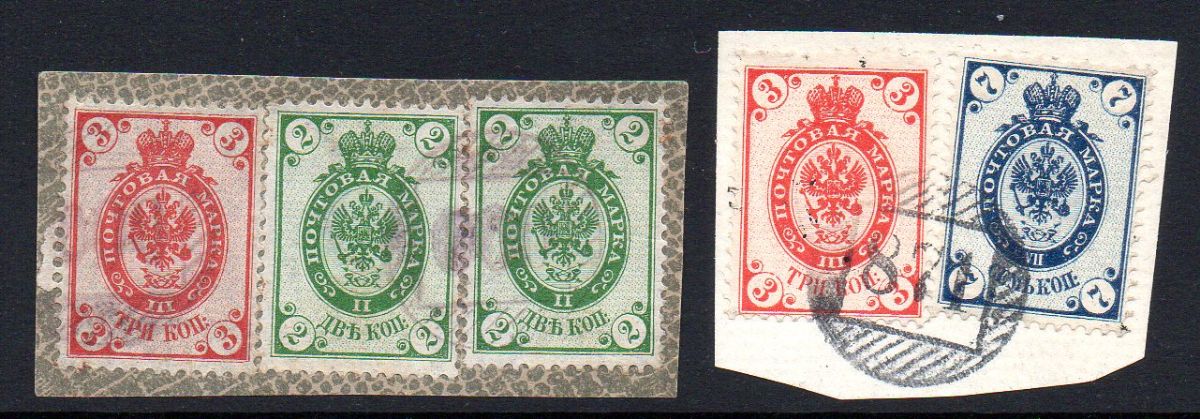
In 1891 a new set of stamps was issued for Finland which were based on the standard Russian designs of the time but with the addition of small rings in the design. These had the Russian currency:

From 1899 onwards new sets were introduced using the Russian designs without rings but with Finnish currency:

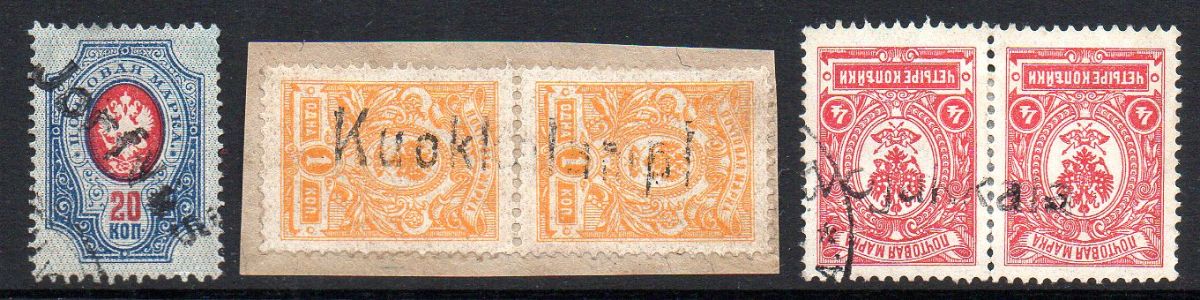
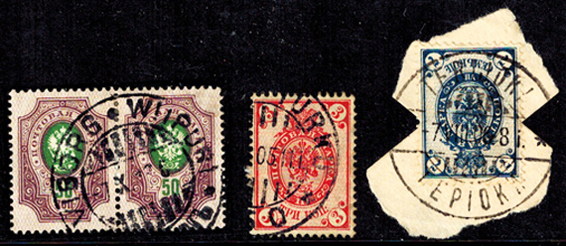
Here we see parts of more of the multilingual postmarks:
WIIPURI = Viipuri (Fin) / Viborg (Sw), now Vyborg in Russia.
HELSINGFORS (Sw) = Helsinki (Fin)
TAMPERE (Fin) = Tammerfors (Sw)
...ASJÄRVI (various possibilities)
The city of Viipuri/Viborg was lost to Russia in 1944.
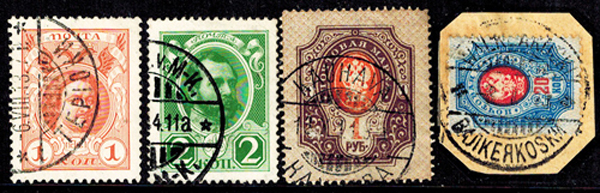
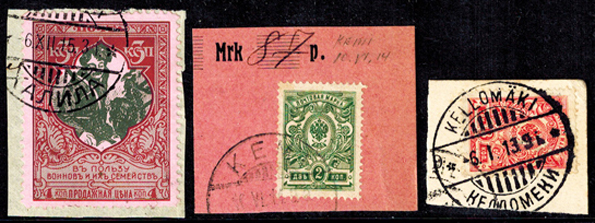
The final Russian-based designs were introduced in 1911:

The postmarks here are:
Russian spelling of Tammerfors (Sw) = Tampere (Fin)
TERIJOKI (Fin & Sw) now Zelenogorsk in Russia.
TURKU (Fin) = ÅBO (Sw)
KAIPIAINEN is a village in Kouvola.
Terijoki was also lost to Russia in 1944.
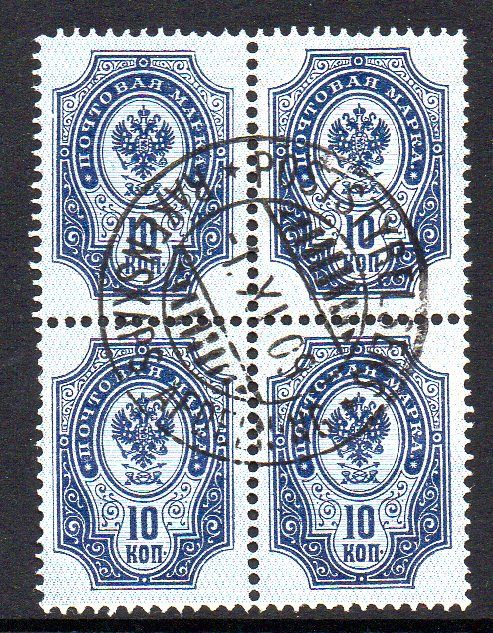
My last item today is a block of the 5 penni used in Turku/Åbo.

Here the Finnish name TURKU is printed faintly at the left, Swedish ÅBO at the top and the Russian spelling of Åbo at the bottom of the postmark.





 Posted 12/05/2017 7:47 pm






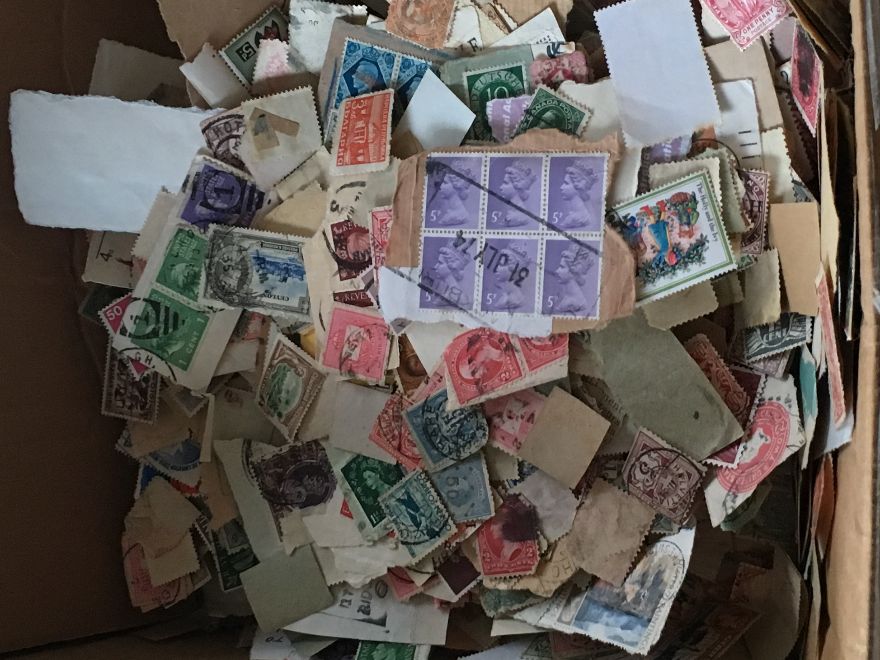
 But a good number of them have clear postmarks and a lot are quite early. If I winnow out the ones with interesting postmarks and soak those, particularly the Hungarian ones, of which there seem to be many, I may have the makings of an interesting page or two


