For the record.
Some background content.
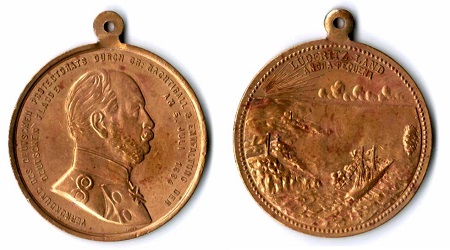
2. German South West Africa #8211; German South West Africa was a colony of the German Empire from 1884 until 1915. With an area of 835,100 km#178;, it was one, the colony had a population of around 2,600 Germans. In 1915, during the First World War, German South West Africa was invaded by the Western Allies in the form of South African and British forces. After the war its administration was taken over by the Union of South Africa and it became independent as Namibia in 1990. However, for centuries, European settlement would remain limited. In February 1805 the London Missionary Society established a mission in Blydeverwacht. In 1840 the London Missionary Society transferred all of its activities to the German Rhenish Missionary Society, some of the first representatives of this organisation were Franz Heinrich Kleinschmidt and Carl Hugo Hahn. They began founding churches throughout the territory, the Rhenish missionaries had a significant impact initially on culture and dress, and then later on politics. During the same time that the Rhenish missionaries were active, merchants, on 16 November 1882 a German merchant from Bremen, Adolf Lüderitz, requested protection for a station that he planned to build in South West Africa, from Chancellor Bismarck. Once this was granted, his employee Heinrich Vogelsang purchased land from a native chief, on 24 April 1884, he placed the area under the protection of Imperial Germany to deter British encroachment. In early 1884, the gunboat SMS Nautilus visited to review the situation, a favourable report from the government, and acquiescence from the British, resulted in a visit from the SMS Leipzig and SMS Elisabeth. The German flag was raised in South West Africa on 7 August 1884. The German claims on land were confirmed during the Conference of Berlin. In October, the newly appointed Commissioner for West Africa, Gustav Nachtigal, in April 1885, the Deutsche Kolonialgesellschaft für Südwest-Afrika was founded with the support of German bankers, industrialists and politicians. DKGSWA was granted rights to exploit mineral deposits. The new Society soon bought the assets of Lüderitzs failing enterprises, later, in 1908, diamonds were discovered. Thus along with gold, copper, platinum, and other minerals, earlier, the colonial aim was to dispossess the indigenous peoples of their land, for use of German settlers, as well as be a source of raw materials and a market of German industrial products. Lüderitz drowned in 1886 while on an expedition to the Orange River, the company bought all of Lüderitz land and mining rights, following Bismarcks policy that private rather than public money should be used to develop the colonies.
|





 Posted 11/11/2017 5:48 pm