For what it's worth, I don't think there's been a single year since maybe the 1920s or 1930s when modern commemoratives began to be issued in larger and larger numbers that there hasn't been some complaints about subjects not commemorated or those that were. And back in the 1890s, many collectors screamed about the enormously high cost of the Columbian stamps where most of the high values were simply not needed, issued perhaps to gouge collectors of their money.
There was a stamp issued during the 1950s for the trucking industry, one for the "Turners" (I still don't know who they are), and a much laughed at Chicken Stamp to honor the poultry industry. I have nothing against any of these groups, but some of stamps issued in the modern era probably represented some voting group or other that the current administration wanted to curry favor with or not offend. Today, we have our share of ethnic, religious, fraternal, and other stamps which are often criticized but which honor groups any government would want to be supportive of. It's a painless way to score "points" with each group, something that stamps have been used to do for a long time.
After the much criticized Columbian Expo issues in 1893 did we really need nine (9) more commemoratives honoring an exposition in Omaha, Nebraska in 1898 followed just a few years later by six (6) more stamps for an exposition in Buffalo? Followed by five (5) more stamps for an exposition in St. Louis. I suspect what was motivating all these stamps was a combination of pride, an effort to honor different groups (westerners in these two cases), and a desire for income from the sale of the stamps.
And there were two more sets of stamps for two more national expositions in the next decade! You'd think nothing else was happening in the country. In fact, there was enormous political, social, and economiic change going on, the rise of the Populist Party, key elections, a major war (Spanish-American), an assassination of a president, major progressive legislation adopted, the invention of the airplane, an enormous wave of immigrants from whom many of us are descended, new banking legislation, an income tax amendment, the Pure Food and Drug Act, and many other changes -- many of which did not get commemorated until much later. No stamp honored the War of 1812 in 1912. No stamp honoring the Barbary Wars a century after they were fought. No stamp honored the 100th anniversary of the pivotal Marbury v. Madison Supreme Court ruling. No stamp for the end of the international slave trade a century before. There was an Ohio River canal stamp in the 1920s but the far more important (historically, at least) Erie Canal had to wait to 1967 for its stamp. The National Road? Nada. In the 1830s, the Trail of Tears (Indian Removals) got ignored (understandably) on its hundredth anniversary, though Andrew Jackson, its main perpetrator, is on many stamps. Jackson also destroyed the stabilizing Bank of the U.S. (too "elitist," he said) in an act of extreme populism. That's not honored anywhere, probably because in many respects it was a very bad decision (it caused an enormous depression, for one thing).
In the 1940s, one hundreds years after the Mexican-American War, there were stamps for pioneers, wagon trains, California's gold rush, but no stamp honoring the War itself (1846-48). Perhaps even then it was seen as a somewhat questionable land grab with its racial overtones. There have been stamps honoring nearly all our other wars, so it's an odd omission. There was one 1946 commemorative, though, honoring, rather vaguely, Gen. Kearny's "entry" into Santa Fe, New Mexico in 1846. "Entry" means the "invasion" of Mexican territory which became the Mexican War. Maybe that's enough vague honor for that war without opening up any international debate.
William Jennings Bryan got one measly stamp while Henry Clay has eleven! Both had major political careers and both lost a number of presidential elections. Clay's had a greater influence, arguably, but not eleven times greater. I don't think the 1820 Missouri Compromise (speaking of Clay) has ever has been honored. Not in 1920, anyway. And I've never seen a stamp for Clay's economic growth package (Bank, infrastructure spending, and protective tariff) called the "American System" from the 18-teens.
There are an enormous number of stamps honoring Ben Franklin, George Washington, and Abraham Lincoln. So that's good. At the other end of the presidential honor roll, though, James Buchanan, an absolutely awful president, (partly responsible for the Civil War, many argue) has only two stamps. Even William Henry Harrison who lasted only about a month as president (before he died) is on three! I imagine some modern presidents who shall remain nameless may fall into the "not honored much" category, as well!
Harding died in office so he got a memorial stamp. and (somewhat oddly, I think) he's also on a dozen other stamps! He was a pretty marginal president in many ways. Most historians rank him pretty low. The other two 1920s presidents, Calvin Coolidge and Herbert Hoover are on only two stamps which may have to do with the Great Depression which their actions helped to produce? Maybe there is some justice in stamps, after all.
The wonderful Revolutionary War heroine Molly Pitcher would definitely get her own commemorative stamp today, being a woman an all. But in 1928 she just got an overprint on a red George Washington 2c regular stamp. Not much of an honor there. Revolutionary general "John Sullivan," not exactly a household name today, was honored for his exploits during the Revolution. Arbor Day got commemorated. Does anyone still celebrate Arbor Day anymore? We can use more trees, you know. During the New Deal, the National Recovery Administration got a stamp -- even though it was soon declared unconstitutional by the Supreme Court! Oops.I Was the far more significant Social Security Act commemorated at the time? I don't think it was.
Check the 1940 "Famous Americans" issue and see if they're aren't at least a few "famous" people you never heard of. There's a stamp for the poet James Whitcomb Riley who very few people read anymore. Maybe he was still read in schools in 1940? Five "educators" are honored but no stamp for one of the most important American educators, John Dewey. That had to wait to about 1968. The five 1940 "Composers" were mostly composers of popular tunes and light classical music. No serious classical composers in the group. The five American "Artists" stamps omit most of the greatest American artists. The "Inventors" stamps omit our greatest inventor, Edison, but he had been honored previously and was honored again in 1947, so maybe that's understandable. No George Washington Carver stamp for "Scientists". He was also honored later.
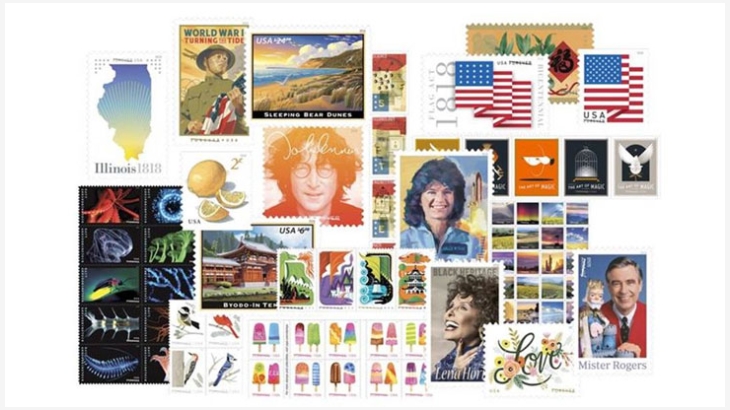
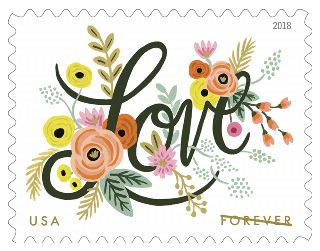
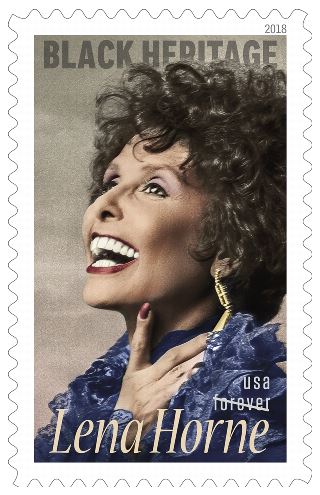
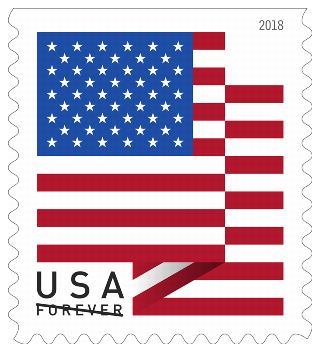
Stamps really don't ever honor all who deserve honoring. They also ignore important events. It's always been hit-or-miss. That's just the way it is, I guess. I have no problem with any of the upcoming 2018 stamps. I'm glad to see Mr. Rogers on one. And Sally Ride, the astronaut, makes good sense, too. John Lennon has tremendous cultural influence. The U.S. role in WWI is honored, too. Also, the usual flags, flowers, and pop culture items which never hurts -- on the "regular" stamps.
1818 events: The treaty of 1818 established part of the northern boundary of the U.S., the Seminole Indian War (speaking of Jackson), Illinois became a state, the U.S. Topographical (map) Bureau was founded, and maybe others, as well. Not nearly as busy a year as some, but then this was the so-called "Era of Good Feelings" politically, so that makes sense.
1868 events (150 years ago): University of California founded, Andrew Johnson's impeachment trial, the first Memorial Day, the (key) 14th Amendment was adopted (civil rights), Thomas Edison's first patent (a vote recorder), etc.
1918 events: Wilson's 14 Points Speech, end of WW I, the phenomenally awful Flu Epidemic began, first airmail service, Paris Peace Conference. |





 Posted 12/13/2017 4:07 pm