| Author |
 Replies: 58 / Views: 9,716 Replies: 58 / Views: 9,716 |
|
Valued Member
United Kingdom
299 Posts |
|
|
|
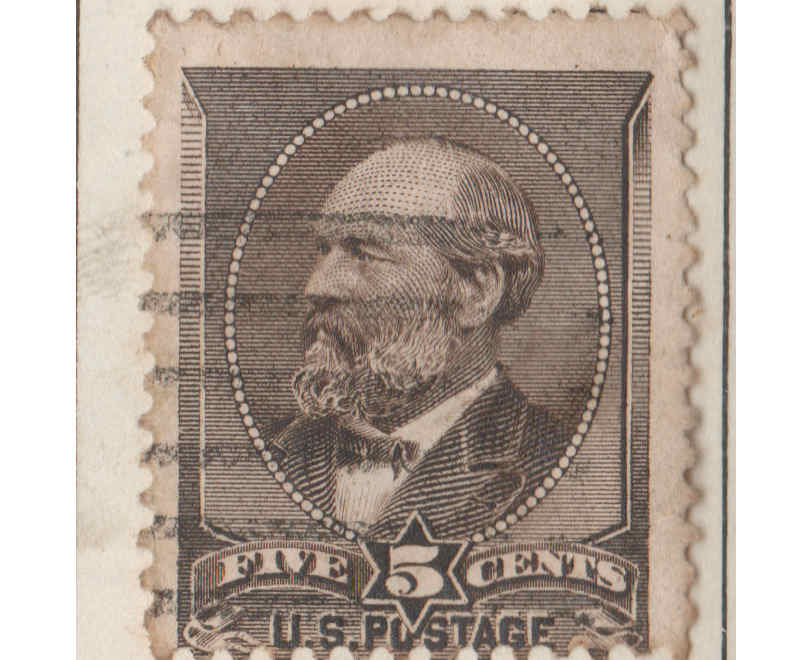
So far, no circulated Scott#205C was officially acknowledged, apparently.
Now, if someone in the past has used a 205C to post something (without being aware of the rarity) then how could the stamp be identified as 205C, please?
|
|
Send note to Staff
|
|
|
|
|
Valued Member
United States
211 Posts |
|
|
Moderator

United States
12330 Posts |
|
|
Valued Member
United Kingdom
299 Posts |
|
|
Pillar Of The Community
1375 Posts |
|
|
Valued Member
United Kingdom
299 Posts |
|
|
Hi Don! Yes, I went through the information on stampsmarter before posting here :)
|
Send note to Staff 
|
|
|
Pillar Of The Community
United States
1946 Posts |
|
|
Quote:
Now, if someone in the past has used a 205C to post something (without being aware of the rarity) then how could the stamp be identified as 205C, please? Some collectors like to fantasize about that, hoping to set up an argument in defense of their claims to have an unreported new discovery. As the footnote in Scott points out, only 22 examples of the batch originally delivered to the 3rd assistant PMG, in advance of issue, have been certified as the true Special Printing. These are distinct from the 2463 listed as sold to collectors, for which the material came from stocks of regular stamps and not Special Printings. Given the official pattern for distribution of the actual 205C your premise could not have occurred. The only way to get one originally would have required that a person knew of their existence and sought one out from the postal officials for a special distribution/purchase. That rarely happened, and it is not reasonable to suppose that anyone privy to the matter would "accidentally" use one. |
|
Send note to Staff
|
| Edited by essayk - 02/06/2018 3:48 pm |
|
|
Valued Member
United Kingdom
299 Posts |
|
|
It seems glued to the paper. If I attempt to take it off I will damage it, most likely. |
|
Send note to Staff
|
|
|
Valued Member
United Kingdom
299 Posts |
|
|
Oh, definitely a connoisseur would not use it!
The offsprings might, however, if nobody warned them of the value :) |
|
Send note to Staff
|
|
|
Pillar Of The Community
United States
1946 Posts |
|
|
Quote:
The offsprings might, however, if nobody warned them of the value :) Or we can fantasize about any later generations. (This is a variant on "infinite regress.") But the burden of proof then falls on you to make good on the claim that such a thing did happen, and that your stamp is the one-in-a-million. You have a better shot with a lottery ticket. It has no strikes against it. |
|
Send note to Staff
|
|
|
Pillar Of The Community
1375 Posts |
|
|
essayk, if I may be questionning my own post above: did all special printings have "no gum" (except the 211B), and can we then really (as I did) assume that it's just not possible to get a used stamp as it must have been made with glue on the paper? Or did to that time perhaps exist some "homemade stamp glue" which could have been used though? I ask as there are for example those three 175 off paper.
(aug-stamps: I know your stamp is on paper, but if I look at it, it does not have the perfect impression as the special printing do have) |
|
Send note to Staff
|
|
|
Rest in Peace
United States
205 Posts |
|
|
The color of #205C exists among the regularly-issued stamps. There are plenty of gray brown #205's.
Used copies are possible in theory. There is a record of a #205 on cover cancelled in February of 1882 that came to auction many years ago as an EKU, which would make it a #205C if the date could be verified; the Special Printing preceded the regular issue by several weeks.
The initial printing were distributed to dignitaries, etc. as samples, and what was left over went to stamp dealers' pre-orders until depleted. Most dealers' orders were then filled with the regular issue once it was available.
#205C appears to have been perforated with a stroke perforator, not a rotary perforator. Holes are cleaner, rounder and smaller than on the regular issue, and the pressure ridge is equal all around. |
|
Send note to Staff
|
|
|
Pillar Of The Community
United States
1946 Posts |
|
|
Quote:
The initial printing were distributed to dignitaries, etc. as samples, and what was left over went to stamp dealers' pre-orders until depleted. Most dealers' orders were then filled with the regular issue once it was available. I can neither dispute nor substantiate this claim, can you? The EDU in Scott for #205 is Feb 18, 1882. How much before this date was the "early" supply sent to the 3rd ass't PMG? Do you have something from the bill books to nail that down? For that matter, are we able to differentiate the EKU from the actual first day of issue? If the early group, which Scott calls the authentic Special Printing, was delivered to the 3rd ass't PMG for his distribution, why conclude that any part of that was ever sent to stamp dealers on request. All the other Special Printings made available for special distribution on request, were produced later than the issue date of the stamp issues. So I am dubious that the stock delivered early to the 3rd ass't PMG was ever made available for wider distribution than to the individuals known to him personally. But I freely confess that I have not paid much attention at all to the Special Printings and do not know what the bill books tell us about the early handling of this stamp. I await enlightenment. |
|
Send note to Staff
|
|
|
Pillar Of The Community
1375 Posts |
|
|
Tipzi: is the information about the stroke perforator also true for other sepcial printings, especially of the 210 and 211? (probably not for all bank note special printings?)
and do you have an idea how the used examples of any special printings (like the 175) have been placed on cover and also soaked off? Usually I think that you just can't find any special printing off cover but somehow the 175s examples let me doubt about this.
|
|
Send note to Staff
|
|
|
Pillar Of The Community
United States
4520 Posts |
|
|
Pillar Of The Community
United States
1946 Posts |
|
|
@stamperix; the gum that was used by the PO at this time was gum arabic, a light adhesive that was readily available to the public at any store that sold envelopes and writing materials. Since it is water soluble, applying some to a stamp would permit adhesion, but it could be readily removed too. Quote:
Yet, Scott issues a number for it. As you can see from the number assigned, i.e. 205C, that did not happen right away. Some discovery had to take place first. |
|
Send note to Staff
|
|
|
Replies: 58 / Views: 9,716 |
|



 Posted 02/06/2018 3:09 pm