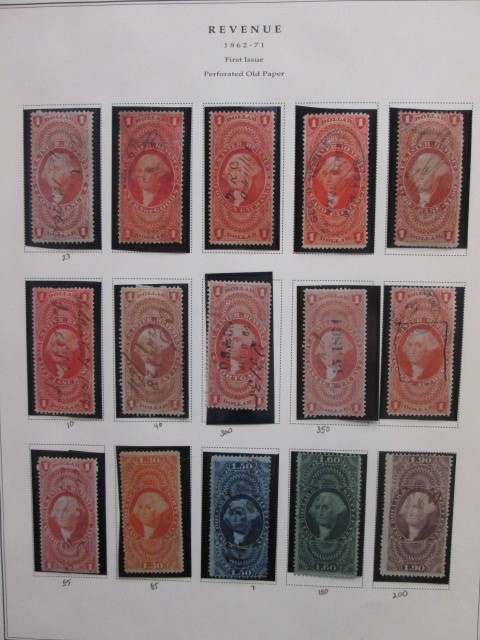
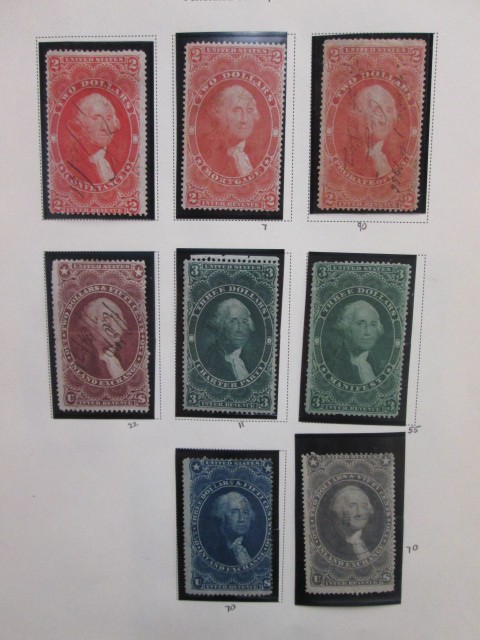
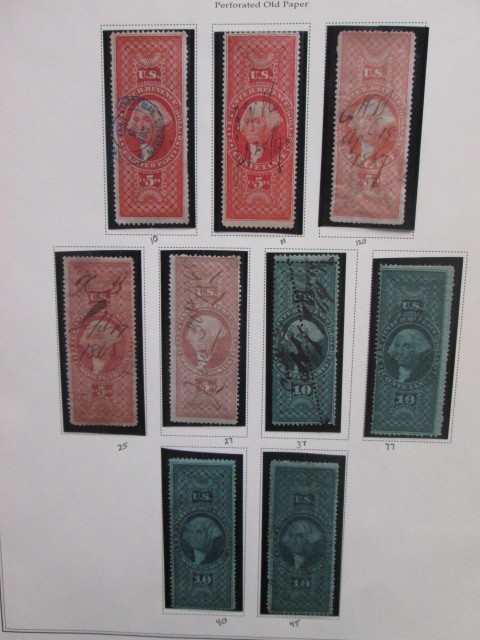
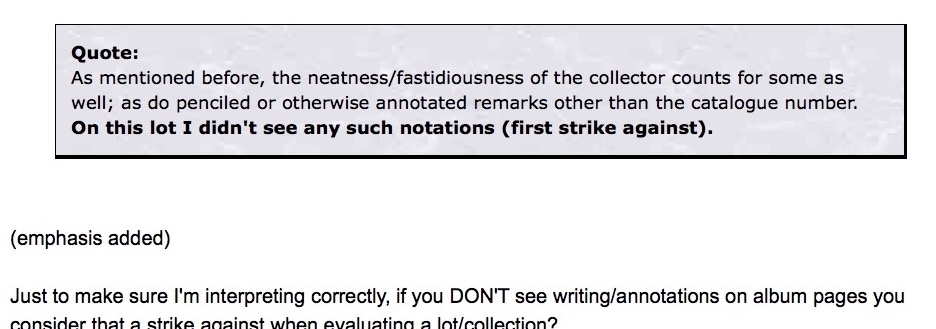
I love discussions like this, seeing how different people assess the same material.
At the end of the day, there is no "correct" answer, as we all purchase and collect differently and have different tolerances for the unknown. Appraisal will vary greatly depending on any/all of the following:
1. How comfortable are you with the material in question?
2. Are you a general or specialized collector of the material?
3. How much of said material do you already have; how many spots do you still have left to fill?
4. Are you purchasing for your own collection, to break down and flip, or a combination of the two?
5. How comfortable are you with lots that are a gamble vs. a sure thing? Do you enjoy hunting for the diamond in the rough?
My assessment of the material:
[Disclaimer: rather than constantly repeating it, the possibility of unseen faults is everpresent and has to be factored in.]
When dealing with low resolution images, enlarging them either in-browser, or upsampling in Photoshop, while not a perfect solution, can frequently help with identification at least at a general level. I did that considerably in order to assess this lot.
I would be purchasing the material as a combination of hold and resale. There are 2-3 items in the lot I would want to keep, which could increase depending on whether there are any plate varieties in the lot (cannot assume).
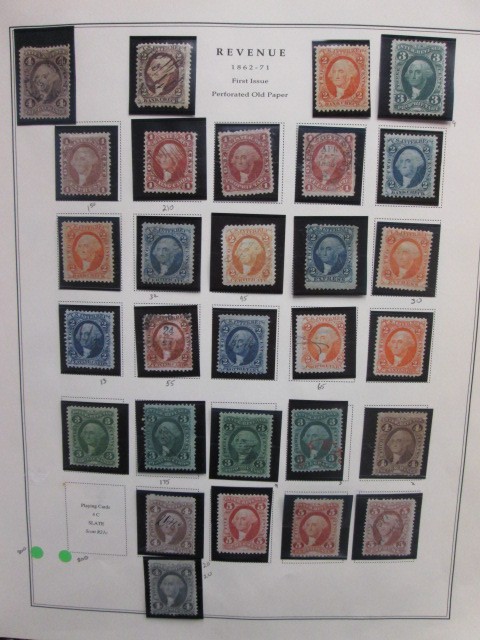
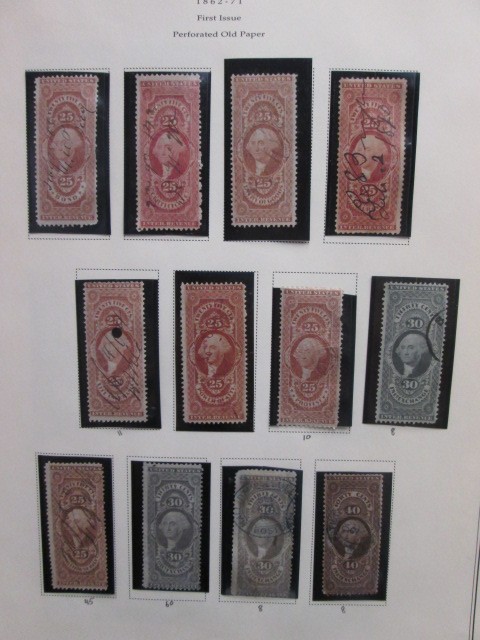
Contrary to Bart's opinion, I actually think there are a few nice cancels in the lot, especially on 2 of the higher catalog value items in the lot: $1 Mortgage (R73c, SCV $300) and $1 Passage Ticket (R74c, SCV $350). Also, the $1 Inland Exchange in the top row appears to have a nice large-format cancel.
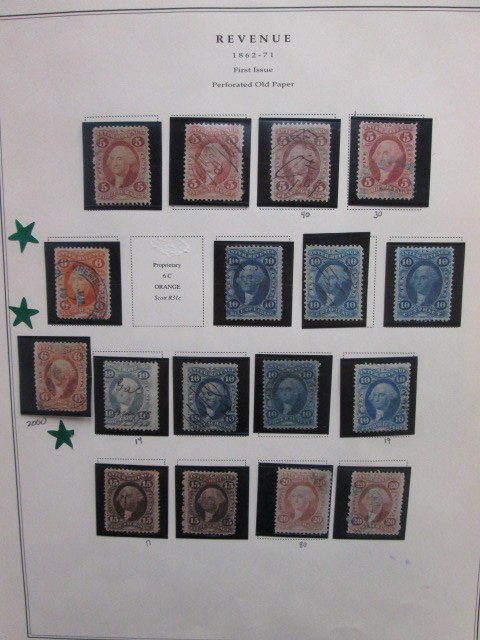
Now, to the R31c. Upsampling the image confirms that it is in fact an R31c. At first glance it appears to have some short perfs, possibly a repaired lower left corner, some sulphurization, and possibly a thinned area at center. Were it another stamp, it would be a 5-10% stamp at retail at best... in fact, many would consider throwing it in the trash.
However, R31c is a completely different animal. The wording in Scott:
Quote:
Nearly all examples of No. R31 are faulty or repaired and poorly centered. The catalogue value is for a fine centered stamp with minor faults which do not detract from its appearance.
So where does that leave us? I've bought and sold several R31c in the past 10 years and I watch what they bring on
ebay and at major auctions. It's one of the key stamps in the 1st issue perforated set, and like it or not is always in demand, regardless of condition. Even complete dog examples sell for $400-600. I sold an example with numerous faults, but admittedly stronger cancel and a bit better eye appeal for $875 about 3 years ago.
Conservatively estimating a $300-400 return on the R31c, that takes a huge bite out of the downside risk of the lot. The 2 stamps I referenced above are likely $50-100 items each. Depending on actual condition, they could be considerably higher.
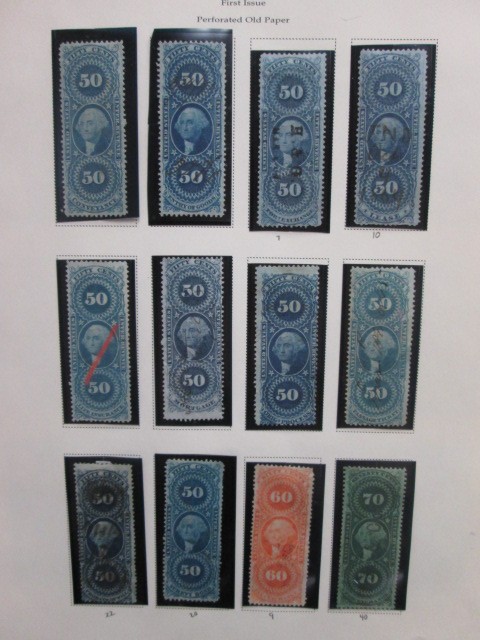
So we're almost at the break-even point without even considering the R2c, R17c, R51c, R77c, R79c, R80c or any of the other stamps in the lot.
Minimizing the downside risk makes it worthwhile (to me) for the opportunity to search for plate varieties and silk papers, two areas that you can never assume, but pay dividends enough times on average to make gambles like this worthwhile.
IMO, you have to risk the occasional strike-out in order to get those home runs.
To me, this lot has hardly any risk at all... but all the factors I list above may be utterly meaningless to anyone else.
I'll report back as to the actual composition of the material once I receive the lot.
P.S. Before making the decision to purchase, I requested and obtained a cellphone picture of just the R31c, which reveals that there is a heavy thin at center which erodes to a hole.
P.P.S. There is a return provision in the event I completely screwed the pooch in my assessment.





 Posted 05/03/2018 2:10 pm