| Author |
 Replies: 12 / Views: 2,000 Replies: 12 / Views: 2,000 |
|
|
Valued Member
United States
41 Posts |
|
|
|
I've only ever collected individual stamps, not covers. Is there a rule of thumb in determining the value of a stamp on an envelope?
For example, if we are talking about Scott 11 (catalogs at $7 to $15, I think), what's that worth on cover as a general rule? Double? And what are the important factors to consider in pricing the piece?
I appreciate any insights on this.
|
|
Send note to Staff
|
|
|
|
|
Pillar Of The Community
United States
8956 Posts |
|
|
There is probably no rule of thumb for covers. Since there is not a rule of thumb for stamps, why could there be one for coves?
Peter |
Send note to Staff 
|
|
|
Pillar Of The Community
United Kingdom
8628 Posts |
|
|
Maury routinely gives prices for older French stamps on cover - but the price very much varies with the scarcity of the basic stamp. |
|
Send note to Staff
|
|
|
Valued Member
United Kingdom
439 Posts |
|
|
I would expect to pay more for a stamp on cover. If the envelope is very interesting it might boost price more ie "nice" postmark, etiquettes, evidence the letter has had an unusual journey. Sometimes I'll even take an inferior stamp if the envelope is interesting. If the envelope is in poor condition and relatively new Being on cover would not be worth much extra to me. As Peter4522 says there is no easy way of valuing a cover. |
|
Send note to Staff
|
|
|
Pillar Of The Community
United States
6467 Posts |
|
|
The question is akin to asking "How much does a blue car cost?" It's not a simple proposition and there are no guidelines other than "other aspects being equal, a stamp is worth more on cover than off". The multiplier could be 2x or it could be 10,000x, depending on the country, the era, the rate, the usage, the type of cover, any cachet, auxiliary markings, etc. If you think that valuing stamps is complicated, postal history elevates the complexity to a whole new level. Realistically, I find the best barometer is to check sold (not unsold or active!) ebay listings, as well as Stamp Auction Network... although with the latter, pricing history is sadly no longer a free service. You have to pay to get to that information now.  Even if you find what you believe to be a comparable cover, be sure you are scrutinizing EVERY aspect of both covers to make sure they match. As little as one day different in the date, or a different city cancel, etc., could raise or lower the value considerably. It's not easy. |
|
Send note to Staff
|
|
|
|
Pillar Of The Community
United States
922 Posts |
|
|
The Scott Specialized Catalogue lists a value for many stamps on cover. This typically represents the most common use paying the most common rate from a big city to a common destination and without any unusual markings. You mentioned the #11 in your post. My 2015 catalog lists the stamp at $15 used and $17.50 on cover. The Dawson cover, which sold for $2 million, has a pair of #11 used on cover with 2 cent and 5 cent Hawaiian missionary stamps. So a #11 on cover is worth anywhere from $1 or $2 for a faulty #11 on a ratty cover to $2 million. |
|
Send note to Staff
|
|
|
Valued Member
United States
41 Posts |
|
|
I know that was a real N00B question, and I appreciate the thoughtful answers. SPQR: It's good to know what the Scott Specialized Catalog has to say. And, Noocassel, that's for confirming that it often is more than for the stamp alone. That makes sense. |
|
Send note to Staff
|
|
|
Pillar Of The Community
1213 Posts |
|
|
And it is not just the degree of interesting aspects about the cover, it is also the overall condition of the cover and the condition of the stamp and the readability of the cancellations and other markings. A ratty condition, torn, dirty cover with poorly legible cancels and markings will add little to no value to that of the stamp and the condition of the stamp will factor in as well, just as it would if it were off cover. A stamp on cover that has poor centering, torn edges, scuffs, etc. will not be much of a factor in the cover's value as the stamp itself would have minimal value. You need to look as the whole package and factor in everything together. All things being equal, a stamp on a nice cover is going to be worth more than the stamp by itself in equal condition, so unless the cover is relatively recent, don't cut out or soak any stamps off of their covers ever again. |
|
Send note to Staff
|
|
|
Rest in Peace
United States
1189 Posts |
|
|
I agree with almost everything Kimo has said, the only point of divergence would be modern stamps on cover.
If you think about how often you find a non-philatelic use of a stamp in your mailbox, you're probably like most collectors, it's a rare occasion.
Given that so many are trimmed from covers already, it might not be a bad idea to keep them on cover. This becomes especially true if it is an advertising cover.
Just my thoughts. |
|
Send note to Staff
|
|
|
Valued Member
United States
46 Posts |
|
|
Glad I ran across this thread. I've been thinking about removing these stamps from the envelope, but now I'm thinking about leaving them on the envelopes. Posted here are four covers that I received in 1962-63 from Pen-Pals I had at that time. Any comments on these covers would be appreciated. 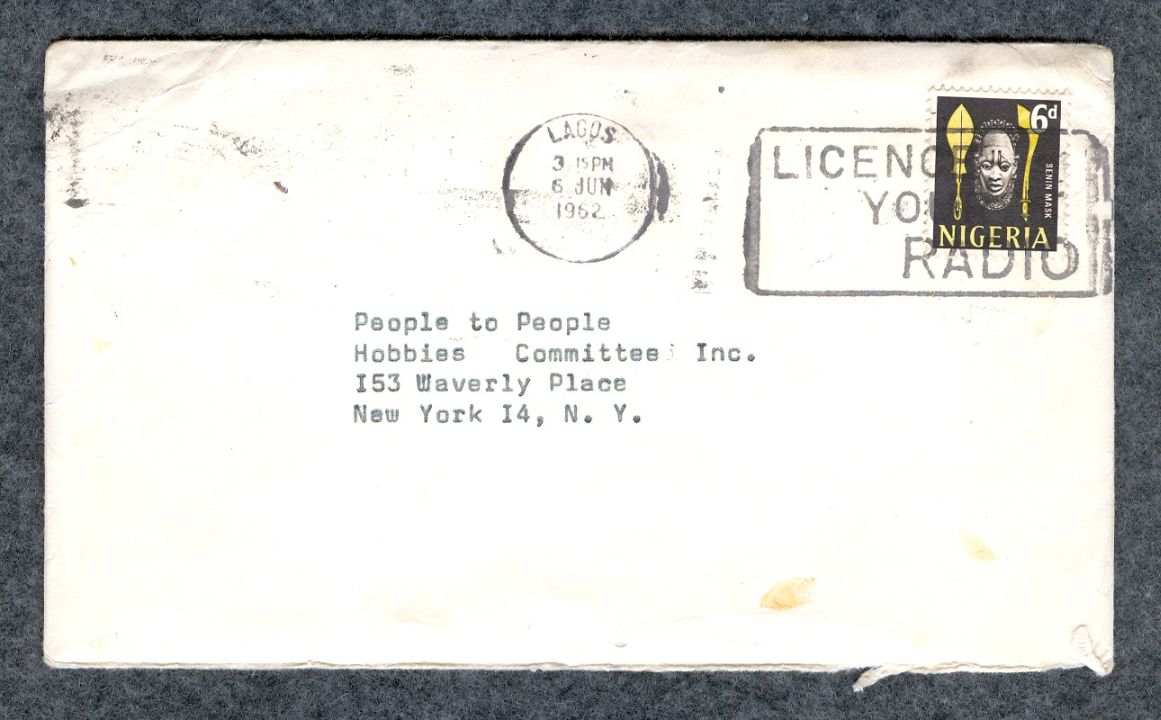 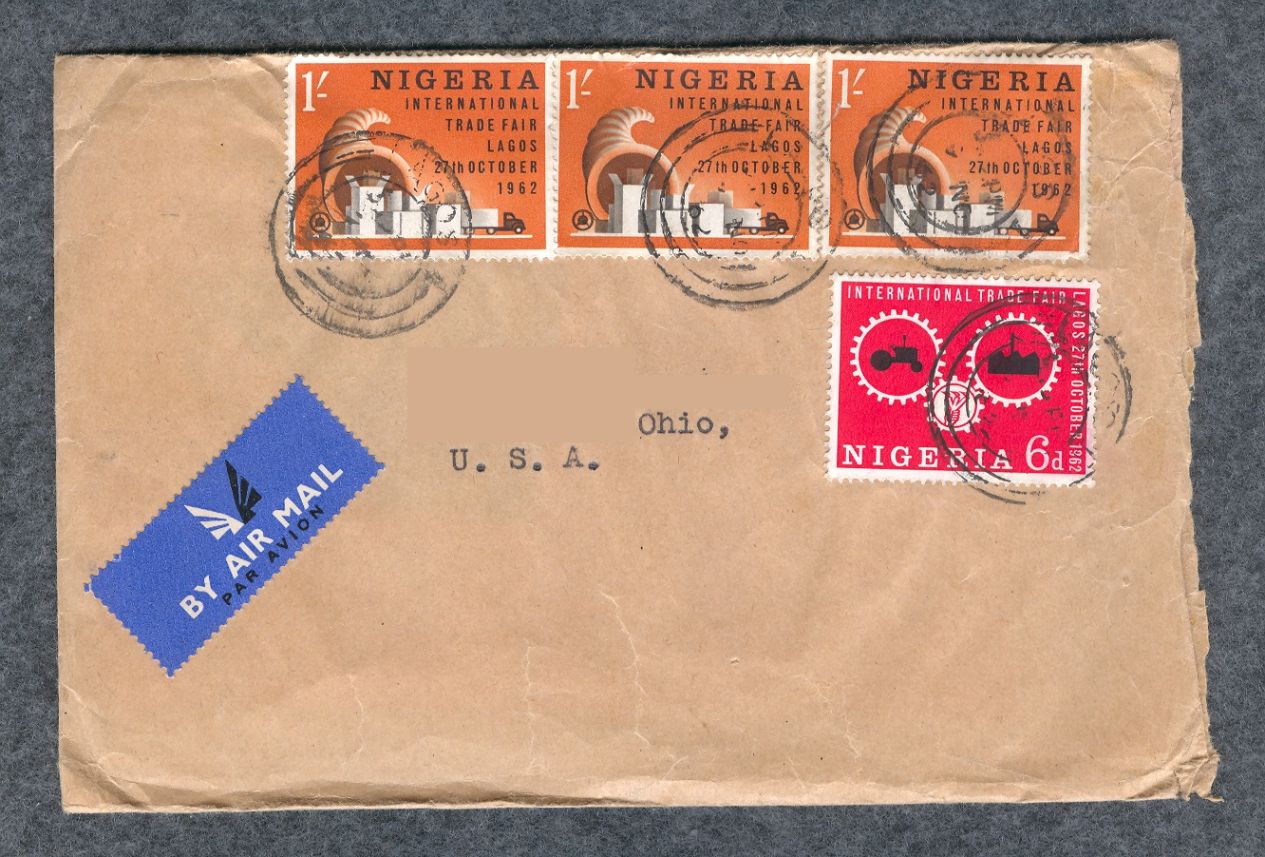 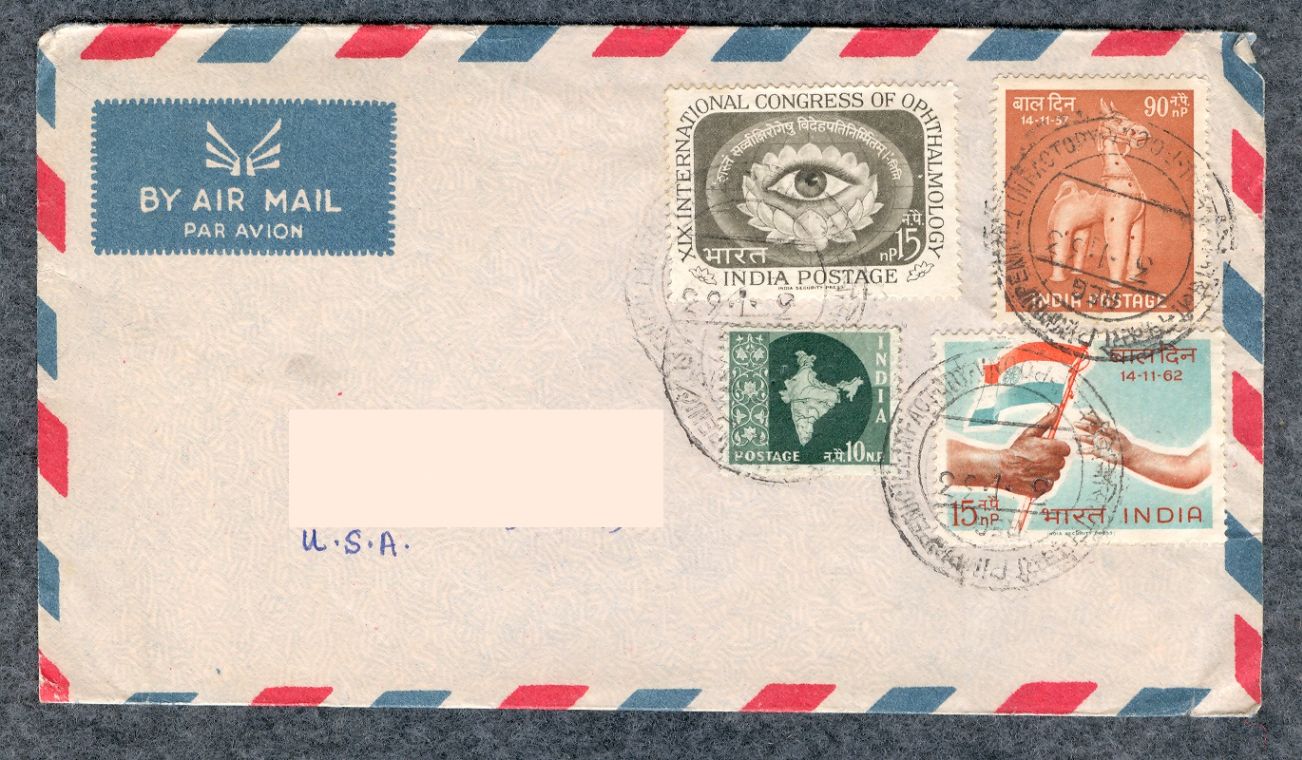 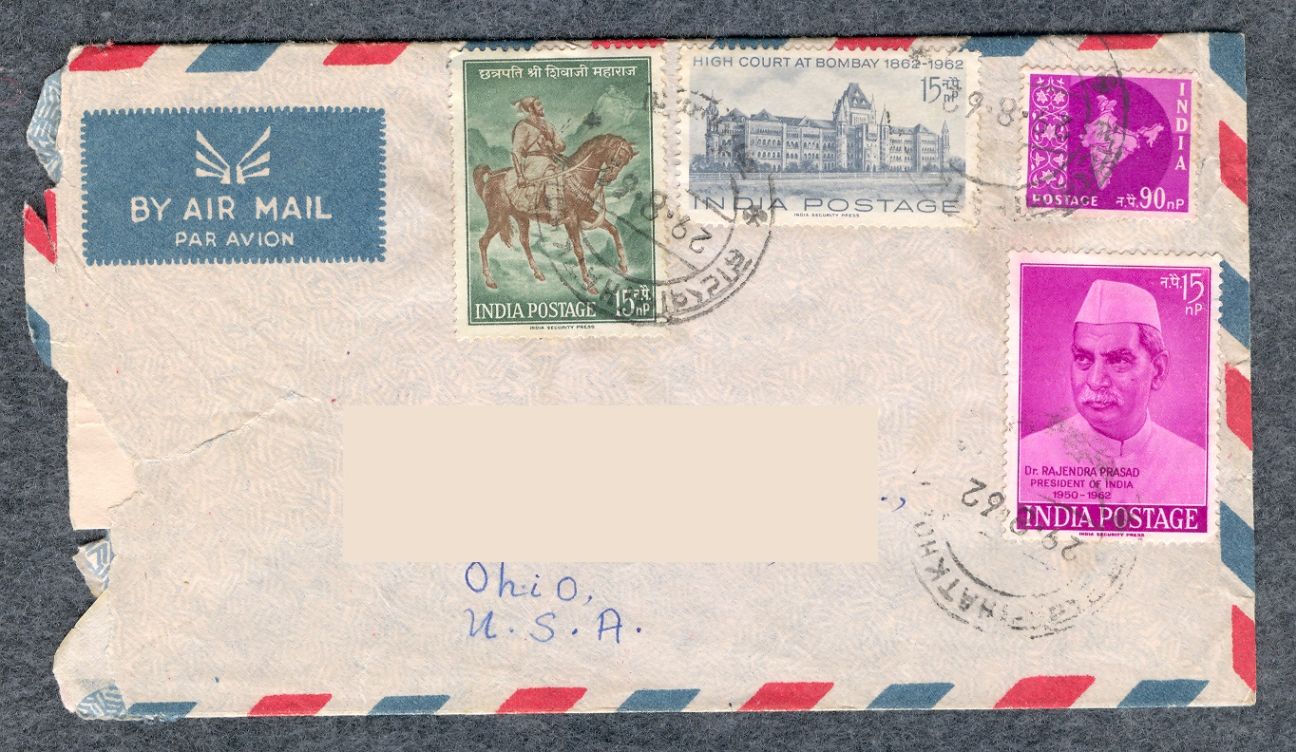 |
|
Send note to Staff
|
|
|
Pillar Of The Community

United States
5469 Posts |
|
|
Nice covers. Leave intact. They tell a great story this way. This is postal history. |
|
Send note to Staff
|
|
|
Pillar Of The Community
United States
1430 Posts |
|
|
Especially the one with the "Licence Your Radio" cancellation. Someone who collects radio-themed covers would be quite interested in that. |
|
Send note to Staff
|
|
|
Pillar Of The Community
United States
1124 Posts |
|
|
Two more points on covers:
-the stamp being affixed to its cover may be hiding a fault (such as a thin). Generally speaking, this isn't an issue but with some of the higher priced items, some expertizing services sweat the stamp from the cover to evaluate the stamp (and to see if there is anything underneath).
-Putting some emphasis on the word 'history' in 'postal history,' the writer or the addressee, if famous or infamous, usually adds value as do the cover's original contents if available. Letters often add a historical perspective to add to the allure of a cover's franking and markings.
|
|
Send note to Staff
|
|
| |
Replies: 12 / Views: 2,000 |
|




 Posted 05/24/2018 3:53 pm





