| Author |
 Replies: 17 / Views: 2,214 Replies: 17 / Views: 2,214 |
|
Pillar Of The Community
Canada
6525 Posts |
|
|
I may be a little over my head with this one, but I do love a challenge. Picked up this 1847 steamer cover on the weekend. A little worse for wear, but it's got a lot going on, So I'd appreciate any help you experts can give. front  The front is a mess. Two rates written and crossed out. Notice at top 'Per North American Mail Steamer'. One faint cancel on left, but I think may be an offset from another envelope, as it looks like it might be in reverse. back  Four cancellations - blue green Liverpool Oct 18 1847, black oval Liverpool office stamp, red London U.C. Nov 12 1847 receiver cancel and a very faint red cancel overlapping the Liverpool mark. Using photoshop I was able to determine that this faint red cancel is from Devonport in Plymouth on the southern coast - Oct 17 1847. So I think this may be the place of origin. 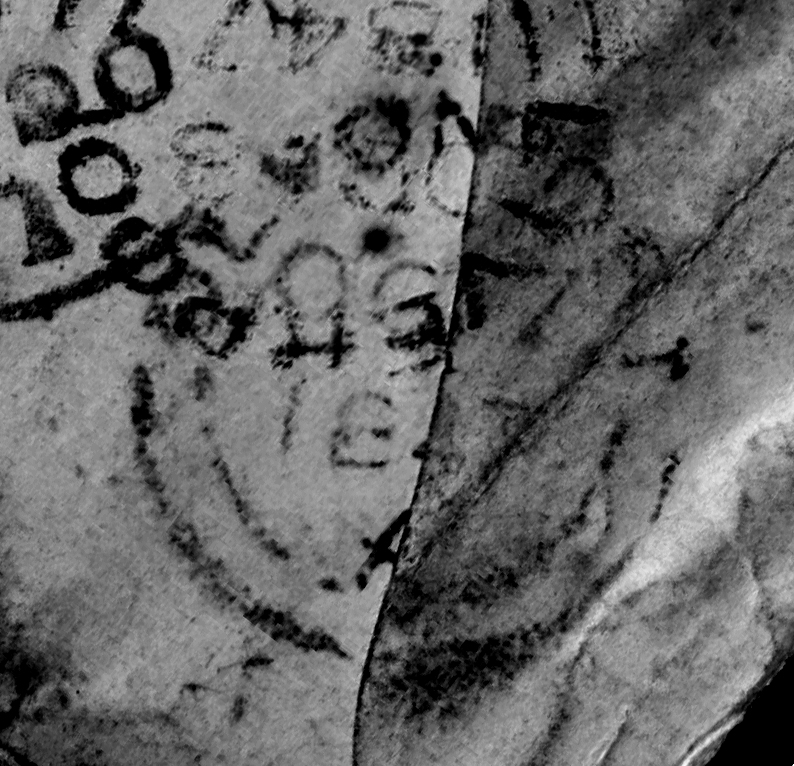 The mystery lies in the name of the steamer written at the top of the page. There was a steamer called the North American sailing with the Allan Line, a Canadian company, but the Allan Line didn't start operations until 1854. There were other lines crossing the Atlantic in 1847, the Ocean Line (American) and Hérout & de Handel (French). Neither of these had a ship called the North American either. I think that the notation at the top of the envelope refers not to a ship called the North American, but to the Cunard Line, which was originally called The British & North American Royal Mail Steam Packet Company, thus a North American Mail Steamer. Also Cunard departed out of Liverpool, so it would make sense with the cancels on the reverse. Y'all still with me? Any thoughts you folks may have on these would be appreciated. Especially the rates. I'm assuming the crossed out rates are for different stages of the journey. So, whatcha think??? |
|
Send note to Staff
|
|
|
|
|
Bedrock Of The Community
Australia
38679 Posts |
|
|
Not an expert. Devonport to London to Liverpool to connect to the Canada Packet makes sense. 1. Address in Canada? any ideas I cannot translate that part of the scribble. 2. I cannot see a cover leaving Devonport through London to Liverpool in 1 day, something is amiss there. You need a collector conversant with Packet routes to Canada. Nice early cover James. The rate scribble on the left is a crossed out 2 shillings and four pence. From 1 June 1843, the rate Canada to France by British packet was 2/– stg per half ounce (paying the transit Canada to UK to France) http://www.rfrajola.com/dh/dhcanada...nalmails.pdf |
Send note to Staff 
|
| Edited by rod222 - 09/04/2018 12:02 am |
|
|
Pillar Of The Community
6357 Posts |
|
|
I agree, the top line is a generic instruction to sail on the first available North American Mail Steamer, rather than a specific ship name
Hubbard and Winter's "North Atlantic Mail Sailings, 1840-75" lists the Cunard's Caledonia sailing from Liverpool on October 19, 1847, arriving at Boston on November 5, 1847.
Ed: Rod, the route is Devonport to Liverpool, then across the Atlantic to London, Upper Canada. Make sense? |
|
Send note to Staff
|
| Edited by John Becker - 09/04/2018 12:01 am |
|
|
Bedrock Of The Community
Australia
38679 Posts |
|
|
Quote:
Ed: Rod, the route is Devonport to Liverpool, then across the Atlantic to London, Upper Canada. Make sense?
Sheesh... now there's a lightbulb moment............ That's why I love Philately. Thanks John. |
|
Send note to Staff
|
|
|
Bedrock Of The Community
Australia
38679 Posts |
|
|
John,
bottom left.
I very faintly recall the custom of signing early mail covers.
Are you able to expand / advise please?
|
|
Send note to Staff
|
|
|
Pillar Of The Community
6357 Posts |
|
|
Lower left reads:
Plymouth
16 Octr /47
(so perhaps Plymouth to Devonport to Liverpool, etc.) |
|
Send note to Staff
|
| Edited by John Becker - 09/04/2018 12:22 am |
|
|
Bedrock Of The Community
Australia
38679 Posts |
|
|
Thank you John.
James , liverpool, oval L over G and date, is referred to as a "Tablet" aux marking,
seen similar on cover, not that shape though.
I have no idea on usage.
|
|
Send note to Staff
|
| Edited by rod222 - 09/04/2018 12:18 am |
|
|
Pillar Of The Community
Canada
6525 Posts |
|
|
Wow! Thank you both. More pieces of this puzzle. Rod the address (though more now for interests sake rather than the route), is to John Harris Esq., London, Canada West, North America. I wonder if the scribbled out rate in the centre is the US rate, which should have been 10¢US tp get to the lines, if the ship did land in Boston as suggested. The ink colour on the central denomination, both scribbles and the right hand denomination (2sh 1 1/2p?) all appear similar, lighter than the left hand rate. Makes me wonder if they happened at the same time (all speculation I know). And thanks for deciphering the lower left notation. That clears up the letter's route. The tablet marking is shown on this page from the book Postmarks of the British Isles published in 1909 by Stanley Gibbons.  http://www.gbps.org.uk/information/...20(1909).pdf http://www.gbps.org.uk/information/...20(1909).pdfAnd I have a digital version of Hubbard and Winter's book. Should come in handy. |
|
Send note to Staff
|
| Edited by jamesw - 09/04/2018 8:11 pm |
|
|
Bedrock Of The Community
Australia
38679 Posts |
|
|
James, great page and link, thanks for that. I can see "London West" now, nice translation, well done you. Quote:
(so perhaps Plymouth to Devonport to Liverpool, etc.) Personally, I am having trouble understanding how that cover reached Liverpool in 2 days, that is extraordinary. Did it go by road or sea? I'd love to know. The clue must lie in the covers movement from Plymouth to Devonport, which is just a few miles away. Juicy stuff for the imagination. |
|
Send note to Staff
|
|
|
Pillar Of The Community
United Kingdom
8624 Posts |
|
|
Rod - I don't think that there would be a differentiation between Plymouth and Devonport. The writer's reference on the envelope would naturally be to the city, rather than the port. |
|
Send note to Staff
|
|
|
Valued Member
Canada
395 Posts |
|
|
I'm not an expert either.
I read the right rate as 2/7½.
I have a reference that says the rate from Great Britain to North America by Cunard was 1 shilling. Possibly this is a double weight letter. (Was the initial 1/2 in the center changed to 2/4?). I believe that you also have to add the postage Boston to London (Canada).
Also, in 1784, a mail coach was able to leave London at 4pm, and arrive in Bristol at 8am the next morning. It would not be impossible to get from Plymouth to Liverpool in two days.
More research is needed.
Jan |
|
Send note to Staff
|
|
|
Bedrock Of The Community
Australia
38679 Posts |
|
|
Quote:
Rod - I don't think that there would be a differentiation between Plymouth and Devonport. The writer's reference on the envelope would naturally be to the city, rather than the port. Right. Makes sense. The fog gradually clears. My ancestry lies around Plymouth, Grandfather, Uncle etc. Quote:
Also, in 1784, a mail coach was able to leave London at 4pm, and arrive in Bristol at 8am the next morning. It would not be impossible to get from Plymouth to Liverpool in two days. Thanks Jan, still find that surprising, I had not worked the mileage, but I was thinking Coach at 4-5mph plus stops, transfers, and presumed it beyond the time. |
|
Send note to Staff
|
|
|
Valued Member
Canada
395 Posts |
|
|
I was looking in the book "Canada's Registry System" by Horace W. Harrison, and found on page 3 a conversion between sterling and local Canadian currency.
The basic conversion is that 4d sterling = 4½d currency.
Thus 2/4 (2 shillings 4 pence) sterling = 7 x 4d sterling = 7 x 4½d currency = 2/7½ currency. Thus the rate on the right is just the Canadian equivalent of the British rate on the left.
Jan |
|
Send note to Staff
|
|
|
Valued Member
Canada
395 Posts |
|
|
From BNA Topics, Vol 55, No 1 (1998), page 5:
"General Instructions to a Postmaster 1848"
"Rate to and from the United Kingdom.
33. On letters between the United Kingdom and your office, the rate is an Uniform Charge of 1s 2d. Sterling, or 1s 4d. Currency, the half ounce which may be prepaid or not, at the option of the Sender."
So your letter is indeed a double rate letter.
Jan |
|
Send note to Staff
|
|
|
Pillar Of The Community
United States
1125 Posts |
|
|
At the time, there was no closed mail from GB to Canada through the US. Therefore, if the cover was sent through Boston, it would have been rated 1S to Boston, then the US Postage to the Canadian border (18¾¢ or 25¢), then Canadian inland postage to the destination per single rate.
To get around this, mail for Canada was often off-loaded in Halifax on the way to Boston. As there is no Boston Exchange Office marking, this was likely the case. The postage would then be the same 1S British transit but only 2d additional for Canadian postage. If it was re-rated as a double letter in Halifax, it would become 2/4 Sterling, which would be the equivalent of 2/7½ Cy. |
|
Send note to Staff
|
|
|
Bedrock Of The Community
Australia
38679 Posts |
|
|
Fascinating stuff guys,
thanks for the research and commentary.
Answered further questions that puzzled me, no Boston ,markings etc.
I can see how collectors get caught up in postal history.
James: Are you able to read the wax seal at all?
|
|
Send note to Staff
|
| Edited by rod222 - 09/05/2018 4:15 pm |
|
|
Replies: 17 / Views: 2,214 |
|




 Posted 09/03/2018 10:15 pm


