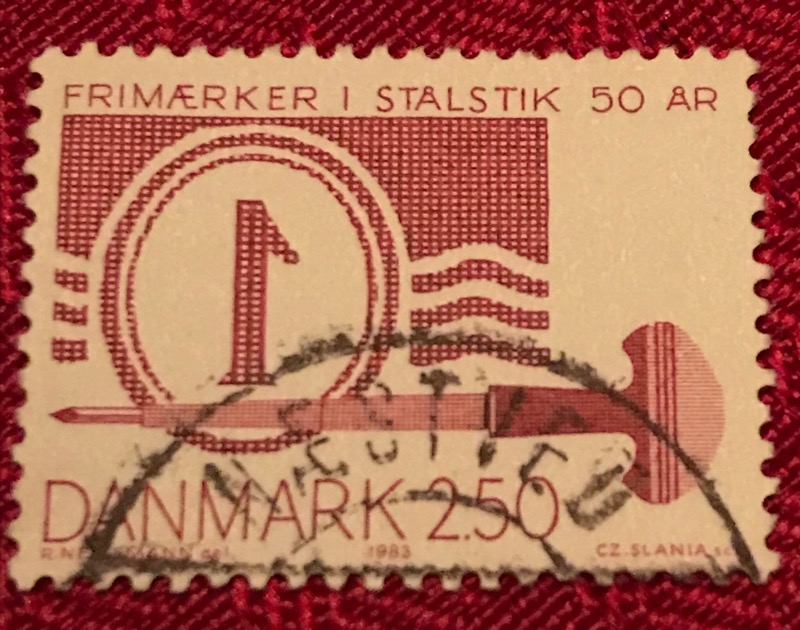
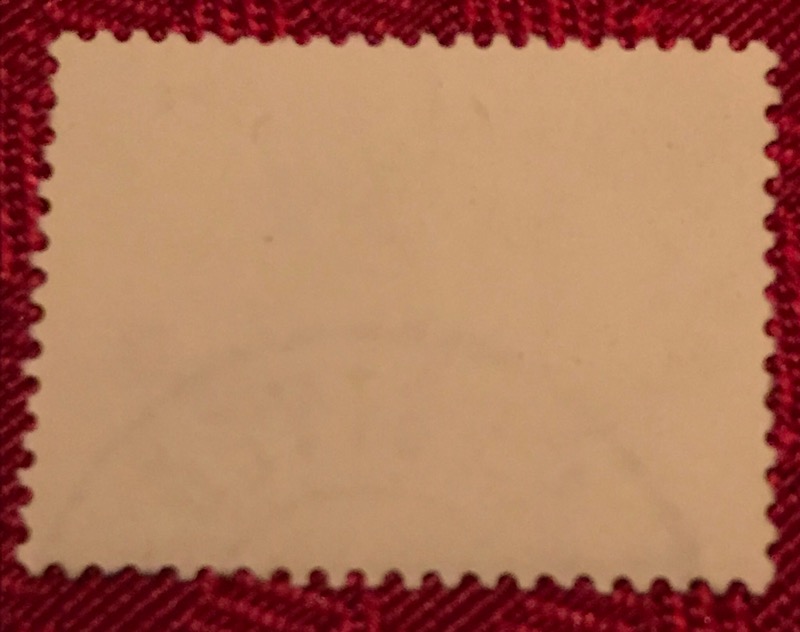
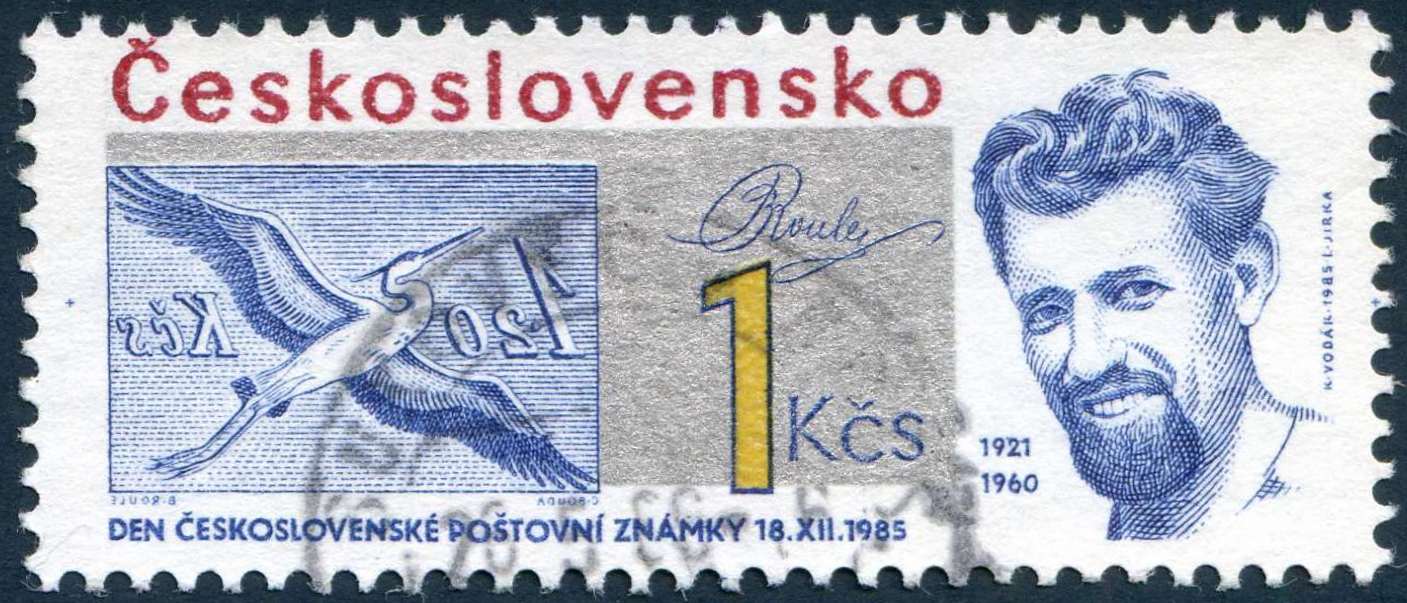
Yes, the engraving plate is shown, therefore the reverse of the printed stamp. Also, a graver (engraving tool) is pictured, as the stamp celebrates 50 years of Denmark's use of engraved stamps.
What's remarkable about that Danish stamp is that it helps to celebrate a design which has continued almost unaltered for over 110 years. The iconic "wavy line and numeral of value" design, as Scott describes it, first appeared on Danish definitives in 1905, with values ranging from 1 ore to 20 ore. The only major design change was in 1933 when the tiny hearts just above and just below the country name were removed. Other than that, the only changes have been to keep up with inflation with values now up to 500 ore (rather than 5 kroner, which is really the same thing. I think perhaps they decided to put values in the hundreds of ore, rather than kroner and ore, for esthetic reasons, and to lend continuity to the design) I remember reading that the three wavy lines represent three bodies of water that separate the country of Denmark into major land masses.
Disclaimer: While a tremendous amount of effort goes into ensuring the accuracy of the information contained in this site, Stamp Community assumes no liability for errors. Copyright 2005 - 2026 Stamp Community Family - All rights reserved worldwide. Use of any images or content on this website without prior written permission of Stamp Community or the original lender is strictly prohibited. Privacy Policy / Terms of UseAdvertise Here





 Posted 12/27/2018 9:17 pm