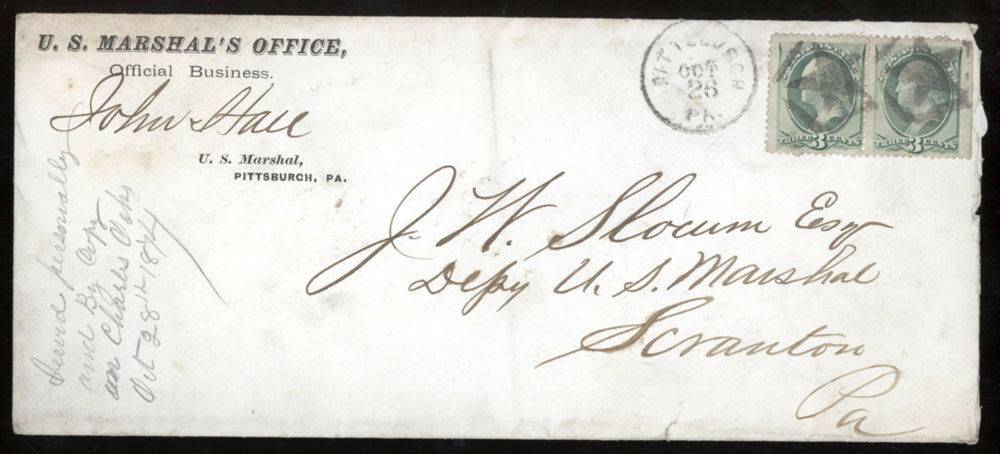
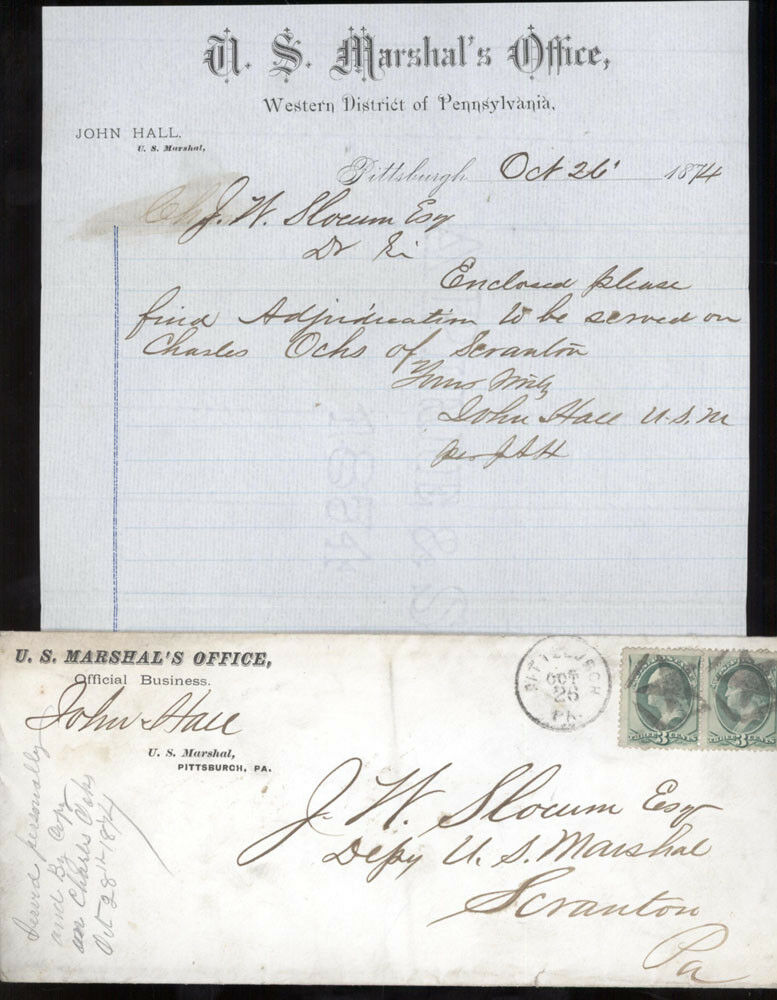
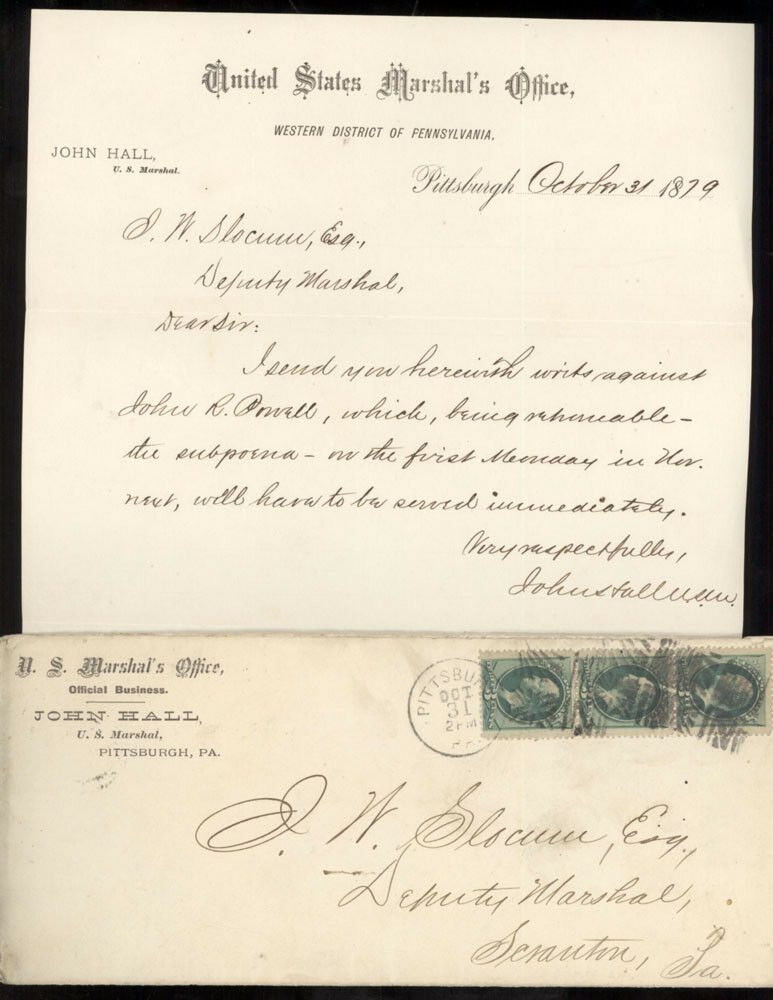
eyeonwall, the recording of fancies on Banknotes is poor since there are so many. This killer may be in a reference on Pittsburgh cancels, but city and state cancel references generally fix on townmarks and just give killers a mention.
http://www.stampsmarter.com/feature...sicView.htmlrecords a similar cancel from 1877 and Pittsburgh has many other star killers in 5-sided frames. Further, the ink color, its consistency and the cancel strike matches the townmark from what I can see from just a scan.
As luck would have it, here's a cover for sale on
ebay right now, supposedly dated 1874, source of date unknown ecept for a posthumous pencil note:
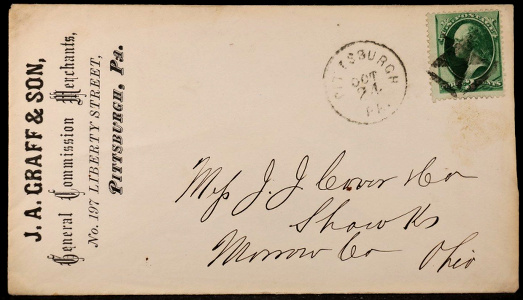
This killer isn't tied, either. So it's faked and that there's a factory out there cranking out forgeries of inexpensive covers? The pencil docketing is forged? Contents were taken from another cover and included here? Perhaps a chance of all three happening, but that's a chance so small as to be nearly nonexistent.
It's one thing to not like this in the case of stamps not being tied. But if untied is the only way the star killer exists, and you'll never have one. Also, Banknote-era legal covers are disliked relative to small covers as are postal cards. But postal cards yield the best cancel strikes and are what are often available these days. Postal cards can have dated contents whereas Banknote-era covers mostly do not. Again, if a cancel doesn't exist on a small-size cover, you won't have one. Makes it easy to collect when nothing is considered worthy.
There are loads more positives than negatives about the first cover. The approach is different from a collector vs. a postal historian. Of course, you should be cautious; paranoid, no. Further, in the case of Pittsburgh who generally used fancy cancels in the Bankote period, replacing one fancy cancel with another different one that is not a spectacular one doesn't make sense.





 Posted 01/23/2019 2:27 pm