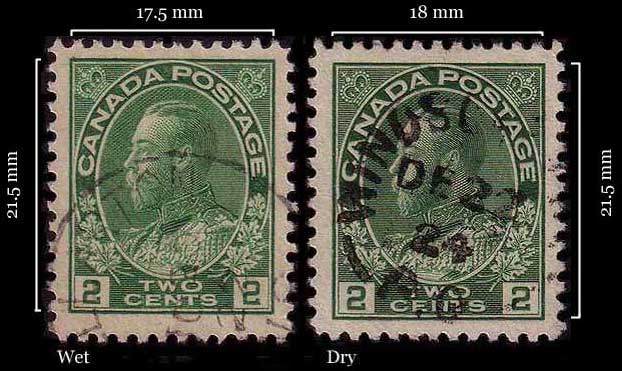
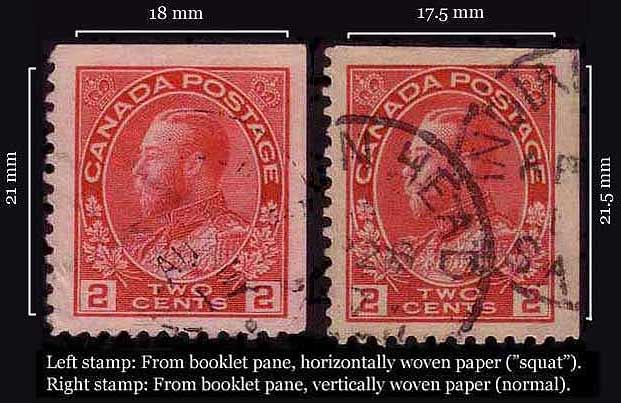
Yes, if you think about when (much later!) the first US stamps were made with dry printing, it's clear that 1905 is quite early, as well as the Quebec commemorative stamps. If the 90xii was experimental and did not cause the printers to print all stamps in dry printing, it's perhaps not very likely to find other stamps (Unitrade numbers) from that era in dry printing, at least from the Edward VII issue.
Concerning your topic (Quebec stamps), if the printing quality is fine, the embossing of the design is on the gum side and the size is obvious, I don't see where there is much place for doubts? Is there maybe, like in US stamps, also a difference of paper thickness, which could help to objectify?
(concerning the US stamps about which I asked above, I looked at many stamps now, from Bank Note stamps over 1894, 1902, Washington-Franklin, and indeed I can now see the wove pattern, thanks to the detour to Canadian stamps, never thought about that for US stamps. For some W-F stamps they are quite cloudy, so perhaps any dry printing experiment was not discovered yet because of that, in US stamps)
|





 Posted 04/04/2019 06:48 am