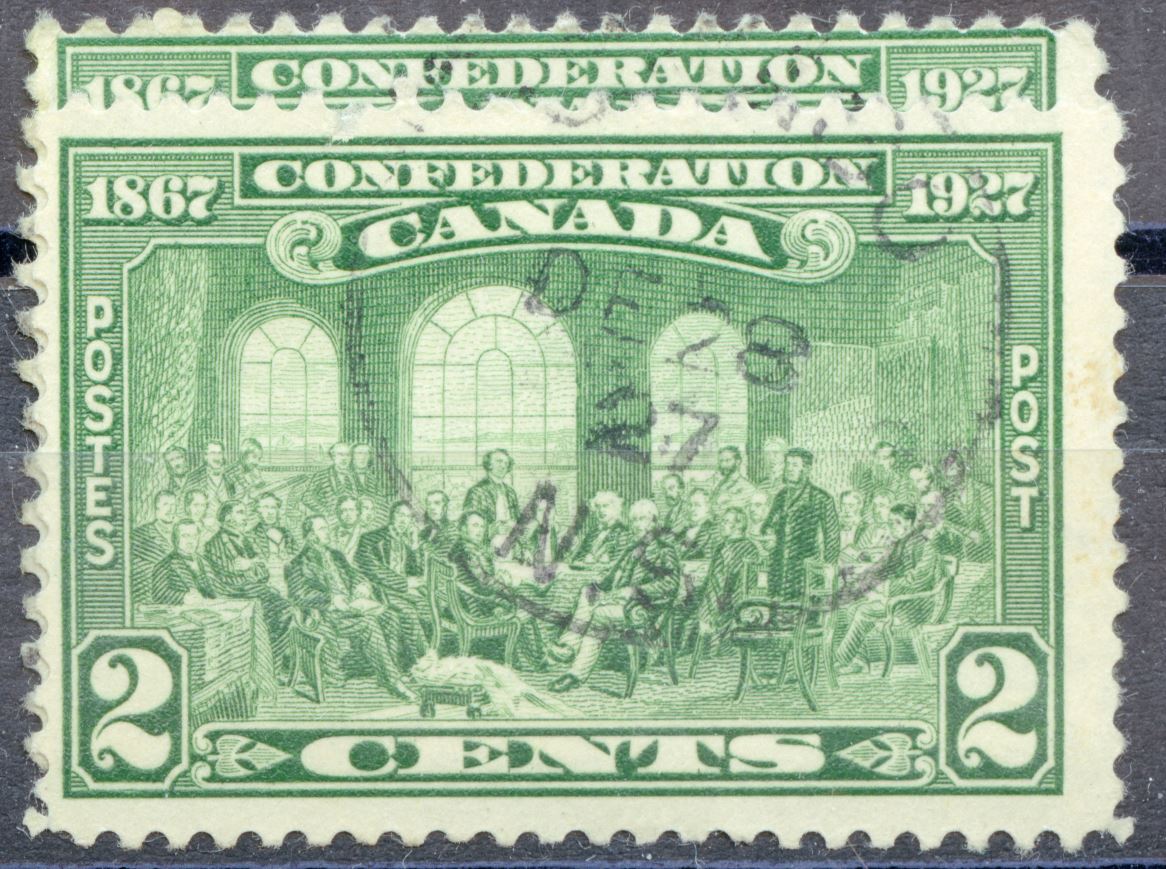
Do you have any mint stamps rather than used stamps to show this? The CBNC started in late 1922 to dry print some of their Admiral stamps. The CBNC was already using dry printing by 1927 for the Confederation issue.
Galeoptix: For the Admiral stamps a design width difference of only around 0.5 mm exists horizontally between the wet printed stamps (17.5 mm) and the dry printed stamps (18 mm).
the difference is not between the designs! The width of the design on the (curved) plates is probably the same, but due to shrinking of the (vertical) fibers, the width of the printed design shrank about 0.5.mm.
That width may vary in relation to the amount of wetness of the paper; the wetter the more swollen the fibers might have been on the moment of the (curved) plate touching the paper...
Yes, I am aware that wet paper used for wet printing shrinks across the grain of the paper upon drying so that vertical wove paper would shrink horizontally and horizontal wove paper would shrink vertically.
I don't know why this dry printed stamp Scott/Unitrade # 142 from 1927 was chosen since CNBC was dry printing stamps by this time. It is mostly wet printed stamps that are looked into for the possibility of finding a dry printed variety. Also, the window for finding ABNC dry printed stamps from wet printed stamps is from 1905 (Scott/Unitrade # 90xii) to 1923 (Scott/Unitrade # 108c).
Disclaimer: While a tremendous amount of effort goes into ensuring the accuracy of the information contained in this site, Stamp Community assumes no liability for errors. Copyright 2005 - 2026 Stamp Community Family - All rights reserved worldwide. Use of any images or content on this website without prior written permission of Stamp Community or the original lender is strictly prohibited. Privacy Policy / Terms of UseAdvertise Here





 Posted 03/29/2019 05:27 am