| Author |
 Replies: 6 / Views: 1,764 Replies: 6 / Views: 1,764 |
|
|
Pillar Of The Community
United States
901 Posts |
|
|
|
|
Bedrock Of The Community
United States
10862 Posts |
|
|
Pillar Of The Community
673 Posts |
|
|
Gettinold,
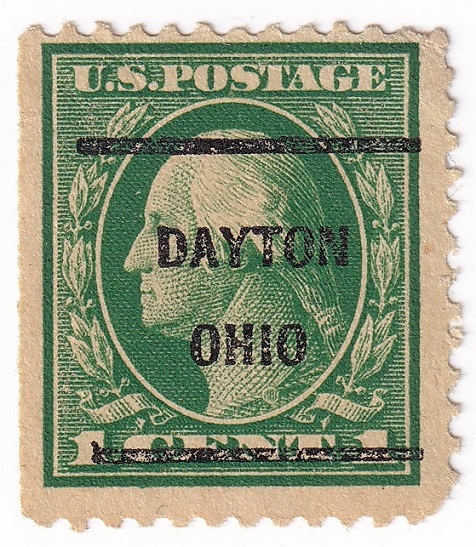
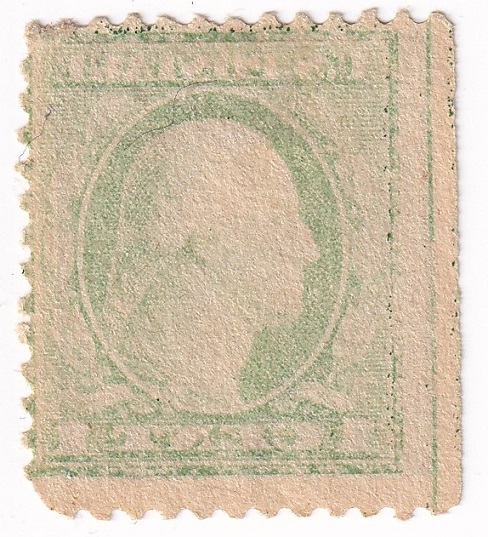
On these flat plate printings, this is very common, in varying levels of visibility. It can range from only a few dots of ink to a strong replica of the image. This happens because the pages were wet when printed, and the ink is damp, when the next sheet comes off the press, the next one lands on top of it. The wetter the ink, the bolder the transfer. This is called a set off. This one is cool though, because it's a center line set off as well (you can see the page center line in the right side). The way to tell set off from a printed on both sides is the image (text) is reversed. The result of transferring from the sheet below it.
It's fun to look for these. This is a nice one. |
Send note to Staff 
|
|
|
Pillar Of The Community
United States
901 Posts |
|
|
Thank you both. Still trying to nail down the terminology. I noticed the set off is not exactly aligned with the image on the front. There is a slight shift to the left on the image on the reverse. I believed if the image on the back lined up with the image on the front the image came from another sheet. This belief made me lean towards the conclusion that it might be a stamp printed on both sides. Didn't know in such a case the image on the reverse would be reversed. I know now. I have a growing collection of errors. I'm sticking this one there. May not qualify as an error but I don't want it buried with my other 1 cent Washington stamps. |
|
Send note to Staff
|
|
|
Pillar Of The Community
673 Posts |
|
|
gettinold,
Set offs are not considered errors. The term EFO means Errors, Freaks and Oddities, so what you might consider is expanding your definition of that collection to EFO, where this would qualify as an oddity.
Philatelically oddities are events that occur somewhat randomly and frequently, and aren't specifically repeatable in exactly the same way. A clear set off like this is a great example of an oddity. Many "fly spec" issues in stamps that aren't repeatble, are also oddities (i.e. a hair fell on the stamp page before it was printed, and then later came off, but you can see the line it left). This is also an oddity, not an "error".
Errors are things like the C3a. The sheet was loaded upside down on the second pass, and all the centers were inverted. This is an error. It effected every stamp on the sheet. Someone "accidentally" (i.e. human error) loaded the sheet wrong.
Freaks are similar to oddities but happen with more frequency. Like pre-print paper folds/creases. Also "crazy perfs" where pages get folded before the perf, then unfolded later. These are freaks. They are more specific and somewhat repeatable than an oddity, but aren't caused by someone making a mistake in the process that was repeatable in every stamp. "Imperf between pairs" is a good example of a freak. |
|
Send note to Staff
|
|
|
Moderator

United States
12330 Posts |
|
|
I think the definition of a freak/oddities has always been a bit ephemeral but has been made more confusing by 'fly-speccing'. In todays technical collecting world, we have collector using high resolutions scans to ID things which are almost impossible to see with the naked eye and calling them a EFO. Yesterdays badly centered stamp at times seems to be today's EFO.
This has caused more confusion for folks who equate any EFOs in hand with stories of very high priced errors. In the marketplace the only EFOs which bring an increased value are those which jump off a page in an album. |
|
Send note to Staff
|
|
|
Pillar Of The Community
United States
901 Posts |
|
|
I used the term error in error. I abbreviated EFO to E. Understanding the human component of error helps to isolate those stamps which qualify for the error designation. Wasn't sure if this stamp qualified for that term or one of the others. Correctly called an Oddity. I appreciate the help here. I recently posted images of a stamp where a paper fold prevented the top of a stamp from being perf'd and another stamp which had been folded during printing leaving an impression that had shifted on half of the stamp. In the two later cases the end result seems to have been caused by a defect, (if a paper fold qualifies as such) in materials used during production. A freak occurrence in each instance but not an isolated one.
Lumping everything out of the ordinary into the category of error due to a fuzzy understanding of the terms EFO. This should have been the title of this thread. |
|
Send note to Staff
|
|
| |
Replies: 6 / Views: 1,764 |
|




 Posted 04/26/2019 09:23 am