| Author |
 Replies: 11 / Views: 1,387 Replies: 11 / Views: 1,387 |
|
|
Pillar Of The Community
United States
6467 Posts |
|
|
|
I just obtained a lot of checks, billheads, and other small format documents. The problem: whoever compiled this "collection" glued the documents together in vertical strips of 4-5, apparently many many decades ago. The documents overlap at the tops and bottoms anywhere from a quarter to half inch.
I don't want to cut them apart, as that would destroy many of the documents due to the overlap.
Soaking is out, as that will remove the stamps from the documents.
Humidifiers tend to put out steam in a non-tightly controlled manner, meaning you cannot easily pinpoint where the steam goes.
How would one go about separating the documents without affecting the stamps?
|
|
Send note to Staff
|
|
| Edited by revenuecollector - 06/02/2019 6:19 pm |
|
|
|
|
Pillar Of The Community
United States
6666 Posts |
|
|
Pillar Of The Community
United States
939 Posts |
|
|
Or you could try a dry clothing iron on low heat. Might be enough to melt the glue enough to get the documents apart. I'd place a towel or pillow case over the area to be heated, and then just apply heat to the glue area. It might be enough to warm up the glue and make it soft and pliable. |
Send note to Staff 
|
|
|
Pillar Of The Community
United States
6467 Posts |
|
|
Upon looking closer, I was wrong about a collector having done this. All of the documents concern the same business, John Booker of Richmond, Virginia, and all are from January of 1872, so it appears this was how the business organized the documents, gluing them together in order of receipt, presumably so they would be faster to page through.
So the glue is 147 years old... |
|
Send note to Staff
|
|
|
|
Bedrock Of The Community
United States
10827 Posts |
|
|
Totally depends on what kind of glue was used. See if lighter fluid loosens them. If not, you might try putting them in the freezer overnight. |
|
Send note to Staff
|
|
|
Bedrock Of The Community
Australia
38679 Posts |
|
|
Guess: 150 year old glue is probably animal or starch. If they are important to you, I would suggest seeking out your local State Archives, they can assist with solid advice. A Western Australian example Providing recordkeeping services to government; Preserving the State archives collection; Making State archives accessible for researchers. https://www.sro.wa.gov.au/state-rec...rn-australia |
|
Send note to Staff
|
|
|
Pillar Of The Community
1363 Posts |
|
|
Freeze them, then try a sharp knife and see if the glue is brittle enough to separate cleanly by using the sharp knife very delicately. A scalpel or similar is what you want to use. This probably won't work, though, and you always risk damage. But it may be worth a shot.
Various fluids, lighter fluid and StampLift, should work. I'd apply them very lightly using a small artist's brush and only in the area where the glue is located. Let it soak a bit, then try your sharp knife. Experiment with one and see if there's any success. Avoid any tugging at the paper and just rely on the blade to do the work.
Heat might work, but you'll want to localize it. A heat gun will likely be too hot, but a hair dryer might work. Be careful not to overheat, but apply the heat in one spot for a minute and then try your sharp knife again. If the glue seems to 'give' it may be softening -- but I'd very much doubt old glue will soften. Keep trying but be very gentle. Again, you risk doing damage so be aware of that. I'd go very gently with the knife.
Getting a little more risky here, but a steam iron might work if you heat the document up very briefly (more and you'll burn it) and spray a burst or two of steam in the right location. If you keep at it, the heat and moisture might soften the glue enough for your knife to cut through it. This is likely to cause damage, though.
I've heard of people using "steam boxes" to separate things which I imagine (never done this) is a container of some kind into which they've pumped steam. Maybe place a pan of near-boiling water inside a plastic storage box, then lay the items to be separated inside the box next to it, and close the lid. I'd say the chances of this working are pretty low, but it sounds like fun -- and you never know.
The glue is probably hard as a rock by now, so any aggressive effort (with a knife or otherwise) may damage the paper. Maybe just leave them attached? If you try any of this, you may have to pick a "sacrificial" item you're willing to damage just to see if any of this works. |
|
Send note to Staff
|
| Edited by DrewM - 06/03/2019 3:10 pm |
|
|
Pillar Of The Community
United States
775 Posts |
|
|
revenuecollector - do the documents have to be separated? Can you display them on an album page without cutting anything? If so, I would leave it alone. |
|
Send note to Staff
|
|
|
Pillar Of The Community
United States
6467 Posts |
|
|
Many of the strips are too long to fit in an album. More importantly, some of the documents have no philatelic or aesthetic interest handwritten notes, receipts, etc.). |
|
Send note to Staff
|
|
|
|
Pillar Of The Community
674 Posts |
|
|
Have you tried friction? Rubbing your tongs - carefully - over a glued area?? Given what's been described, that may work. |
|
Send note to Staff
|
|
|
Pillar Of The Community
United States
3281 Posts |
|
|
Quote:
Soaking is out, as that will remove the stamps from the documents. Not if they are held in place during the soak.  I use an assortment of old refrigerator magnets I've salvaged for the purpose, some hard some soft. Secure the stamp in place with a soft magnet on half of the stamp, with stronger hard magnet on the back of the document. The stamp will need to be re glued when the document dries. This is why I said half of the stamp. 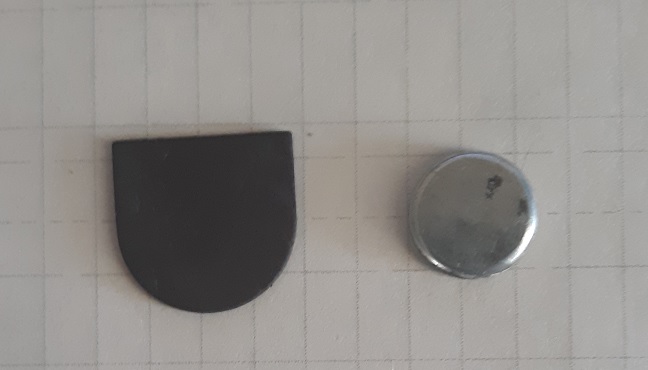 |
|
Send note to Staff
|
|
|
Pillar Of The Community

United States
1951 Posts |
|
|
I like that idea of freezing. What would be the harm if it was tried on a test basis?
Jack |
|
Send note to Staff
|
|
| |
Replies: 11 / Views: 1,387 |
|




 Posted 06/02/2019 6:18 pm





