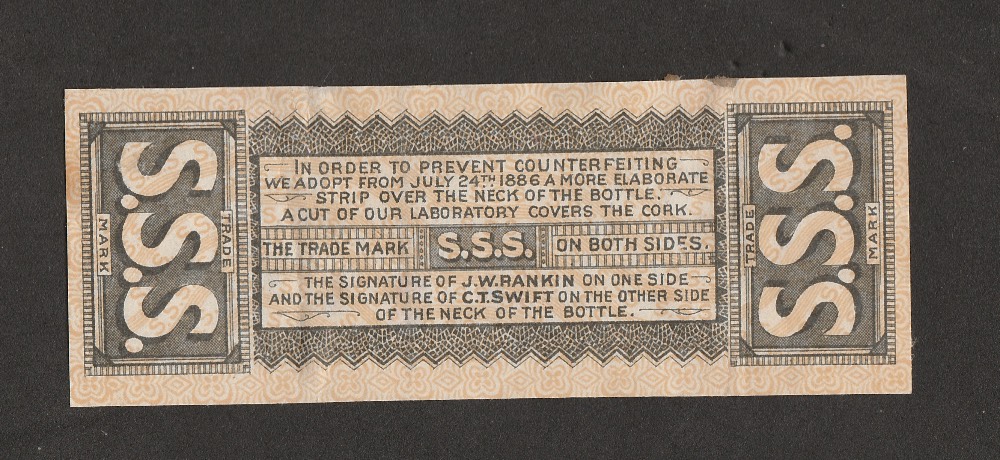
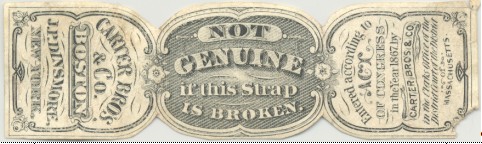
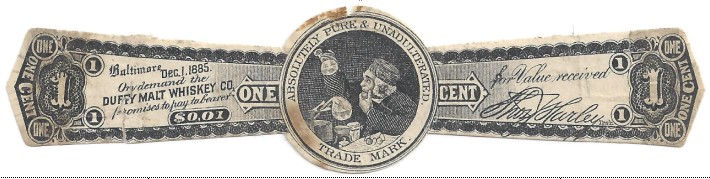
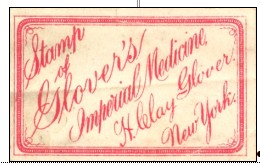
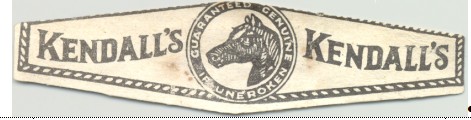
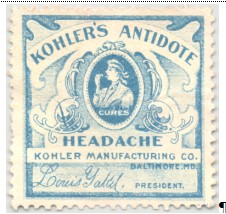
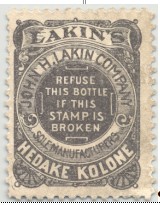
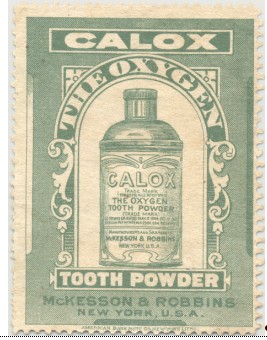
Quote:
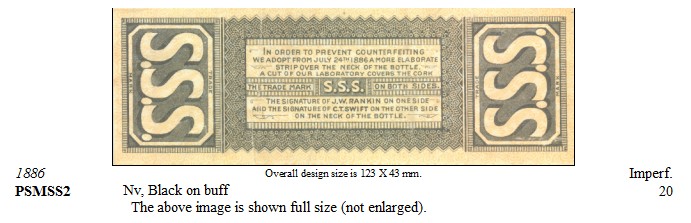
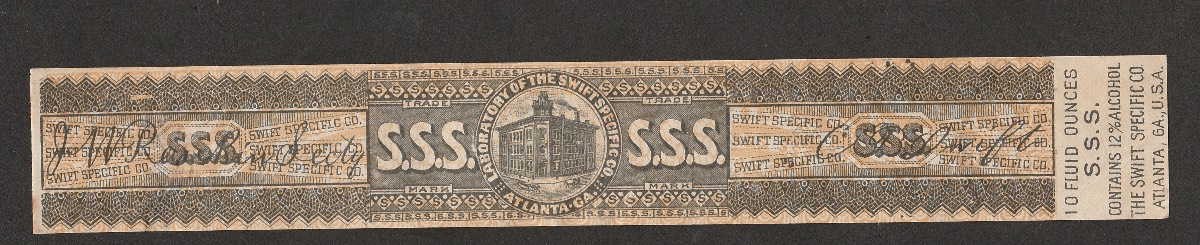
Yes, I know what facsimile labels are, but I didn't see any link between that label and a M&M stamp. I guess you are expanding the definition to include package closures unrelated to a M&M stamp, unlike the Springer and Holcomb lists.
I'm not sure that anyone has ever actually looked up the definition of the word "facsimile."
I did:


Kindly notice the repeated use of the word "exact."
Based on the actual, current, "real" definition of "facsimile,"
NONE of the Springer, etc. listed stamps actually qualify as match and medicine "facsimile" stamps.
They were erroneously described as such many years ago, and the error apparently continually perpetuates until (hopefully) today.
The stamps in this area should all actually be called "replicas," at best. Maybe 'sort of looks like' would suffice.
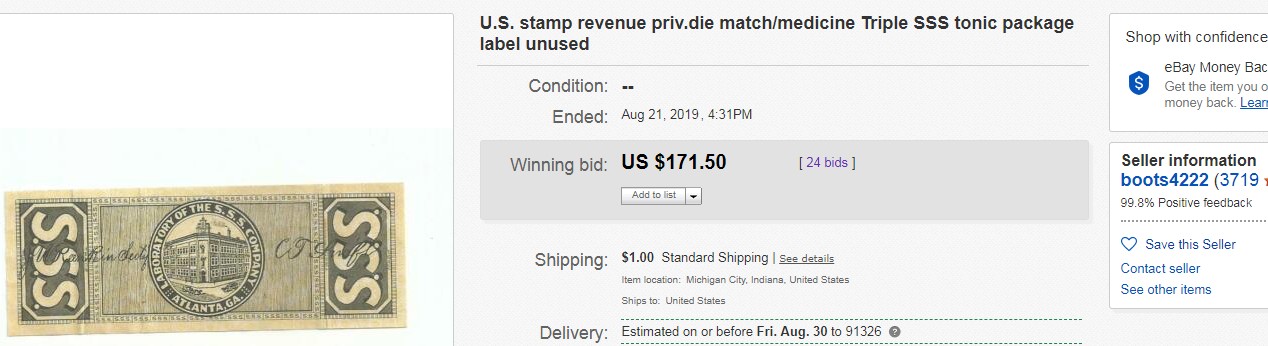
Nonetheless, the entire point of this post was to point out the high dollar amount that was spent on what was basically a package seal for an old medicine product, which is what I originally wrote.
The semantics of the terminology used was beside the point.
This point was apparently lost on most, as usual.
Oh well.
Quote:
This is not a "match and medicine" label. That term specifically relates to the post stamp labels of stamps issued by the companies listed in Scott.
And where, exactly, is this particular description specifically documented, please? Or was this just arbitrarily made up for an argumentative sake? Who said that the "facsimiles" had to be first listed in Scott in order to be recognized?
Maybe this is the general contrariness that is always seen here?
Jim





 Posted 08/22/2019 1:39 pm