| Author |
 Replies: 10 / Views: 1,176 Replies: 10 / Views: 1,176 |
|
|
Valued Member
United States
249 Posts |
|
|
It's not really a "cut square." Is it common to see collections of this format? 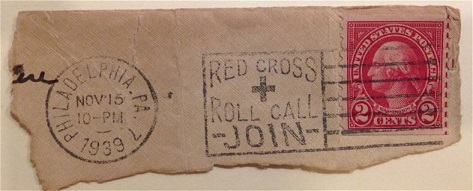 Thanks in advance for your replies. |
|
Send note to Staff
|
|
|
|
|
Pillar Of The Community
United States
811 Posts |
|
|
Pillar Of The Community
United States
811 Posts |
|
|
If you collect postmarks, it is common, but collectable on-piece stamps are usually cut neatly and not torn. Used stamps always start out on-piece and you can get bags of them for lower-value stamps in "kiloware" which is sold by weight. |
Send note to Staff 
|
|
|
Valued Member
United States
249 Posts |
|
|
Got it. Follow-up questions:
Are "covers" considered a subset of on-piece?
Is there a distinction between "on-paper" and "on-piece?"
Eight months into this avocation, and already I'm up to my knees in kiloware. |
|
Send note to Staff
|
| Edited by BFRomeos - 08/30/2019 09:03 am |
|
|
Pillar Of The Community
United Kingdom
8628 Posts |
|
|
Logically, "on piece" is a subset of "on cover", as the piece is a fragment thereof. You could have stamps on paper that weren't actually from a cover. |
|
Send note to Staff
|
|
|
Valued Member
United States
29 Posts |
|
|
BFR,
There is much to be said about your present style of collecting and being "knee-deep in kiloware".
My collections only occur through the prism of kiloware (both on and off paper). I buy pounds(kgs.) at a time and then sort into the resulting pots: worldwide, US, precancels, perfins, B.O.B., place/date cancels, slogan cancels, etc. (with subsidiary collections off these, including a large collection of what you pictured above (full cancel on piece) which I neatly trim.
I prefer the frugality of collecting this way, as well as the enjoyment of sorting, making "little finds", and filling in the infinite holes in my collections.
If you enjoy what you are currently doing, then stick with it and know that there are others who "are withya bro".
Best of luck,
Greg
|
|
Send note to Staff
|
|
|
Pillar Of The Community
United States
1819 Posts |
|
|
"On piece" is usually used when the piece contains some postal marking or cancellation, such as shown in the original post. "On paper" is used generically when the stamp has been close-cut from an envelope, postal stationery or revenue document without having been soaked off. |
|
Send note to Staff
|
|
|
Valued Member
United States
249 Posts |
|
|
Quote:
"On piece" is usually used when the piece contains some postal marking or cancellation, such as shown in the original post. "On paper" is used generically when the stamp has been close-cut from an envelope, postal stationery or revenue document without having been soaked off. We have a winner! My question has been answered. Thank you, Dudley! |
|
Send note to Staff
|
|
|
Pillar Of The Community
United States
506 Posts |
|
|
Actually "on cover" is a subset of "on piece" since all "on covers" are "on piece" where the piece is the entire cover, but the reverse is not true since not all "on piece" are "on cover" |
|
Send note to Staff
|
|
|
Pillar Of The Community
United States
2555 Posts |
|
|
Once upon a time it was common practice to cut a cover down to a 2x4" square that preserved only the stamp and the cancel. They were called 2x4's. |
|
Send note to Staff
|
|
|
Pillar Of The Community
United States
1819 Posts |
|
|
Quote:
Actually "on cover" is a subset of "on piece" since all "on covers" are "on piece" where the piece is the entire cover, but the reverse is not true since not all "on piece" are "on cover" Not to get into a terminological quibble, but this is not so. The word "piece" as used in "on piece" means "piece of a cover." |
|
Send note to Staff
|
|
| |
Replies: 10 / Views: 1,176 |
|




 Posted 08/30/2019 07:42 am


