| Author |
 Replies: 42 / Views: 6,023 Replies: 42 / Views: 6,023 |
|
|
|
Pillar Of The Community

United States
1273 Posts |
|
|
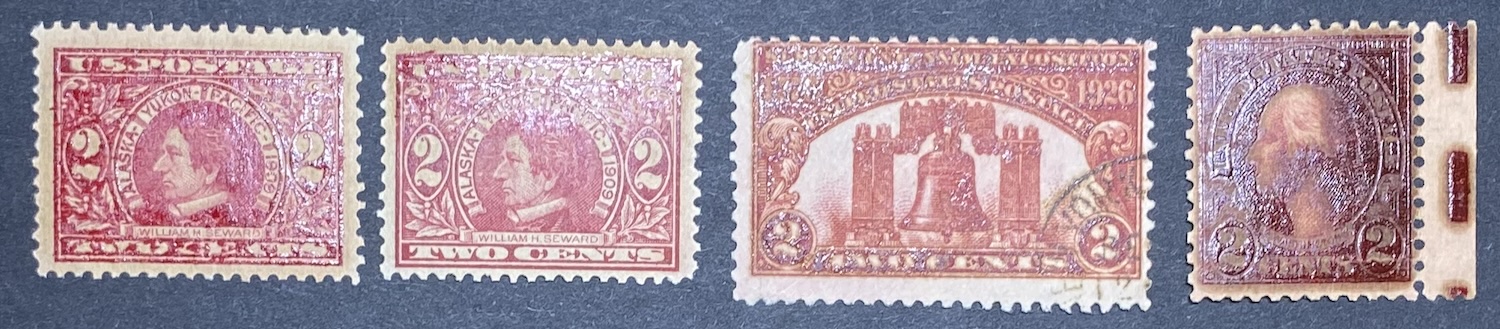
To quote the cert.... " it is not 634 variety, rather it is Scott no. 634 on normal paper, and with a pulled perforation at right..... (from one of four certs.)
No comment regarding the back. I sent two 632s and two 634s all with the same characteristics of the image showing on the reverse, like what you've posted, and all four came back negative with no comment regarding the reverse appearances. |
Send note to Staff 
|
|
|
Pillar Of The Community
United States
4183 Posts |
|
|
Valued Member
United States
108 Posts |
|
|
Al E Gator:
I have the exact stamp on cover as your certified 634VAR. I have not been able to figure out the market price for this stamp. I was trying to see if it's worth sending in for a certificate. Have you had any luck in what the value is of this variety? Do you think it's worth sending in? It's interesting that the color on your certificate lists Carmine. This variety is very dark (almost looks like lake with a sheen)
Thanks!
RT |
|
Send note to Staff
|
|
|
Pillar Of The Community
United States
1273 Posts |
|
|
Waynezach, if your referencing the varnish ink stamp, to my knowledge, there is no established value for the variety. There are two covers, a single and a block of four cert'ed in the PF. I am also unaware of any selling in an auction. If it were mine, I'd cert. it. You might want to post a good scan of the cover and of the stamp. |
|
Send note to Staff
|
|
|
Valued Member
United States
108 Posts |
|
|
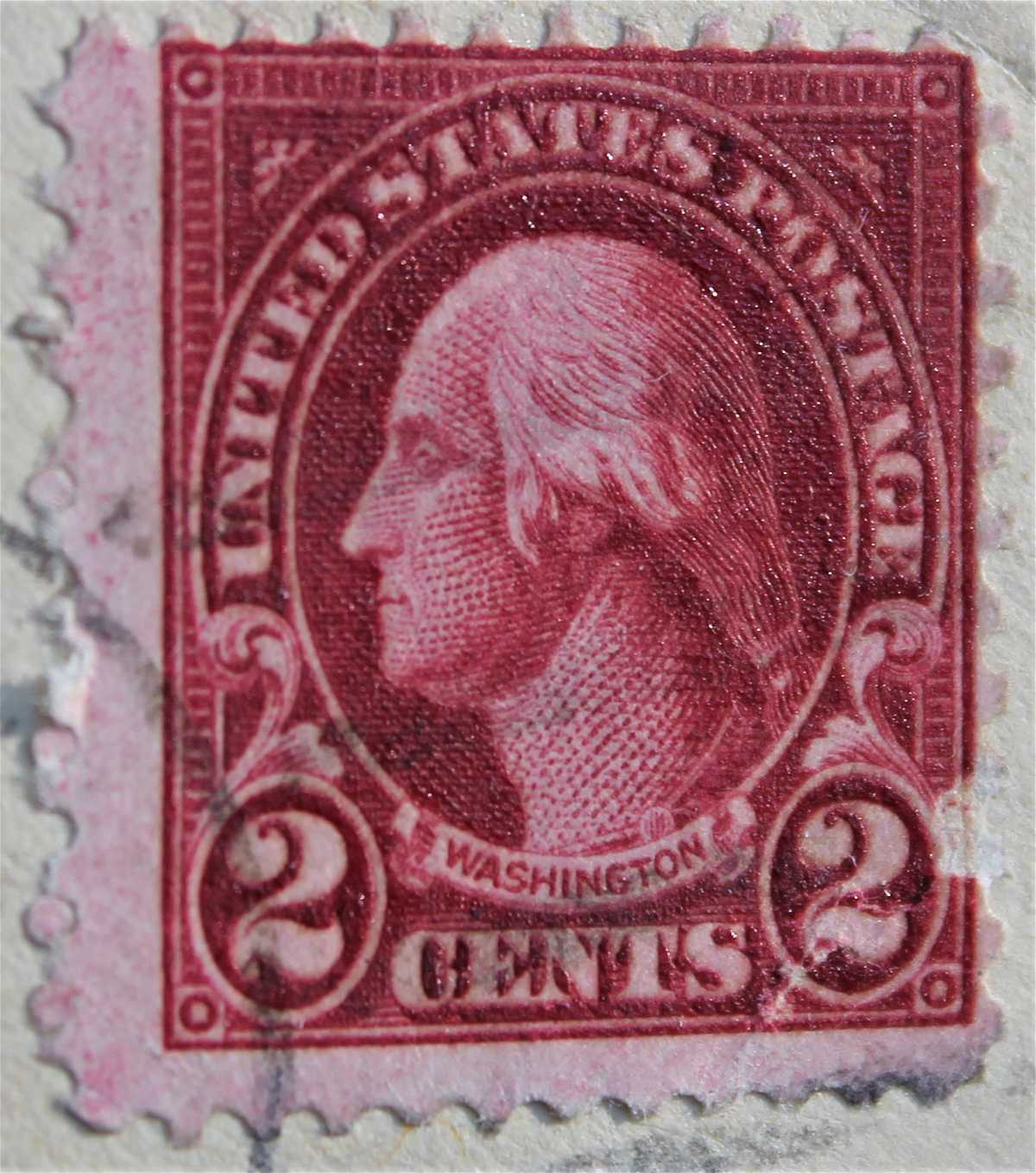 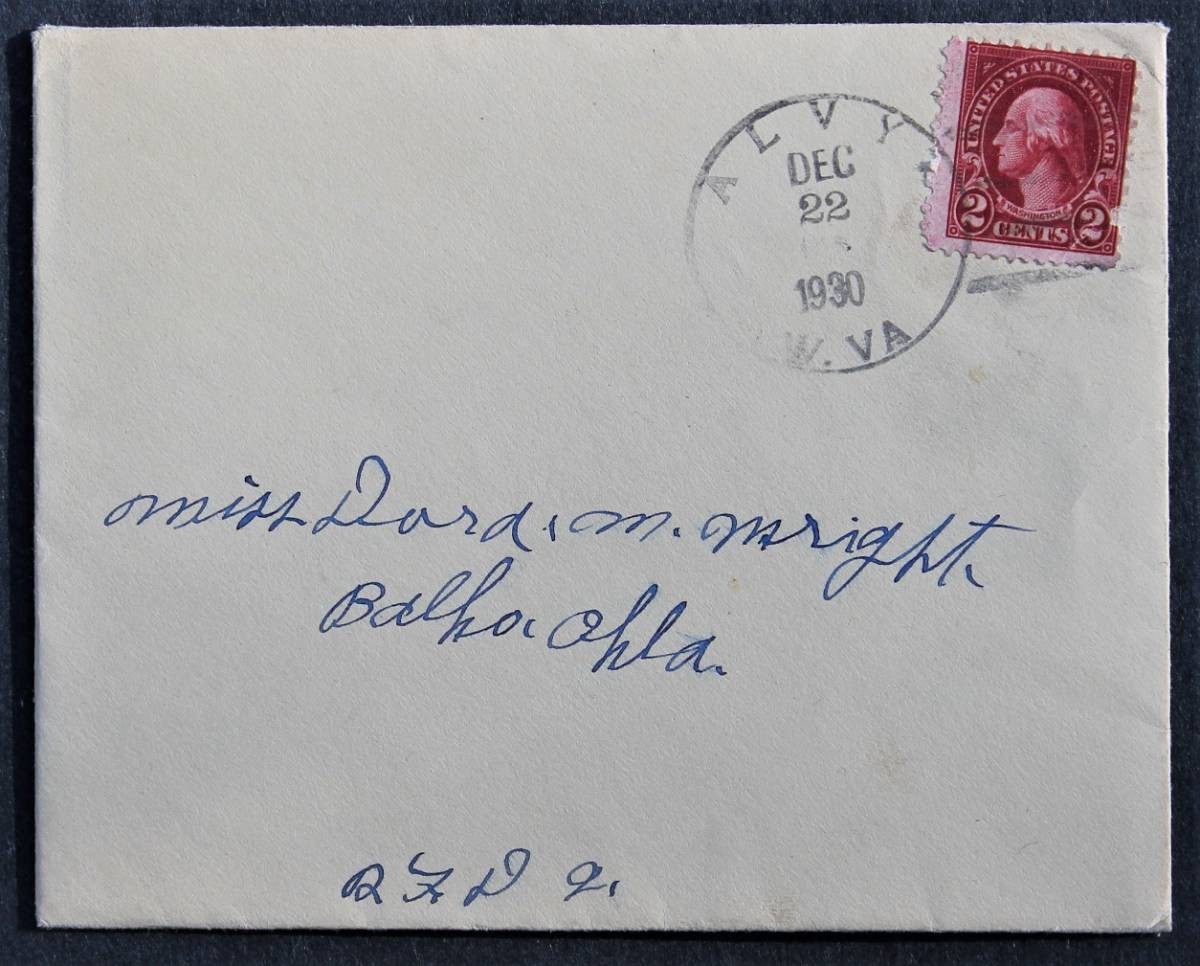 I took the close up photo at an angle so you can see the sheen and how thick the varnish is. I wonder if anyone has tried to do an audit on these. I believe I might have another one in one of my unknown "odd-ball" stock books. |
|
Send note to Staff
|
|
|
Valued Member
United States
108 Posts |
|
|
Oh, I forgot to ask, Did you use Sc# 634VAR when submitting and what value did you place on it to submit?
Thanks for you advice!
RT |
|
Send note to Staff
|
|
|
Bedrock Of The Community
12774 Posts |
|
|
Pillar Of The Community

United States
1159 Posts |
|
|
Bedrock Of The Community
12774 Posts |
|
|
The plot thickens. I found this when researching "varnish" inks. It is specific to British George V stamps but is easily applicable IMO to what we are discussing. VERY interesting. Quote:
The strange phenomenon of shiny paper and varnished inks on the stamps of GB
George V has been described above. However, it does not explain how all this came
about. For that, we need to call in forensic scientific experts. However, before we
look at the scientific evidence, let us first recapitulate on what we actually know.
1. All recorded specimens of varnished ink stamps involve the use of red tinted
pigments in the printing inks, regardless of their face value.
2). The paper seen in varnish inks stamps generally appears shiny and seems to
have been polished or stored under pressure.
During KG V's reign, many red pigments used in printing inks were formulated on
aniline-based or coal-tar extract-based dyestuffs. Some of these dyestuffs may
change colour, or take on a deeper hue, and even become a little more "rubbery" in
texture when subjected to heat (e.g., towards 95°C).
Also, one of the dyes used in the red inks of George V was alizarin crimson. This
was made from a coal-tar extract (anthracene). The process of manufacturing
alizarin had been invented in Germany in 1868.
If the ink is heated above 200 degrees Fahrenheit (95 centigrade) in an oven, it
becomes orange, and eventually extremely bright red!
Page 3
These same dyestuffs may produce similar effects when treated with other
chemicals, more particularly with formaldehyde, formalin, phosgene (coal tar gas)
and microscopic elements contained in burning wood gases.
An example of this kind of chemical reaction may be found when intense (or
deeper) orange vermillion shades of the KG V Royal Cypher 1d stamp were
"manufactured" by unscrupulous people the 1920's by treating stamps with
phosgene or coal tar gas.
The accompanying change towards a more rubbery, plastic looking appearance
when carried out under pressure (e.g. within 'crystalline' mounts in a heavy book)
could give rise to a more shiny and polished finish. In other words, the result could
be varnished ink stamps.
Varnished ink stamps are reported to have been found in the old 1960s style stock
books with acetate strips where the stamps had not been moved for many years. It
is therefore not at all surprising to learn that these same strips contained
formaldehyde type chemicals, the use of which has since been discontinued. This
could well be considered to be the "natural" way of producing varnished ink stamps,
although they might also been subject to heat at some period in the past.
Likewise, the same could be said for varnished ink items that occasionally appeared
in the 1950's and later in stock-books with plastic strips which had survived despite
having been very close to a major fire, for example during The Blitz in World War
Two. The books might then have been carefully tucked away for many years, only
to re-appear at a later date containing varnish ink stamps.
However, these occasional and rare sources of "naturally produced" varnished ink
stamps cannot in any way account for the relatively large number of varnish ink
stamps now being sold in the philatelic marketplace, and we can only conclude that
they must have been produced intentionally from the 1970s onwards.
With large profits to be made, it would not be too difficult for an unscrupulous
person to "manufacture" varnish ink stamps by placing old-style acetate over a
stamp, putting the stamp under pressure or under a heavy weight, and then
subjecting the stamp to extreme heat, perhaps in a wood burning oven, and this
might still be going on to this day.
This is also borne out by the fact that many varnish ink stamps have the odour of
burning wood, although this smell does lessen with time.
It must also be remembered that during the entire lifetime of the GV Royal Cypher
issues, coal and wood fires were extremely common throughout the country, as
were unfortunately the resultant house fires. In addition, during the 1914-1918 First
World War, Zeppelin dirigibles were flying over the country dropping incendiary
bombs on houses which would also undoubtedly have caused many more house
fires.
Page 4
To sum up, when taking everything into account, my inescapable conclusion is that
no varnish inks stamps were ever sold over the Post Office Counter during the reign
of King George V.
Therefore, it appears that all varnish ink stamps have been manufactured artificially,
either accidentally or intentionally, perhaps at the time of issue or at a much later
date than when the stamps were actually on sale at Post offices. To put it in a
nutshell, in my opinion all varnish ink stamps are fakes. https://hendonstamps.com/wp-content...H%20INKS.pdf |
|
Send note to Staff
|
|
|
Pillar Of The Community
United States
1273 Posts |
|
|
Waynezach, On the cert. Application, I just called it "#634 with Varnish Ink". I probably valued it a maybe $100.00 Below is the PF Cert. on that block of four #716. Interesting comments from the PF. That block may have come out of being in a crystal mount too long? Zebraman, yours, especially to last two could also be from crystal mounts. I've 5 or 6 (different Scott numbers singles) that I remove from crystal mounts that have "color changed" to a darker carmine color and have touches of " shinny glazing" on parts of the stamp surface. None as far gone as they could be if left longer. That's just a supposition on my part about what they may be, You have them in hand. You may want to have them cert'ed. http://pfsearch.org/pfsearch/pf_grd...lledfrom=lkp |
|
Send note to Staff
|
|
|
Pillar Of The Community
United States
1273 Posts |
|
|
Rogdcam, That's a very interesting article. I was typing while you were posting.  |
|
Send note to Staff
|
|
|
Bedrock Of The Community
12774 Posts |
|
|
Al - Interesting PF opinion! This is getting very interesting. The certified Siegel examples had PSE opinions, and I have to wonder if something was created via the "urban legend" method or perhaps a game of telephone. The most recent Siegel sales of these "varieties" was 18 years ago and I have to wonder why it suddenly stopped if the money was good. Maybe they learned something along the lines of what we are looking at here? All supposition but as heavily collected and studied as these issues are I have a hard time believing that these "varieties" escaped notice all these years. The British article makes a lot of sense and your comments about Crystal Mounts fits right into that conjecture. |
|
Send note to Staff
|
|
|
Valued Member
United States
108 Posts |
|
|
Thanks Al E. Gator.
I think this issue is going to be like the "Overrun Countries" reverse printing saga where one expert certifies while another does not recognize it. I had that happen to me before!
|
|
Send note to Staff
|
|
|
Pillar Of The Community
United States
1159 Posts |
|
|
Interesting conversation and insights. Excellent forum, as usual. That 716 block that Siegel sold for $1150 with a PSE certificate is the identical block that PF said is "an oily printing that should have been discarded as printer's waste"?! But the PF does certify the Varnish Ink variety as recently as 2020 as seen by Al E. Gator's cover. Maybe covers are more likely to get a positive opinion than single stamps since covers are less likely to be infused in crystal mounts versus individual stamps. I will add a note to my stamps but will skip getting certificates. Not worth a $27 gamble for me when I don't intend to sell them right away anyway. |
|
Send note to Staff
|
|
|
Bedrock Of The Community
12774 Posts |
|
|
ZebraMan said: Quote:
That 716 block that Siegel sold for $1150 with a PSE certificate is the identical block that PF said is "an oily printing that should have been discarded as printer's waste"?! I did not pick up on that! Absolutely amazing and another reason why the PF not including dates in their opinion search results makes me  and  and  as well as  . |
|
Send note to Staff
|
|
|
Replies: 42 / Views: 6,023 |
|



 Posted 01/26/2021 10:46 am