| Author |
 Replies: 11 / Views: 1,997 Replies: 11 / Views: 1,997 |
|
|
Valued Member
54 Posts |
|
|
One of my biggest problems is determining the difference in colors. One, the Great Britain 113, is carmine rose and the 113a is vermilion. I Googled the two colors and according to the examples this looks like the vermilion. I looked at the two in Hipstamp and don't see a difference in the stamps. Carmine rose is a dusty gray rose according to one site. So again I am stumped on color along with many other red stamps I have. Thanks 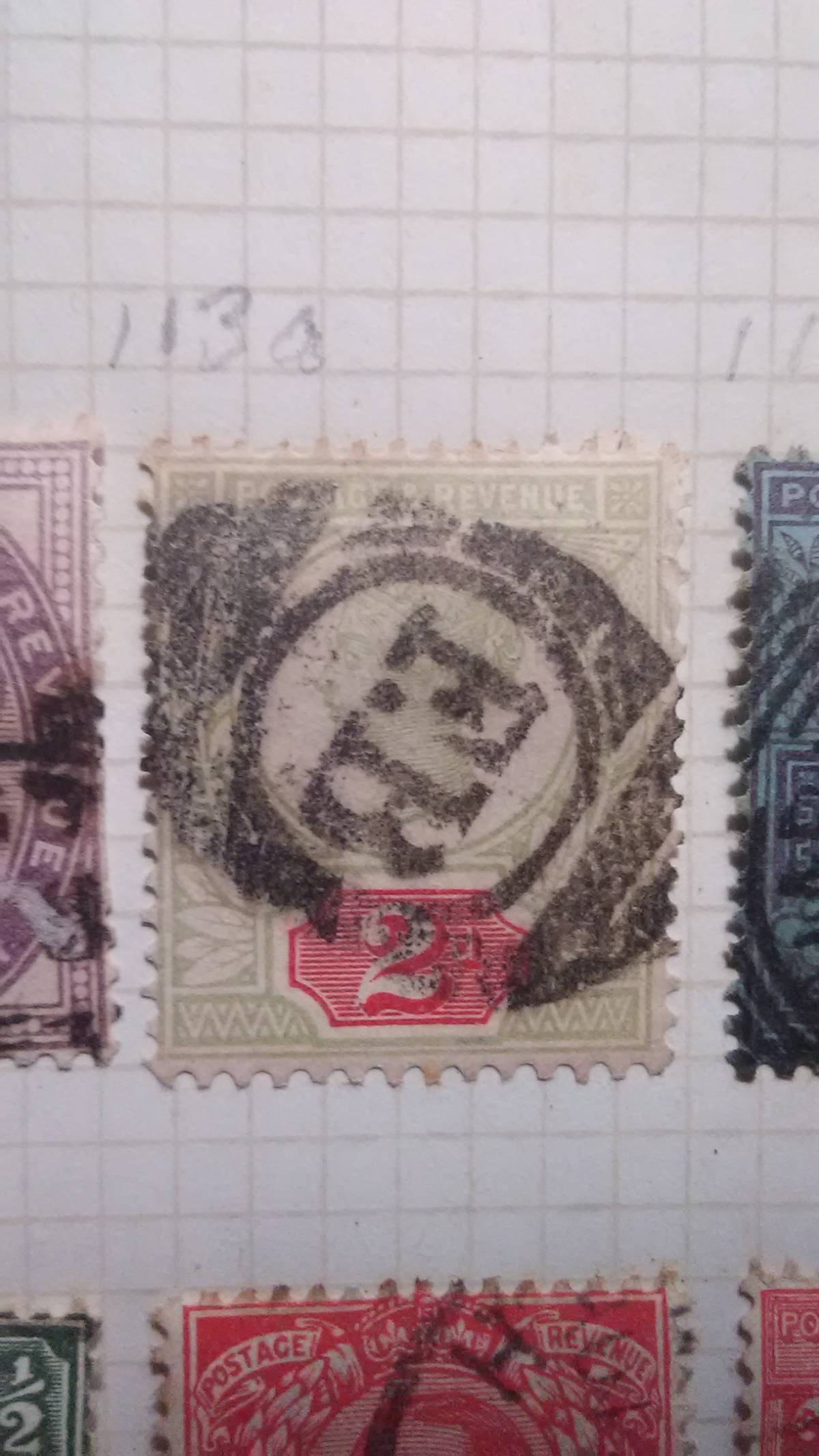 |
|
Send note to Staff
|
|
|
|
|
Valued Member
United States
328 Posts |
|
|
It really helps if you accumulate a number of stamps rather than just a couple when sorting the colors. In terms of old Great Britain stamps, you also have the problem that there were typically more printings than are listed in the catalogs. Also it really helps with mint stamps that have not been climatized. Used stamps can lose some of their color characteristics by being soaked and also in terms of how they are treated in the mail. All that considered, you might want to get a Stanley Gibbons Stamp Colour Key (see image below). It is not a perfect match for your stamps, but it will help you discern the difference in colors of stamps from their catalog.  |
Send note to Staff 
|
|
|
|
Pillar Of The Community
United States
3224 Posts |
|
|
What Scott calls vermilion for this stamp is more what most people would call scarlet to scarlet vermilion. The first two examples here are Scott 113a (SG 199): https://www.theswedishtiger.com/gb/K30.htmlNow compare the green colors on that site with your stamp. Your green is heavily faded, since for this issue, green is fugitive/soluble in water, which happened when soaked to remove backing paper. So are the red colors to a certain extent. Therefore shades cannot often be proven reliably in used stamps especially with this issue, the preceding Victorian issue and the later Edward VII definitives. |
|
Send note to Staff
|
|
|
Pillar Of The Community
France, Metropolitan
3756 Posts |
|
|
Here is an example I have.Color change in Straits Settlements SG 166.Green and Red/ yellow. Light yellow paper. 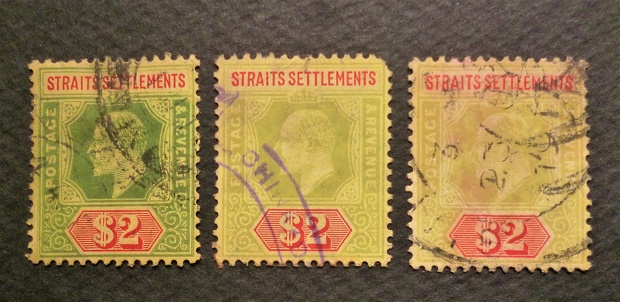 |
|
Send note to Staff
|
|
|
Valued Member
54 Posts |
|
|
So which one is this one? I put stamps on the market with ebay and Hipstamp. I don't want to call it something that is not and get buyers angry at the same time I wouldn't want to sell it as a 113 and it's a 113a which is worth much more. Here is a photo of another one I have. The green is a more bluish grey and the red is a bit mare dull like the rose color. 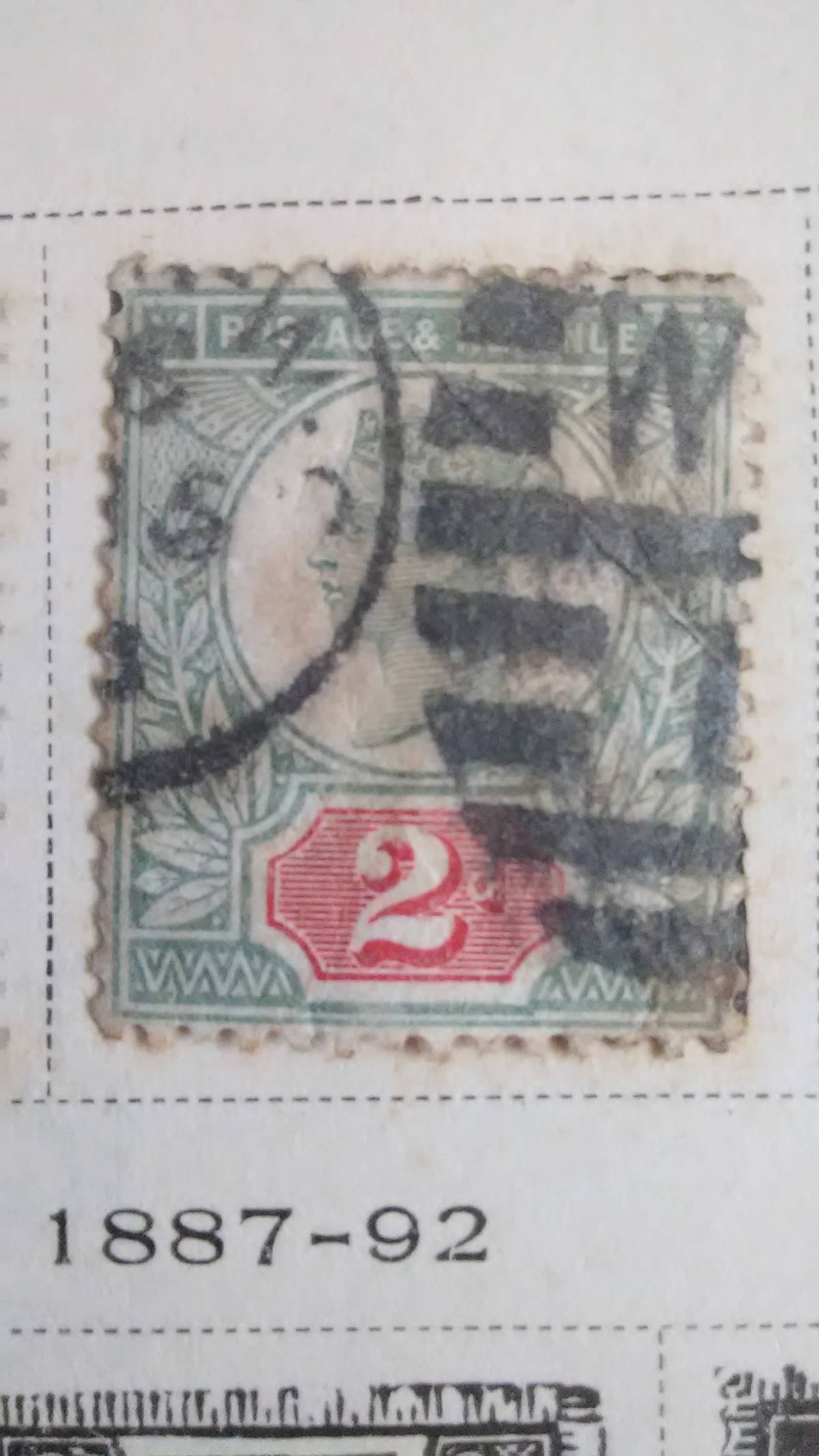 |
|
Send note to Staff
|
|
|
Valued Member
54 Posts |
|
|
Pillar Of The Community
France, Metropolitan
3756 Posts |
|
|
Looks like carmine rose ___________________________________________ Scott lists the (a) type as green & vermillon: 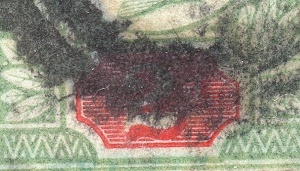 |
|
Send note to Staff
|
| Edited by perf12 - 10/15/2019 2:49 pm |
|
|
Pillar Of The Community
United States
3224 Posts |
|
|
I would agree that the second stamp shown is Scott carmine rose. The green there is also faded slightly including a washed out spot below the value tablet. I am very disappointed that you didn't look at the link provided and did not make your own determination of the color of either stamp; Swedish Tiger is quite the expert. I would say the first stamp is not in (Scott's) vermilion. You are missing the big picture: the green is faded without question so is not the value tablet color altered as well? Neither color can be trusted in your examples, in other words. As a faded, off-center stamp with a heavy cancel, I doubt the first stamp is worth even 10% of catalog. The FB lozenge killer has a little merit on its own, but most collectors would only keep the stamp as a reference or space filler until a better one comes along. The second stamp has a stain spot and small creases and is similarly devalued. All the singles and sets on ebay, etc. that are faded have probably sat and will sit there for ages unless bought by an unknowing newbie who will regret the purchase once they discover they have bought damaged stamps. A hard lesson learned and perhaps a collector lost. |
|
Send note to Staff
|
| Edited by hy-brasil - 10/15/2019 4:54 pm |
|
|
Pillar Of The Community

United States
814 Posts |
|
|
Agree with hy-brasil. The link he provided is a terrific tool, especially for questions of color. You should take the time to study it. KGVIStamps also offers good advice. Color distinctions are a perpetual problem for everyone, but he mentions some helpful techniques. Asking others to look at a scan and decide for you isn't one of the best. |
|
Send note to Staff
|
|
|
Valued Member
54 Posts |
|
|
I did look at the link and studied it. It gave me a bit of understanding but was confused at the fact that some are scarlet and none of them are vermilion. If the examples were those indicated in the scott catalog which are carmine rose and vermilion, I wouldn't have had to ask the question again. I already understand the condition aspects and the degrading of stamps with flaws. That is a given. I just want to start learning the colors better so I know what to list them as. |
|
Send note to Staff
|
|
|
Pillar Of The Community
France, Metropolitan
3756 Posts |
|
|
That's understandable.Anglo-saxons (British) use the word Scarlet more often than Vermillon.
In French ,Scarlet color would be the word (Ecarlate),which is just a bright red.
Vermillon (red with a tinge of orange) color is well known for the 1F Ceres French stamp. |
|
Send note to Staff
|
|
|
Valued Member
United States
328 Posts |
|
|
Since you are not sure about the color, I would suggest that when you list it for sale put a range of catalog numbers that are possible rather than try to actually identify it yourself. Let the bidders decide for themselves. That way you won't be misrepresenting it. When you get a few more copies try comparing them, but look for stamps that are not heavily cancelled so they are closer to the original color when they were printed. |
|
Send note to Staff
|
|
|
| |
Replies: 11 / Views: 1,997 |
|



 Posted 10/15/2019 03:42 am


