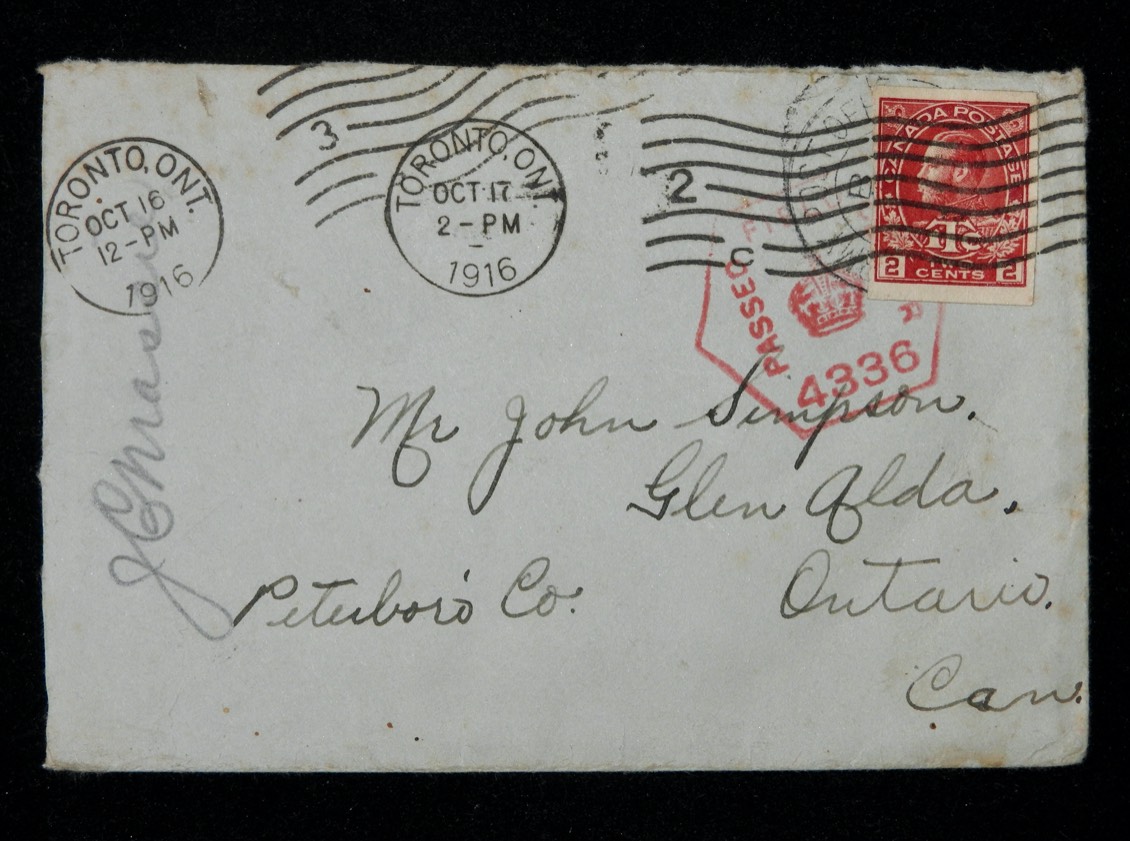
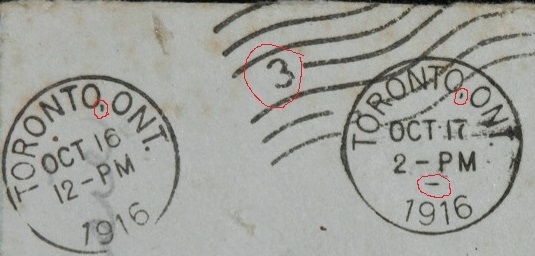
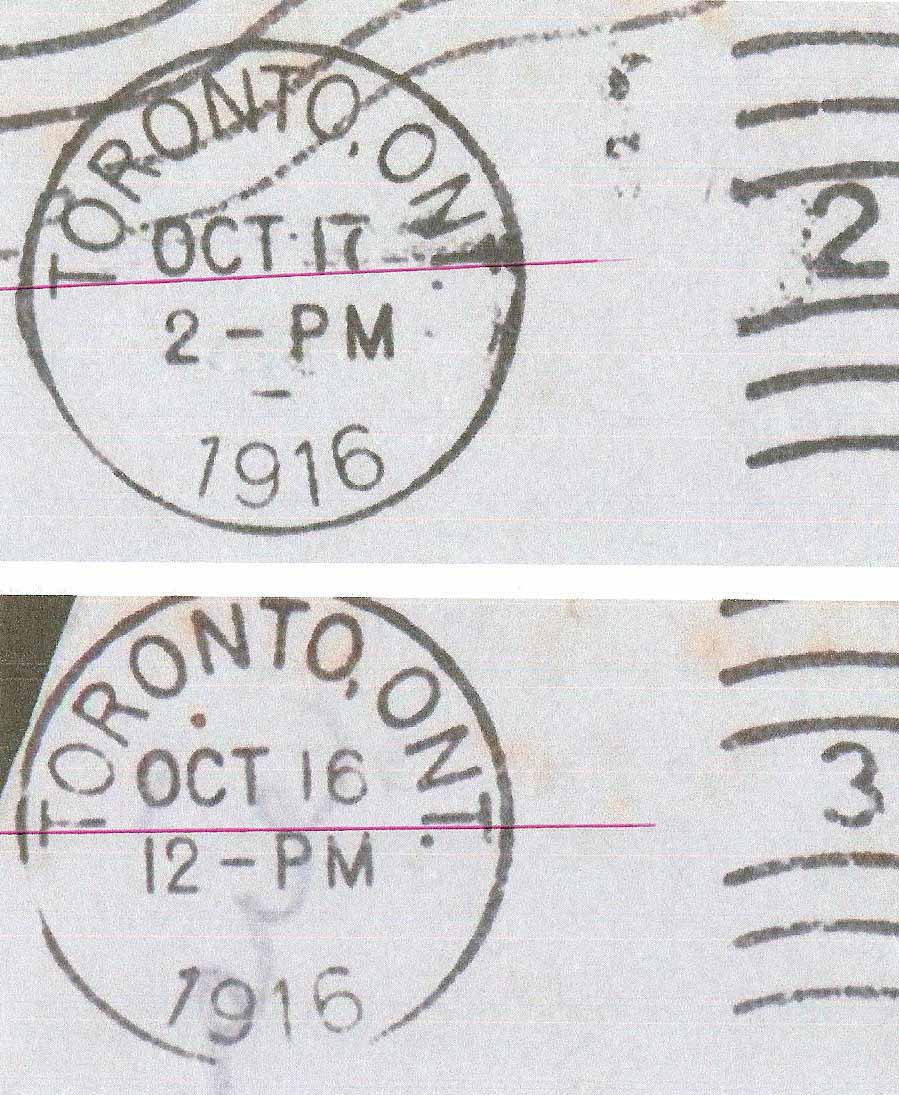
The leaders of our forces in WWI new early on that morale was boasted considerable within the ranks if there was a reliable flow on mail.
The people who censored the out going mail were regimental people that they fought and trained with, they were well known by many.
The soldiers disliked the thoughts of someone reading the personal letters they were sending home to their loved ones.
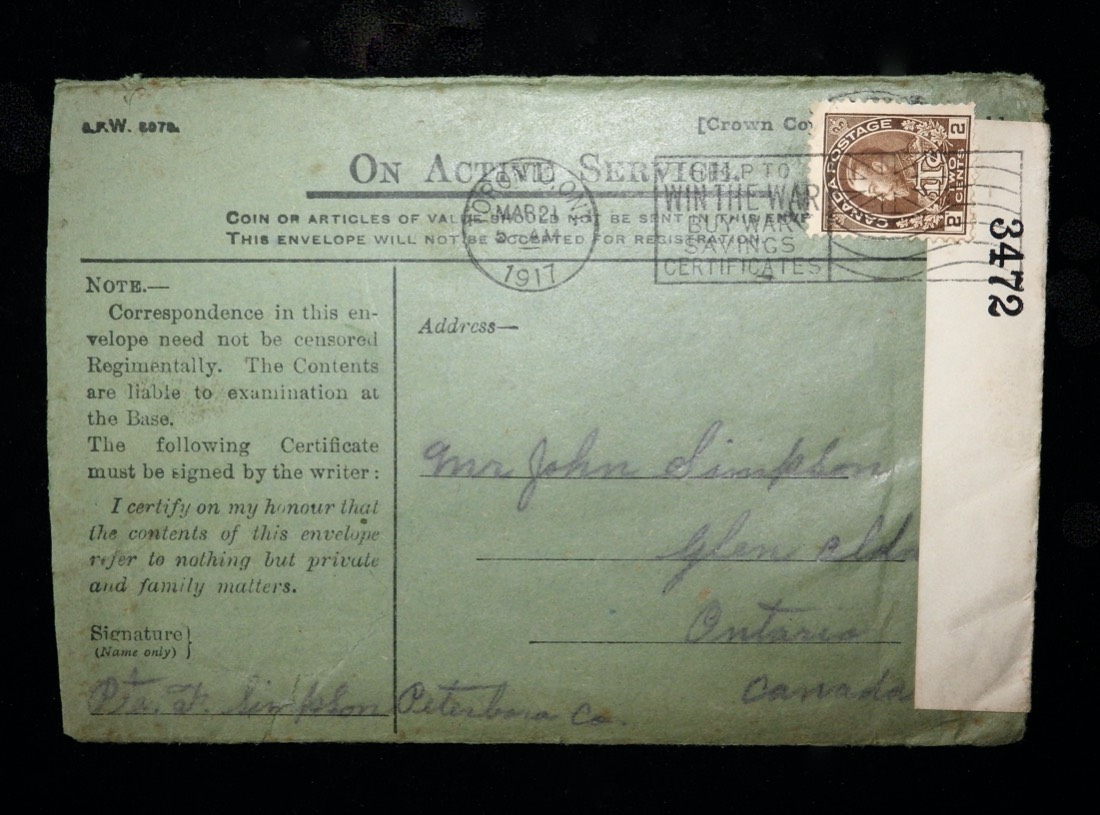
With this in mind the military introduced a honour envelope, now a soldier would be able to sign the envelope declaring the content was nothing but private and family matters.
Letters in the honour envelope would not need a field censor stamp but instead travel to the main base and there they would be subject to being censored.
The procedure in mailing from the front back home was to hand the letter to the low ranking officer assigned to censoring the content. Only after he read it would he stamp it with a field censor stamp and sign it.
It was only after censoring that it was handed over to the Field Post office and stamped as such, from the field post office it was sent back to the main base.
Now at the main base it could be subject to another censor or if it was in an honour envelope this is where it could be censored.
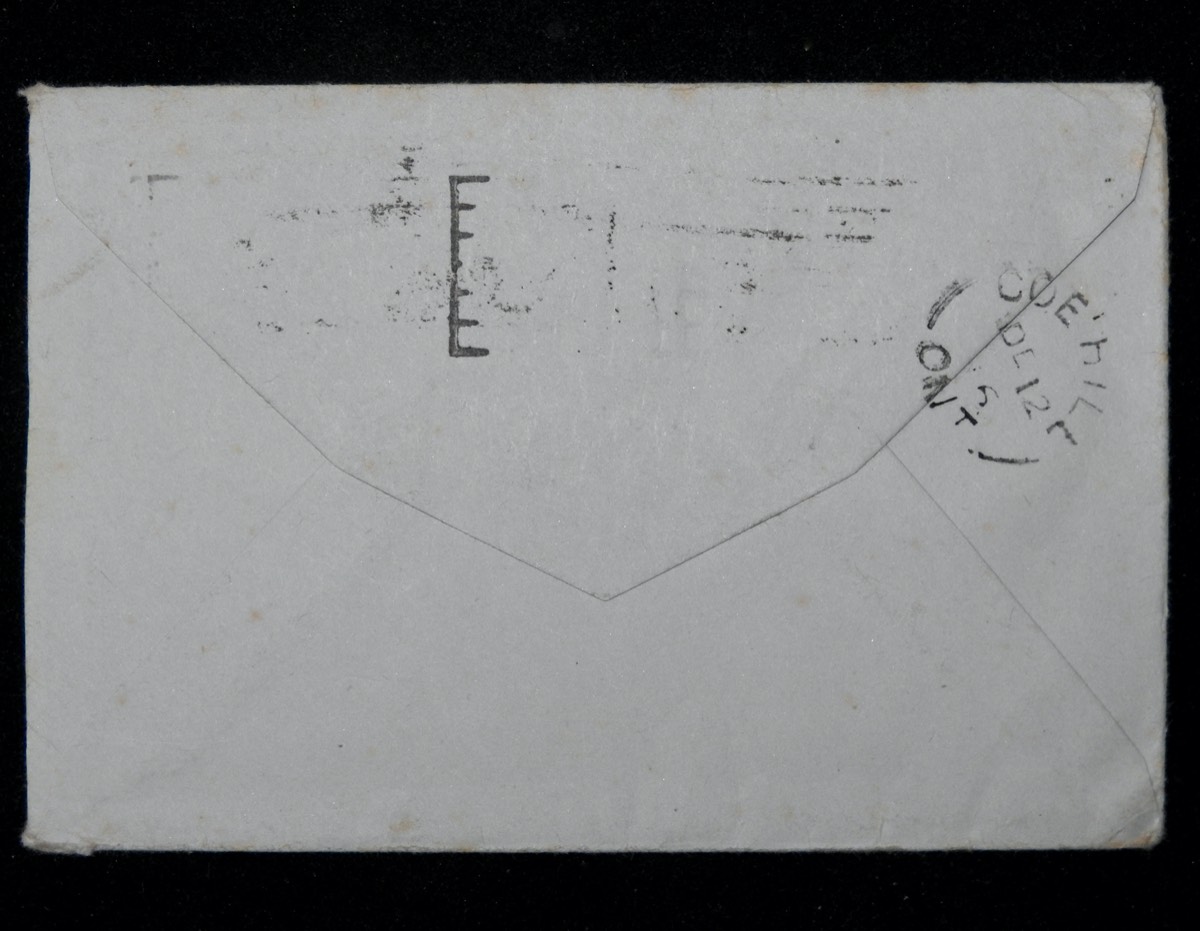
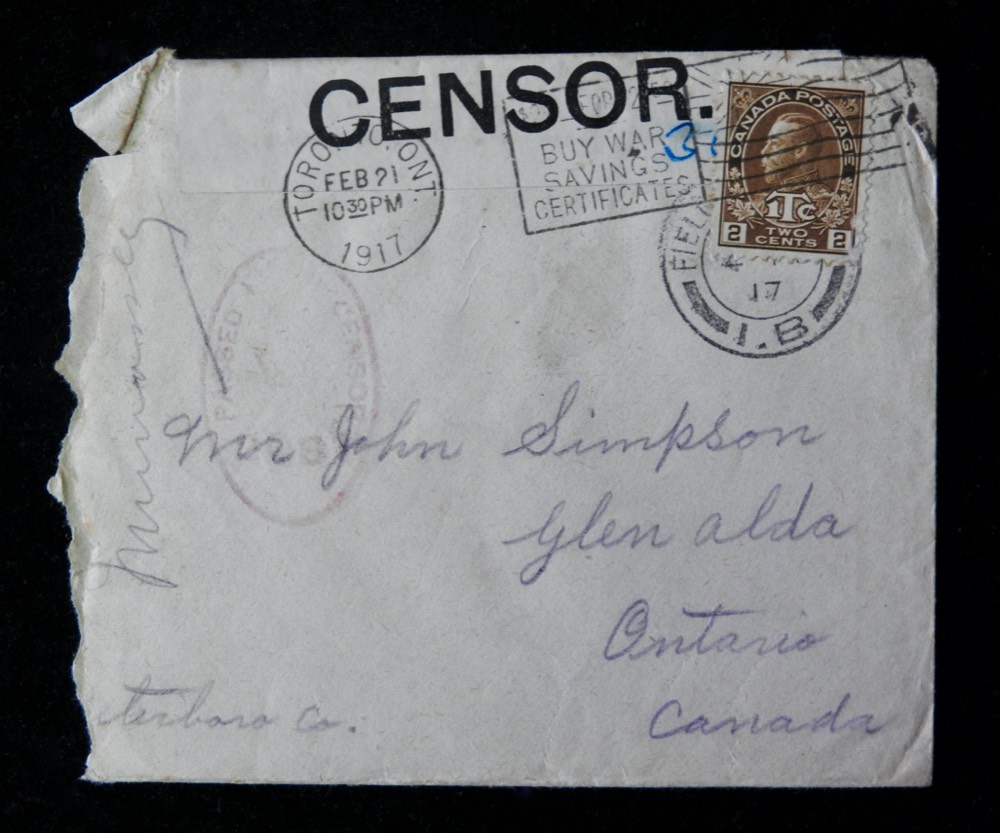
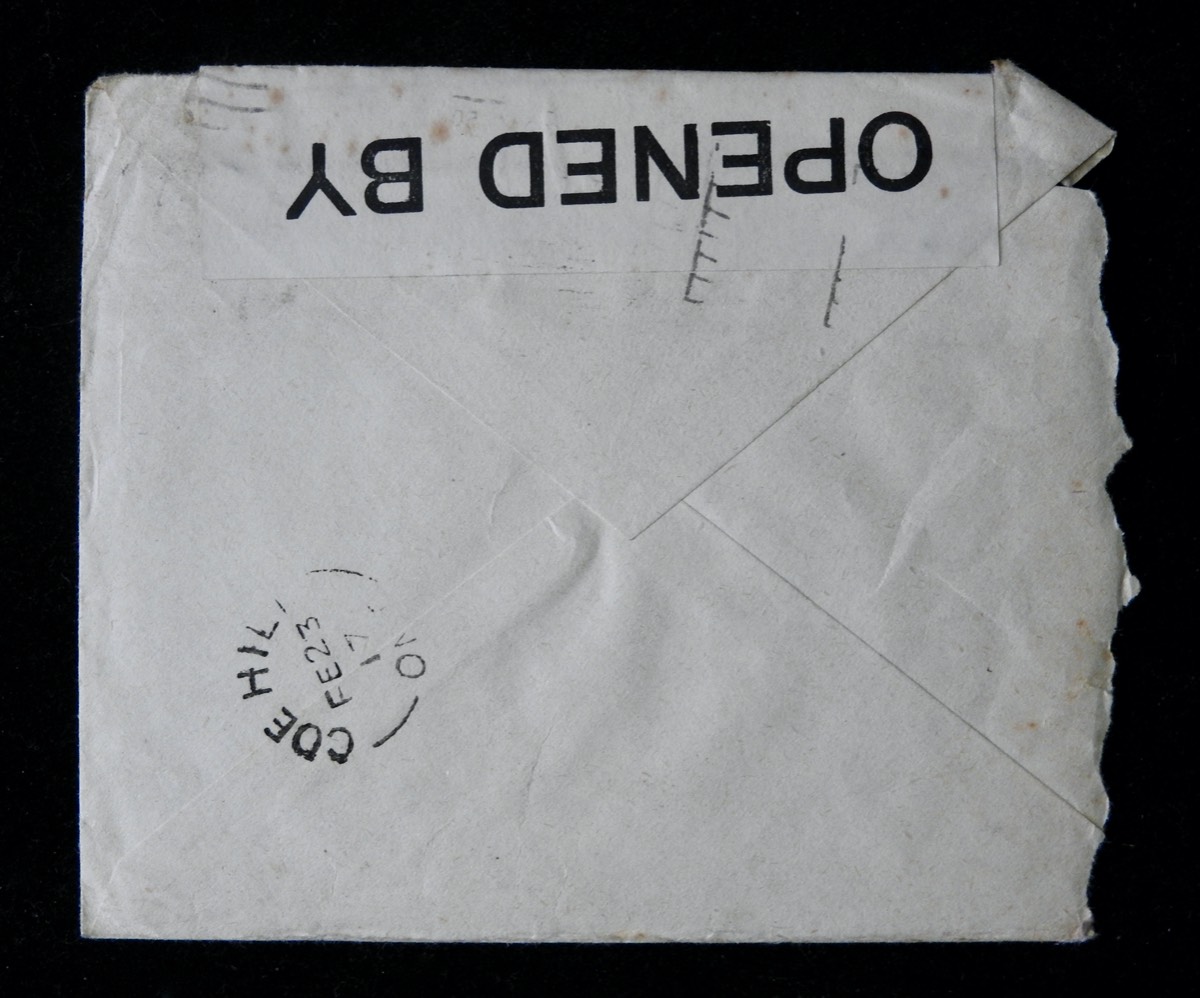
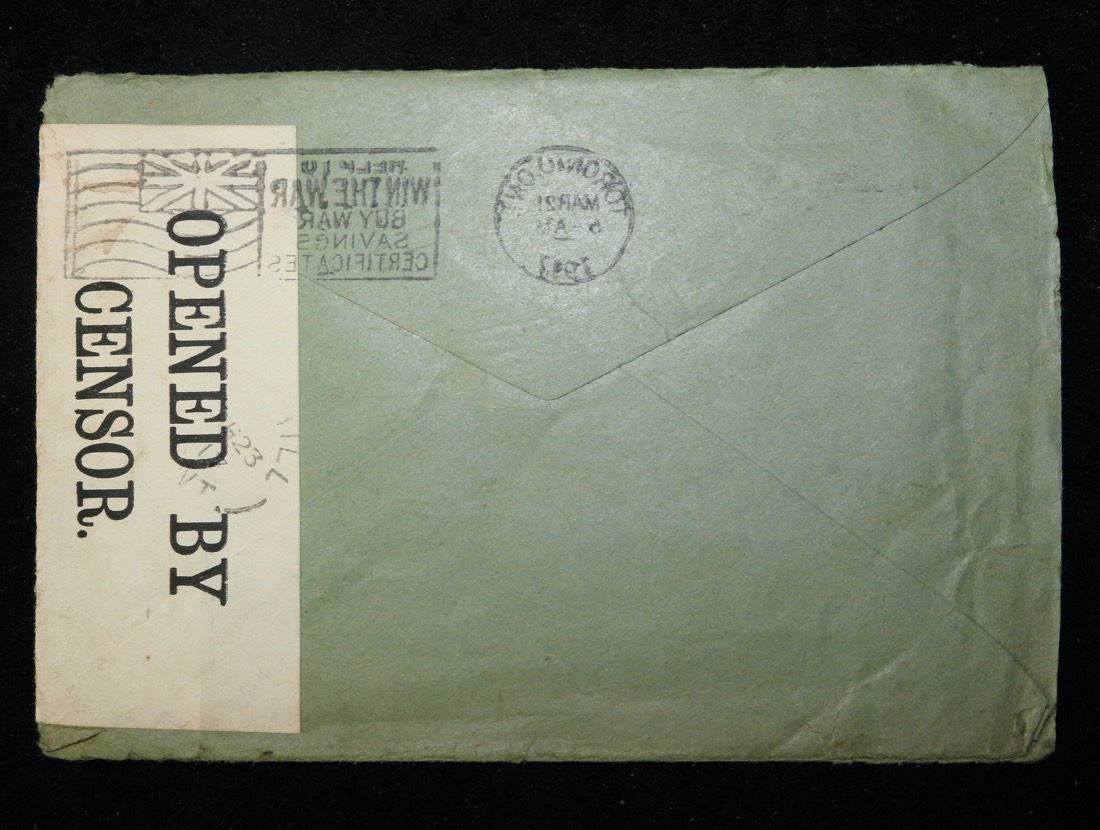
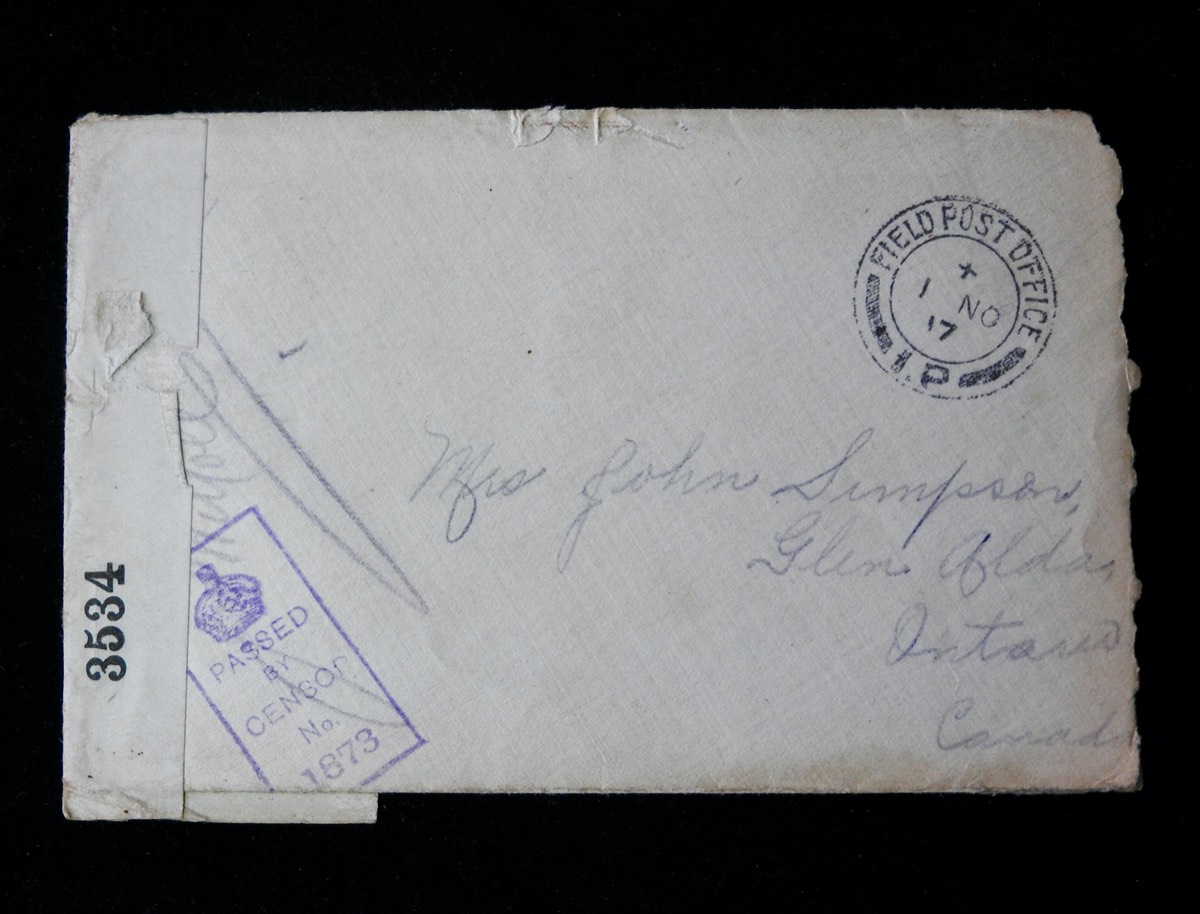
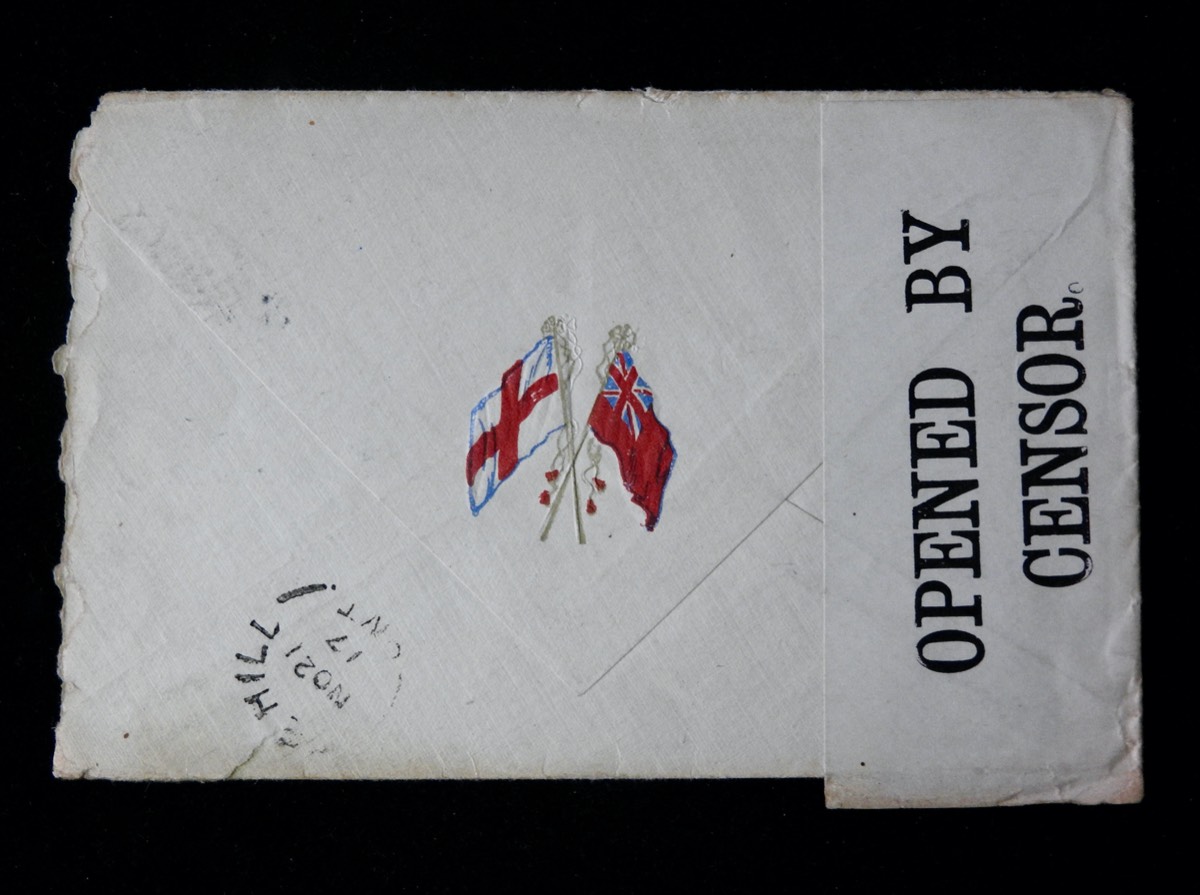
Below are four examples
1. Passed field censor and signed on left side, stamp added and canceled in Toronto.
2. Passed field censor and signed on left side also was censored at main base, stamp added and canceled in Toronto.
3. This is the Honour envelope so there's no field censor stamp or signature however it was censored at the main base, stamp added and canceled in Toronto.
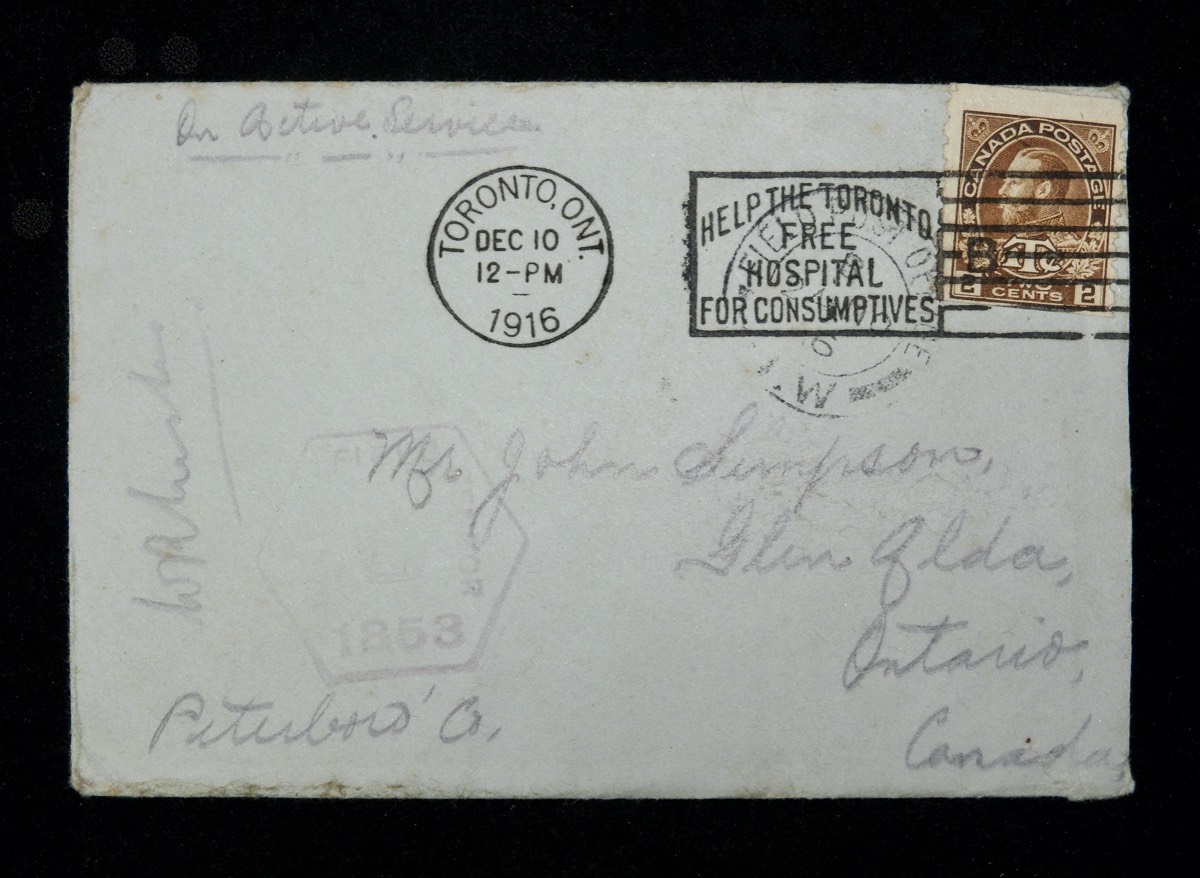
4. Here's another example of a letter being censored twice, this one is interesting because you can see the signature from the field censor is under the censor label applied at the main base.
Note also they had stopped adding stamps to the envelopes around this time.
Cheers, Bill
uploaded/Hounddog Bill/20200113_7F70C8D7-8E71-482D-8D56-A15D9C70C952_1_201_a-scfopt.jpg[/img





 Posted 01/07/2020 1:27 pm