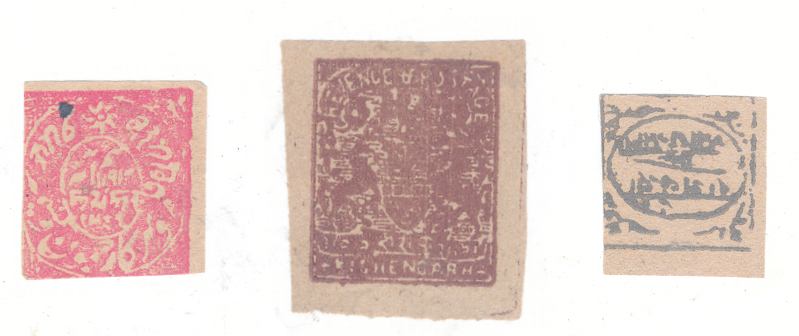
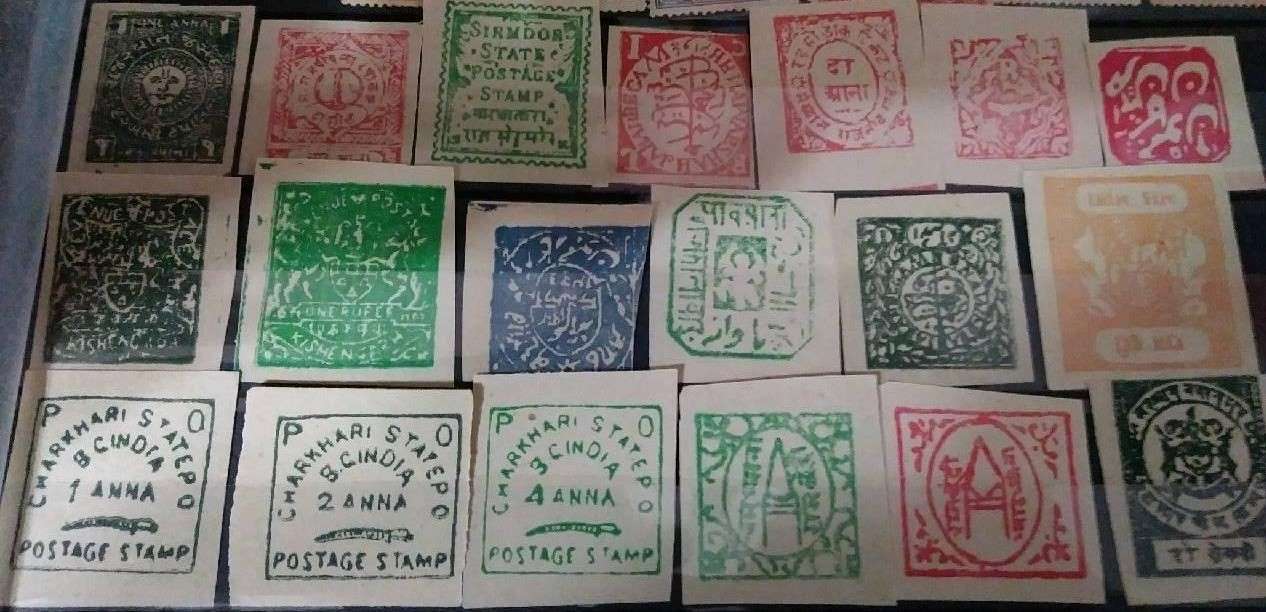
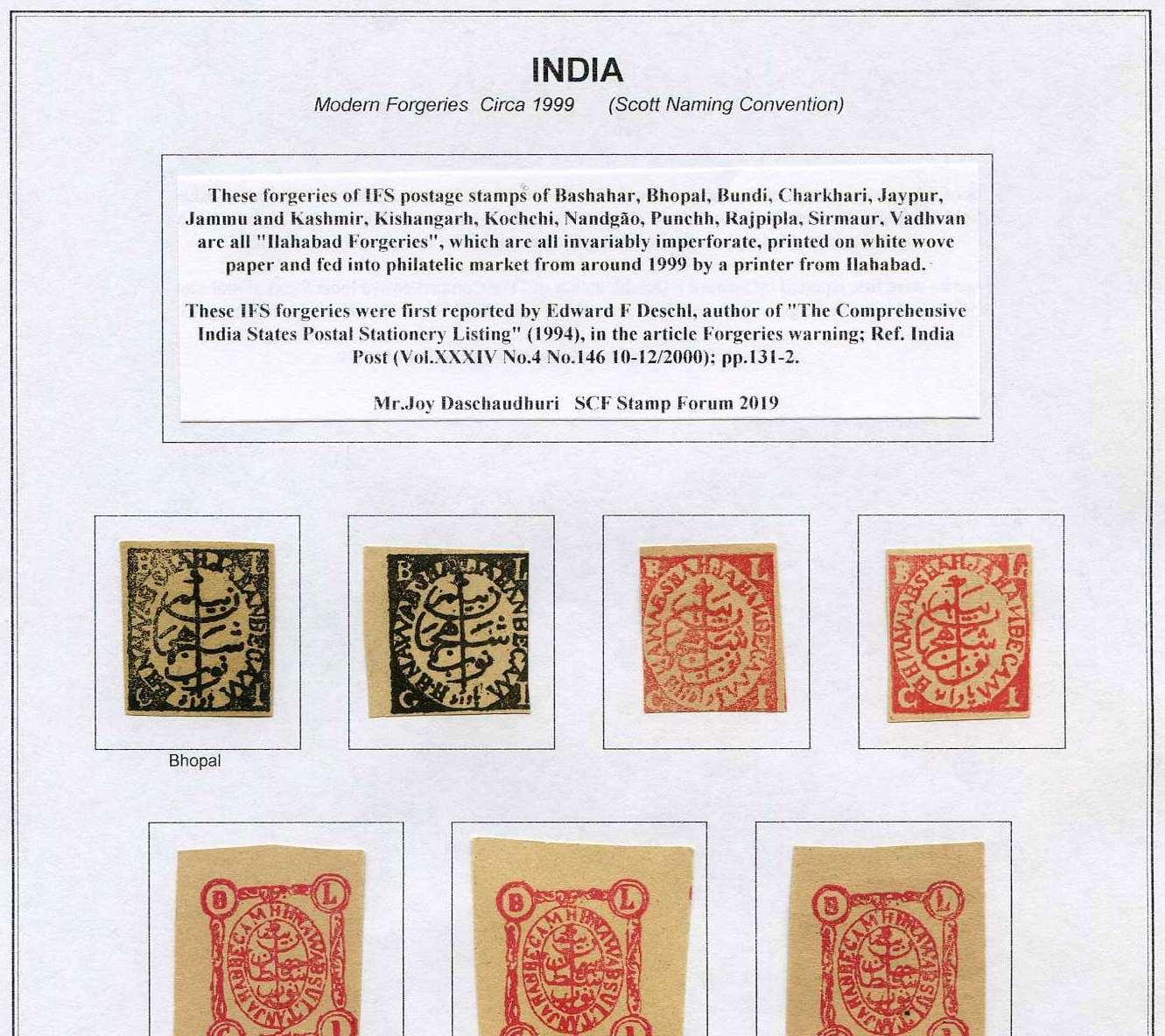
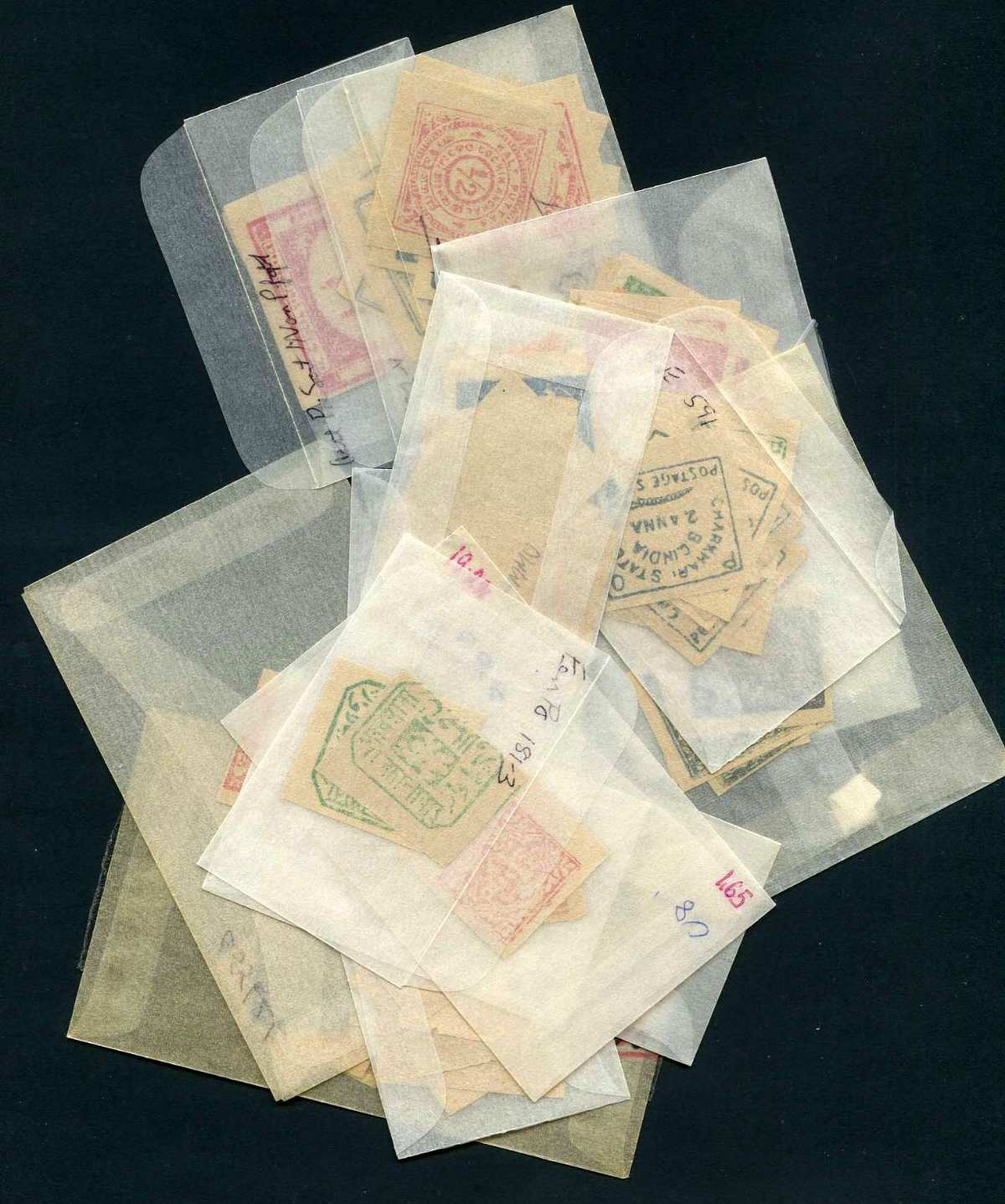
These are from the same source as jol34's stamps.
They appeared in the late 1960s or early 1970s and allegedly came from the Indian city of Allahabad. They were supposedly produced as imitations and not intended to deceive, but found their way as spacefillers into many collections worldwide. They remain extremely common and are virtually worthless.
The following is taken from a posting elsewhere by Tony MacGillycuddy (tonymacg on here):
- The nature of the printing: The forgeries tend to have a very lifeless look. If the genuine stamp was typeset or handstamped, the stamp should look typeset or handstamped.
If typeset, there will probably be indentations around the image; if handstamped, there will almost certainly be irregularities in the image - lighter and darker, and imperfectly printed parts. If the printed image is flat and uniform, be very wary.
- The paper: The forger has used rather cheap quality brownish-white wove for any stamps that were originally on 'white' papers. The coloured papers used by the forger usually bear no resemblance at all to the real thing: the colours are usually far too garish, while the originals tend to be on rather more subtly coloured papers.
- Spacing of the impressions: The impressions of the forgeries are usually widely spaced on the sheets, while the genuine stamps were usually (frugally) spaced close together. Of course, there are exceptions to this rule, but taken in conjunction with the other indicators, you should be able to pick the forgeries with confidence.
- 'Irrationality': Some of the forgeries are simply obviously wrong: wrong colour, wrong paper or howling rarities that are just not going to turn up on ebay at a starting bid of 99 cents.





 Posted 02/16/2020 02:10 am