| Author |
 Replies: 11 / Views: 1,313 Replies: 11 / Views: 1,313 |
|
|
Valued Member
United States
11 Posts |
|
|
Does anyone know Newfoundland stamps well enough to know which this one is? StampWorld lists several possibilities, all of which have no watermark and are 12 perforated. 1) 1866 Definitive Issues- type 1, yellowish paper 2) 1866 Definitive Issues- type 2, white paper 3) 1880-1896 Definitive Issues- type 1, yellowish paper, different frame (I'm failing to see a difference, but the pictures are pretty small) Looks yellowish to me... 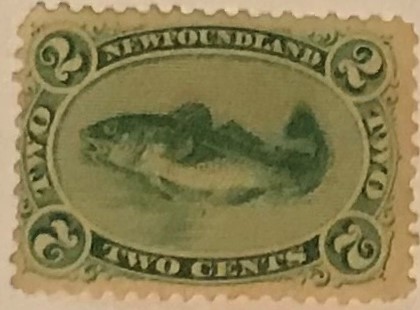 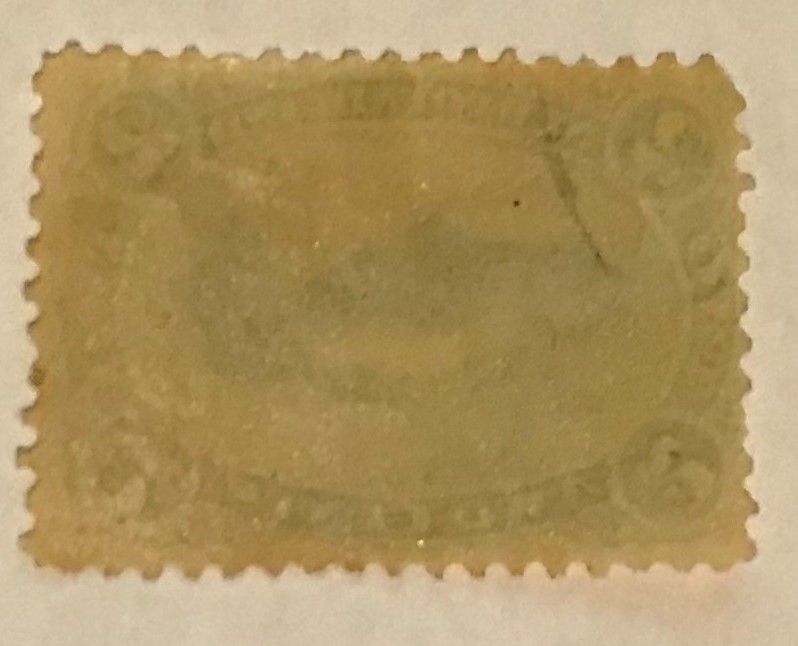 *** Moved by Staff to a more appropriate forum. *** *** Moved by Staff to a more appropriate forum. *** |
|
Send note to Staff
|
|
|
|
|
Rest in Peace
7742 Posts |
|
|
Quote:
Looks yellowish to me... Hi stampy1...You have the NFLD stamp in hand...If it looks yellowish to you and is thin paper, then it is probably the codfish Scott 24a...Issue date 1870. Robert I ran it through a program to make sure there was NO watermark. 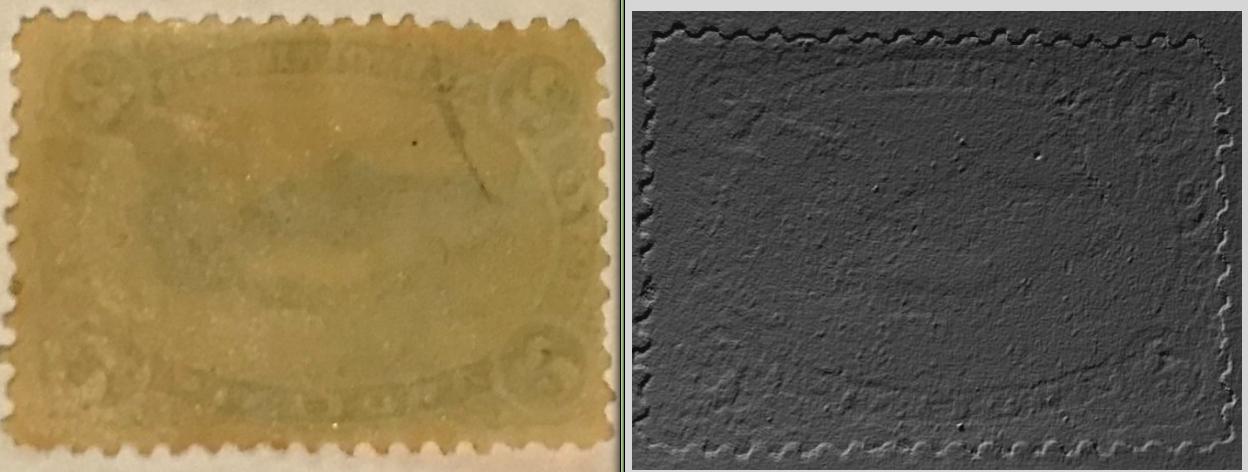 |
Send note to Staff 
|
|
|
Bedrock Of The Community
Australia
38679 Posts |
|
|
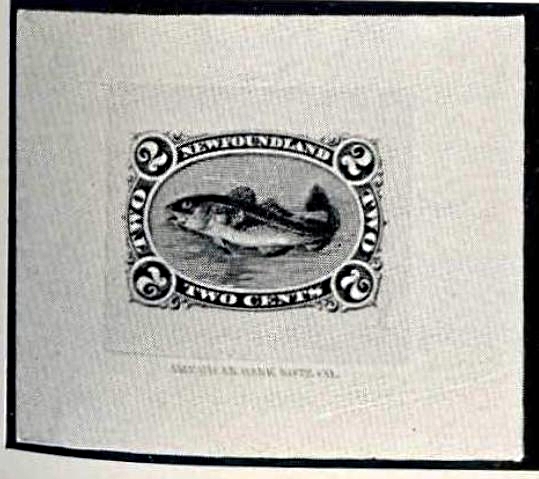
A FYI (For your Interest) The Codfish was designed by Charles Jeens, The American Banknote Company, altered the tail of the fish, in order to get it into the space available. wiki Jeens worked on postage stamps for British colonies. He was one of the engravers engaged on the Royal Gallery of Art (1854) edited by Samuel Carter Hall, and executed plates for The Art Journal. About 1860 he became associated with Macmillan & Co., for whose Golden Treasury series and other publications he produced many vignettes, and portraits including a series of Scientific Worthies in Nature. 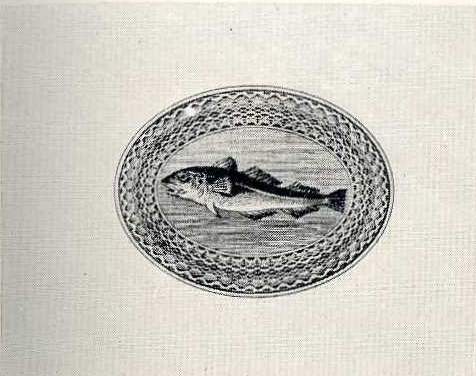 |
|
Send note to Staff
|
| Edited by rod222 - 02/23/2020 10:58 pm |
|
|
Valued Member
Canada
395 Posts |
|
|
According to the Unitrade Catalogue:
24 is on stout white paper
24a is on thin yellowish paper
It can't be 46 or 47 because they have only two copies of the digit "2" in the frame (both at the bottom).
Jan |
|
Send note to Staff
|
|
|
Rest in Peace
7742 Posts |
|
|
Valued Member
United States
11 Posts |
|
|
Thank you all, your input is much appreciated!
Robert- I've heard of those programs. Pretty slick...are they accurate? |
|
Send note to Staff
|
|
|
Rest in Peace
7742 Posts |
|
|
stampy1 There are a lot of good software programs out there. here is an example trying to see if a cancel was over advertising on a cover, or advertising printed over cancel. Looks like according to the results show advertising was printed over the cancel...Just saying. Robert 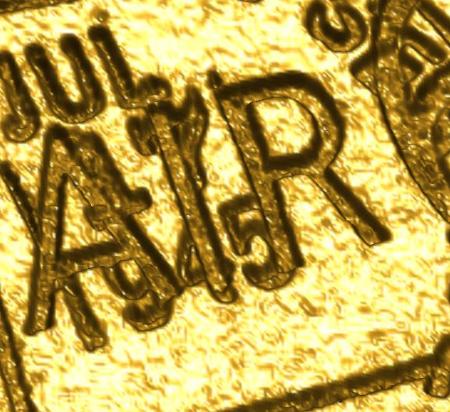 |
|
Send note to Staff
|
|
|
Valued Member
United States
11 Posts |
|
|
I sure could use help in that area. As a stamp newbie, I find watermarks to be the most frustrating component of identifying stamps. |
|
Send note to Staff
|
|
|
Rest in Peace
7742 Posts |
|
|
Moderator

United States
12330 Posts |
|
|
The images are 2D, they do not contain 3D (Z axis) data. But imaging software is able to detect small deltas in colors, tints, and shades in the form of a color histogram. Image color histograms are a representation of the distribution of colors in an image. Histograms appear to be 3D by assigning 'height' to the deltas in the colors. In Robert's gray image above it is tempting to think that it has detected 'height' or a embossing on the stamp but it is actually analyzing the color deltas in the stamp image. If you took a piece of multicolored steel which was perfectly flat, a color histogram would assign 'heights' to it. The only way a watermark could be detected using this method is if there is a difference in the colors. If a stamp was perfectly monochromatic and the scanner and computer detected color deltas, it may well be a watermark. But stamps are not a single color, they are multicolor and often have cancels. If you look closely at Robert's histogram above, you can see how the cancel on the face of the stamp has been detected and is assigning 'depth' to it. (In this histogram it is assigning depth to the dark colors.) Note how the black spot appears as a pit in the histogram image.  More info on image histograms https://en.wikipedia.org/wiki/Image_histogramDon |
|
Send note to Staff
|
|
|
Valued Member
United States
46 Posts |
|
|
on the 1866 issue, bottom set of twos are printed upside down. on the later set the bottom set of twos are printed right side up. |
|
Send note to Staff
|
|
|
Rest in Peace
7742 Posts |
|
|
stampy1
aucguy says latter stamps were printed with the bottom 2's printed upright.
True, but those were Scott 46 printed in 1882 and Scott 47 printed in 1896, but were a different set of codfish stamps. Don't get them confused with your Scott 24a.
Robert
|
|
Send note to Staff
|
|
| |
Replies: 11 / Views: 1,313 |
|



 Posted 02/23/2020 8:08 pm