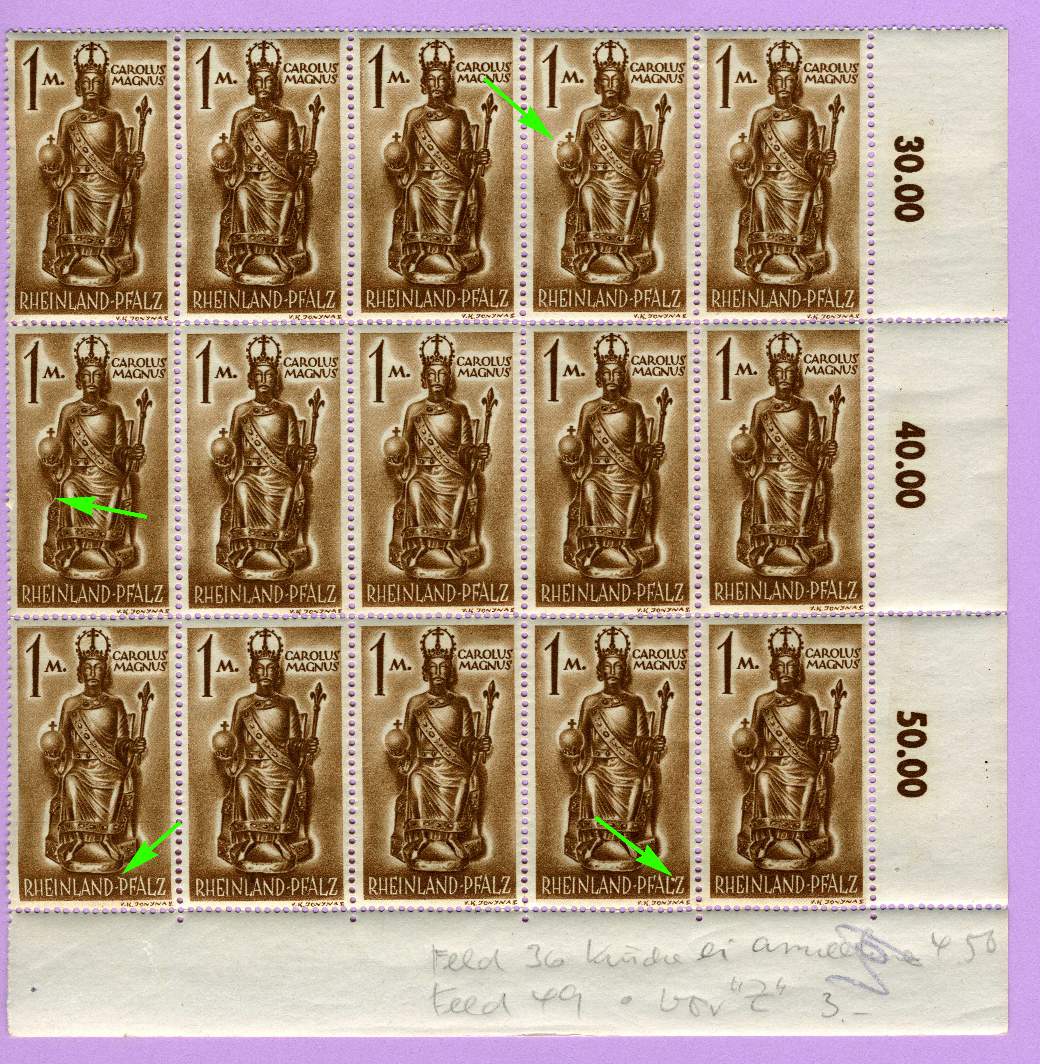
Germany 1947 Rhine-Palatinate Mi#1-15 (Sc#6N1-6N16)
There are very common stamps (0.3 Euro each) that after you buy you place them nicely in the binder and forget about them.
I bought the whole series for 3-4 Euros because I liked the blocks with the edges of the sheet.
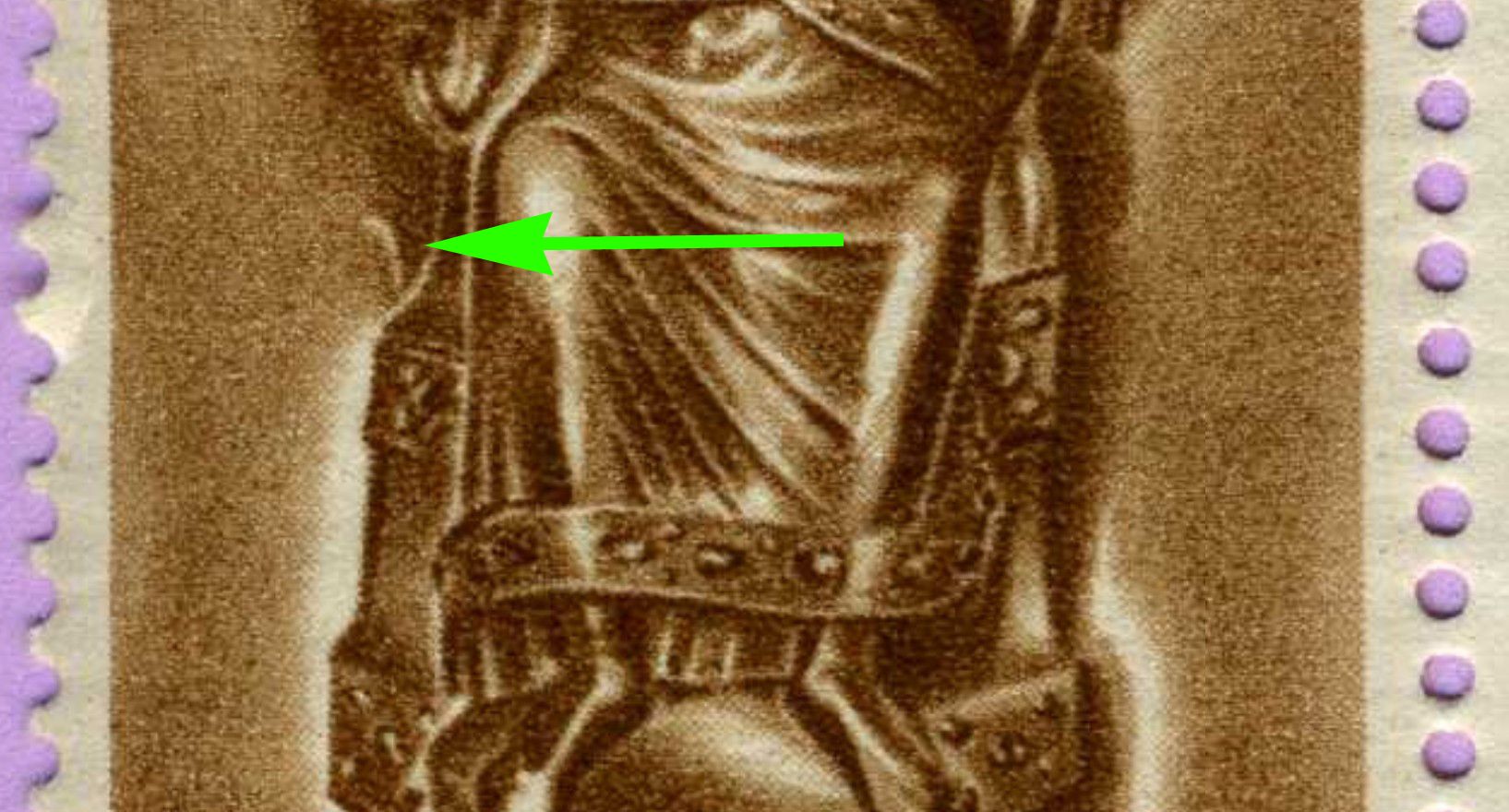
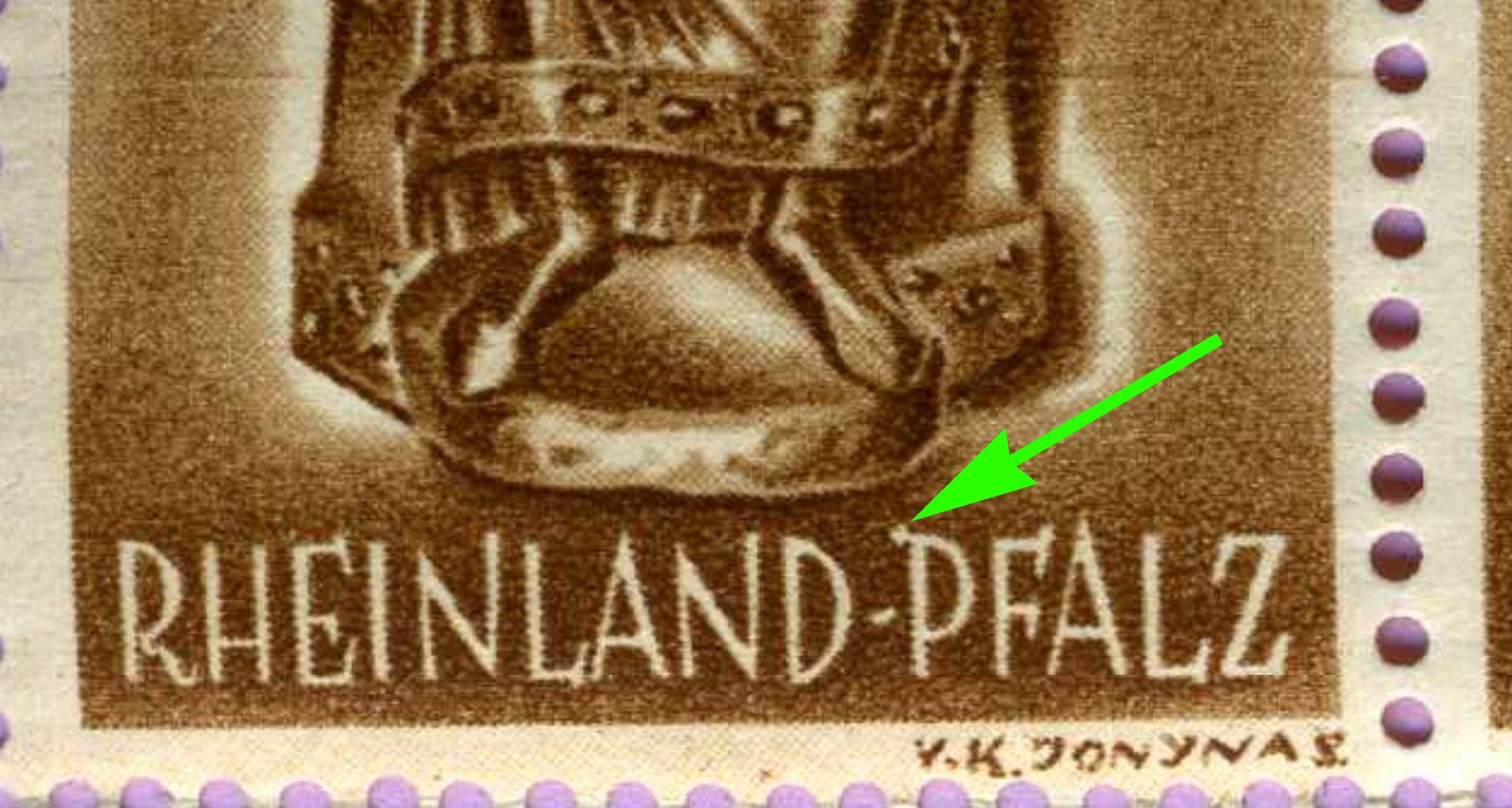
Seeing the discussion I started looking for plateflaw (without success), but I noticed the different color of the paper and the gum.


The Michel catalog mentions the types of paper and rubber:
Paper:
v= white-gray, wood-containing, thick paper with a rough surface; 0.085-0.125mm (March-June 1947)
x = smooth, white cardboard paper 0.105-0.135mm (July 1947)
y = smooth white paper 0.070-0.100mm (July 1947-April 1948)
z = smooth, thin (gray) white paper 0.055-0.065mm, small partial editions in July 1947 (Mi # 15) and March 1948 (Mi # 4)
Gum:
v = smooth to fine-grained rubber coating, tinted white to brownish.
w = thick, rough, clearly coarse-grained rubber coating (created by crystallization or clumping of the gum, often only occurring in parts of the arch; use can only be tested with full rubber coating)
"y" paper and "v" gum are the most common.
The "v" paper (the stamps on the bottom row) is less common and when viewed in light, a network towards unlike the "y" paper, which is homogeneous.


The stamps with "w" gum (12, 15, 24, 45, 75, 84 Pfennig and 1 Matk) have a quota from 12 to 35 Euro."w" gum it is easily recognizable as the "v" gum with shades from white to brownish .


The "x" and "z" paper was used on the 12 Pfenig and 1 Mark stamps which have a value from 35 to 160 Euro. The pair of stamps on the bottom row that have the date of printing inscribed on the selvage are also of interest with a value of 10 Euro and can reach 300 Euro (1 Mark stamp).
All these quotas are conditioned by the existence of certification by BPP.
As an example the block of 12 Pfennig (paper "v" and gum "w" and the date of printing inscribed on the selvage) has a value of 77 Euro.

It is interesting to keep these varieties of stamps even if you do not send them for certification to BPP.
George





 Posted 04/16/2020 9:36 pm