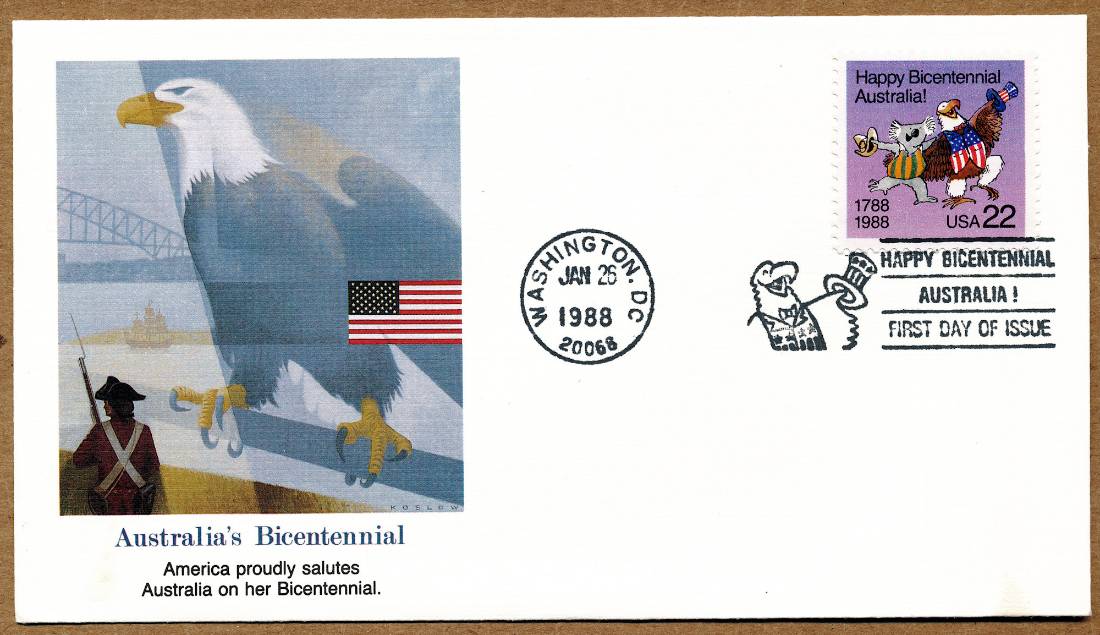
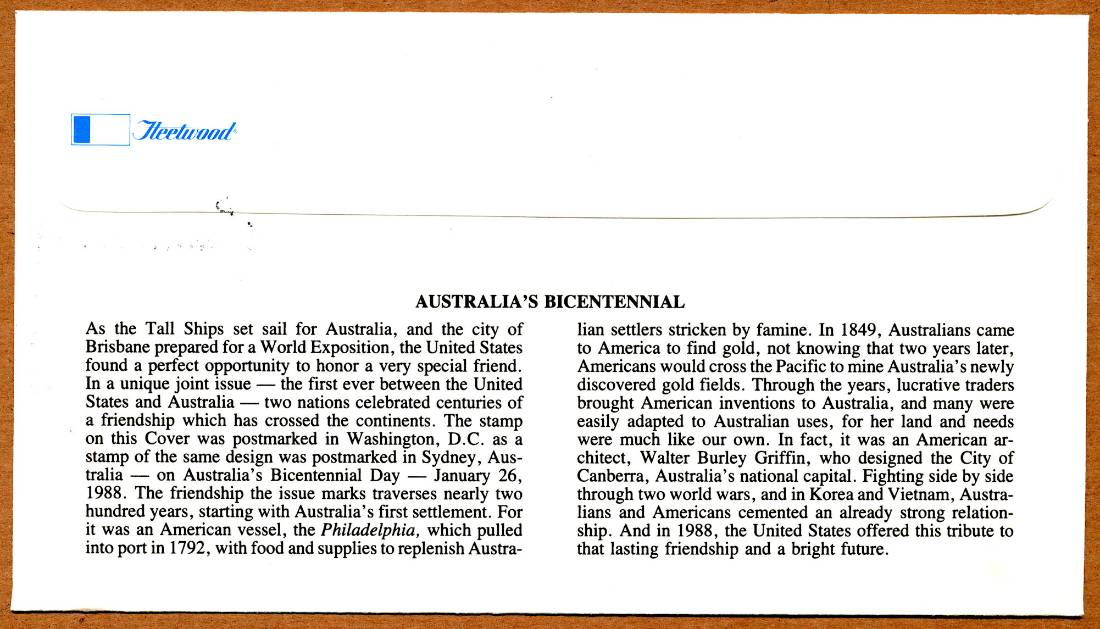
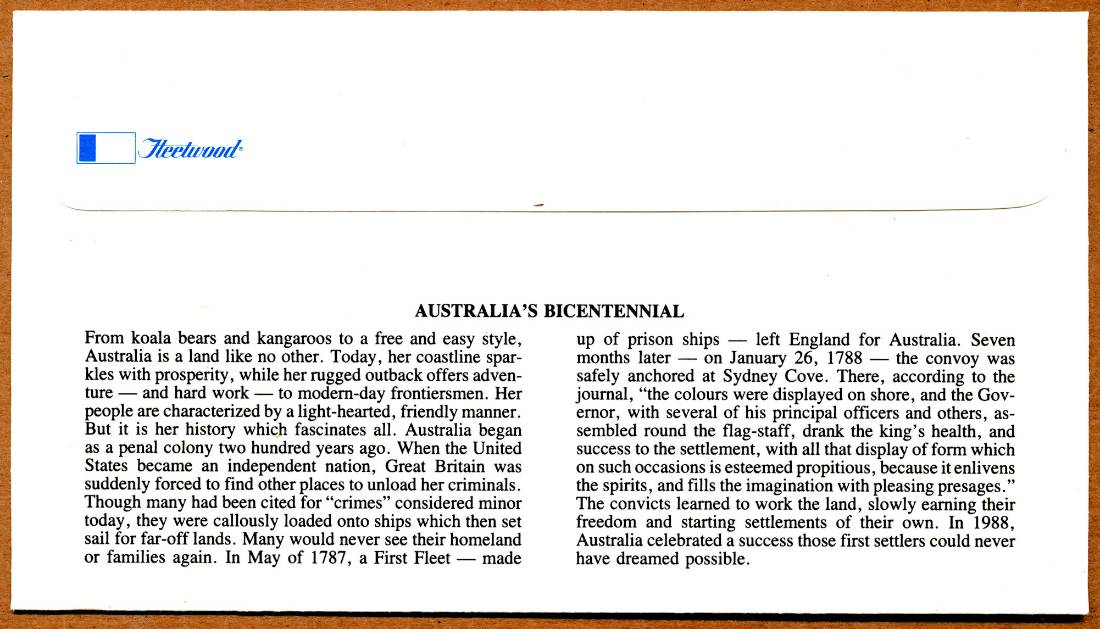
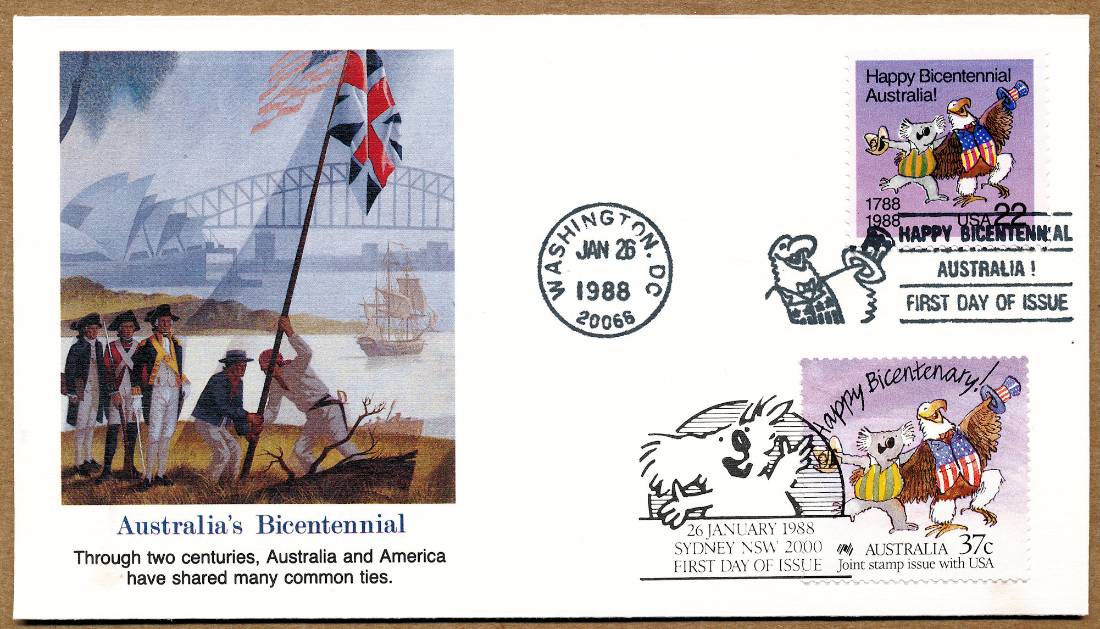
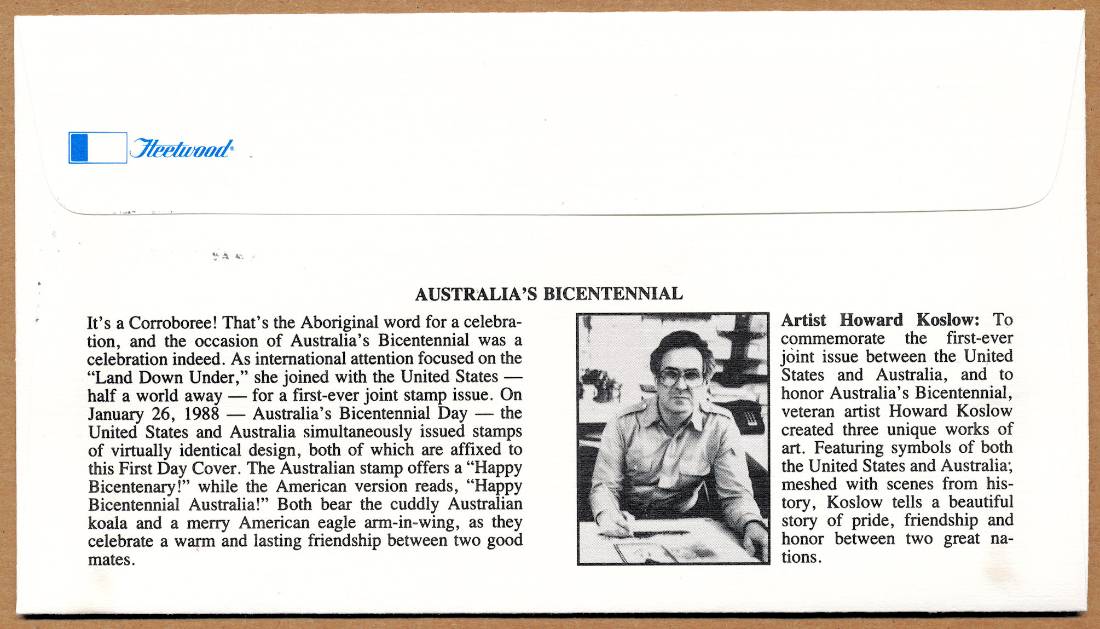
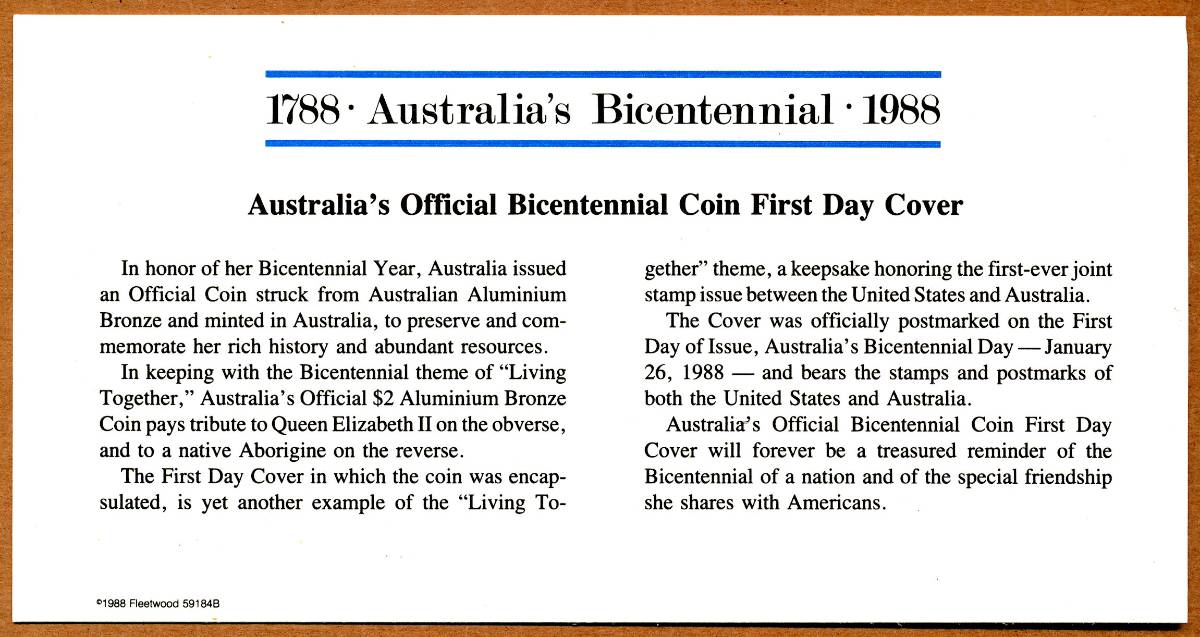
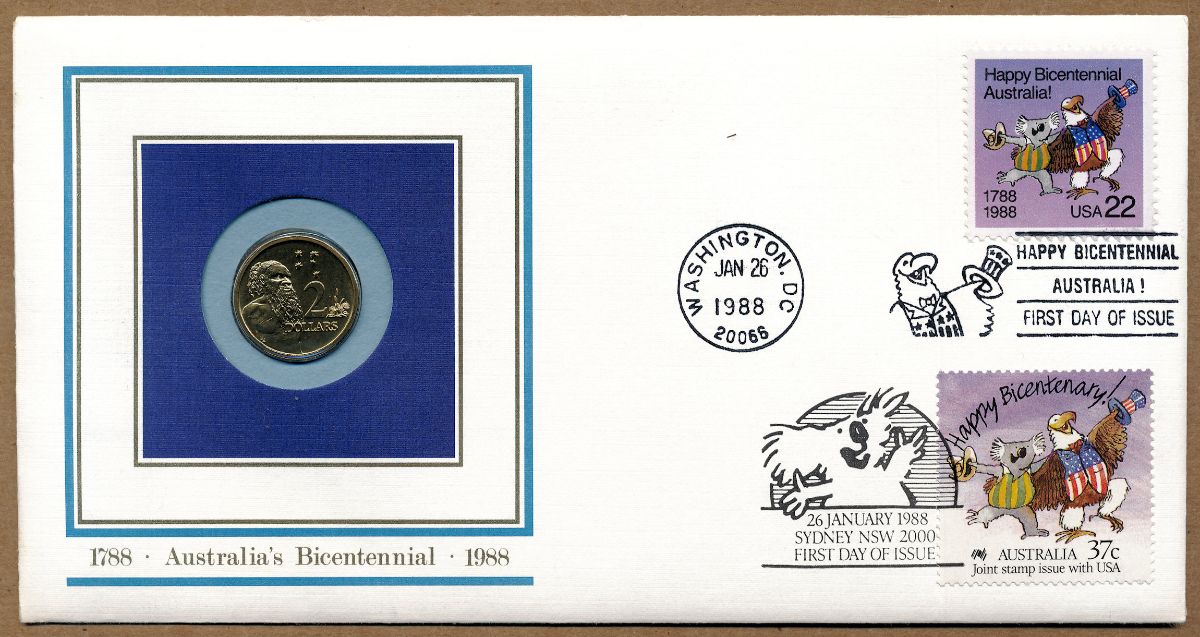
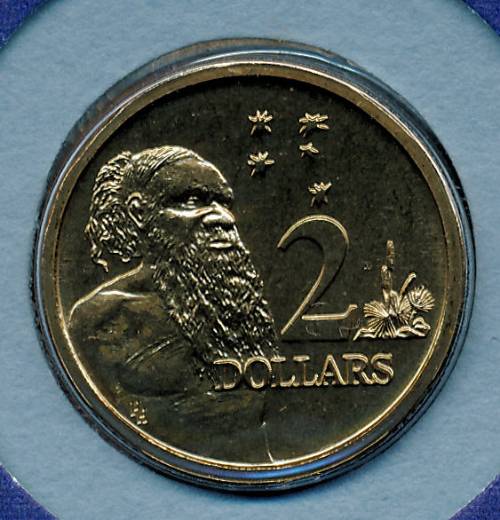
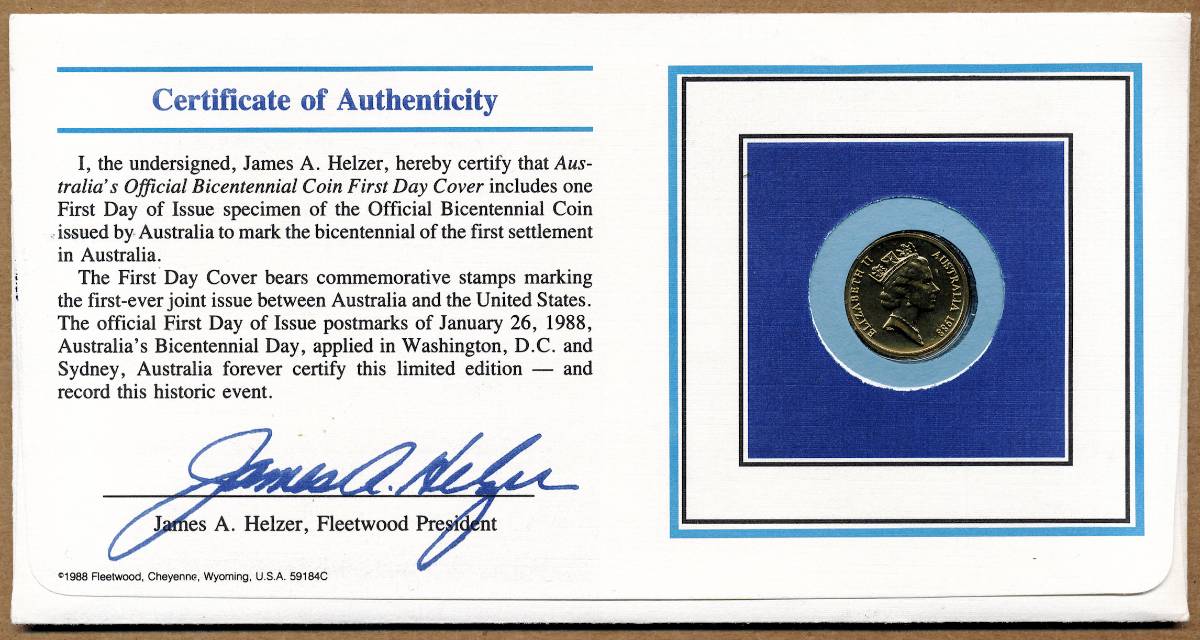
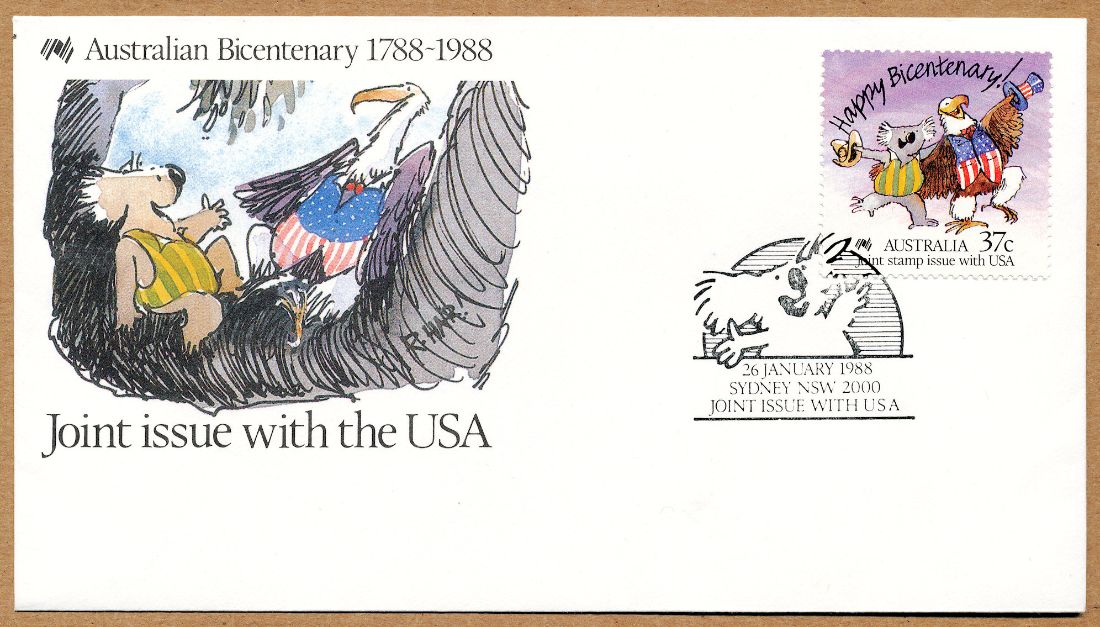
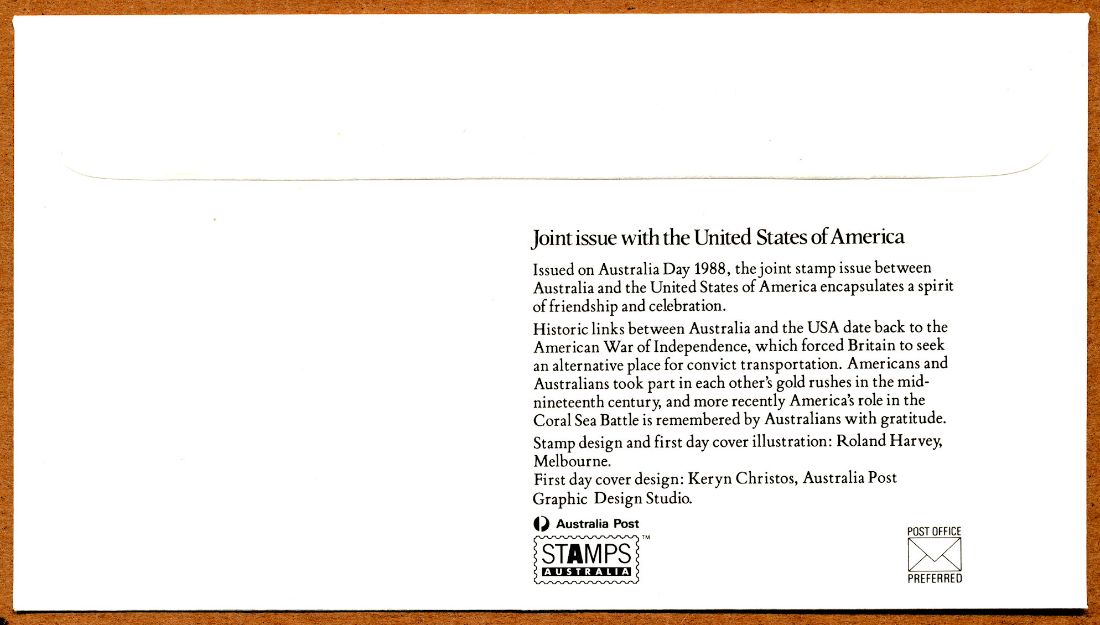
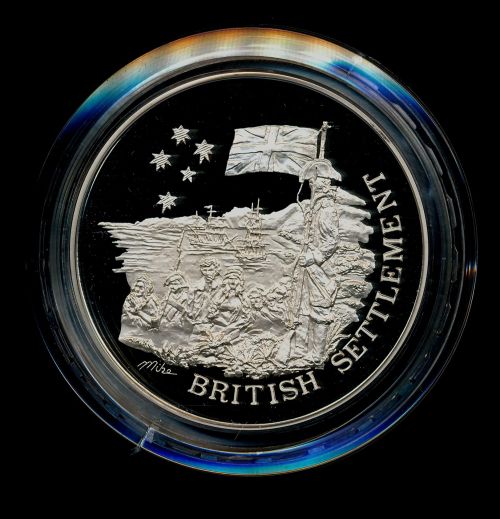
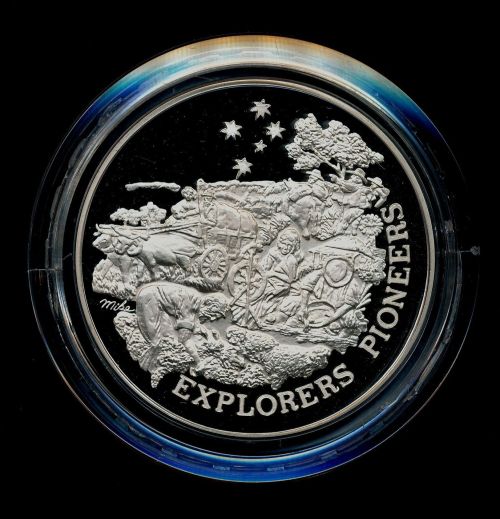
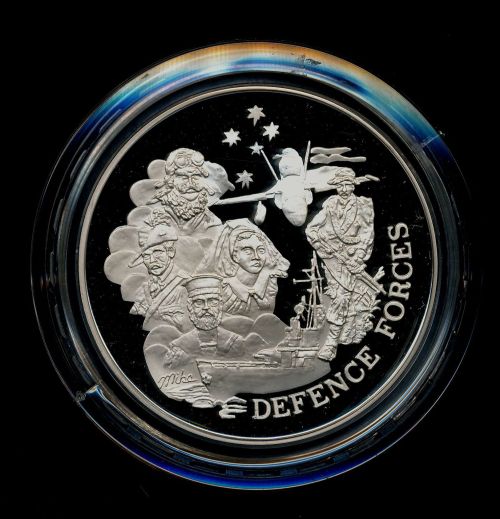
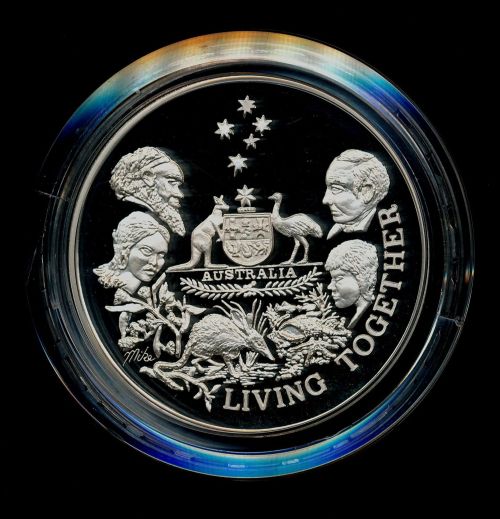
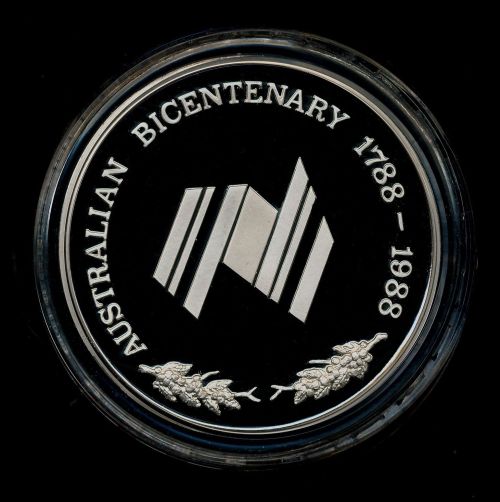
In January 1988, Australia celebrated the 200th anniversary of the arrival of the First Fleet on its shores and the beginnings of its first settlement. The Fleet had departed from Portsmouth, England on May 13, 1788 under the command of Captain Arthur Phillip. It included eleven ships, six of which were convict ships. The intent of the Fleet was to transport prisoners out of England to Australia and to establish a penal colony there.
The Fleet arrived first in Botany Bay (so named by Captain Cook during his initial survey of the area in 1770), on January 18, 1788 after a journey that included supply and repair stops at Tenerife (Canary Islands), Rio de Janeiro (Brazil) and Cape Town (southern Afirca); the voyage took approximately 8-1/2 months to complete.
Soon realizing that Botony Bay was not a good place to establish a settlement, Captain Phillip ordered the Fleet north along the coast to Port Jackson (also named by Cook). The Fleet entered and anchored in Port Jackson on January 26, 1788. It was there that the first British settlement in Australia was built.
January 26 is celebrated as
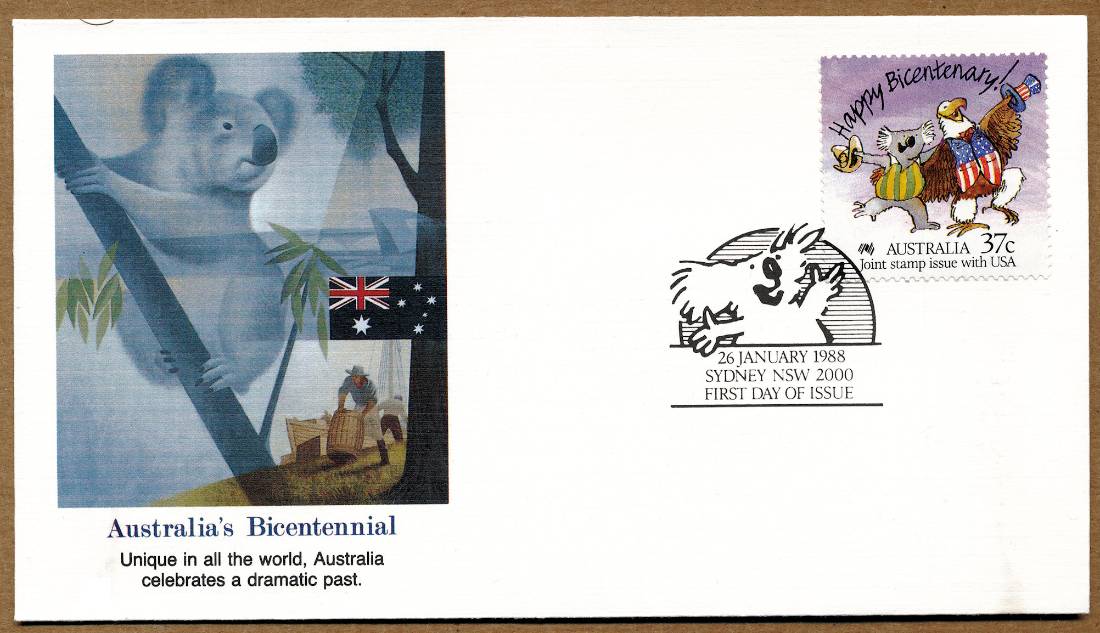
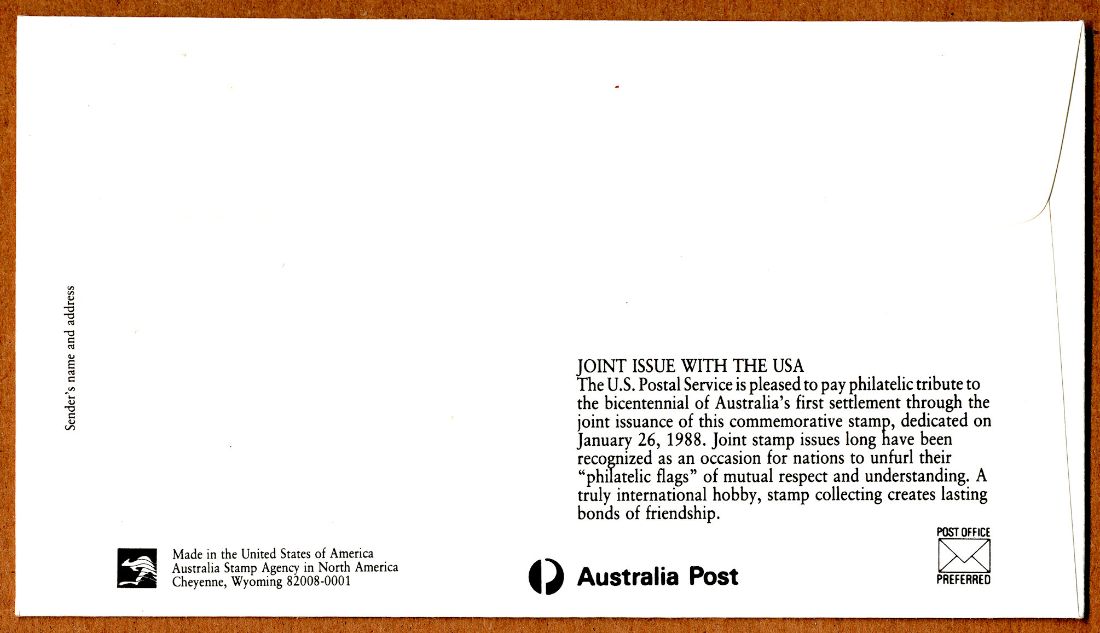
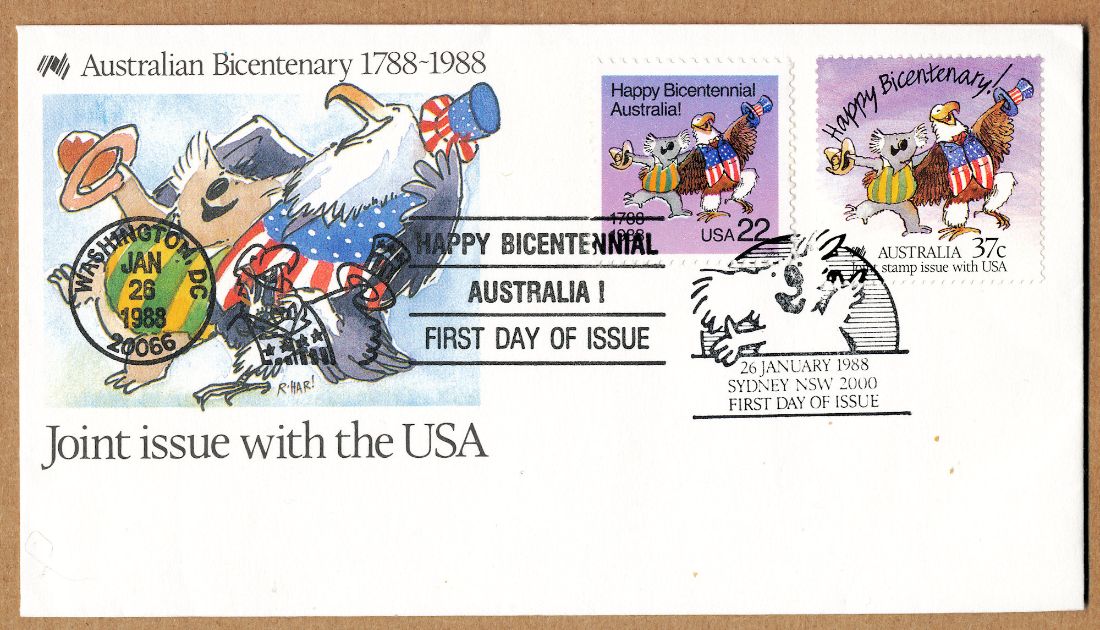
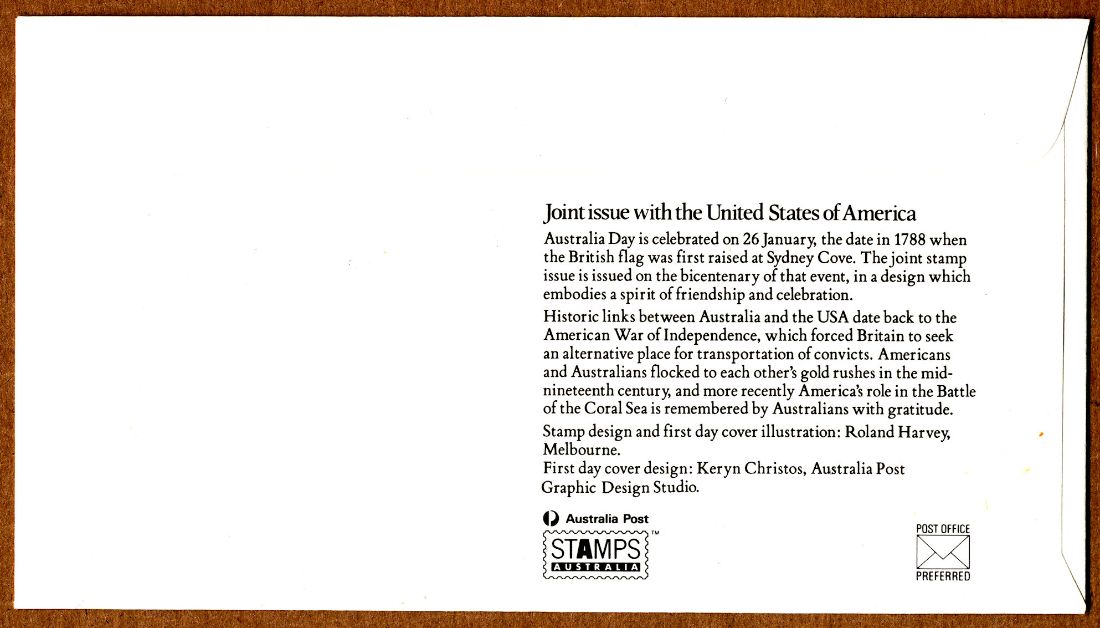
Australia Day in Australia and was the first day of issue for the US-Australia joint issue of stamps. The Australia Post also teamed up with the United Kingdom and New Zealand for joint stamp issues; the UK and New Zealand stamps were issued on June 21, 1988. The US-Australia stamps are the focus of this post.
As with other US joint issues, Fleetwood released a Joint Issue Series of covers that included one for the US stamp with a USPS FDI postmark, one for the Australian stamp with an Australian Post postmark and one that included both stamps, each cancelled with its country's postmark.
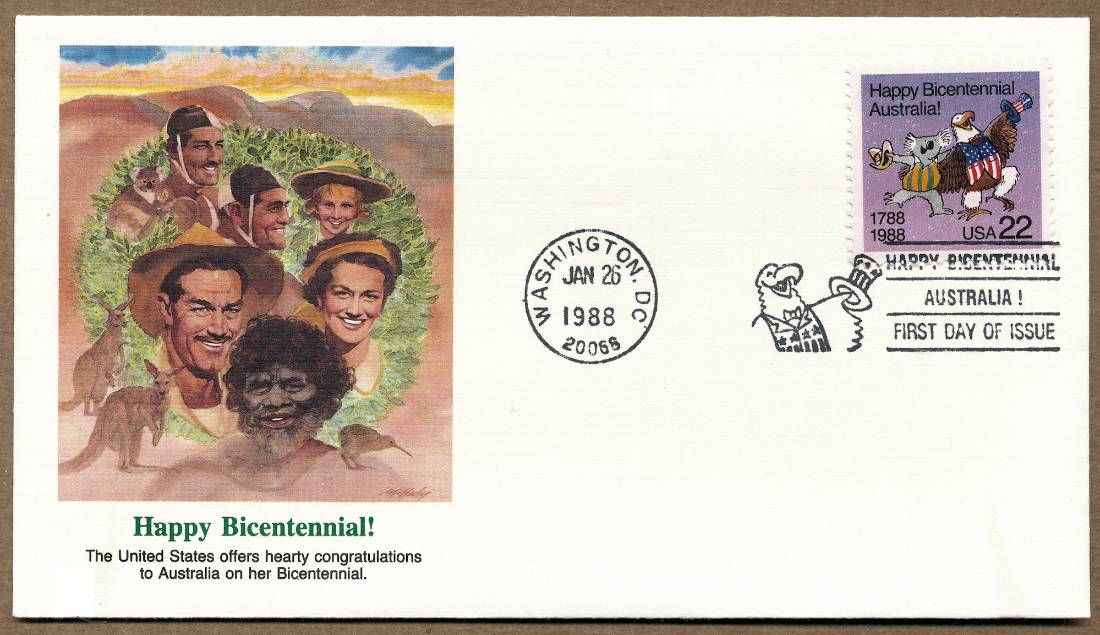
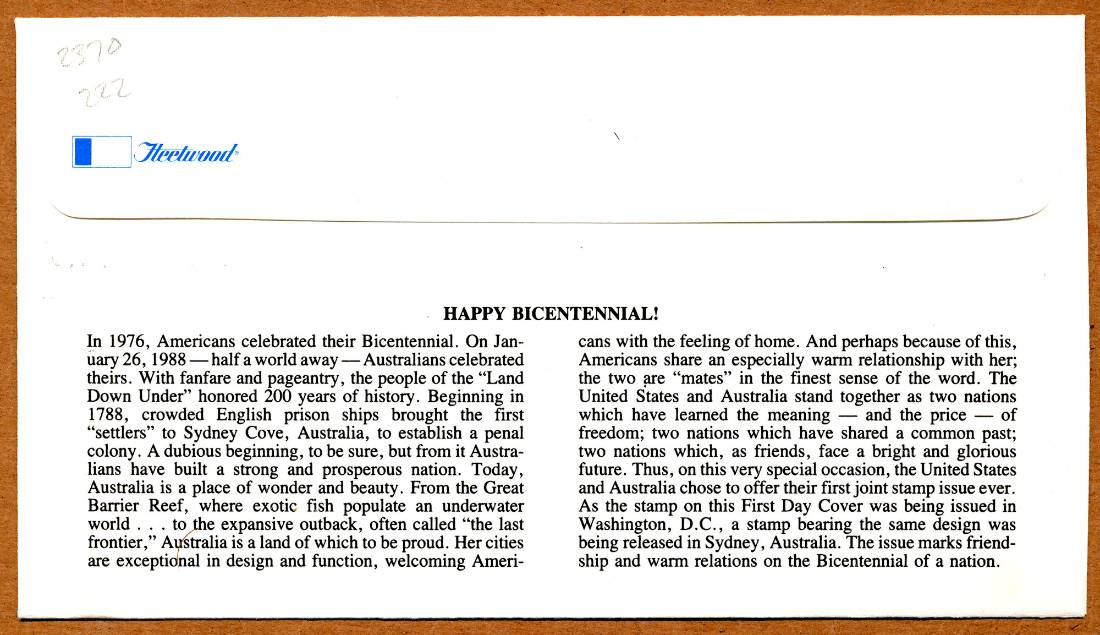
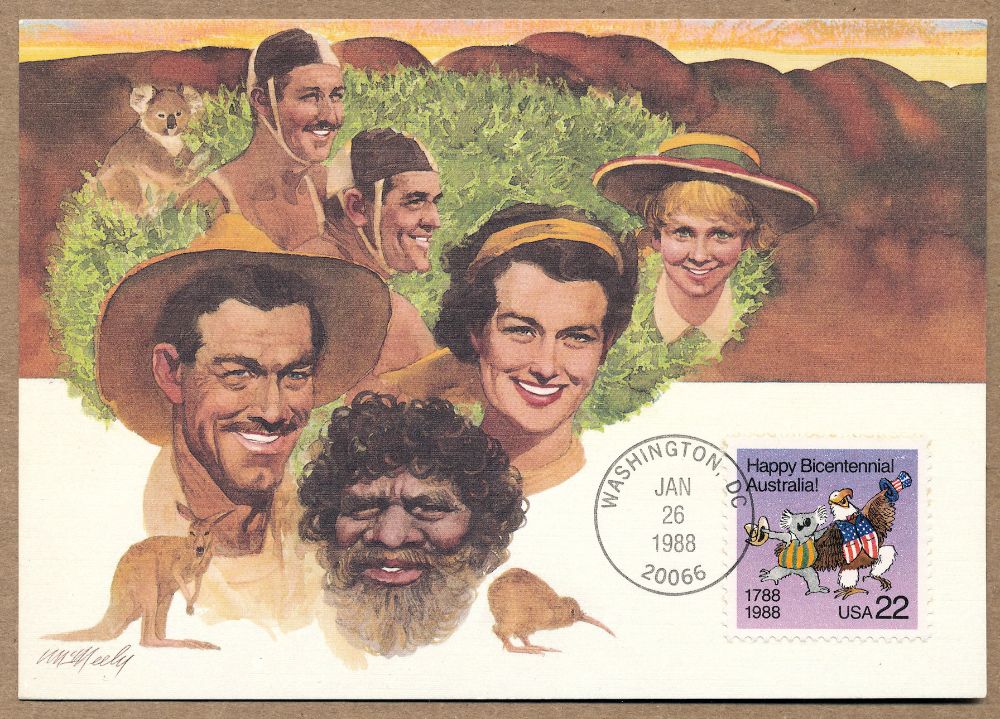
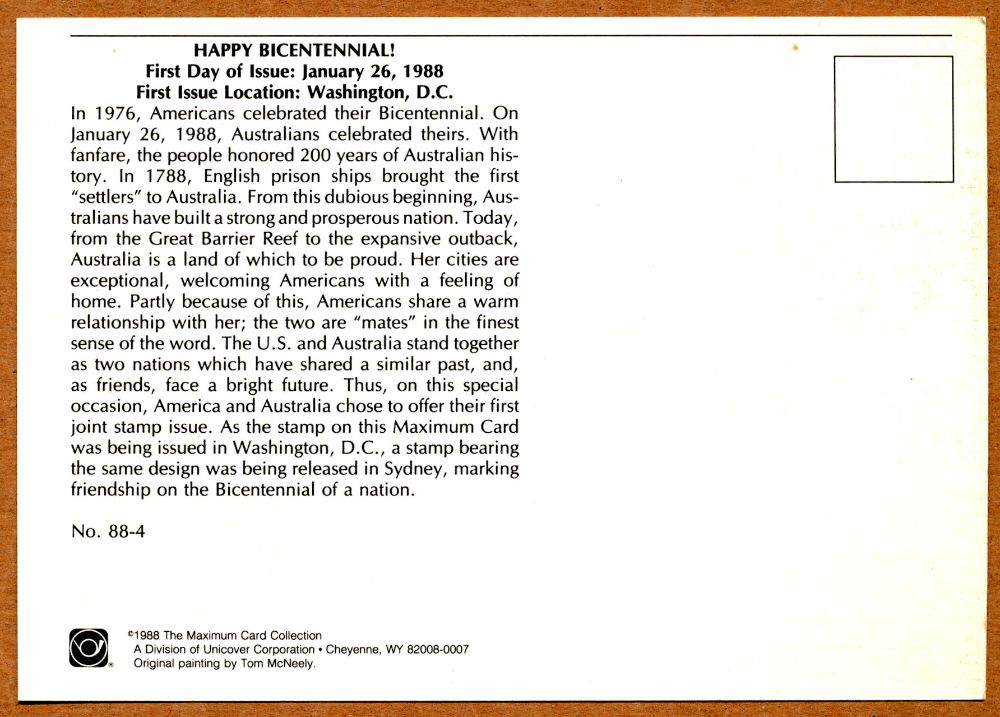
Fleetwood also produced a standalone cover for the US stamp, and that's where my series of posts on the 1988 US-Australia joint issue is going to begin. Shown below is the standalone FDC for the US stamp along with the Maximum Card for the same issue.





 Posted 04/17/2020 10:30 pm