| Author |
 Replies: 3,825 / Views: 255,659 Replies: 3,825 / Views: 255,659 |
|
|
|
Pillar Of The Community
United States
637 Posts |
|
|
Hi Moyock --
Great to hear from you!
I am not able to scan the back of the stamp right now -- but I can tell you that the back of the stamp is clean -- no marks of any kind. The paper looks very typical for the issue -- no discoloration -- no obvious evidence of "bleaching" or other shenanigans.
Dipping the stamp in fluid reveals nothing unusual either. Ditto with examining under various light sources, angled light, etc.
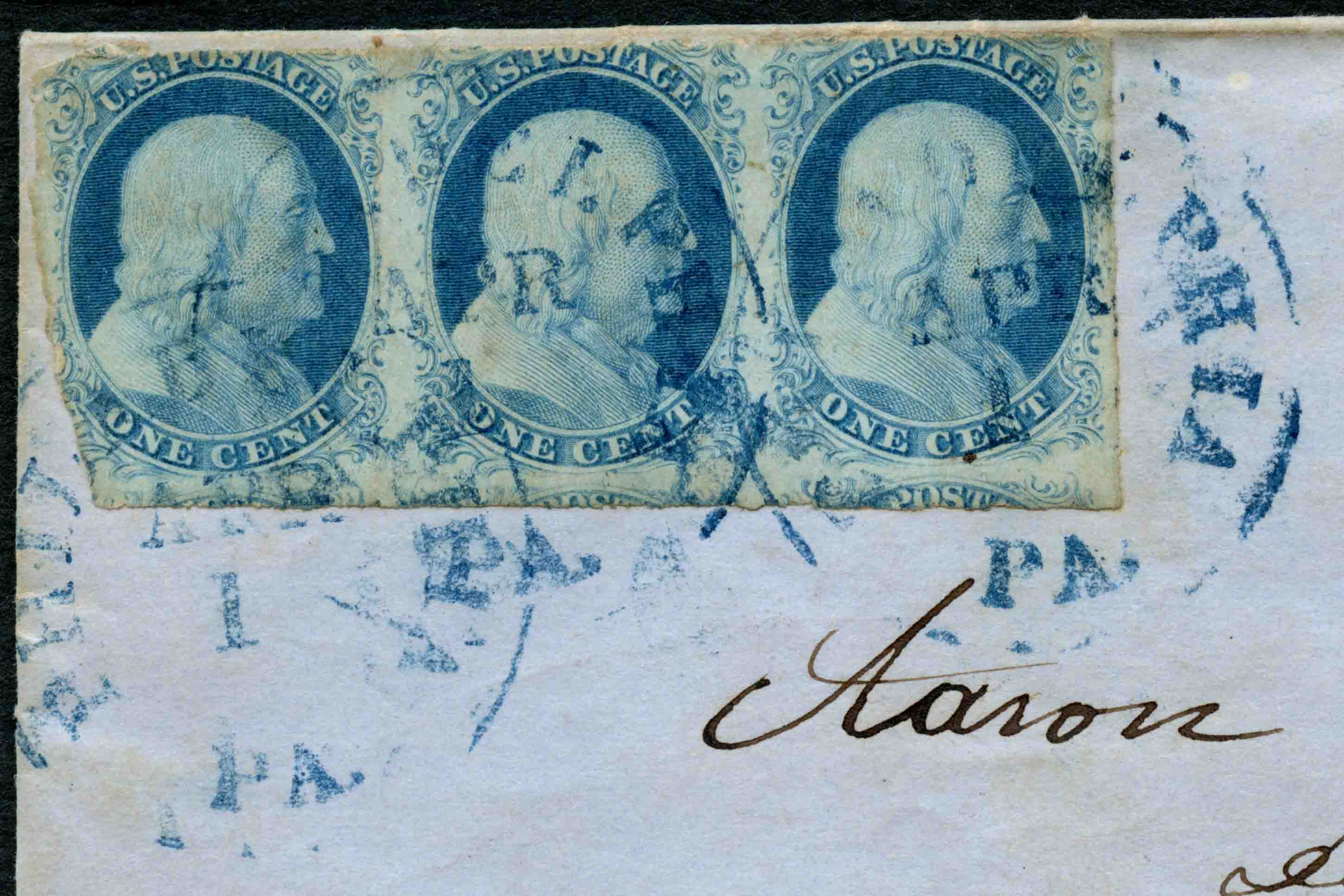
I have seen plenty of fancy star cancels on the perforated 1857's -- mostly circa 1860 / 1861 -- but very few on the imperfs.
Perhaps this stamp is a late usage -- but on the other hand -- the combination of these 4 factors are what is giving me pause --
-- 1 -- that smudgy remnant of a possible CDS at lower right;
-- 2 -- how "clean and sharp" the outer circle of the star cancel looks;
-- 3 -- how perfectly placed the strike is on the stamp; and,
-- 4 -- not that it means a whole lot -- but I cannot find a tracing to match in either S&E or Simpsons.
On the other hand -- perhaps I am over-thinking this one -- as it is a garden variety "plating quality" stamp -- an A relief -- most likely from either 2L or 3 -- and with minor paper faults. Still, the cancel caught my eye -- and the more I studied it -- the more I questioned it -- so thought I would post it up to the board here and see what others might have to say.
Regards // ioagoa |
Send note to Staff 
|
|
|
Pillar Of The Community
United States
939 Posts |
|
|
Goofing off on ebay while working (Shhhhh!). I came across this 3c and it piqued my interest. It was advertised as having only a recut RFL and no faults, but it also shows multiple LFL. Chase mentions the 99L3 multiple LFL, interesting. Hard to see as it is faded, must have been "cleaned".  |
|
Send note to Staff
|
| Edited by Moyock13 - 10/28/2021 3:05 pm |
|
|
Moderator

United States
12330 Posts |
|
|
Pillar Of The Community
United States
637 Posts |
|
|
Hi Don -- That is a really nice data base of the fancy cancels -- and in addition to all of the factors mentioned in my original post -- is another data point that leans toward the star in circle on my Scott #11A being a fake. On the other hand -- perhaps my stamp is a very late usage -- after the 1851 issue was demonetized -- and is thus a great rarity worthy of a single lot listing in a major auction (just kidding)  . At least I plated the stamp to 74R3 -- so if nothing else it is nice reference copy for the position. Thanks again for pointing me to the Stamp-Smarter fancy cancel data base -- as it is a great resource -- and one which I had really never looked at before you made me aware of it. Regards // ioagoa |
|
Send note to Staff
|
|
|
Pillar Of The Community
United States
3532 Posts |
|
|
There is definitely a Canton, Miss "star in circle" style of cancel. I've seen several, and they are circa 1861. They are found with perforated 3c stamps of the 1857 issue.
Yours does not appear to match the Canton killer, nor do I think it is likely that its another Canton killer, since that postmaster tended to make fairly 'thickly-inked' designs. They usually aren't as fine/thin as the one you have (ioagoa). So I don't think that yours is Canton (certainly not the well-known one) .. but my point is star-in-circle is known at least with 1857-issue 3c stamps, and I suspect there are other towns from the Antebellum era that have a similar killer.
I don't recall seeing yours .. but the design is possible is my point. |
|
Send note to Staff
|
|
|
Pillar Of The Community
United States
637 Posts |
|
|
Hi txstamp --
Thank you for your comments about the "pre Civil War" period of use of the "star in circle" design cancels.
I agree with you that genuine usages of the "star in circle" design do exist for the 1857 - 1861 3c perforated issue -- I actually own a few -- and there are a number of tracings of same in the Skinner and Eno book -- but as you say -- none matching my stamp.
The few examples that I have seen on cover are generally from 1860 - 1861 -- and I do not recall seeing one used earlier on a 3-center -- perf or imperf -- although that does not mean that they do not exist -- as there are probably hundreds of small towns where the cancels have never been traced and catalogued.
Regarding my stamp -- If not for that faint evidence of a cleaned cds at lower right, I would lean toward a late usage of the 3c 1851 - 1857 imperf (like circa 1860 - 1861) -- but given the smudgy remnant of the possible cds at lower right, the sharpness of the outer circle, and the perfect placement of the cancel, I am leaning toward it being a fake? On the other hand, hard to be sure -- as the purpose of the "killer" was to cancel the stamp -- so the placement of the strike makes sense (versus the cds where the purpose was to serve as a "postmark" -- and thus, in this case, presuming that it actually is a cds, only caught the lower right corner?
Bottom line -- If I were "expertizing" this stamp, I would probably decline opinion on the cancel.
Thanks again and your comments are much appreciated.
I suppose I should try to scan some of my fancy cancel stuff for Don's data base and get a few 1860 - 1861 examples loaded up (another item on the philatelic "to do" list).
Regards // ioagoa |
|
Send note to Staff
|
| Edited by ioagoa - 10/29/2021 12:54 pm |
|
|
Pillar Of The Community
United States
2230 Posts |
|
|
Hi Moyock13,
Yeah, that's a confirmed 99L3. The paper looks toned, and the ink looks faded. I'm guessing the original color was in the dull red/orange red group. I've found it really difficult to find nice examples of those colors, as those inks didn't hold up well over time. It's still a nice example of three-rows variety #6. |
|
Send note to Staff
|
|
|
Pillar Of The Community
United States
1341 Posts |
|
|
Pillar Of The Community
United States
637 Posts |
|
|
Hi Jaxom --
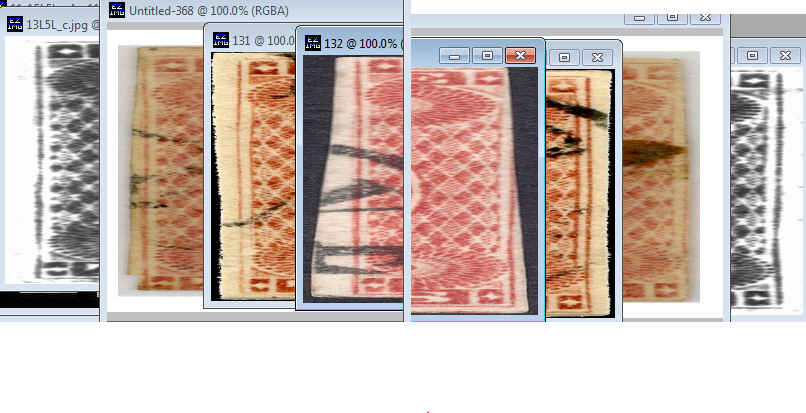
The stamp image attached to your last post -- currently slotted on the StampSmarter data base as 13L5L (NOT) -- is actually position 14R2L.
Regards // ioagoa |
|
Send note to Staff
|
|
|
Pillar Of The Community
United States
1341 Posts |
|
|
Valued Member

United States
327 Posts |
|
|
Valued Member
United States
327 Posts |
|
|
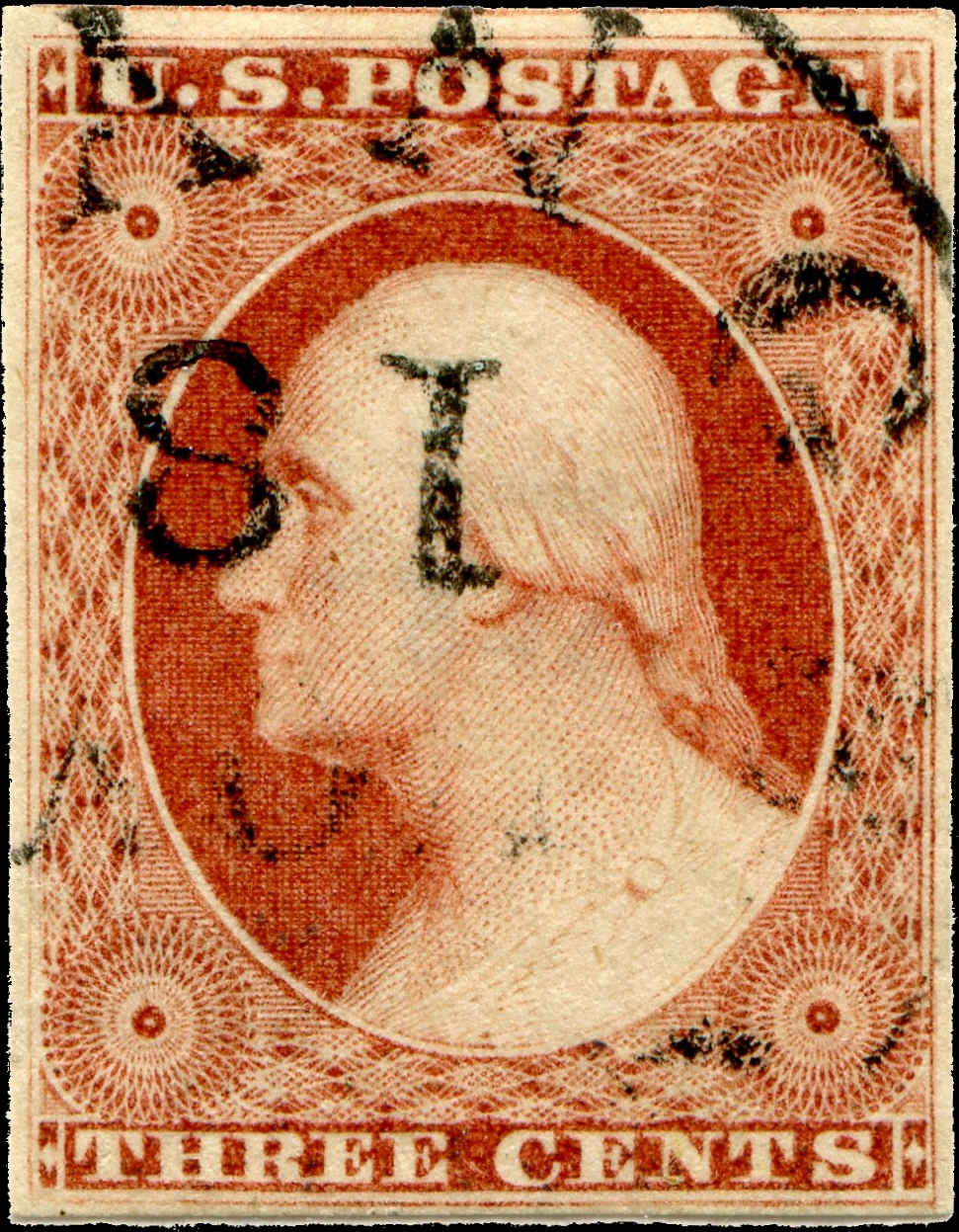
Diving into plating with this one. Please let me know if I'm on the right track.  1. It is Relief A. 2. It has two inner lines (Right frame line just barely visible near upper right rosette). This will eliminate plates 4,6,7,8. 3. Upper right diamond block recut with 1 horizontal line at top. 4. Top label block is recut. 5. No visible guide dots. 6. Upper left triangle has been recut but i'm not sure if it is one vertical line or two. There is one strong line and one that is thin. 7. Not from 1L because top right diamond block is not gouged. 8. Not from 2e, 3 or 0 because frames lines are not clear and inner lines are not heavily recut. 9. Possible double impression on left frame line (definitely not an expert on this and it may be hard to see on the online version). This all leads me to say this stamp comes from Plates 1e, 1i, 2L, 5e or 5L. Which still leaves a whole bunch of possible locations. Assuming I am correct so far, what else can I use to narrow down my choices? Edit: Seeing as this stamp is mounted on page labeled Scott #11, the chances of it being from 1E, 1i or 5E are small. I'll start looking in 2L or 5L I apologize if I completely butchered my analysis, gotta start some where. Any insight is always greatly appreciated. Regards, Stephen |
|
Send note to Staff
|
| Edited by Harper1249 - 11/08/2021 4:11 pm |
|
|
Pillar Of The Community
United States
637 Posts |
|
|
Hi Harper1249 --
Regarding the 1851 3c stamp that you posted for plating comments -- (the one with the Dec 6 manuscript cancel -- possibly of Bryan Ohio?)...
First -- allow me to say that for a novice plater -- your analysis is very well thought out. That said, I would offer the following comments / clarifications -- and a few hints that you may find useful in figuring the plate position.
You are correct that the stamp is an A relief -- with both inner lines recut -- which, as you also correctly noted, definitely eliminates plates 4, 6, 7, and 8.
The overall impression and color do not look like a typical Scott #10A -- so that leaves plates 1L, 2L, 3, and 5L.
You correctly noted that the URDB was not gouged out -- which eliminates all but 2 positions on plate 1L -- and since the only 2 positions on 1L where the URDB was not gouged out are both B reliefs with huge guide dots -- versus your stamp which is a A relief -- I agree that you can confidently eliminate plate 1L.
As you note, there is one vertical line recut in the ULT.
So, at this point the possibilities have been tentatively narrowed down to A relief stamps with 1 line recut in the ULT from plates 2L, 3, or 5L.
You also noted what you called a "possible double impression on the left frame line" -- which is one of the tell tale signs of re-entry -- which on the surface would lean toward plates 2L or 5L (since plate 3 only exists in one state and was thus not re-entered). As an aside -- this "doubling" does not eliminate plate 3 -- as the doubling could have also occurred when the LFL was recut or in those specific cases where an individual position on plate 3 needed to be re-entered for some other reason. Still, this "doubling" feature is useful in narrowing down where you choose to start the hunt.
The LIL and RIL on your stamp are a touch strong for plate 5L -- but not out of the question -- so another feature pointing toward plate 2L as the place to start the hunt.
There are 3 additional features on your stamp that should be extremely useful in nailing this one:
-- The stamp above your stamp shows a guide dot in the white space between the LRDB and the BFL -- sitting just above the BFL and approximately centered under LRDB. Misplaced guide dots notwithstanding -- this eliminates all "row 2 stamps" from any of the possible plates (i.e., positions 11 thorough 20). It also eliminates all A reliefs from the 10th vertical column (i.e., positions 20, 40, 60, 80, and misplaced A reliefs in the 10th vertical column, if any, are automatically eliminated).
-- The bottom label block shows a line extending off its LR corner heading east toward the LRDB -- but only extending part way into the white space between the BLB and LRDB.
-- Likewise -- the top label block shows a "horn" poking out from its UR corner heading east toward the URDB.
One more hint -- your stamp shows a tiny portion of the RFL of the adjoining stamp to its left -- so that eliminates all A relief stamps from the first vertical column on any of the possible plates (i.e., positions 11, 31, 51, 71, and misplaced A reliefs in the 1st vertical column, if any, are automatically eliminated).
As an aside, I have plated your stamp -- so once you get it figured out, I can readily confirm your plating -- or if you like -- I can reveal the position.
Again -- great analysis on your part for a novice plater.
Regards // ioagoa
edited to correct minor typos
|
|
Send note to Staff
|
| Edited by ioagoa - 11/09/2021 03:01 am |
|
|
Pillar Of The Community
United States
2230 Posts |
|
|
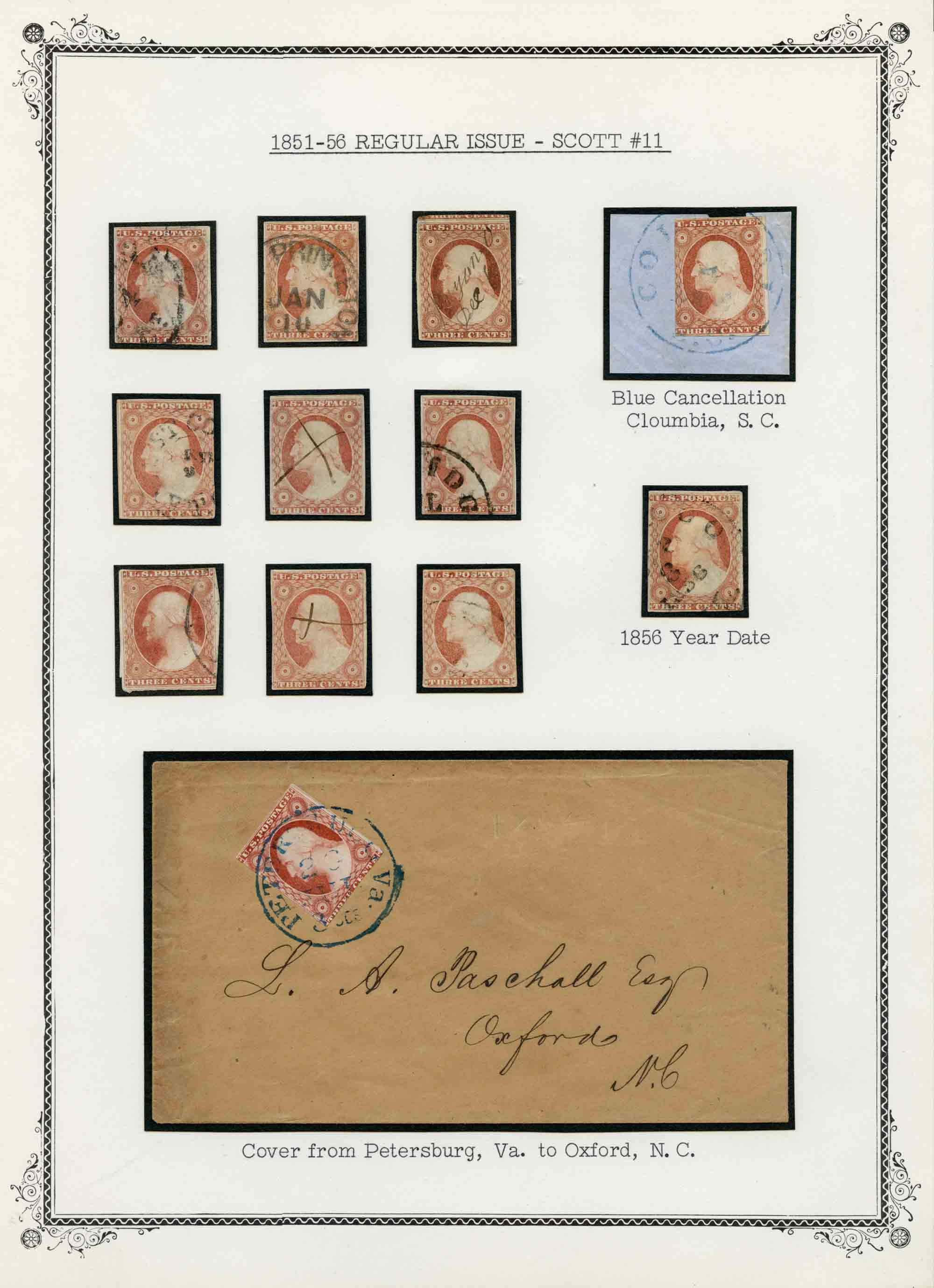
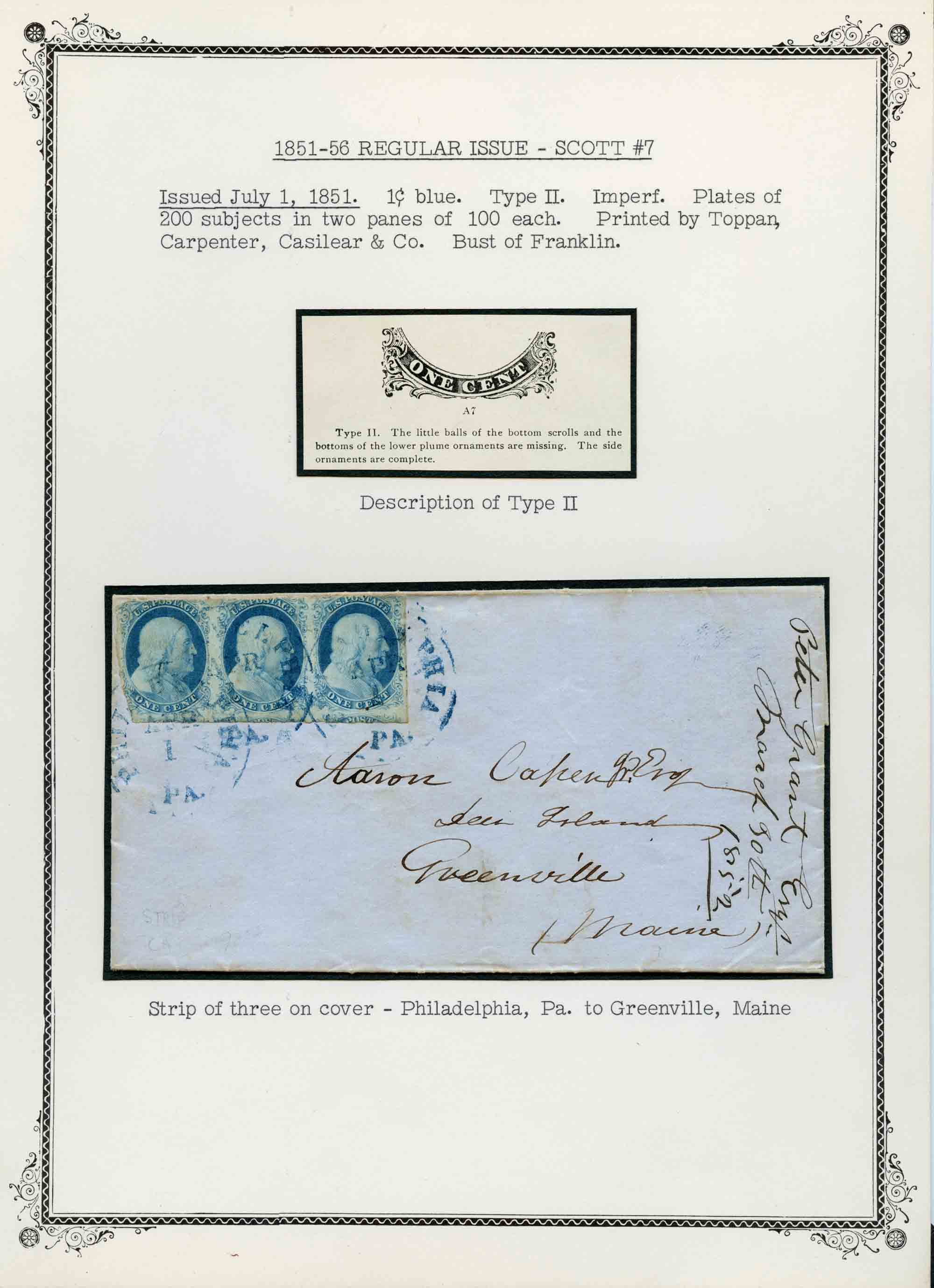
Harper1249, Those are some very nice display pages. Thanks for showing them.
I especially like the two covers. The 3-cent cover has an interesting 3cts integral rate marking. |
|
Send note to Staff
|
| Edited by Classic Coins - 11/08/2021 10:21 pm |
|
|
Valued Member
United States
327 Posts |
|
|
Thank you iogoa for the insight. Had to work today so sorry Im just getting to respond. I went back and looked through possible stamps in 2L and all signs are pointing to 74L2L. |
|
Send note to Staff
|
|
|
Replies: 3,825 / Views: 255,659 |
|



 Posted 10/22/2021 3:54 pm