| Author |
 Replies: 3,821 / Views: 253,064 Replies: 3,821 / Views: 253,064 |
|
|
|
Valued Member
United States
342 Posts |
|
|
Pillar Of The Community
United States
636 Posts |
|
|
Hey Stan --
I plated that 4 margin #11 that you posted yesterday (the one with the blue CDS cancel) to position 11R7.
I also plated your #11A center line single (also with a blue CDS cancel) to position 11R1L.
Regards // ioagoa |
Send note to Staff 
|
|
|
Valued Member
United States
342 Posts |
|
|
Thanks again iogoa! I have a place for that - and also on that page, in a sea of dull reds on worn plates, was this 32R1L that just popped out as a magnificent stamp. So I decided to pull it, scan, it, and share it here. I figured someone might enjoy it. I would love to imagine a complete reconstruction of examples like this! Stan Shepp 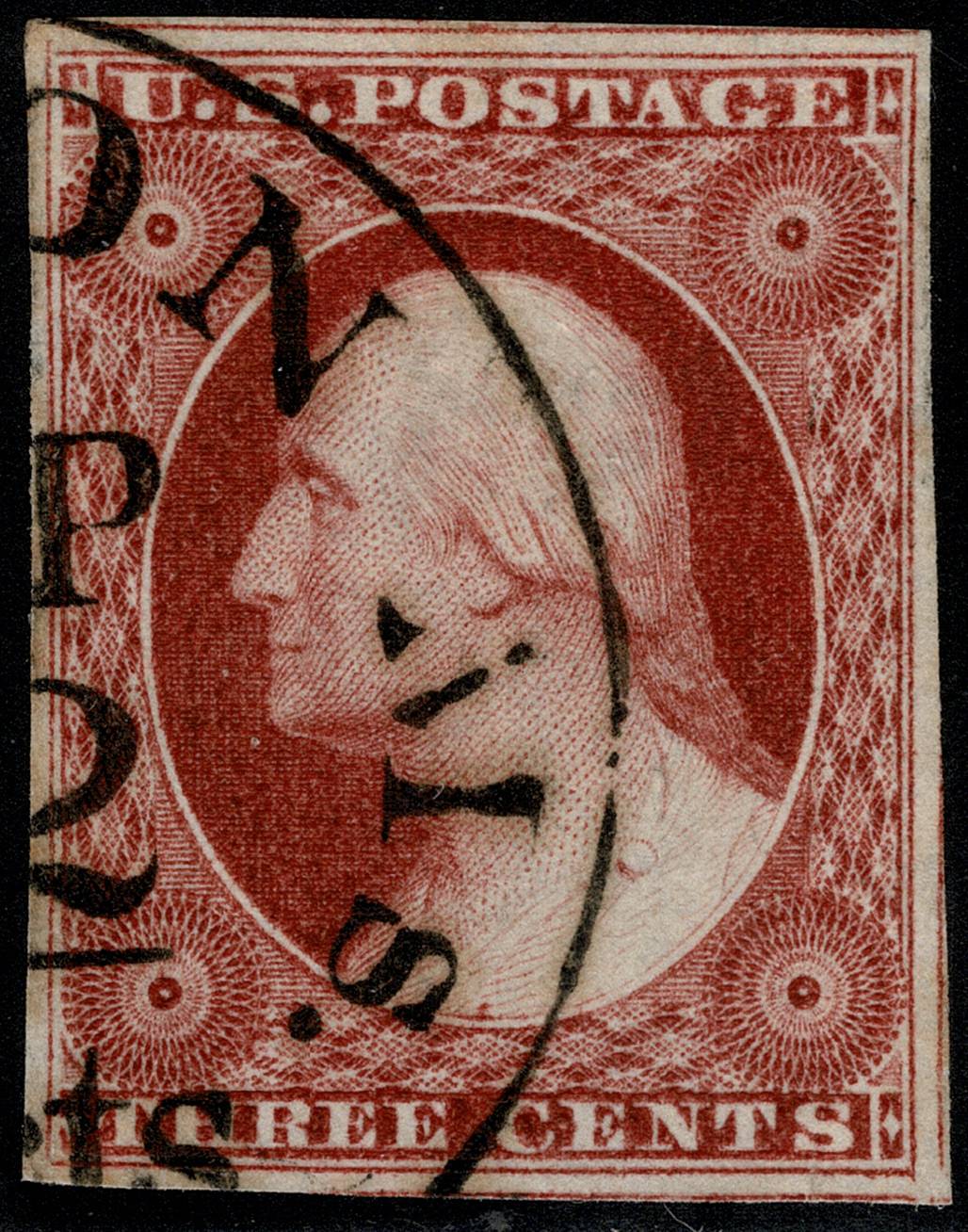 |
|
Send note to Staff
|
Stan Shepp |
|
|
Valued Member
United States
342 Posts |
|
|
I'll share another one as I have this window open and am scanning stamps. I am pretty sure of the plating on this one, as I have easily narrowed it down. It has McDaniel recut #39 - The lower right corner of this position is connected with a vertical line to the upper right corner of the stamp below it. It was also miscut enough to show the complete upper frame line of the position below it - which shows the extent of the line going down from the lower right corner. I came upo with 44L8. opnly 3 #11 show up with this recut. I ruled out 41L4 as the guide dots are wrong. I was stuck between 29L8 and 44L8 for a little while, but I finally noticed the slight bulge in the right frame line - and that matched both Chase's and Lund's copies of 44L8. My 29L8 is a nice example and my 44L8 needed an upgrade, so I am pleased. Stan Shepp 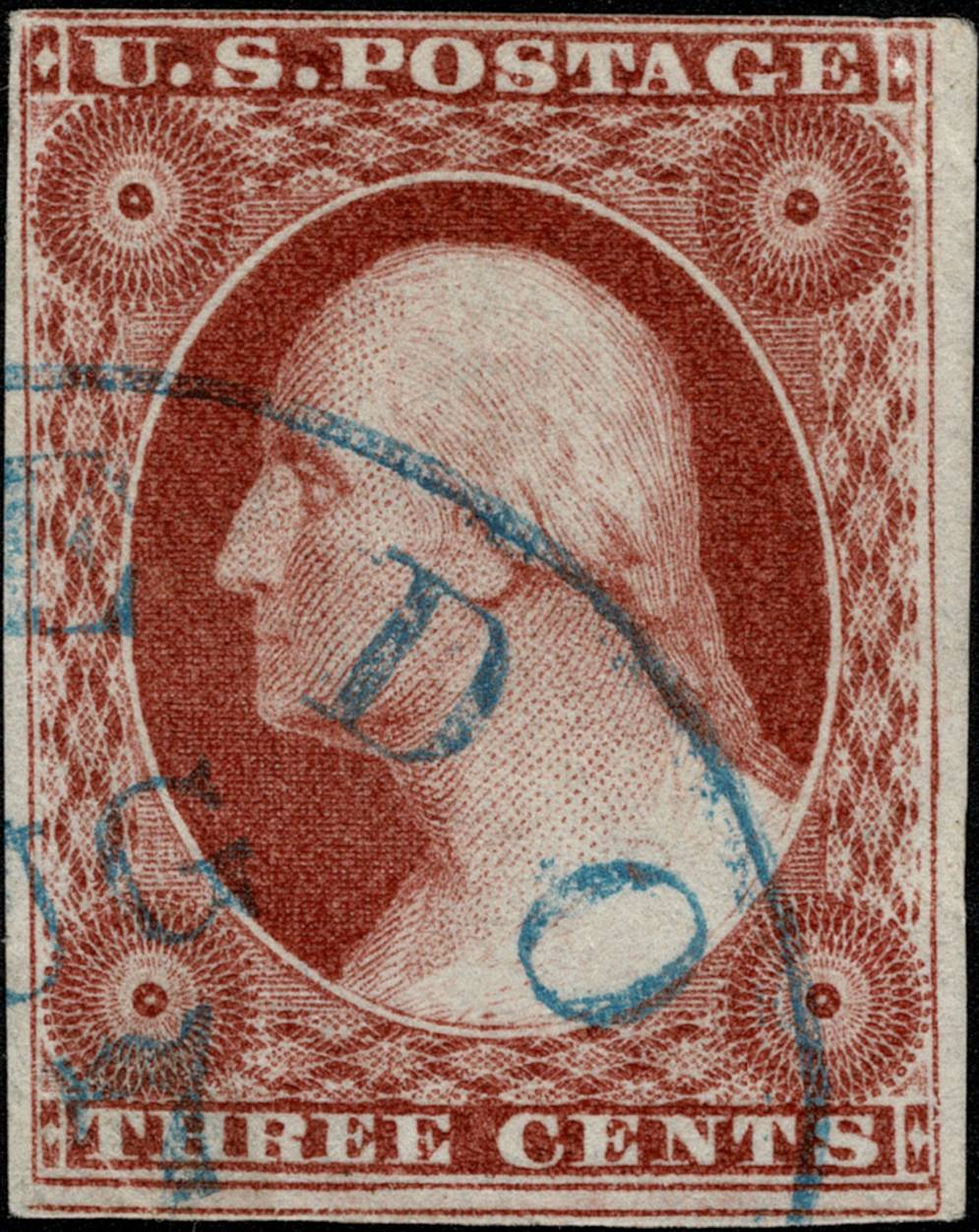 |
|
Send note to Staff
|
Stan Shepp |
|
|
Valued Member
United States
342 Posts |
|
|
I was going to attempt plating this one. I am having trouble determing the plate that it is from (8?) and even what relief it is (A?) All of the areas that I normally look at don't seem very definitive. :( The distinguishing characteristic seems to be that left side frame line is close to the tesselations and the right side is significantly farther away. Also the two upper corner lines meet (or, don't meet) in a definite way. I used Devere Card's method to narrow it down and had zero luck. I scanned through my Chase plates - still no luck. I was optimistically thinking 1E, but also considered plates 1i & 8. Maybe someone can guide me and teach me as to where to look and why. I would really appreciate it. Also - a very interesting mess of writing on the inside of the envelope. Druids, Romans, Wales, Ireland, Scotland, Saxon barbarians, swords, and "worshippers of the Sun for the most part as the Shekinah of the Supreme Being", the Brazen serpent of Moses, high priests, Israelites, & even marshmallows. An interesting item no matter what. Stan Shepp 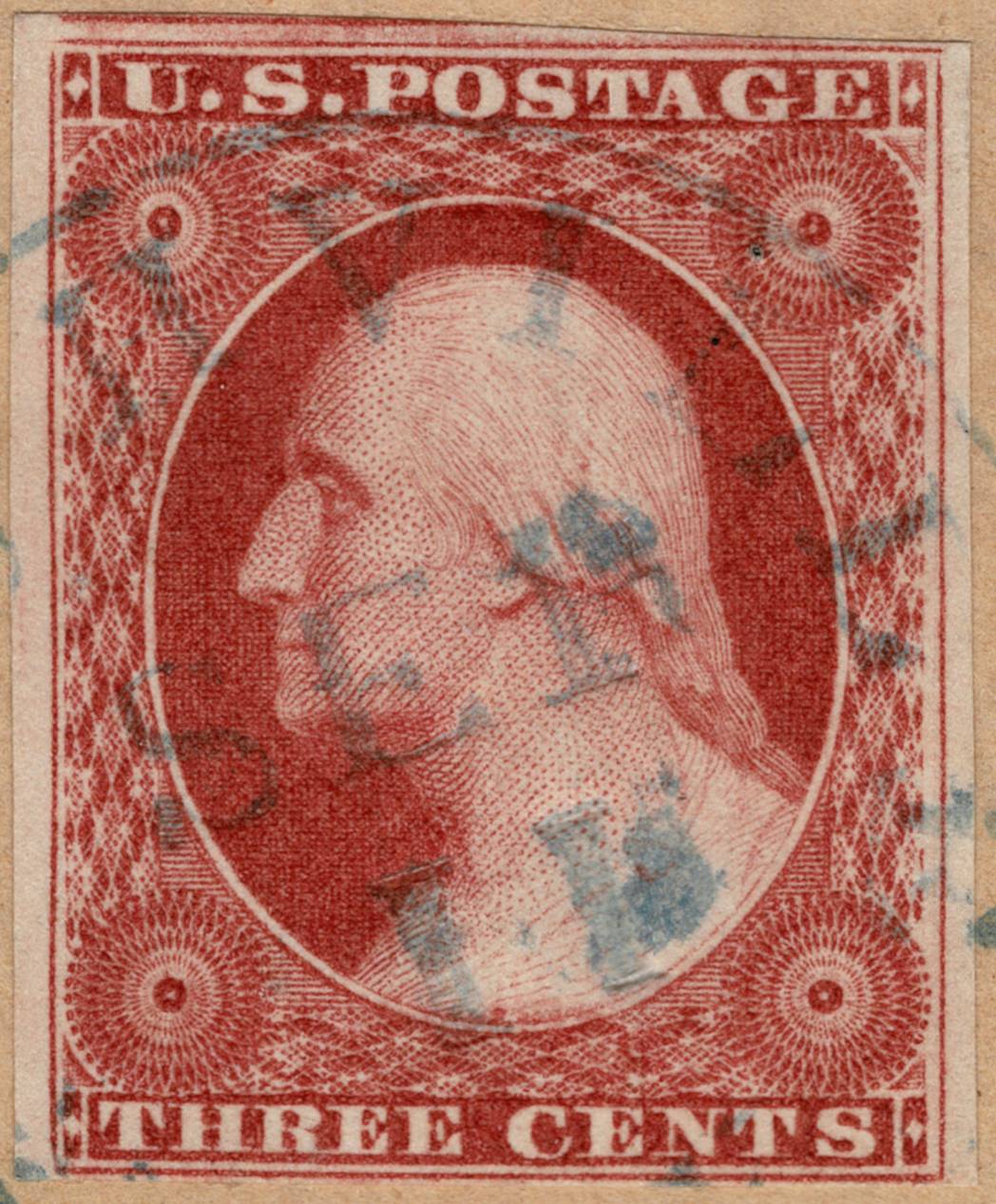 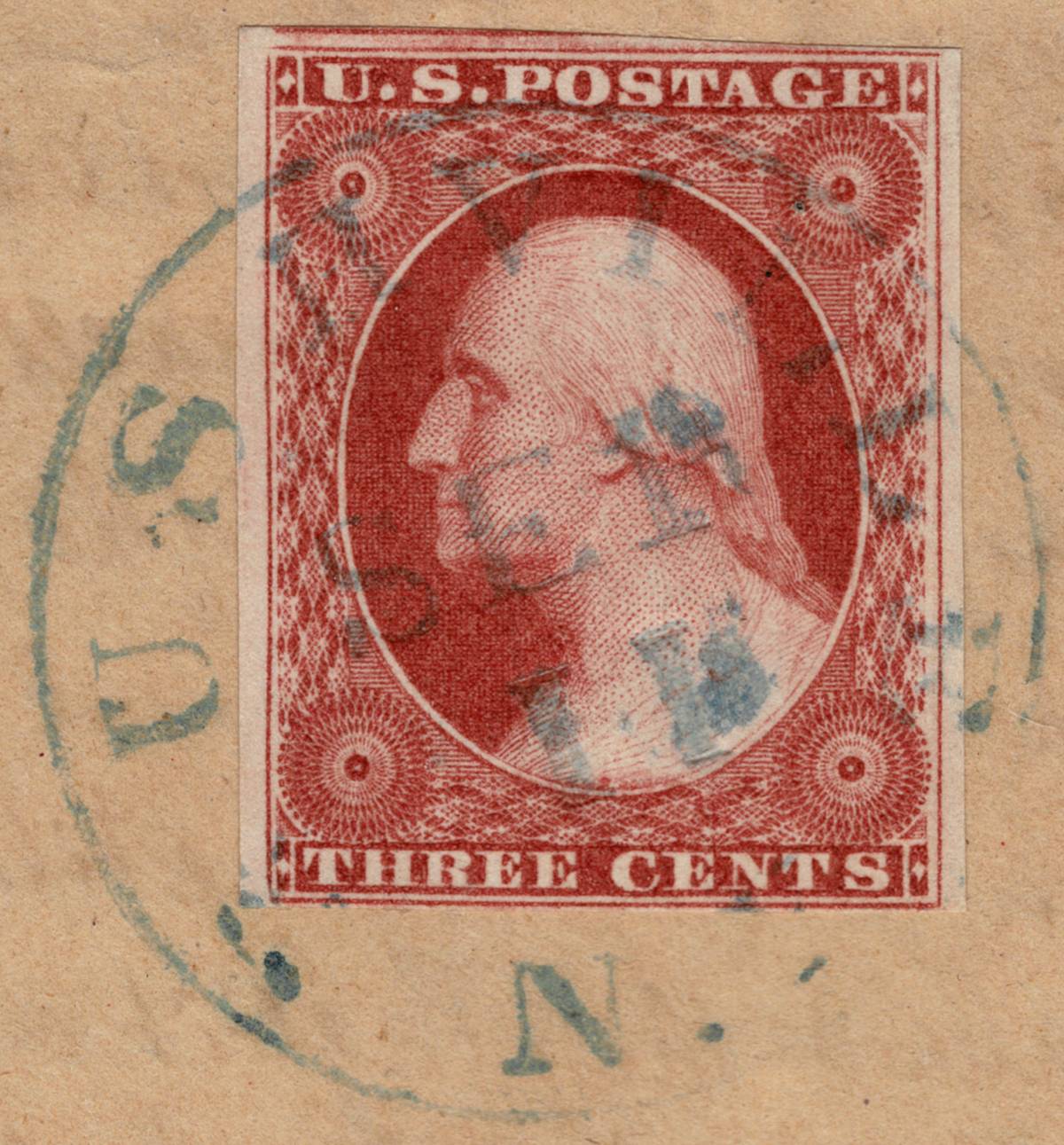 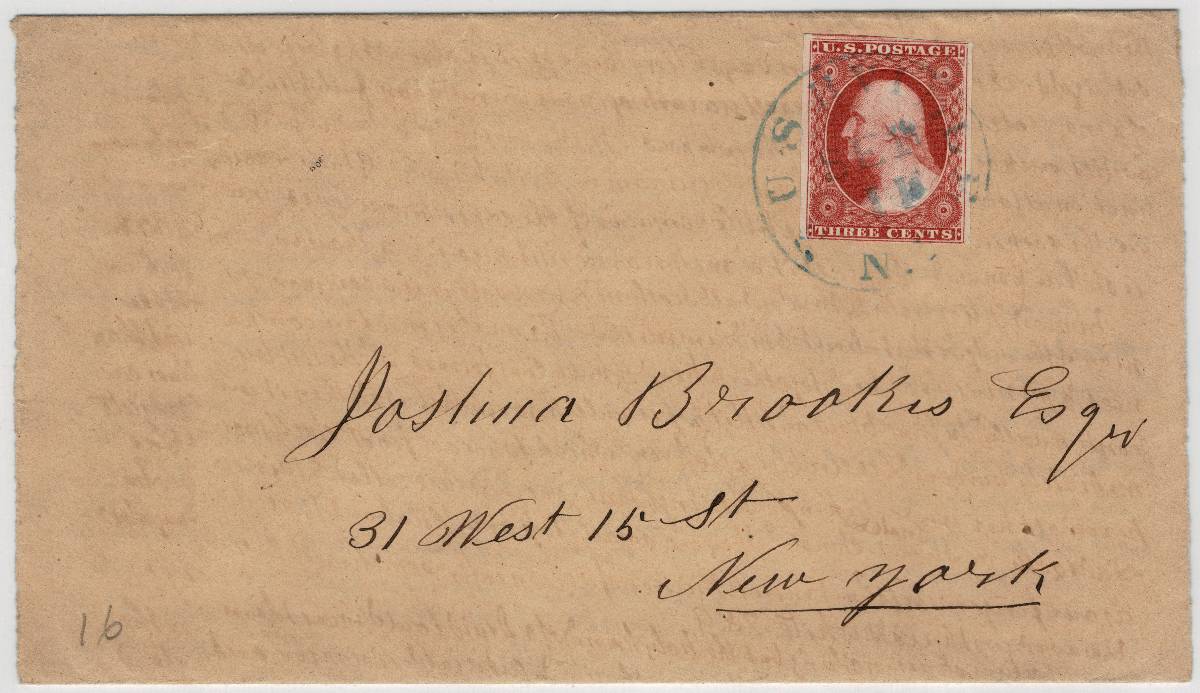 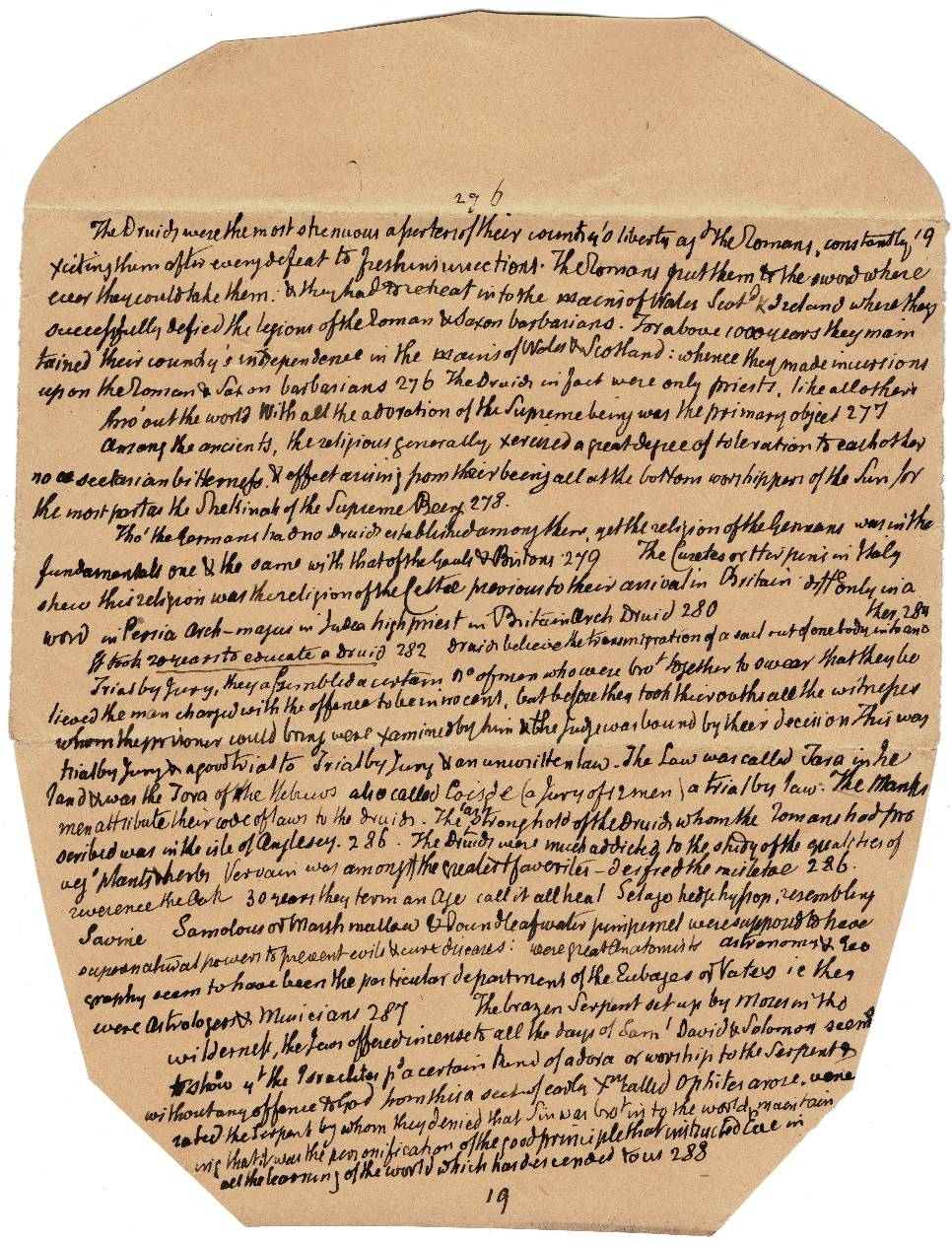 |
|
Send note to Staff
|
Stan Shepp |
|
|
Pillar Of The Community
United States
636 Posts |
|
|
Hey Stan --
Your stamp with the blue SEP 11 CDS (the one that is on the cover addressed to Joshua Brooks Esq.) -- plates to position 89L8.
My plating logic was as follows:
-- Color -- at least on my monitor does not look like an OB -- and neither does the impression. This does not 100% eliminate 1E / 1i -- but more likely than not -- the stamp is from one of the "dull red / no inner line" plates -- namely -- 4, 6, 7, or 8.
-- To summarize the preliminary assessment -- color and impression do not look OB -- Neither inner line is recut -- and other than the 4 FL's -- all of which are heavily recut -- there are no other recuts of note. Next step is to narrow down the most likely plate from which the stamp was printed.
-- LFL too strong for typical plate 4 -- and neither the TLB or BLB show any trace of recutting -- so that eliminates plate 4 and leaves plates 6, 7, and 8.
-- FL's -- especially the BFL too strong for plates 6 and 7.
-- So, at this point I would start my hunt on plate 8.
-- Relief ID -- as you say is not clear cut -- BUT -- at the 3:00 position on the oval -- it looks like a very typical B relief (as the tessellations do not impinge into the oval as they would with a typical A relief). In my experience -- when I see stamps like this -- I start thinking 9th row B reliefs (i.e., B9's) -- as when the 9th row was rocked in using the guide relief method -- positions 81 through 90 received "A relief" influence (all as explained in the USPCS Sesqui book article on the guide relief method).
-- GD -- another thing I noted about your stamp was a "possible" GD sitting right on top of the BFL -- positioned dead center below the LRDB. Again -- on a preliminary basis, it was hard to tell if a GD or not -- but enough ink protrudes from the BFL -- that my preliminary assessment was that the stamp had a GD.
-- OK -- I am now ready to start hunting -- hoping to get lucky with only 20 B9 stamps to look at on plate 8 -- 10 on the left pane and 10 on the right. I started the hunt on the left pane -- and bingo -- quickly landed on 89L8.
-- I checked your stamp against the Chase copy, my copy, the Lund copy and the SS copy -- and I am confident that your stamp -- despite a few inking anomalies (like the GD not being as prominent on some of the others) is definitely 89L8.
Regards // ioagoa
|
|
Send note to Staff
|
|
|
Valued Member
United States
342 Posts |
|
|
ioagoa,
I appreciate the effort expended both to plate this and to explain the plating of it.
I was 90% sure that it was an "A" relief, but not 100%. It just seemed so vague to me.
I sensed that something was off on it, and even looked through the "T" relief information to see if that fit, but there is a portion of the stamp above showing on it, so it couldn't be an odd top row stamp relief.
The guide dot doesn't match and disappears into the bottom frame line - unlike the Chase or Lund copies.
Even my plated example shows a clear guide dot.
Devere Card's plating charts show position 89L8 as having the lower right corner farthest away from the outside frame line - which was the characteristic that I was looking for.
Looking through my notes, I did have 89L8 written down as a possible position, so I surely looked at it for comparison. I probably dismissed it outright because of the guide dot mismatch.
I also was 90% sure that it was an A relief. I guess I had better re-read my sesquicentennial booklet and become more familiar with that process. My preliminary assesment was that it had no guide dot.
If I was focusing on A-reliefs with no guide dot and it was actually a B-relief with a guide dot, I could have spend another couple of hours looking and not found it.
I wish that I was somewhere that a group could meet together and share information like this. Reading books, then implementing the information, then re-reading the books later and gaining more information from them, then re-applying that information - it can be tedious for stamps like this one.
My other assumption - that this was an early printing from the plate, that the lines were all crisp and clear, that it was an amazing example of its position and that, if anything, it would be a better example than Chase's of Lund's might have been mostly true, but when it came to that guide dot - not so much.
Anyway - I really appreciate your explanation of the process that went into plating this stamp.
The more I know, the more I realize what I don't know.
Which is a good thing.
Stan Shepp |
|
Send note to Staff
|
Stan Shepp |
|
|
Valued Member
United States
342 Posts |
|
|
Here are a couple that I was attempting to plate this evening. Any verification of the ones I came to a guess on would be appreciated. Any help on the second #10A would be even more appreciated. Possibly 21R2E 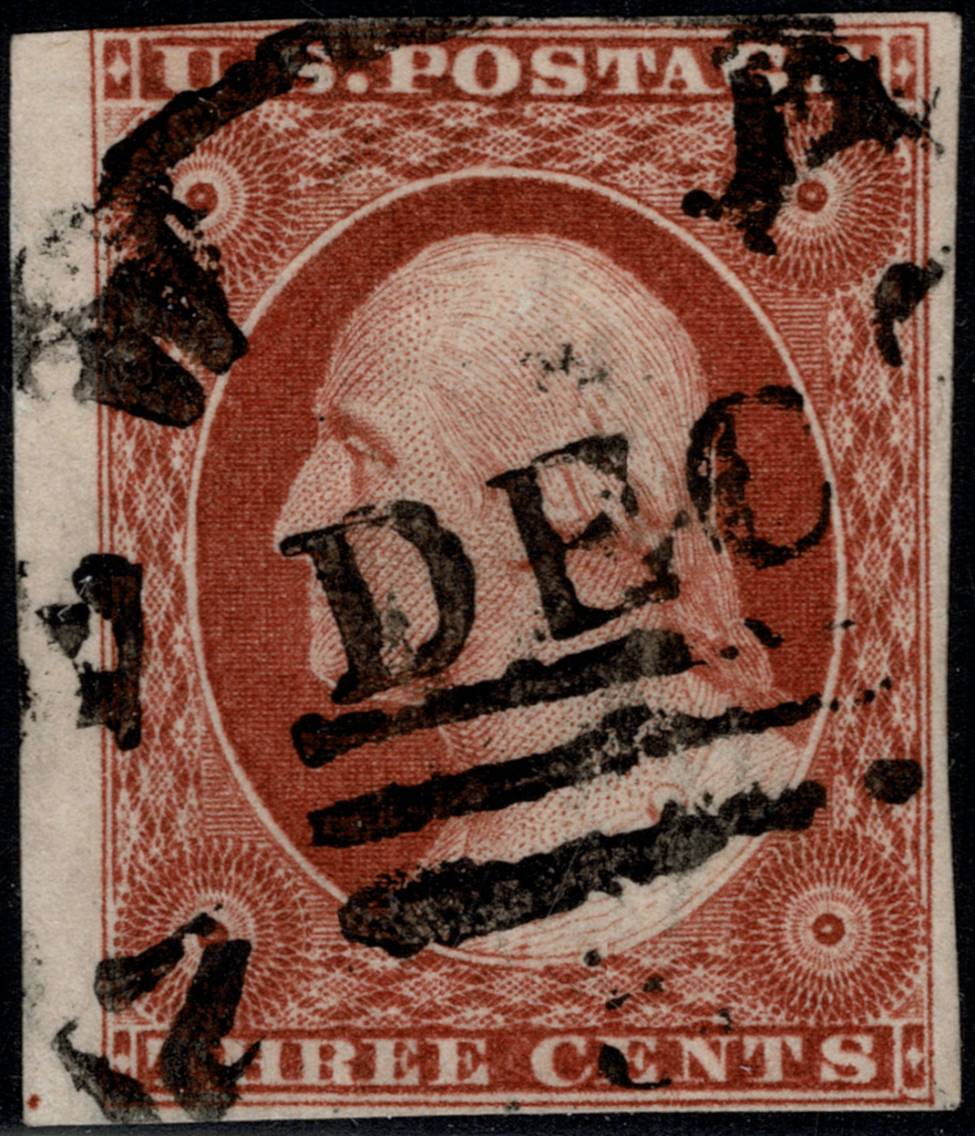 I am having trouble with this one: 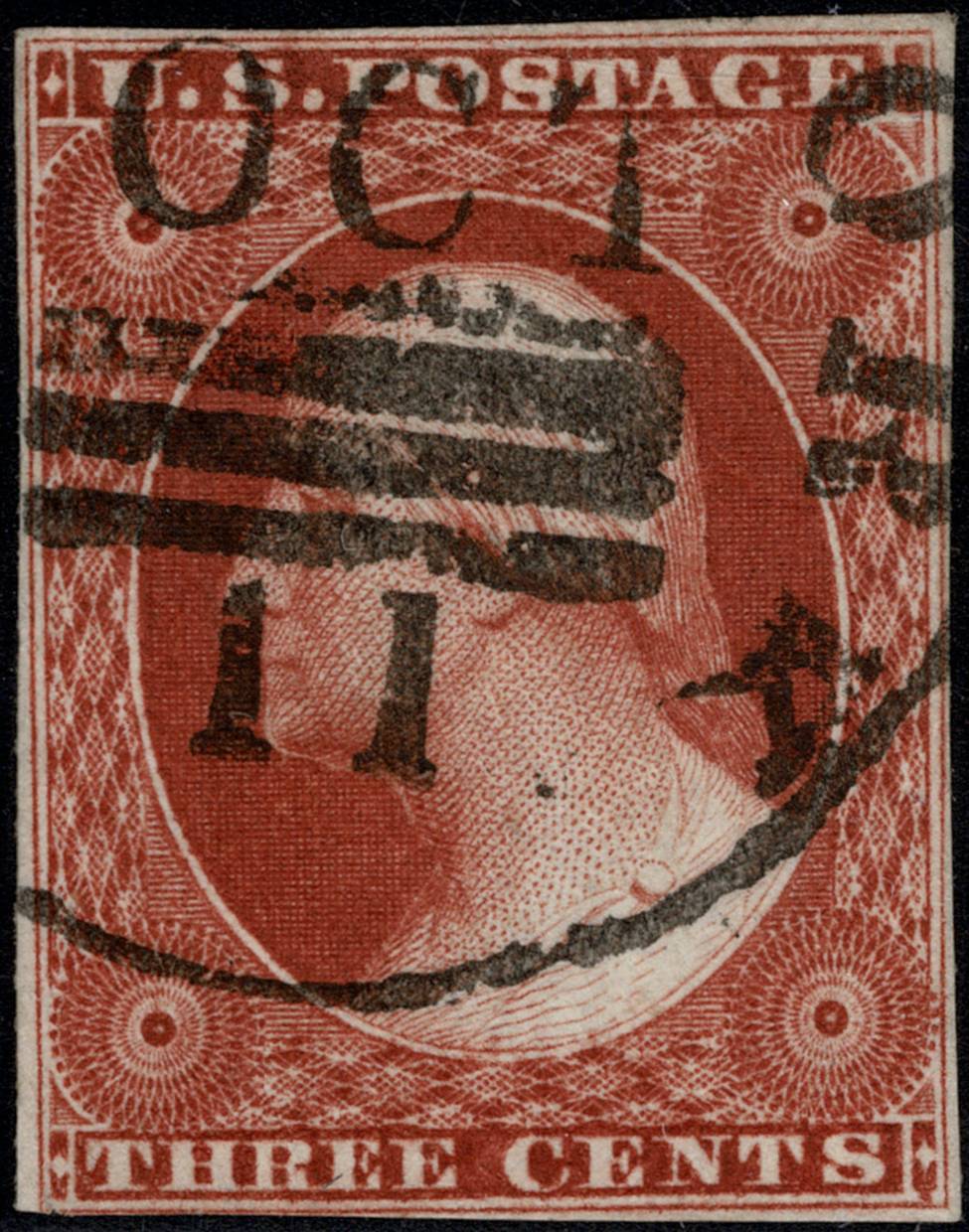 Possibly 41R2L It appears to have a lower left guide dot, buit not a very strong Lower Right one. Chase and Lund's copies don't show the Lower left dot. 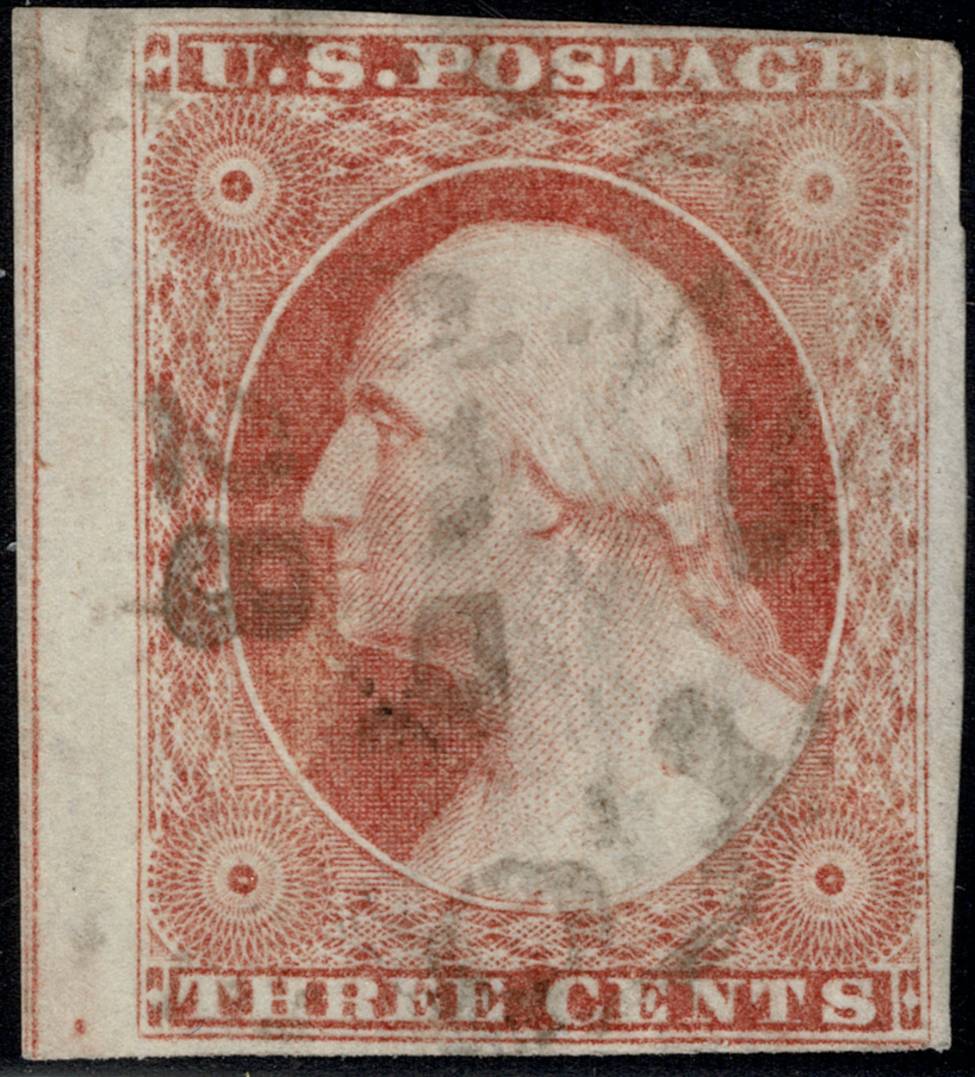 Stan Shepp |
|
Send note to Staff
|
Stan Shepp |
|
|
Valued Member
United States
319 Posts |
|
|
Hi Stan - where do you obtain so many extremely nice copies of 10/11 stamps. I'm always amazed at your crisp 4 margin copies shown here regularly. |
|
Send note to Staff
|
|
|
Pillar Of The Community
United States
636 Posts |
|
|
Hey Stan --
The #10A in your last post -- the one with the OCT 11 4-bar NY NY CDS cancel that you said was "giving you trouble" -- is position 22R5E.
Regards // ioagoa |
|
Send note to Staff
|
|
|
Valued Member
United States
342 Posts |
|
|
Jamesg,
I have thousands that aren't so great.
I only share the cool ones. :)
Ioagoa,
Thanks! Again.
I verified the other two positions against my existing plated stamps (which I am often hesitant to do because I know who plated many of them) and they were a match.
You seem to be exceptional at plating.
I'd love to sit down with you sometime and learn.
Stan Shepp |
|
Send note to Staff
|
Stan Shepp |
| Edited by stanshepp - 08/29/2023 11:08 am |
|
|
Valued Member
United States
342 Posts |
|
|
I compared the 21R2E to my existing example - and its a great match!
I wish that we could revise the stampplating.com site with the best known examples of each position.
Siegel Auctions, Harmer, and others would allow us to use any images that they have.
Stan Shepp |
|
Send note to Staff
|
Stan Shepp |
|
|
Valued Member
United States
342 Posts |
|
|
This one came plated as 82L0. Written in pencil on the reverse (ugh) I only hate that when it is wrong. I replated it and came up with 46L5E. Otherwise, almost 4 margins, guide dot shows, but missing the lower right corner. I am trying to plate one #10/A a day so that I can get caught up. LOL!! My eyes aren't great, but my scanner is. 1200 DPI and 100% plus and I can see a lot of the detail. Stan Shepp 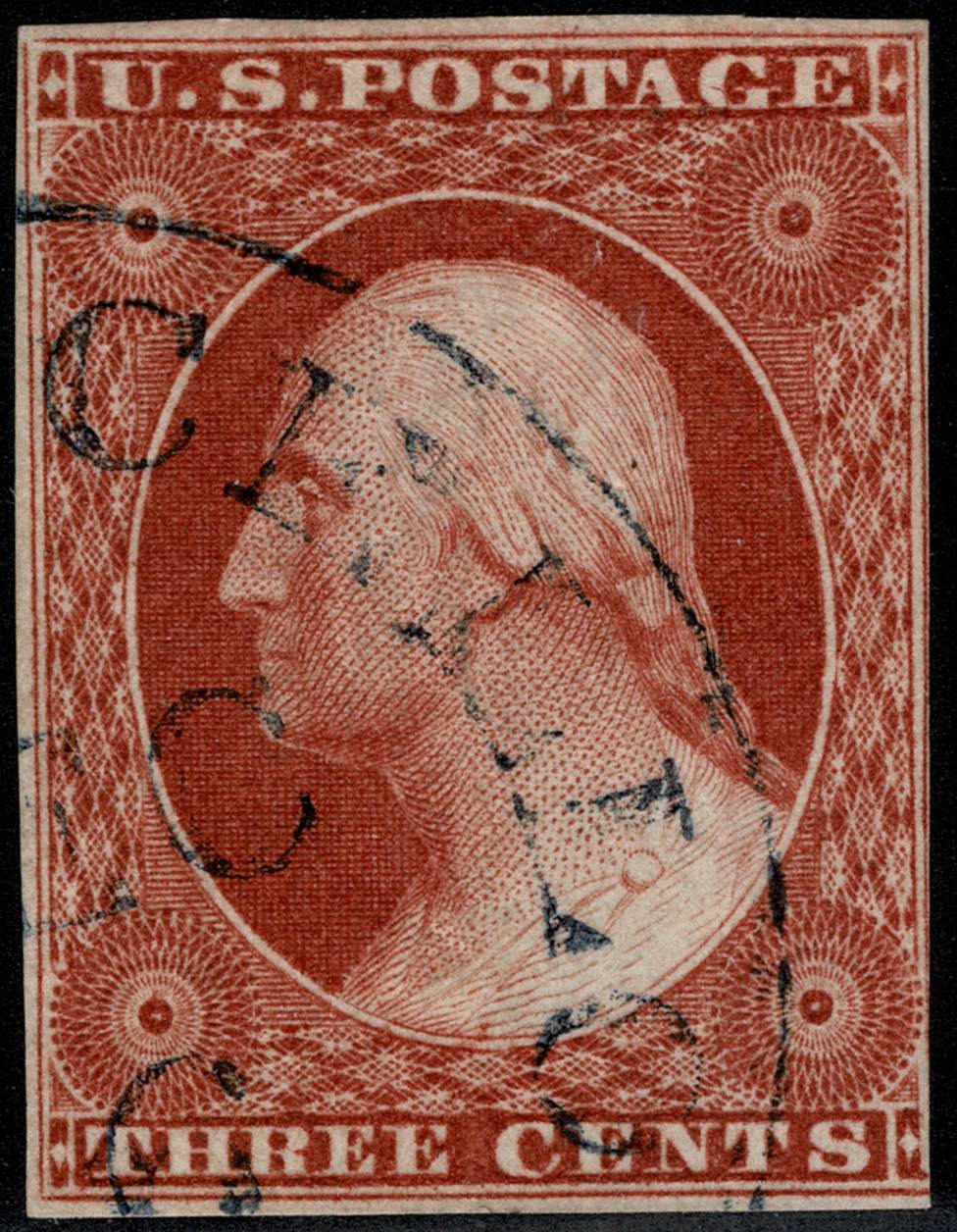 |
|
Send note to Staff
|
Stan Shepp |
|
|
Valued Member

United States
356 Posts |
|
|
I decided to have a closer look at a #13 or 14 and would like some information as to what I have here. TIA 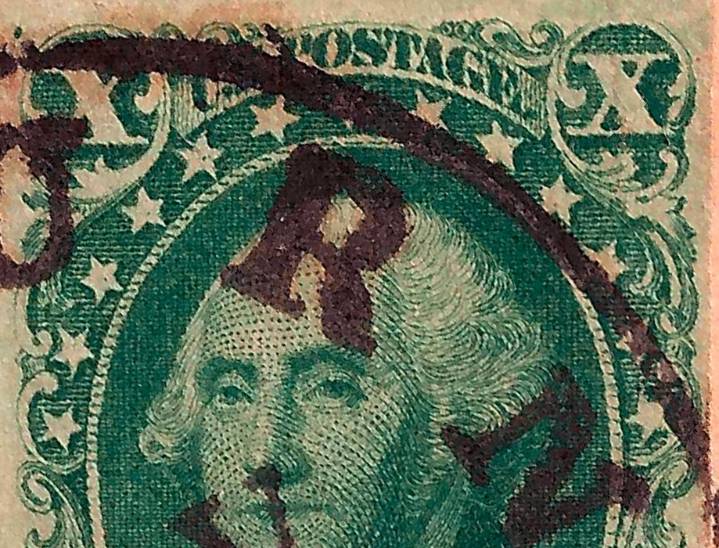 Will add the bottom here as I was size limited. 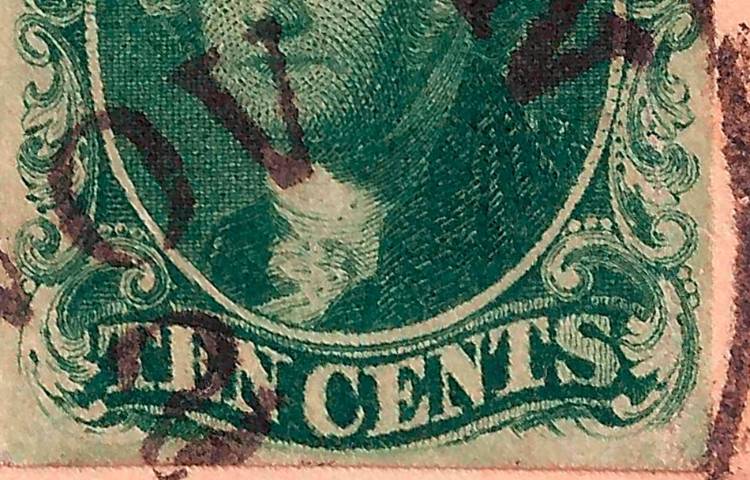 The entire 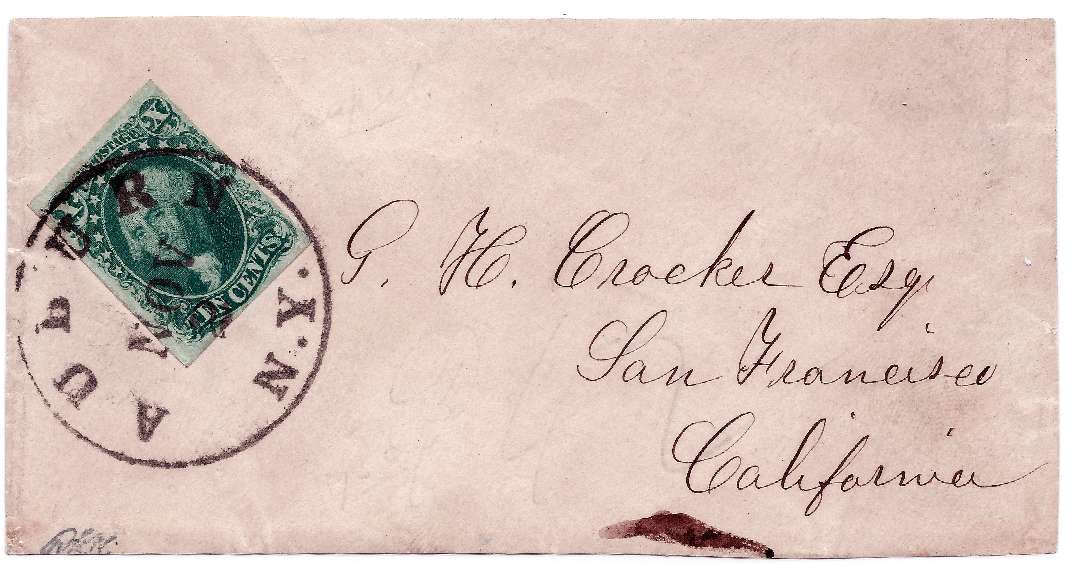 |
|
Send note to Staff
|
|
|
Pillar Of The Community
United States
1817 Posts |
|
|
It is #14 (the guide dot at upper left and details of the lower right plume). |
|
Send note to Staff
|
|
|
Replies: 3,821 / Views: 253,064 |
|




 Posted 08/21/2023 6:06 pm


