| Author |
 Replies: 3,821 / Views: 252,970 Replies: 3,821 / Views: 252,970 |
|
|
|
Valued Member
United States
144 Posts |
|
|
Pillar Of The Community
United States
636 Posts |
|
|
Hi Oiman --
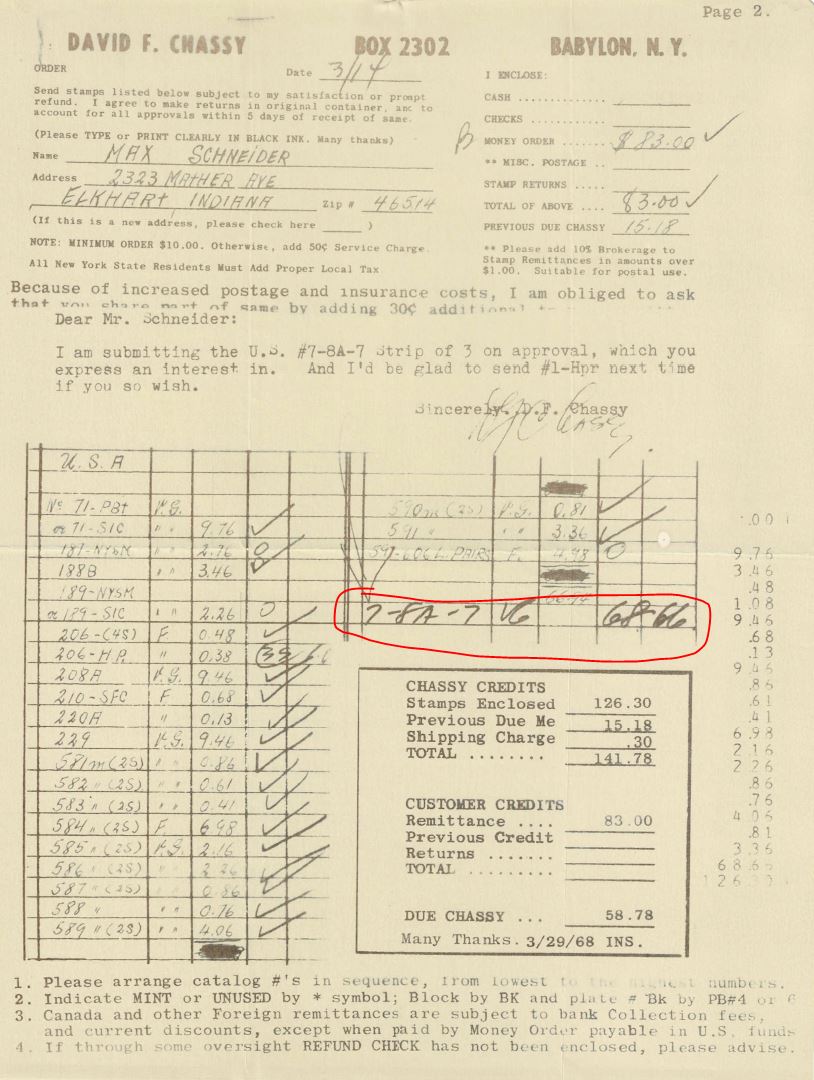
I love seeing old-time stamp receipts -- sure wish you could buy that strip for $69 today!
Interestingly -- a quick inflation calculation indicates that $69 in 1968 is equivalent in purchasing power to about $622 today, an increase of $553 over 56 years.
By the way -- those are both nice strips of the 1c blues -- thanks for showing them!
Regards // ioagoa
|
Send note to Staff 
|
|
|
Valued Member

United States
327 Posts |
|
|
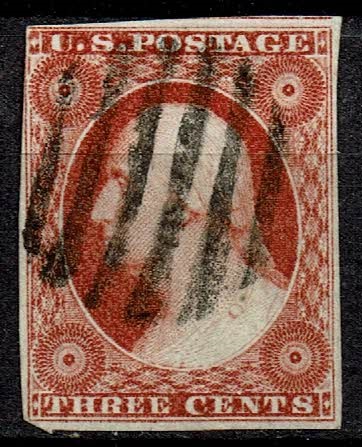
Greetings all. Hope everyone is well. I came across this specimen tonight and with the help of a nice shifted transfer in the rosettes and lower label block I plated it 95R1i. 95R1E does not show the shifted transfer so am I correct in saying that this shift occurred when the plate was re-entered? Chase IDs the shifted transfer at this position but doesnt go into what caused it. He does mention that some shifted transfers on the left pane of 1i were created when the plate was re-entered. Regards, Harper1249 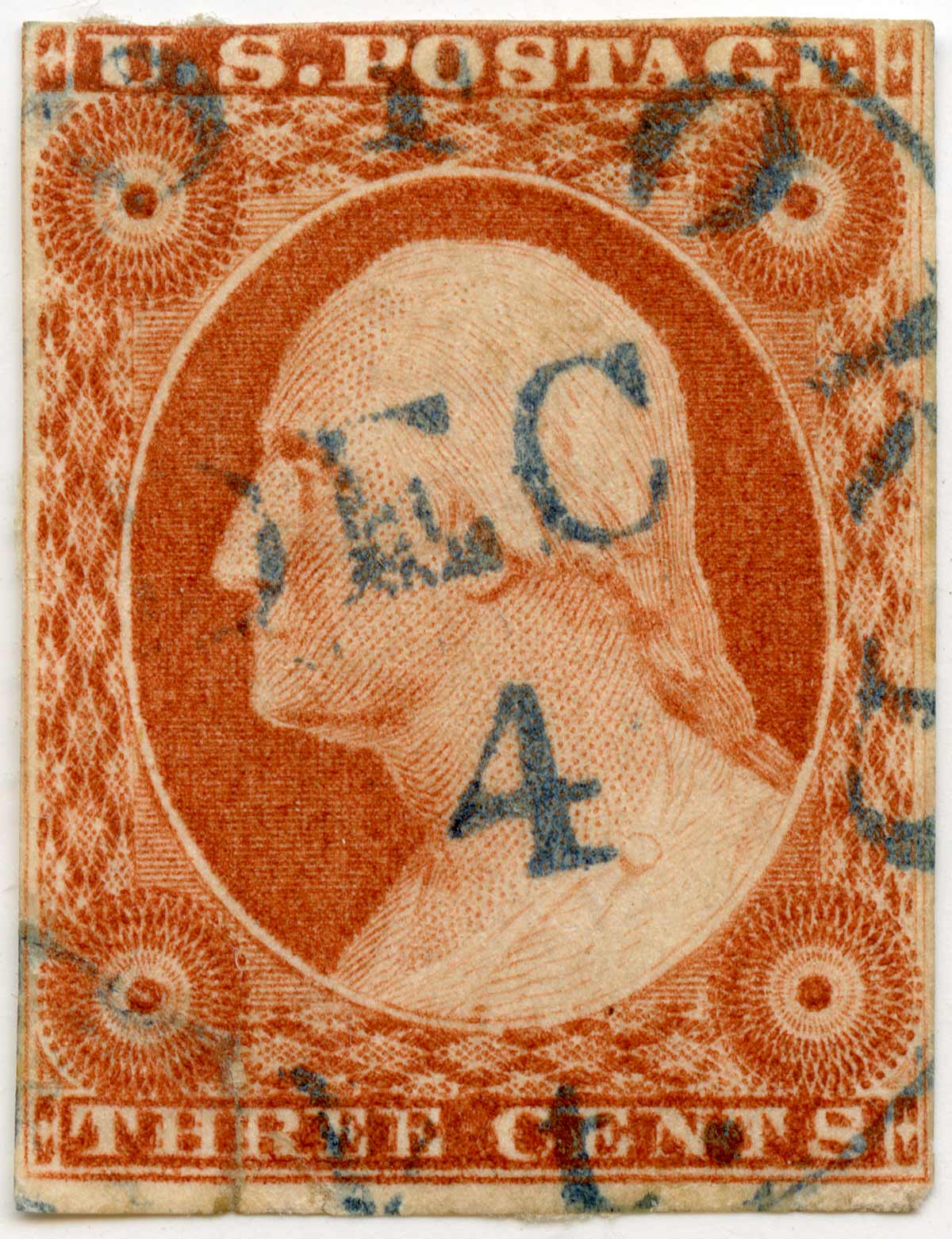 |
|
Send note to Staff
|
|
|
Pillar Of The Community
United States
3520 Posts |
|
|
That is most surely correct. Re-entry of any plate very often generates double transfers. In fact, in this era, you almost assume plate re-entry will generate some, if not a lot of them. |
|
Send note to Staff
|
|
|
Pillar Of The Community
United States
2230 Posts |
|
|
Hi, Oiman,
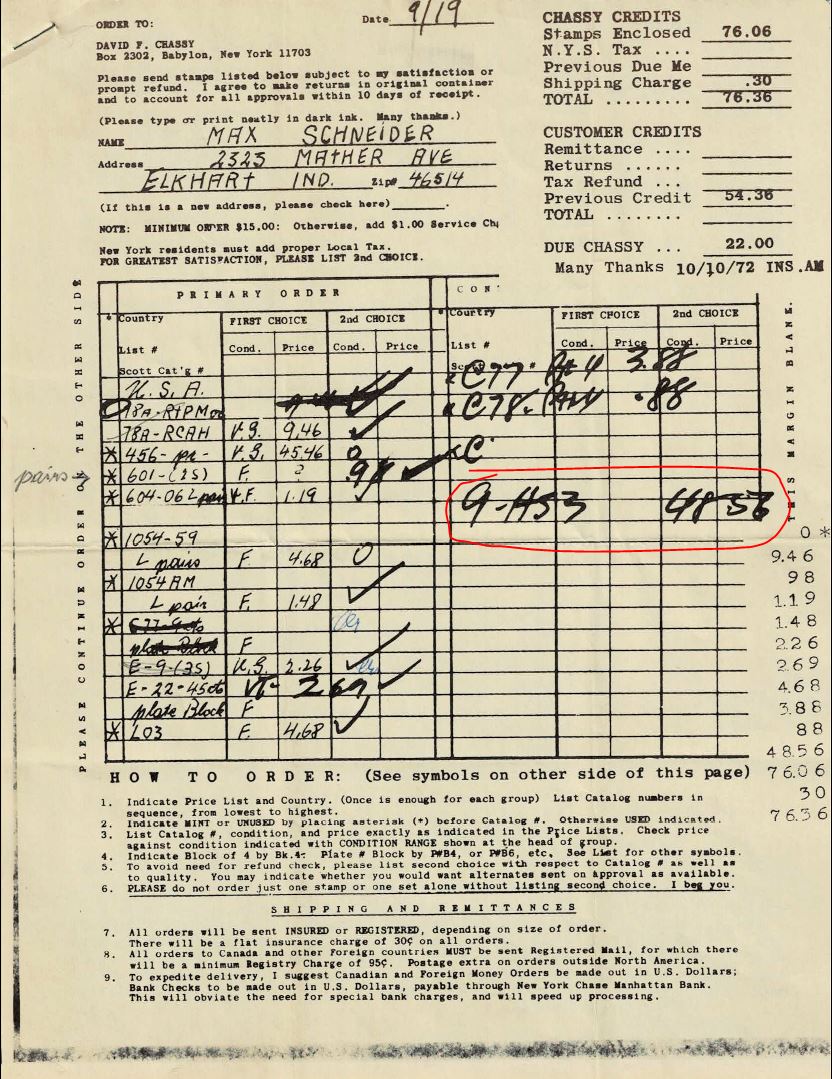
Thanks for posting those receipts from David Chassy. I think I still have some receipts from him laying around. I was a regular customer of his in the 1980s. I bought my first #11A from him, and I still own three #11As that I bought from him in 1984.
Chassy had an innovative system of indicating a stamp's grade in the price shown on his price lists. I don't recall it exactly, but he would use the last digit or two digits after the decimal to indicate the grade. For example, if a stamp was priced at $3.46, the 6 would indicate a grade of fine. The system allowed for a more compact price list to keep printing and mailing costs lower. |
|
Send note to Staff
|
|
|
Valued Member
United States
342 Posts |
|
|
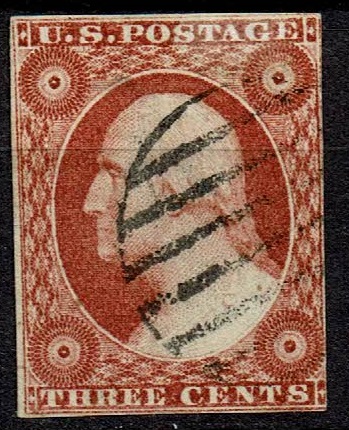
I find myself once again stumped. This example has a clear double transfer in the center of the UR Rosette. It has a prominent guide dot in the UR corner. The strong break in the oval at the top - signifying a B-relief The Left Inner Line appears to run up too far. The Right Inner Line goes down a little too far. There appears to be some double transfer implications in the white oval from about 10 o'clock to 11 o'clock. The Upper Label Block shows some markings inside the "OSTAGE" and the Lower Label Block shows what appears to be a plate crack across the thREe ceNTS" especially in the capitalized letters shown here. It is obviously a top row stamp and the Upper Label Block appears to be distorted by the printing process. Another interesting characteristic of this example is the single perforation on the Lower Left Corner. I know. It isn't a single perforation. But it appears to have been on the stamp prior to posting. The cover appears to have a "DEC 6" CDS and a manuscript noptation of "21 NOV 1851" (1854? 1857?) Internally, there is not dateline, but the letter refers to a balance of $751.25 foir the year 1851 - and it is clearly 1851 in that instance. Also - What might have caused the printing anomolies at the top of this example? Thoughts? Thanks in Advance, Stan Shepp 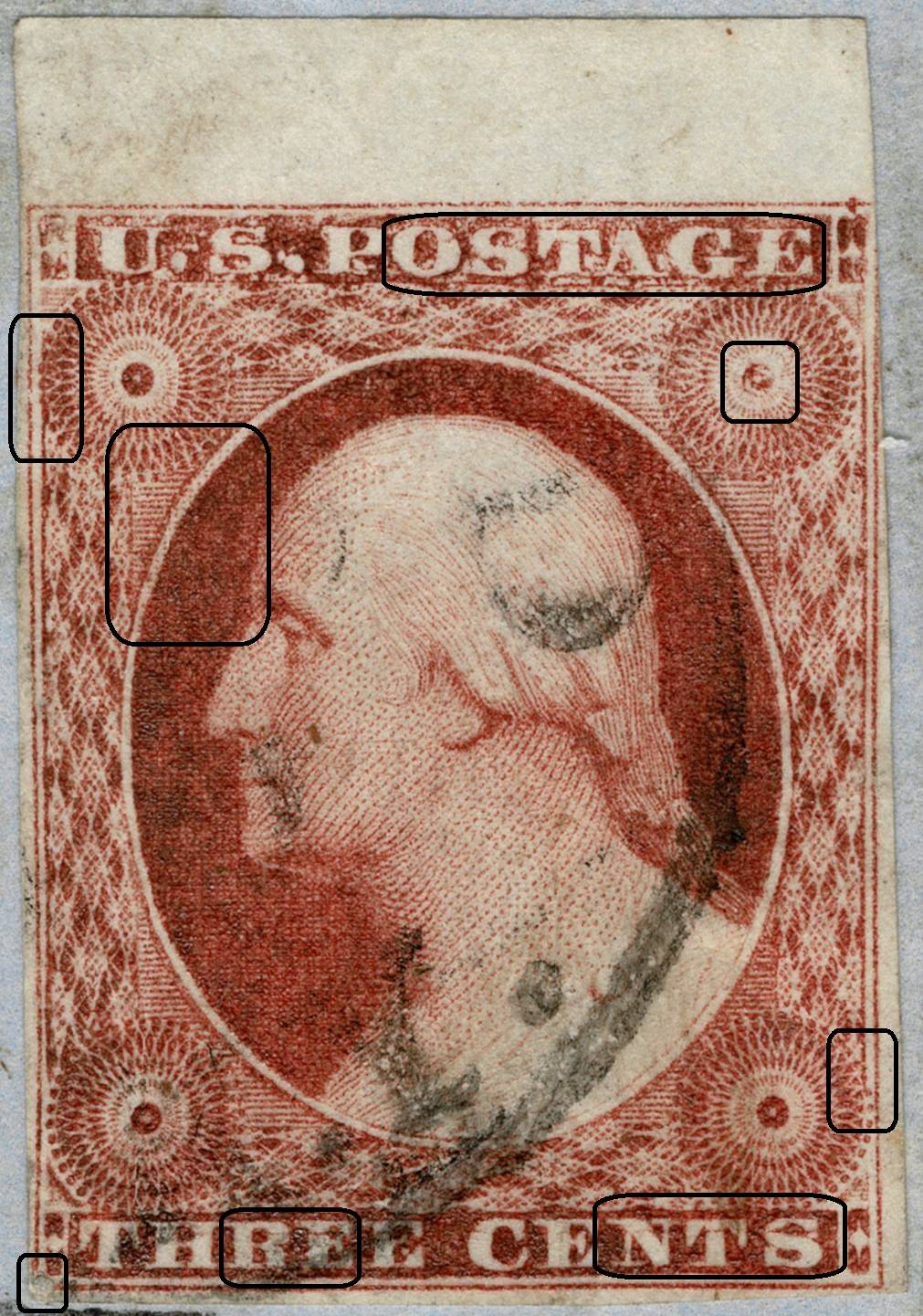 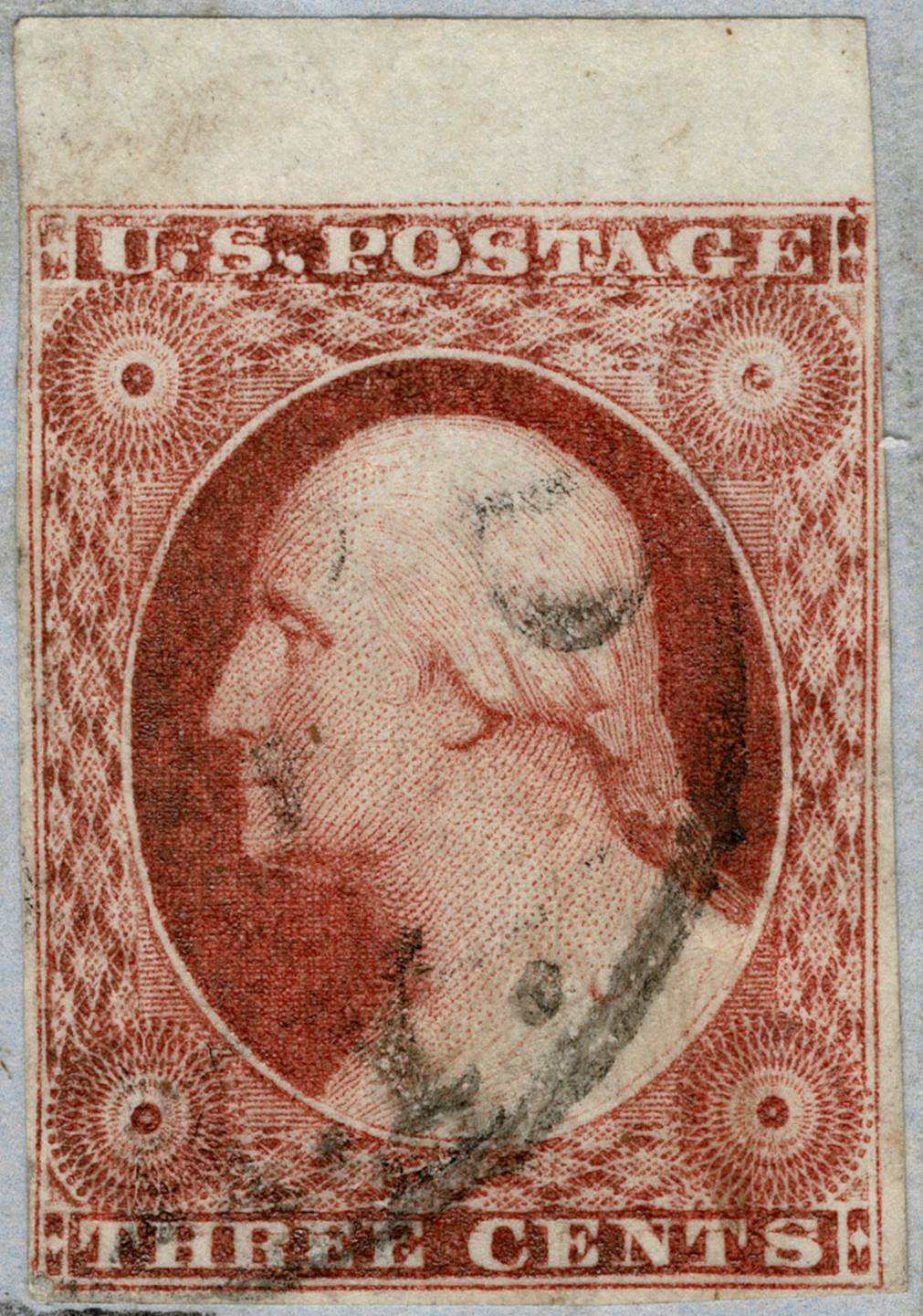 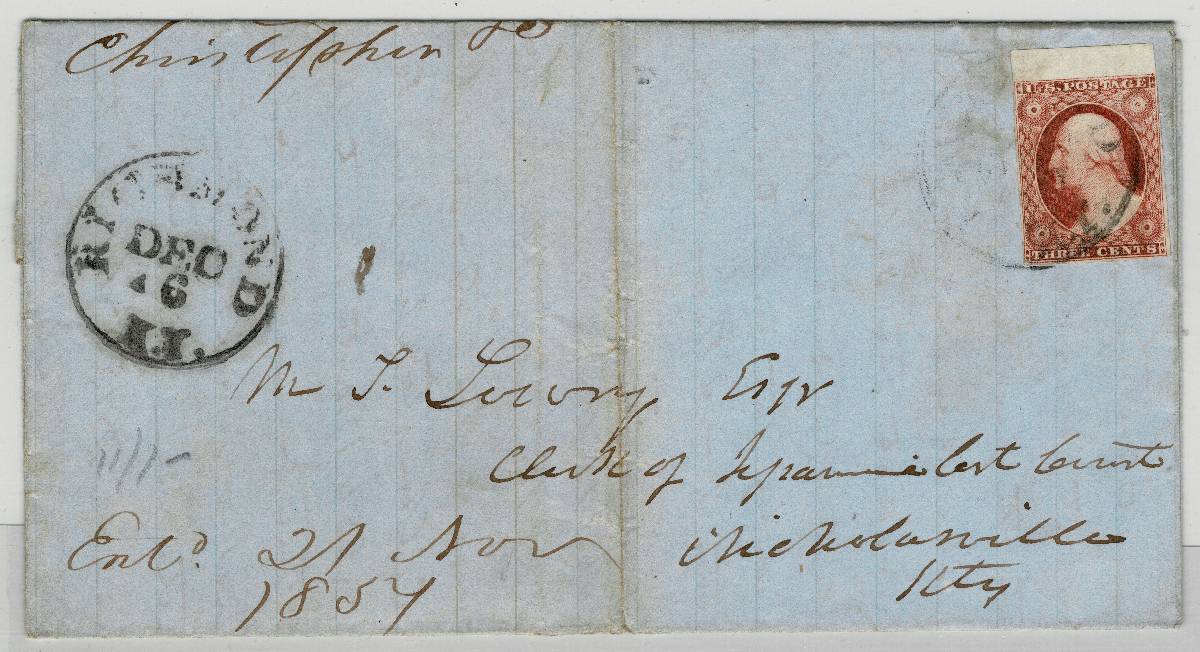 |
|
Send note to Staff
|
Stan Shepp |
| Edited by stanshepp - 06/28/2024 7:16 pm |
|
|
Pillar Of The Community
United States
2947 Posts |
|
|
My first reaction is to wonder if what you're considering to be DT is just an inking issue or something caused when removing the sheet from the plate? |
|
Send note to Staff
|
|
|
Pillar Of The Community
United States
3520 Posts |
|
|
Look at 3R1L.
Its a notable double transfer. |
|
Send note to Staff
|
| Edited by txstamp - 06/28/2024 11:33 pm |
|
|
Valued Member
United States
342 Posts |
|
|
3R1L crossed my mind, but I only remembered the short TA and this example just looked like a mess at the top. It didn't appear to me to have the short TA, but now it does.
Thank you very much.
Stan Shepp |
|
Send note to Staff
|
Stan Shepp |
|
|
Pillar Of The Community
United States
1831 Posts |
|
|
Pillar Of The Community
United States
636 Posts |
|
|
Hi rlsny --
Definitely an A relief from plates 6 or 7.
Regards // ioagoa |
|
Send note to Staff
|
|
|
Pillar Of The Community
United States
1831 Posts |
|
|
Thank you. That was exactly what I hoped for. I tried matching using the compression images for plate 6. I had never used them before. Fun, but I did not succeed. I either missed it - quite likely - or it is on plate 7 which is not yet available on stamp smarter. I see so many stamps that are so close to this on plate 6, that my eyes hurt. So, no luck, but also, no doubt about the type. Thanks again for the help. |
|
Send note to Staff
|
|
|
Pillar Of The Community
United States
636 Posts |
|
|
Hi rlsny --
You are welcome -- and YES -- these A relief stamps from plates 6 and 7 can be very challenging to plate -- as many are very similar and the differences ever so subtle.
I spent some time today plating your stamp -- and it plates to position 16L6.
I have never used the compressed images on StampSmarter -- so you may want to go back and take another look at 16L6 and see if it looks right to you.
To me, the most distinctive plating characteristics from a compression analysis perspective are in the LFL -- but everything else looks like a solid match to me as well -- both compressed and using a full-sized traditional approach.
FYI -- the Lund copy of 16L6 on StampPlating is wrong -- as it is actually 24L6 -- so please bear that in mind if you try to compare your patient stamp to the Lund copy.
Regards // ioagoa
|
|
Send note to Staff
|
|
|
Valued Member
Netherlands
11 Posts |
|
|
Valued Member
United States
327 Posts |
|
|
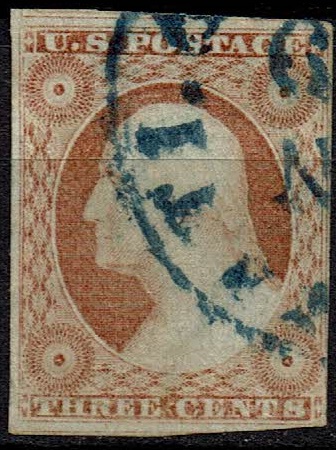
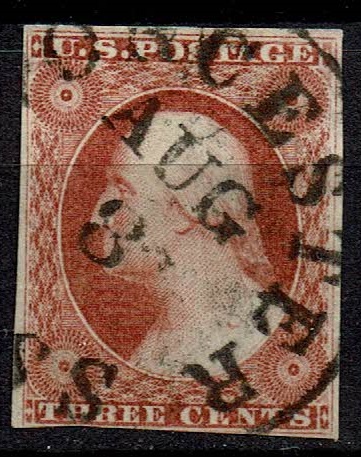
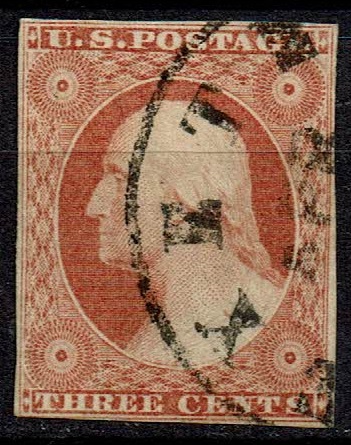
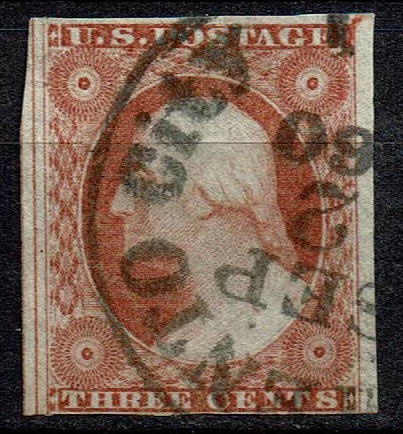
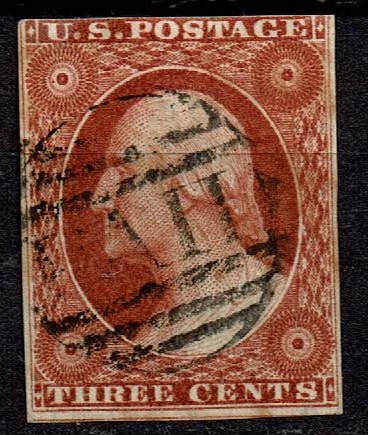
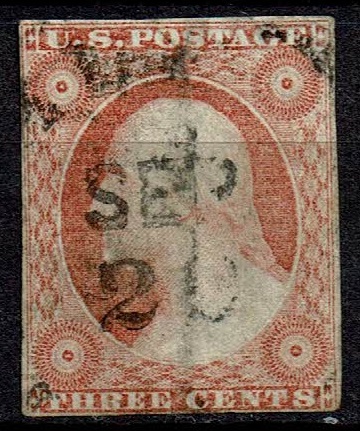
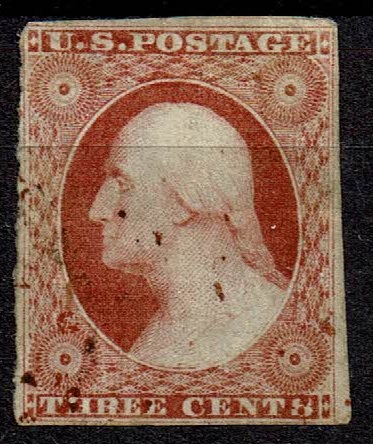
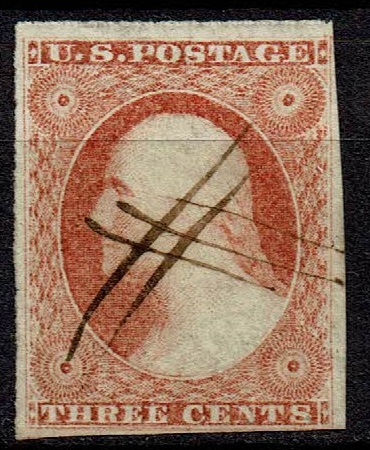
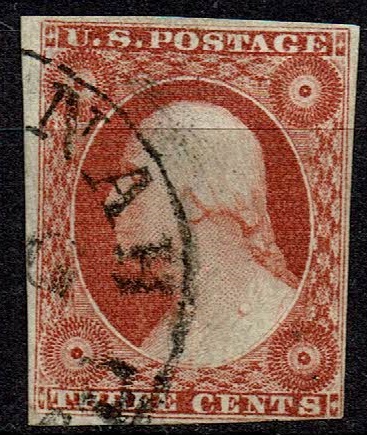
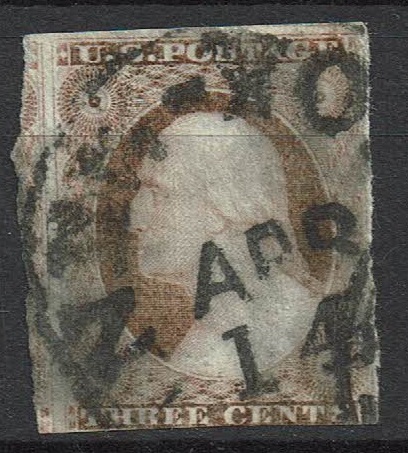
Hello Salvtem and welcome to this forum. Commenting on color from digital scans or images isnt worth doing given the variability with scanners, phones, monitors, etc. You do have some nice examples of the 1851 3 cent though. This thread almost always refers to the Scott numbering system when discussing the varieties of this stamp -- the 10, 10A, 11 and 11A. As for cancellations and other factors, I would point out the following:
Stamp #4 - I suspect this is actually a Scott #26 (perforated variety, series 1857) that has had the perforations cut away. Factors that support this would be centerline on left side. The centerline being the line that divided the left and right panes and was a guide for the post office to separate the panes into individual sheets. It is very close to the impression on this example. The earlier imperf varieties had a much larger gap between centerline and the adjacent stamps. This stamp is also missing its upper frameline and likely its bottom, both characteristics of #26. It looks to be from the top left corner of the right pane.
Stamp #7 - The Boston "PAID" cancellation on this one is of the smaller variety and can be used to date the stamp's use to a date prior to January 23, 1852, and therefore likely a Scott #10A Orange Brown variety. There is a guide dot in lower right corner below the diamond block. This could aid with plating if you are interested in that.
Stamp #12 - The stamp looks to be heavily oxidized/sulphurized resulting in a darker brownish color. It also has a heavy cancellation impacting color.
Hope this is helpful.
Regards,
Harper1249
|
|
Send note to Staff
|
|
|
Replies: 3,821 / Views: 252,970 |
|




 Posted 06/01/2024 6:56 pm