| Author |
 Replies: 3,821 / Views: 252,962 Replies: 3,821 / Views: 252,962 |
|
|
|
Pillar Of The Community
United States
2230 Posts |
|
|
Many plate 5L positions can be plated using rust patterns. The plate apparently rusted when it was in storage for several years, and the rust spots on the plate resulted in consistent ink spots on the printed stamps, like around the S on position 58R5L.  |
Send note to Staff 
|
|
|
Pillar Of The Community
United States
2230 Posts |
|
|
Quote:
As for outer frame lines on the #11A, would I be correct in that they are NOT strong? They don't appear to be very weak either, so perhaps there is a middle ground. Hi, NicholasC, I've strayed far from your second question. Your #11A has all four outer frame lines recut, and both inner lines recut (the lines inside of the right and left frame lines). Comparing your stamp to other plates, I would say the recutting on your stamp is medium strength, indicating a probable plate 2L or 3 printing. The recut line along the top of the upper-right diamond block on your 11A is also indicative of plate 2L or 3. I would not rule out plate 5L, though. The frame line and inner line recutting is generally heavier on some plates, like plate 0 or 1L, and light on other plates like plate 5L. So the heaviness of frame line recutting can help a plater narrow down what plate the stamp was printed from. |
|
Send note to Staff
|
| Edited by Classic Coins - 08/01/2024 9:46 pm |
|
|
Pillar Of The Community
United States
1105 Posts |
|
|
@Classic_Coins, wow, that was a ton of great information. I can honestly say I think I understand now about the recutting that took place. |
|
Send note to Staff
|
|
|
Valued Member
United States
342 Posts |
|
|
80L2 - but is it Early? or Late? Used on a cover internally dated July 28, 1852. And I believe that this must be about the farthest a left inner line has gone up. Thoughts? (The outer frame line anomolly is a scanning issue) I added another - also dated July 29th - no year. I have not yet attempted to plate it, so I am just sharing it. Also, I found a copy of 94L5L - Plate Crack on cover. Just Sharing. Stan Shepp 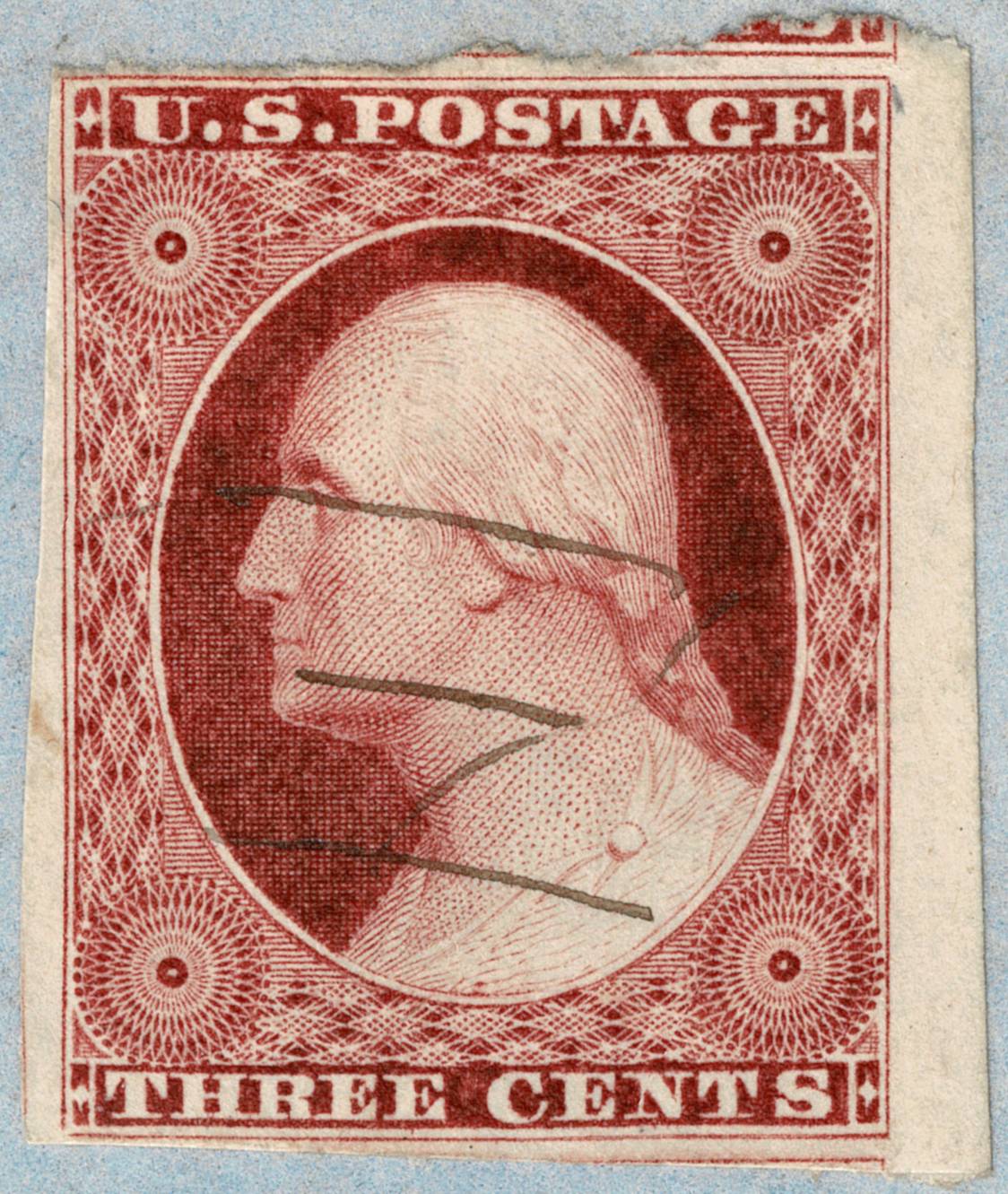 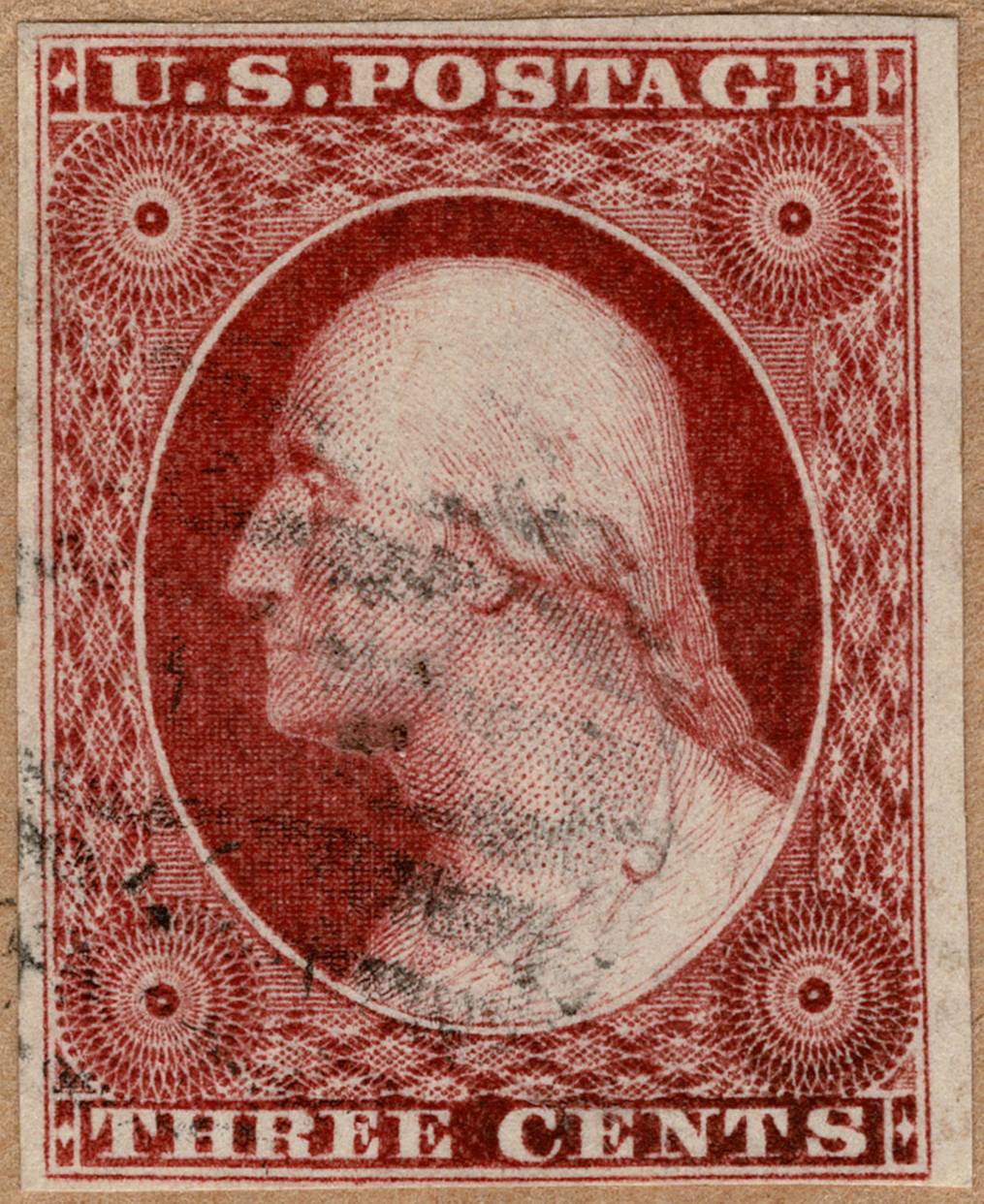 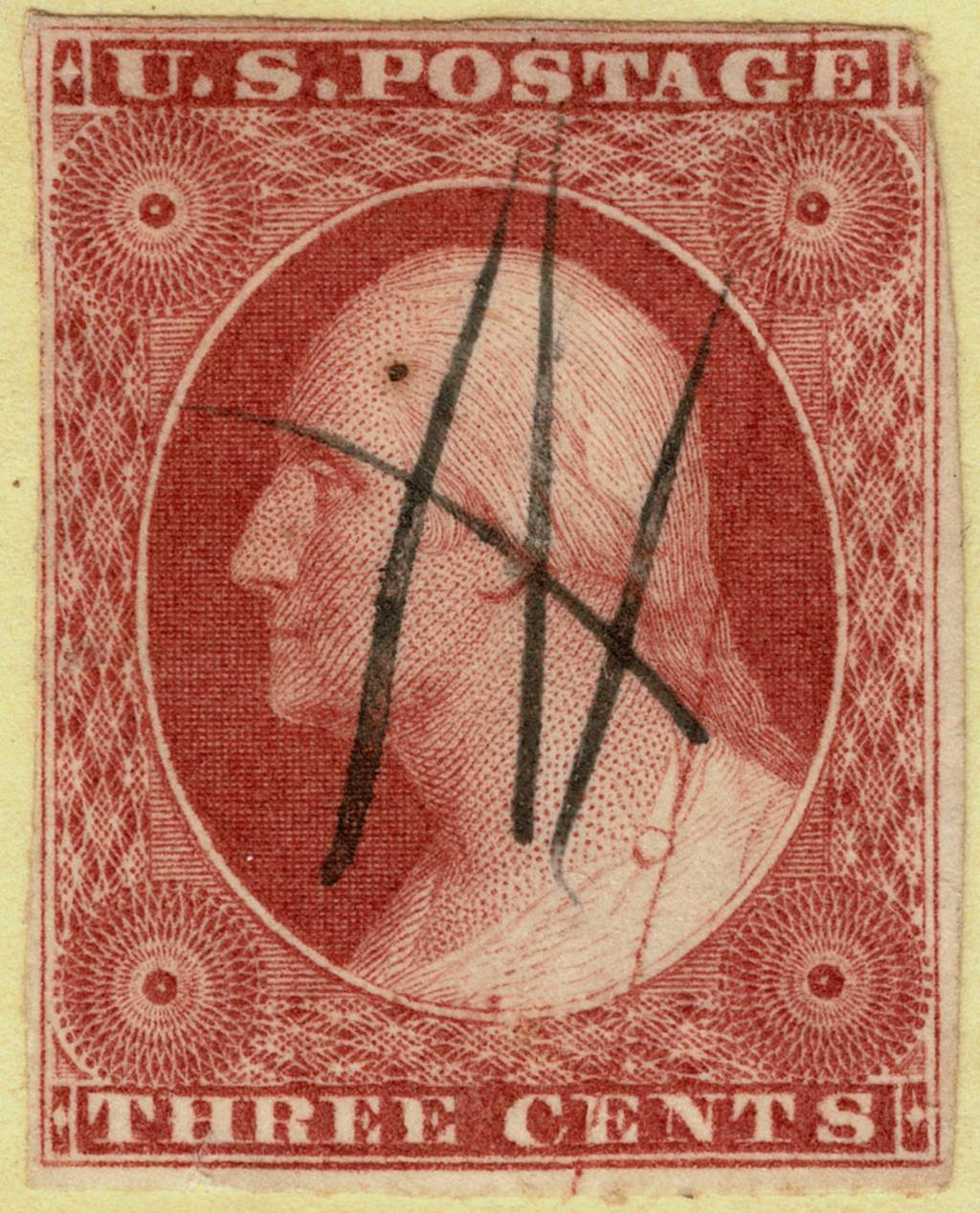 |
|
Send note to Staff
|
Stan Shepp |
|
|
Valued Member

United States
327 Posts |
|
|
Pillar Of The Community
United States
2947 Posts |
|
|
My first thought, the lack of plate wear would have me believe its 80L2L.
Obviously you know better than to take my word on this, I just like to participate.
Nice stamps!! |
|
Send note to Staff
|
|
|
Pillar Of The Community
United States
636 Posts |
|
|
Hey Stan --
I agree with StampCrow that your 80L2 stamp is Late State -- so 80L2L.
It is surely a very early printing impression from the Late state of the plate -- and almost proof-like (don't we wish they were all like that!).
I see evidence of re-entry when plate 2E became plate 2L -- most notably in the BFL below the EN of CENTS -- in the segment of the RFL at a level roughly opposite the toga button and running up to the bottom of the queue -- and at the upper end of the RIL -- and a number of other places as well.
Anecdotally, a July 1852 usage is getting late for plate 2E -- although not impossible. Also -- with all the usual caveats about colorizing stamps from scans -- the color and the overall impression do not look like a typical 2E stamp to me.
Regards // ioagoa
|
|
Send note to Staff
|
| Edited by ioagoa - 08/20/2024 5:24 pm |
|
|
Valued Member
United States
342 Posts |
|
|
Thanks, Ioagoa.
That was the feedback that I was looking for.
|
|
Send note to Staff
|
Stan Shepp |
|
|
Pillar Of The Community
United States
1831 Posts |
|
|
I am betting this is an easy stamp to plate. Pair top is cut off, not going to be valuable, but I'm just curious due to the doubling of the frame line on the left and missing a frameline on the right (left stamp). Seeking clues, thanks in advance. (no markings on the back) 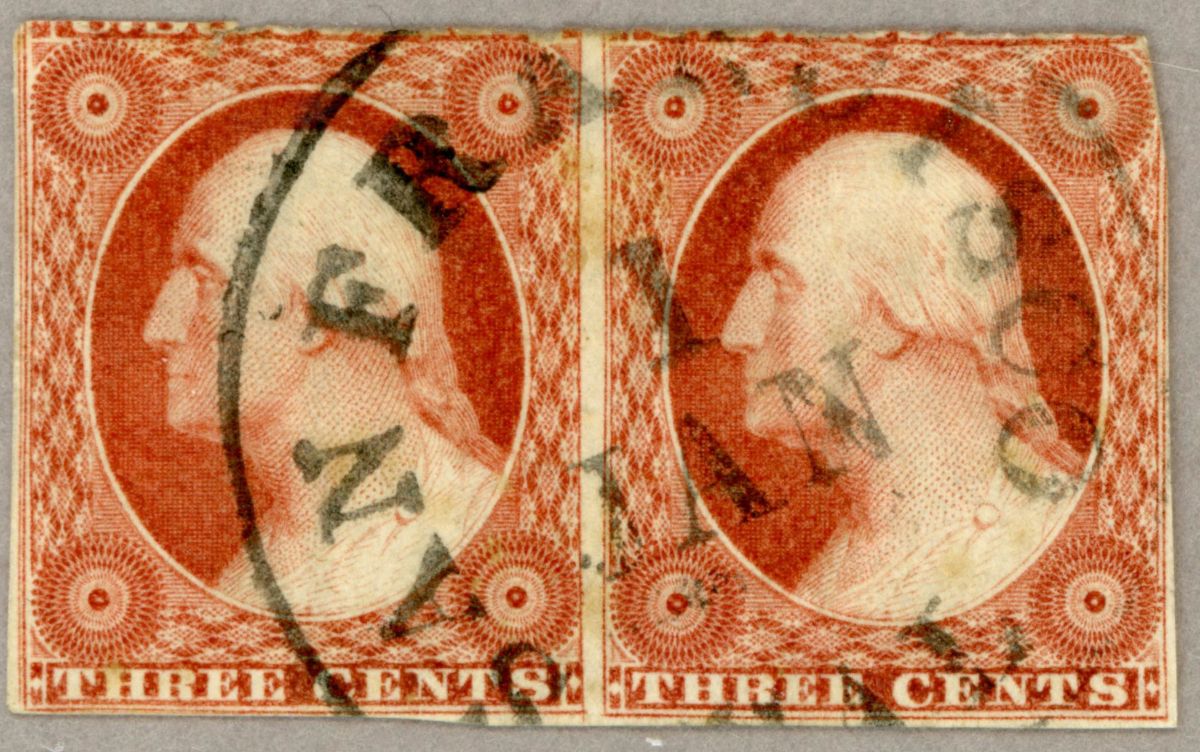 |
|
Send note to Staff
|
|
|
Pillar Of The Community
United States
3520 Posts |
|
|
Try looking at the plate 3 chapter in Chase.
"three rows". 8-9-10L3 columns. |
|
Send note to Staff
|
|
|
Pillar Of The Community
United States
1831 Posts |
|
|
Thanks! Found it on plate 3, but row 6, pos 59-60L3 looks like the answer |
|
Send note to Staff
|
|
|
Valued Member
United States
342 Posts |
|
|
Dr. Chase, on page 60 (1942 Revised Edition) says, "65L5(L) shows a tiny diagonal crack on the bottom of the bust below and just to the left of the button. It runs from northwest to southeast and is about 2-1/2 mm. long. This stamp is on a cover that has a pencil notation "65L5L Crack Chase p. 57/60" I have several stamps plated as 65L5L, but I cannot see a plate crack as described by Dr. Chase & his book has no image. I also cannot see the plate crack in the examples shown on the www.stampplating.com website. Does anyone have an example of the plate crack on position 65L5L that they can share here? Is this stamp an accurate example of said crack? Or was this a hair on the plate that made a line? Thanks in advance. Stan Shepp 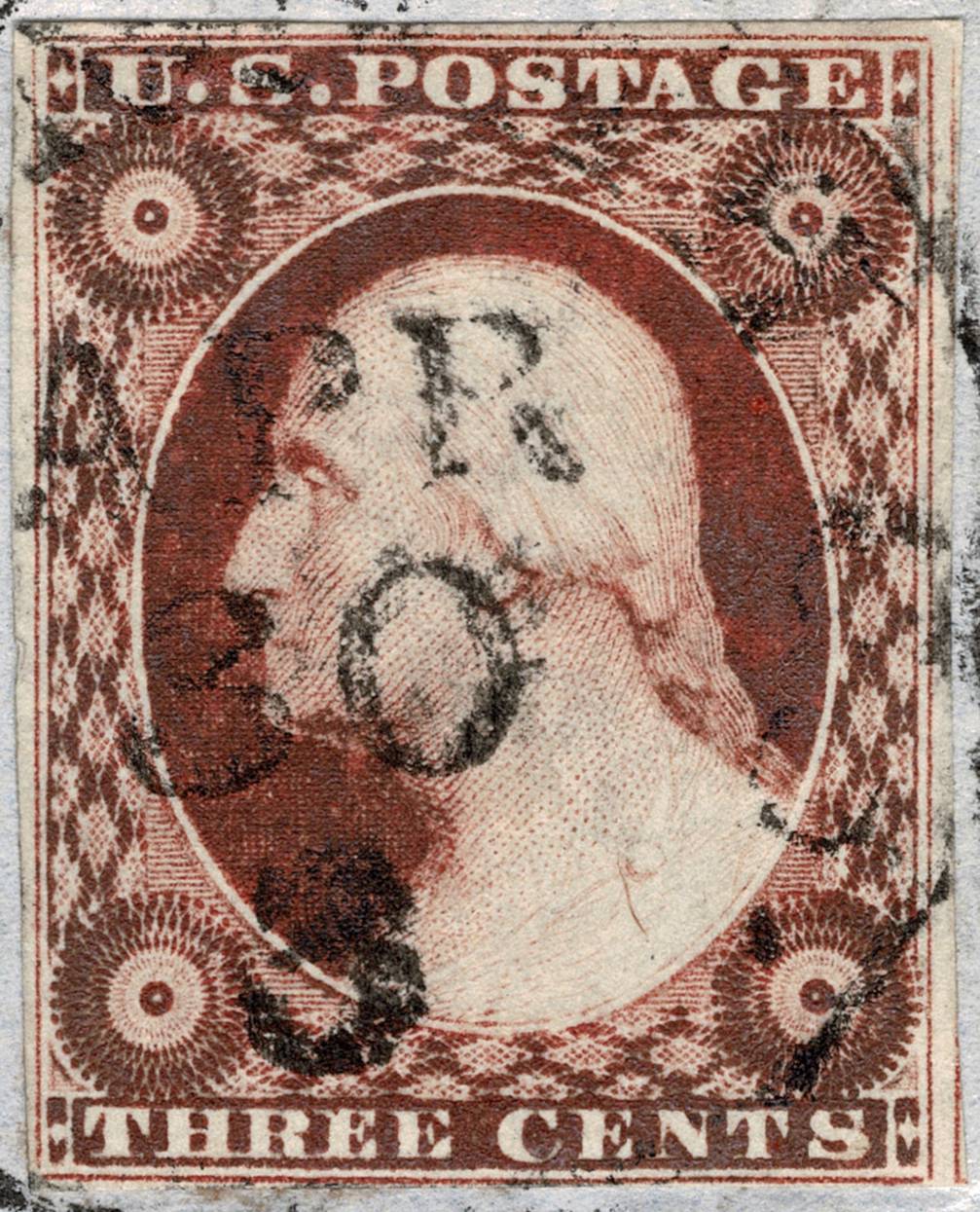 |
|
Send note to Staff
|
Stan Shepp |
|
|
Valued Member
United States
342 Posts |
|
|
I always like to share some eye-candy whenever I ask for assistance. Here is a nice, unplated Scott #10A with a small Boston PAID cancel. Beautiful color & 4 margins. That's all. Stan Shepp 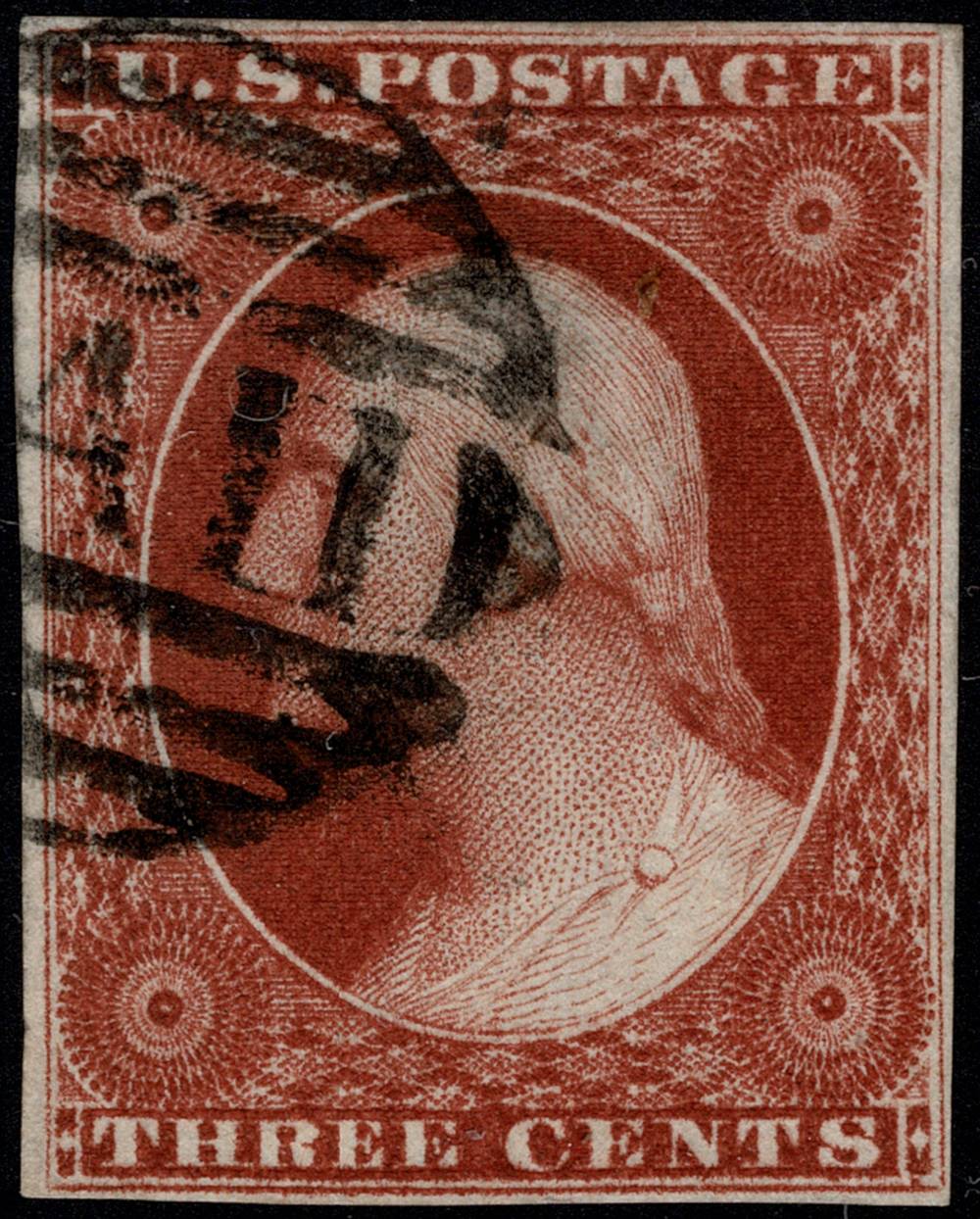 |
|
Send note to Staff
|
Stan Shepp |
|
|
Pillar Of The Community

United States
1123 Posts |
|
|
I cannot answer your question about the 65L5L plate crack, but coincidentally this last Saturday I watched a "simulated" plate crack of 74 84 94 L5L sell at Paradise Auctions (SAN). The unused block of 12 has a "fraudulent line drawn to imitate the plate crack" 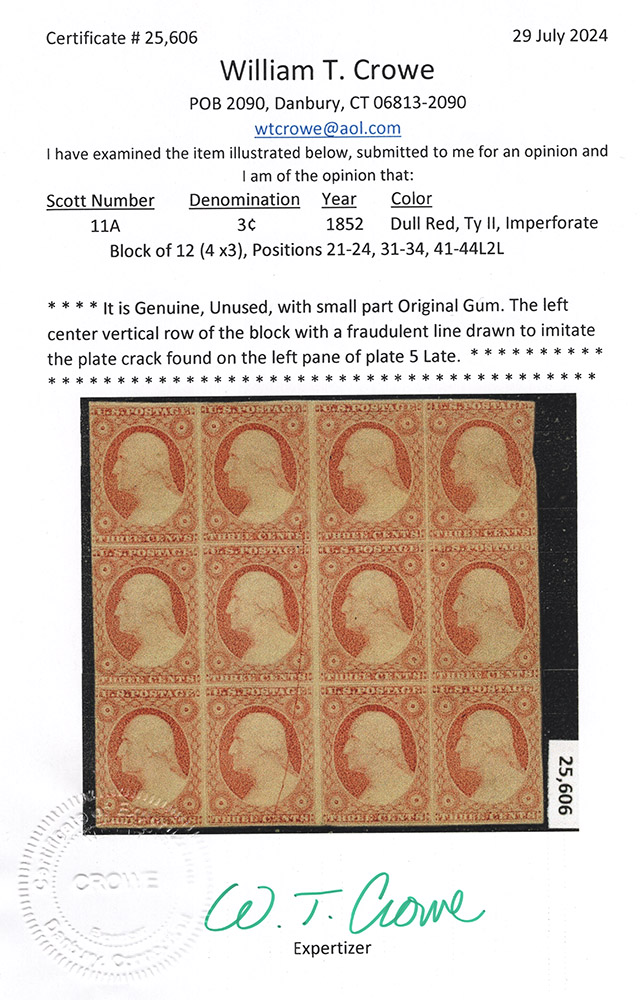 I was tempted to bid as it sold for just $625 against a $5100 CV (for the normal stamps in unused blocks and pairs). Unusual, but I didn't need it that badly. (nice 10A that you posted by the way.) |
|
Send note to Staff
|
|
|
Pillar Of The Community
United States
3520 Posts |
|
|
I saw that fake crack lot, and I avoided it. Its really too bad, as its a very nice block that someone messed up, thinking that they might actually fool someone as to what it was. Even if they had done a decent job of re-creating the crack (which they didn't), its not even the right 3c plate. It wouldn't fool even a beginning 3c plater.  People who try to (re)create plate varieties, such as these likely don't realize the detailed analysis that real platers undergo. Its difficult to create a fake variety like this. .. and don't get me started on the "Knapp Shift".  |
|
Send note to Staff
|
|
|
Replies: 3,821 / Views: 252,962 |
|




 Posted 08/01/2024 9:20 pm


