| Author |
 Replies: 3,821 / Views: 252,955 Replies: 3,821 / Views: 252,955 |
|
|
|
Pillar Of The Community
United States
2230 Posts |
|
|
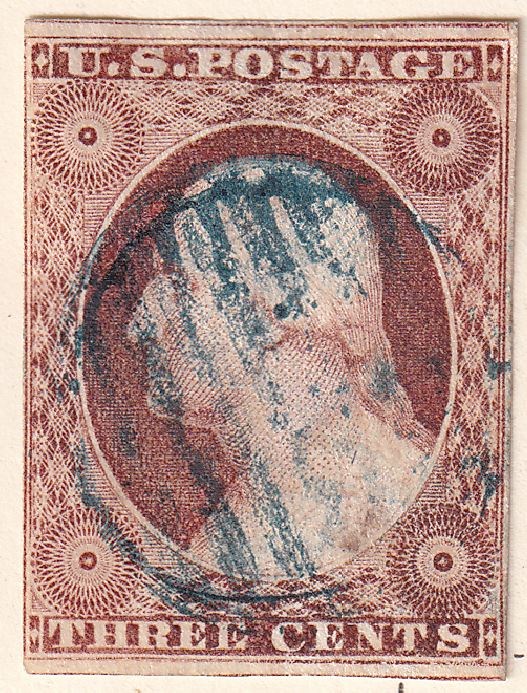
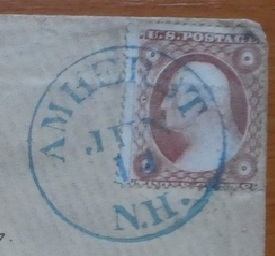
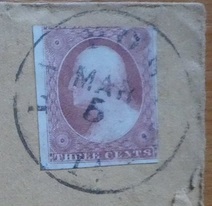
Here's a well-worn dog that I picked up in a bulk lot at a stamp show last month. When I got it home and compared it to my master color set, I was happy to find that it is a perfect match for the plum color! It is position 15R2L, with one line recut in the lower-right triangle.  |
Send note to Staff 
|
|
|
Pillar Of The Community
United States
636 Posts |
|
|
Hi Classic --
That plum might be a dog as you say -- but it is still a plum!
Nice pick up -- and goes to show that there are still scarce to rare shades of the 1851–1857 3c to be found in the wild.
Regards // ioagoa |
|
Send note to Staff
|
|
|
Pillar Of The Community
United States
2947 Posts |
|
|
These shades can be found but I think there's a conversation to be had about certification of them. Colors like Plum, Pink and the later years Orange Browns.., I would have more confidence in you two identifying them than I would the PF or other services. |
|
Send note to Staff
|
|
|
Pillar Of The Community
United States
2230 Posts |
|
|
Thanks, ioagoa and stampcrow.
Yeah, with Bill Amonette no longer with us to pre-approve such certifications, I wonder if any of the expertising services would confirm it. I have a certified plum that was confirmed by Bill first. |
|
Send note to Staff
|
|
|
Valued Member
United States
144 Posts |
|
|
I've read a few discussions about the plum shade. To be honest I am not sure 100%, but armed with the RH White book that references Dr. Amonette directly in it's text description of Washington 3c imperforates and looking at the few examples online, perhaps this specific stamp with the New York Express Mail cancel could be considered a candidate. Part of my issue is I have not seen a certified/verified plum in person so I am not as confident about the statement, but it stands out compared to the other washingtons on the page. One part I also don't know if it's only a color seen on 11A, as this one seems to be an 11. 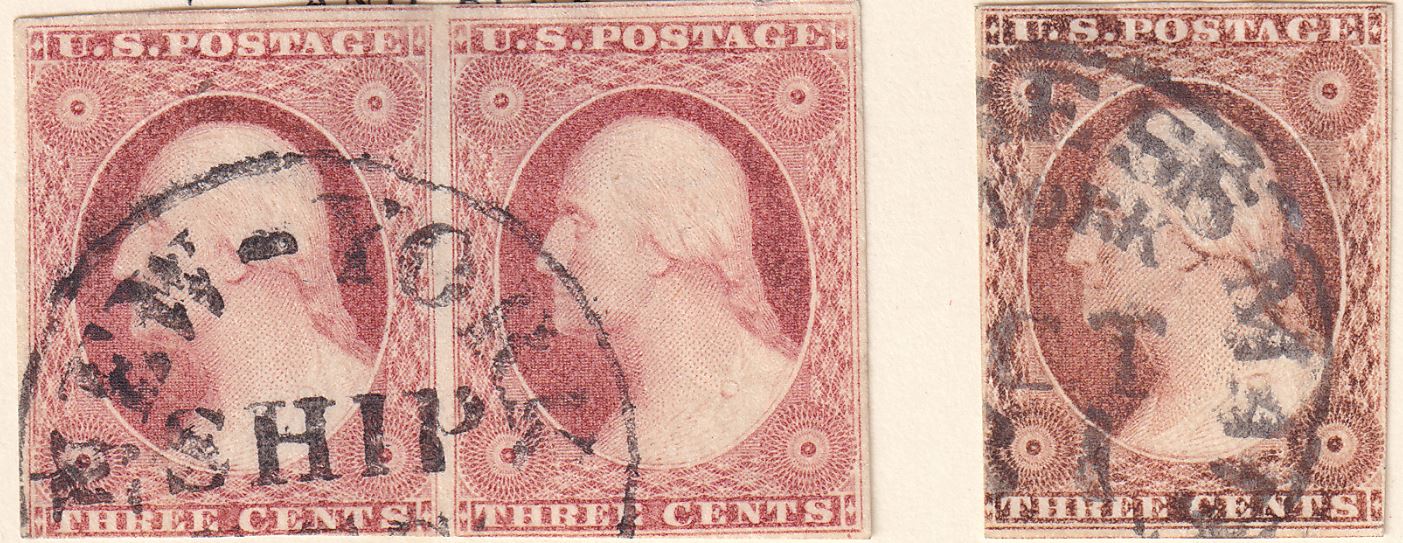 |
|
Send note to Staff
|
| Edited by Oiman - 10/08/2024 2:51 pm |
|
|
Valued Member
United States
144 Posts |
|
|
Pillar Of The Community
United States
636 Posts |
|
|
Hi oiman --
For all of the reasons previously discussed in this thread (and others), it is unfortunately impossible to colorize a stamp from a scan.
That said -- your second potential plum candidate -- (i.e., the stamp with the somewhat smudgy bluish/black circular grid cancel) -- looks to be a plate 1L printing (i.e., based on the gouged out URDB). Plate 1L was taken out of service in 1855 -- and plum is an 1857 color. Consequently, this particular stamp is not a potential plum candidate.
I wish I could see these stamps in the flesh to give you better feedback on the colors -- as based on what I am seeing on my monitor, your plate 1L stamp might be a deep shade of the 1852 Early Claret -- but alas -- it is near impossible to say without having the stamp in hand and comparing it against confirmed color reference copies using consistent ambient lighting.
Regards // ioagoa
|
|
Send note to Staff
|
| Edited by ioagoa - 10/08/2024 3:16 pm |
|
|
Valued Member
United States
144 Posts |
|
|
In person appears to be the best method to check colors. The analysis of the plating too would help me more easily make an assessment too as you noted. All sorts of fun things to learn about! Thanks for the feedback. Deepish Claret or Brownish Carmine could be candidates for the two stamps above too. |
|
Send note to Staff
|
| Edited by Oiman - 10/08/2024 3:40 pm |
|
|
Pillar Of The Community
United States
636 Posts |
|
|
Hi oiman -- You are welcome! As an aside -- although I have not put your stamp through a full plating analysis -- based on the position of the GD -- and a very quick look at the relationship of the FL's to the IL's -- subject to further confirmation, I believe that your stamp is position 81L1L. Additionally, given the carry over recutting from plate 1i that shows at the left edge of the ULT on your stamp, it is a relatively early printing -- probably sometime in early to mid 1852 -- although that iust just an educated guess -- but at least anecdotally is consistent with the timeframe of the Early 1852 Claret colors. I will try to confirm the 81L1L plate position later this evening when I have more time -- unless another SCF member can do so beforehand.  Again, I wish I could see this stamp in the flesh to better help you nail down the color. Regards // ioagoa |
|
Send note to Staff
|
| Edited by ioagoa - 10/08/2024 3:47 pm |
|
|
Valued Member
United States
144 Posts |
|
|
Thank you! For me, just being able to identify the stamp, not the inherent value, is what drives me to ask questions and learn. Note, if there are any SCF members that are in New England, I am very open for in person viewings at a neutral location like a library or club event. I'll wrap up by showing this nice Franklin 1c with a PAID US Mail cancel (Skinner and Eno PM-CR I) 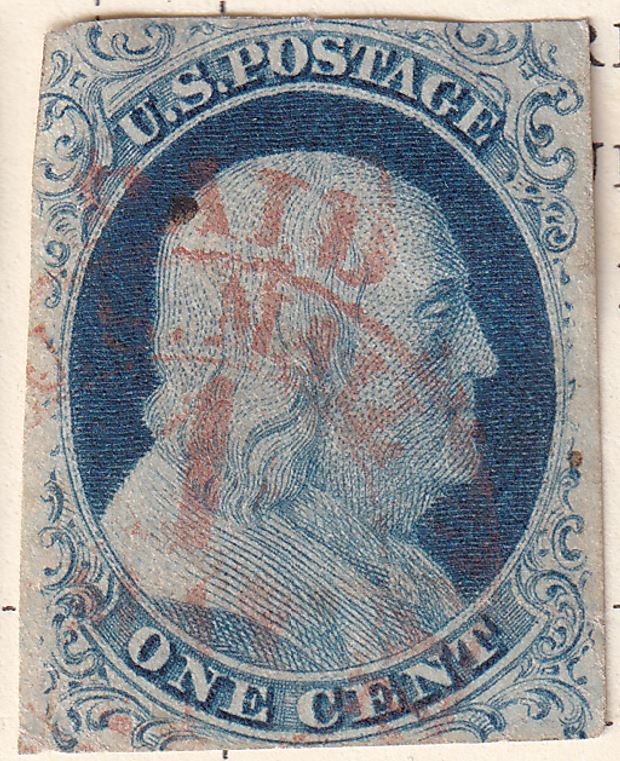 |
|
Send note to Staff
|
| Edited by Oiman - 10/08/2024 4:00 pm |
|
|
Pillar Of The Community
United States
636 Posts |
|
|
Hi Oiman --
Just closing the loop on my preliminary plating of your stamp from yesterday -- the one with the "bluish/black" somewhat smudged circular grid cancel. I finalized the plating -- and it is definitely position 81L1L.
Regards // ioagoa |
|
Send note to Staff
|
|
|
Valued Member
United States
144 Posts |
|
|
Thank you once again! I will try to use the plating tool to see if I can come to the same conclusion and for practice. As I was checking out the 3c imperfs, two of them had indications of being 10A's with the small Boston PAID cancel and Blue Philadelphia town cancel (although the latter was also used a little past the 10/10A print times). I checked the backsides of each one, and the left 10A with the Boston cancel had 19L5e scribbled and the right stamp with the blue Philadelphia cancel had 3L5e scribbled. Both 5th plate early, which would make sense if they are both 10A 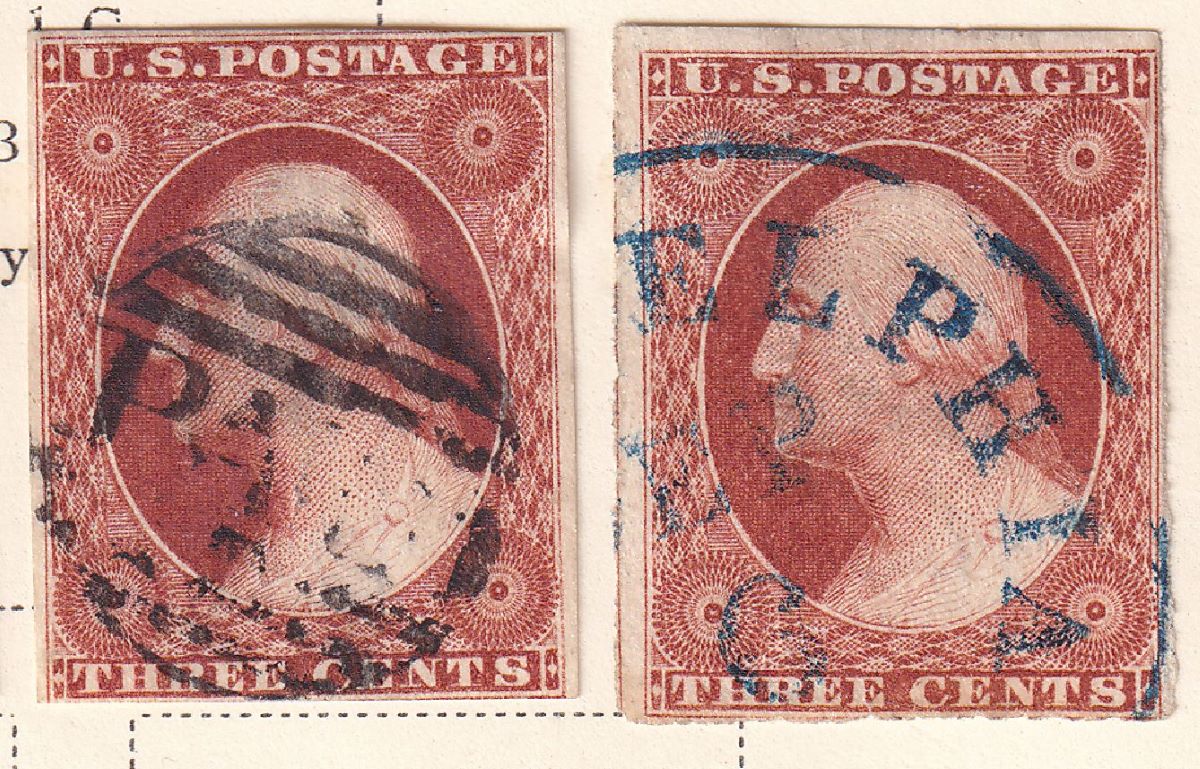 |
|
Send note to Staff
|
| Edited by Oiman - 10/10/2024 08:02 am |
|
|
Valued Member
Netherlands
11 Posts |
|
|
Valued Member

United States
327 Posts |
|
|
Hi Salvtem. The top is perforated so it cannot be a #10 or #11. It is most likely a #26 but would need much better image to say for sure.
The bottom is likely an 11 or 11A given the apparent color, impression and usage month but would definitely need a better image to say for sure.
Hope this helps.
Harper1249 |
|
Send note to Staff
|
|
|
Valued Member
United States
327 Posts |
|
|
Hi Oiman,
Your stamp with the blue Philadelphia cds appears to be correctly plated as 3L5E. The guide dot in the upper right corner above the diamond block matches up nicely. This position also contains a double transfer visible in "U.S. POSTAGE" that confirms the position as well.
Your specimen with the small Boston "PAID" cancel looks like 19L5E but a higher resolution image would be needed to confirm it for sure. The frame lines appear to match up with other examples of 19L5E as does the outer frame line gap in the upper left corner. Your examples also shows a line extending down from the upper left diamond block to the UL triangle but the other examples I have access to do not show this area clearly so I cant use it to confirm the position. Perhaps others might have a clearer specimen that shows this feature.
Hope this helps.
Harper1249 |
|
Send note to Staff
|
|
|
Replies: 3,821 / Views: 252,955 |
|




 Posted 10/07/2024 10:14 pm