Stamp Community Family of Web Sites
Thousands of stamps, consistently graded, competitively priced and hundreds of in-depth blog posts to read


Stamp Community Forum
 
Username:
Password:
Save Password
Forgot your Password?

This page may contain links that result in small commissions to keep this free site up and running.

Welcome Guest! Registering and/or logging in will remove the anchor (bottom) ads. It's Free!

Show Your US 1851-57 Imperforate Stamps

Previous Page | Next Page    
 
To participate in the forum you must log in or register.
Author Previous TopicReplies: 3,775 / Views: 248,356Next Topic
Page: of 252
Pillar Of The Community
United States
6664 Posts
Posted 02/04/2025   10:26 am  Show Profile Bookmark this reply Add stallzer to your friends list  Get a Link to this Reply

Quote:
Someone recently told me that this gap on my stamp should help me plating it


Looks to be a 1st column piece. The "Gap" is the area between panes.
Send note to Staff  Go to Top of Page
Valued Member
Learn More...
United States
327 Posts
Posted 02/04/2025   12:33 pm  Show Profile Bookmark this reply Add Harper1249 to your friends list  Get a Link to this Reply
Sorry for causing you confusion on the "gap". Stallzer is referring to the large white margin (selvage) on the left that points to the stamp being from the first column of the plate. The "gap" I was referring to on your previous post is associated with the framelines in the top left corner of the stamp. The upper frame line does not touch the left frame line leaving a "gap". This isn't a specific recut identified by Chase or others so you wont find it specifically mentioned anywhere. You'll need to look at each stamp from the first column of plates 6-8 and compare your's to the reference copy and try and find one with similar framelines. On Stampplating.com, you can access images of each stamp by clicking on the "Complete Plating" tab and then selecting a plate you want to look at. From there you can select individual stamps. I'd start with Plate 6, then 7 and finally 8. The plating wizard will not help you in this search. Hope this clear things up a little.

Regards,
Harper1249
Send note to Staff  Go to Top of Page
Pillar Of The Community
United States
2230 Posts
Posted 02/04/2025   3:14 pm  Show Profile Bookmark this reply Add Classic Coins to your friends list  Get a Link to this Reply
Hi Captain Stamp,

If you would please post a 1200 DPI scan, or at least 800 DPI, of your #11, with the background closely cropped, we can offer more help with it.
Send note to Staff  Go to Top of Page
Pillar Of The Community
Canada
641 Posts
Posted 02/04/2025   5:04 pm  Show Profile Bookmark this reply Add Captain Stamp to your friends list  Get a Link to this Reply
Thank you really much, stallzer and Harper! I'm still beginning in plating so I do mistakes! Harper, I know this website and that's an extraordinary one! Classic coins, I don't have any really good quality scan, so I'll have to buy one as soon as possible!
Send note to Staff  Go to Top of Page
Pillar Of The Community
Canada
641 Posts
Posted 02/04/2025   7:49 pm  Show Profile Bookmark this reply Add Captain Stamp to your friends list  Get a Link to this Reply
But can someone tell me the visual difference between frame lines recut rather lightly and frame lines heavily recut?
Send note to Staff  Go to Top of Page
Pillar Of The Community
Canada
641 Posts
Posted 02/04/2025   10:45 pm  Show Profile Bookmark this reply Add Captain Stamp to your friends list  Get a Link to this Reply
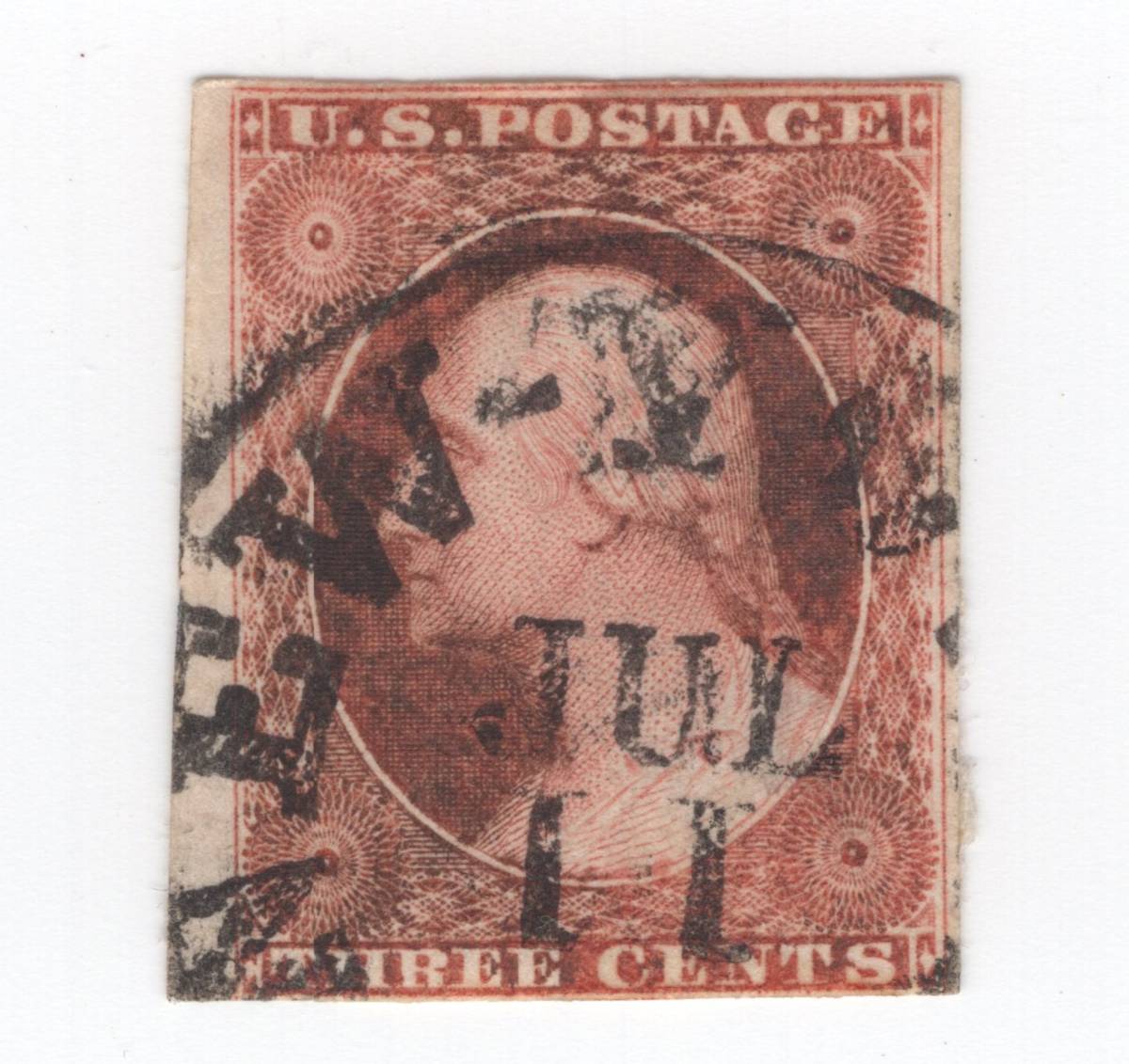
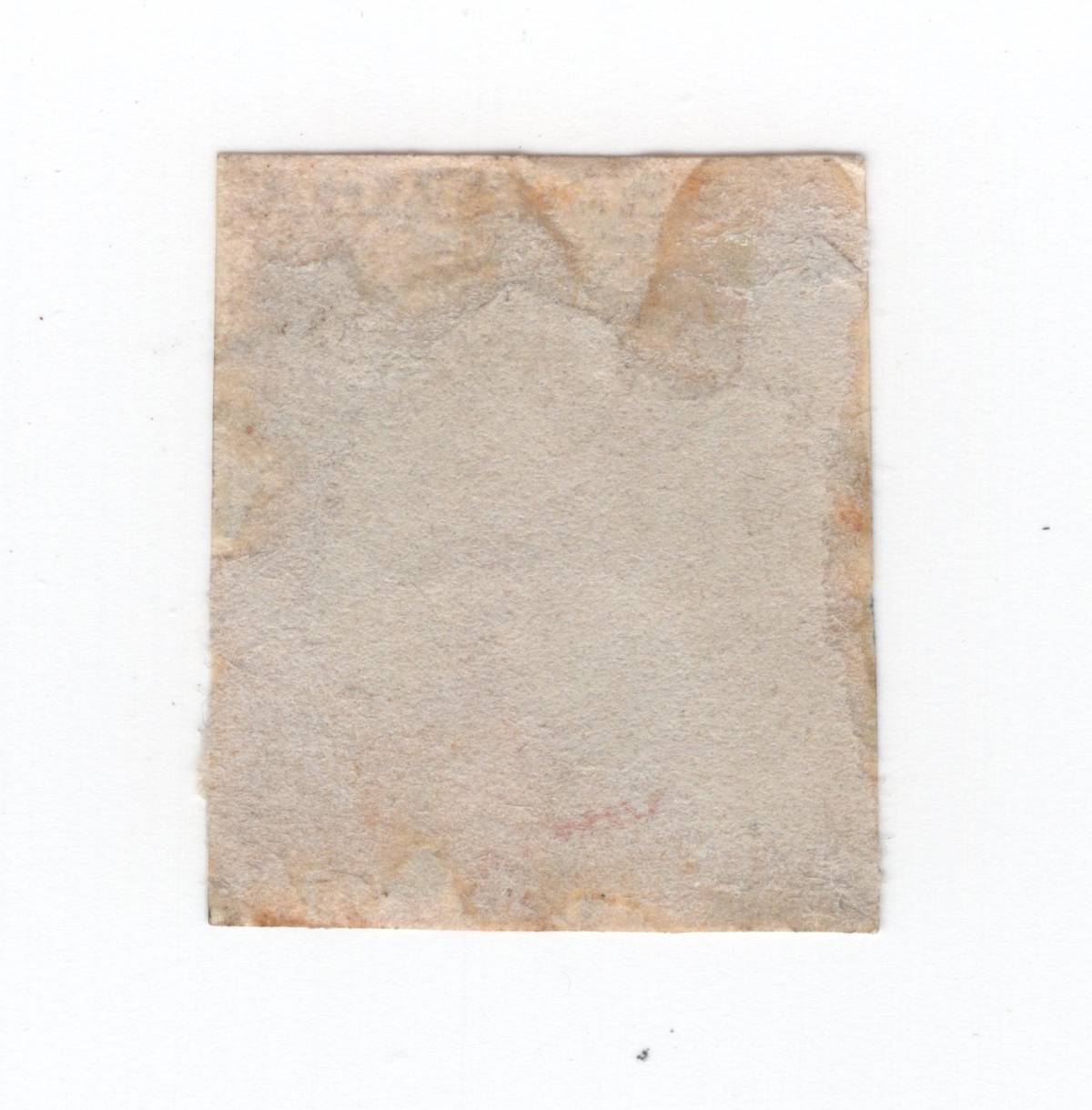
Classic coins, here's a 1200 dpi image of my #11, back and front. Sorry for the white background, I can't do better for now. Could you help me plating it?


Send note to Staff  Go to Top of Page
Pillar Of The Community
United States
2230 Posts
Posted 02/04/2025   11:00 pm  Show Profile Bookmark this reply Add Classic Coins to your friends list  Get a Link to this Reply
Hi, Captain Stamp,

Many of the 1851-57 3-cent imperforate stamps can be attributed to a specific plate by their general recutting characteristics, frequently with the naked eye.

The two stamps illustrated below were scanned at 2400 DPI and compressed digitally to 10 percent of their original height to better show the frame line thickness and curves. The top stamp is from plate 1-Late. Plate 1 in the late state is known for having especially heavily recut frame lines and side inner lines. The bottom stamp is from plate 5-Late. Plate 5 in the late state generally has lightly recut frame lines, and especially lightly recut inner lines.

The link below has more information on the general recutting characteristics of the plates.
 
https://www.uspcs.org/stamps-covers...2%a2-plates/


Send note to Staff  Go to Top of Page
Pillar Of The Community
United States
2230 Posts
Posted 02/04/2025   11:49 pm  Show Profile Bookmark this reply Add Classic Coins to your friends list  Get a Link to this Reply
Thanks for the much better image, Captain Stamp. Your stamp is a "Gash on Shoulder" variety, so it is a C-relief, and that narrows it down quite a bit. The gash is on top of the button on Washington's shoulder.
Send note to Staff  Go to Top of Page
Pillar Of The Community
Canada
641 Posts
Posted 02/05/2025   12:10 am  Show Profile Bookmark this reply Add Captain Stamp to your friends list  Get a Link to this Reply
Thanks, classic coins!
But someone told me that it's a B relief, is that both?
Send note to Staff  Go to Top of Page
Edited by Captain Stamp - 02/05/2025 12:26 am
Pillar Of The Community
United States
2230 Posts
Posted 02/05/2025   12:45 am  Show Profile Bookmark this reply Add Classic Coins to your friends list  Get a Link to this Reply
You're welcome, Captain Stamp.

ioagoa and I have tentatively plated your stamp, and will positively confirm it tomorrow. Your stamp is in a B-relief row, but it definitely is a C-relief. Since the C-reliefs were only intended to be entered on the top row of the plate, your stamp is considered a misplaced C-relief. Misplaced C-reliefs are found on some of the plates.

If you'd like to try to plate the stamp with the information provided, let us know what you come up with. We can confirm the position on Wednesday if you wish.

Send note to Staff  Go to Top of Page
Pillar Of The Community
Canada
641 Posts
Posted 02/05/2025   01:27 am  Show Profile Bookmark this reply Add Captain Stamp to your friends list  Get a Link to this Reply
Of course, thanks But it is really hard! How do you do to know the exact position? You look at pictures of every stamp on a sheet of the plate you think it is and you compare your stamp and the one on the image?
Send note to Staff  Go to Top of Page
Edited by Captain Stamp - 02/05/2025 01:42 am
Pillar Of The Community
United States
2230 Posts
Posted 02/05/2025   12:13 pm  Show Profile Bookmark this reply Add Classic Coins to your friends list  Get a Link to this Reply

Quote:
How do you do to know the exact position?


Hi, Captain Stamp,

If enough of the design is visible, every 1851-57 3-cent imperforate stamp can be attributed to one of the 2,600 positions on the 13 plates/plate states.

Since there were three different reliefs on the transfer roll used to enter the designs into the plate, identifying a stamp's relief can be a good starting point.

The initial entry into the plates was not satisfactory, so the workers tried re-entering the designs from the transfer roll on some of the plates. The effects of these re-entries, including double transfers, can be used to identify which plate-state a stamp was printed from. For example, plate 1 was re-entered during the orange brown period, resulting in early and intermediate plate states for #10/10A.

Additionally, all 2,600 positions had some parts of the design recut by hand, mostly without the use of a straight-edge, to strengthen the design elements. As a result, all 2,600 positions are unique, like a fingerprint. The heavy recutting done to plate 1 in 1851, as shown above, resulted in the third (late) state, of plate 1 (plate 1L). The diagram below from Carroll Chase's book shows what parts of the design have been recut by hand.

Since many parts of the design were recut by hand, the combination of recuts can be evaluated to narrow down the candidate positions. The second image below shows the four types of recuts that were done just to the tiny upper-left triangle (image courtesy of ioagoa and myself). This image also shows some frame lines that don't meet at the upper-left corner.

After narrowing the number of candidate positions by recut combinations, the specific position can be identified by the recut traits. The very common one line recut in the upper left corner recut can be evaluated based on the length of the recut and the angle of the recut. For example, one triangle recut line may be aligned with the left edge of the upper-left diamond block and the left inner line, while another position may have a triangle line that is mis-aligned with the other design elements.

The frame lines and inner lines can be evaluated by their length, curves, thickness, and spacing from each other as well as from the main design. For example, the left inner line, which normally stops at the upper-left rosette, extends well into the rosette on some positions, resulting in the "Left Inner Line Runs Up Too Far" variety.

#11s with no inner lines and only the frame lines recut, like your July 11 New York stamp (with an inverted 11) can be the most difficult to plate. However, there are many frame line clues to evaluate, including the curves, the thickness, the spacing from the main design, whether they meet at the corners, and whether they extend beyond the corners.


Send note to Staff  Go to Top of Page
Pillar Of The Community
Canada
641 Posts
Posted 02/05/2025   6:02 pm  Show Profile Bookmark this reply Add Captain Stamp to your friends list  Get a Link to this Reply
Wow! Thank you so much for all these informations! So, for a beginner, I start pretty hardly with the stamp I have! I wonder, do you now know certainly from which plate and position is mine?
Send note to Staff  Go to Top of Page
Pillar Of The Community
United States
2230 Posts
Posted 02/06/2025   2:34 pm  Show Profile Bookmark this reply Add Classic Coins to your friends list  Get a Link to this Reply
Hi, Captain Stamp,

Sorry for the delayed reply.

Your stamp with the July 11 New York postmark is from position 21L8.

Since your stamp has no inner lines on the sides, it is a #11, which means it was printed from plate 4, 6, 7, or 8. It is a C-relief, and the Plating Wizard on stampplating.com shows that there are a total of 96 C-reliefs on those four plates. Your stamp has a recut top frame line, but 59 of the C-reliefs on those plates did not have the top frame line recut, so that left 37 possible positions. From there it was a matter of evaluating frame line curves, with 21L8 being a match for your stamp's frame lines.

Plate 8 stamps are less common than #11s/11As from any other plate, so that's nice.

Regards,
Classic Coins
Send note to Staff  Go to Top of Page
Pillar Of The Community
Canada
641 Posts
Posted 02/06/2025   5:49 pm  Show Profile Bookmark this reply Add Captain Stamp to your friends list  Get a Link to this Reply
Wow, thank you so much for all your time dedicated to my stamp! I'm really glad, and that'll surely help me to plate other ones later!
Send note to Staff  Go to Top of Page
Edited by Captain Stamp - 02/06/2025 5:51 pm
Page: of 252 Previous TopicReplies: 3,775 / Views: 248,356Next Topic  
Previous Page | Next Page
 
To participate in the forum you must log in or register.

Go to Top of Page

Disclaimer: While a tremendous amount of effort goes into ensuring the accuracy of the information contained in this site, Stamp Community assumes no liability for errors. Copyright 2005 - 2026 Stamp Community Family - All rights reserved worldwide. Use of any images or content on this website without prior written permission of Stamp Community or the original lender is strictly prohibited.
Privacy Policy / Terms of Use    Advertise Here
Stamp Community Forum © 2007 - 2026 Stamp Community Forums
It took 0.35 seconds to lick this stamp. Powered By: Snitz Forums 2000 Version 3.4.05