| Author |
 Replies: 3,821 / Views: 252,843 Replies: 3,821 / Views: 252,843 |
|
|
|
Pillar Of The Community
Australia
967 Posts |
|
|
Hi philazilla
Could Aub be Auburn? But theres so many in different states!
Cheers |
Send note to Staff 
|
|
|
Pillar Of The Community
Canada
641 Posts |
|
|
Valued Member
United States
90 Posts |
|
|
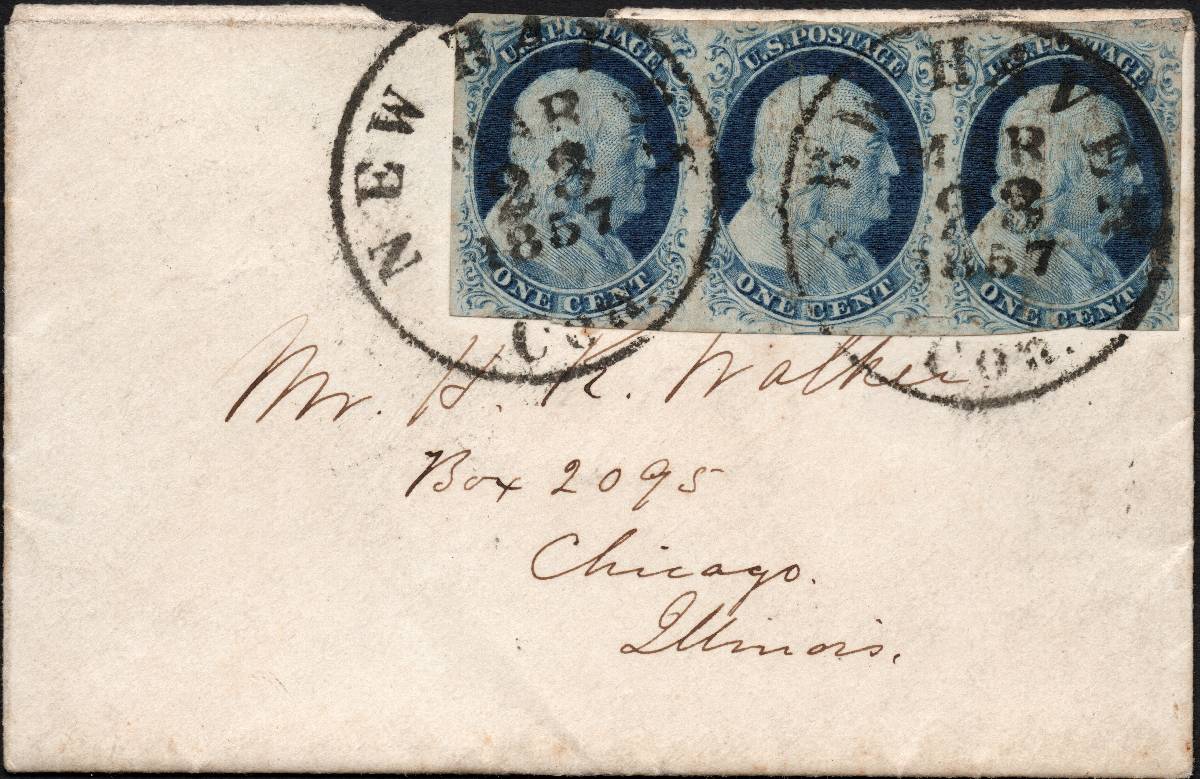
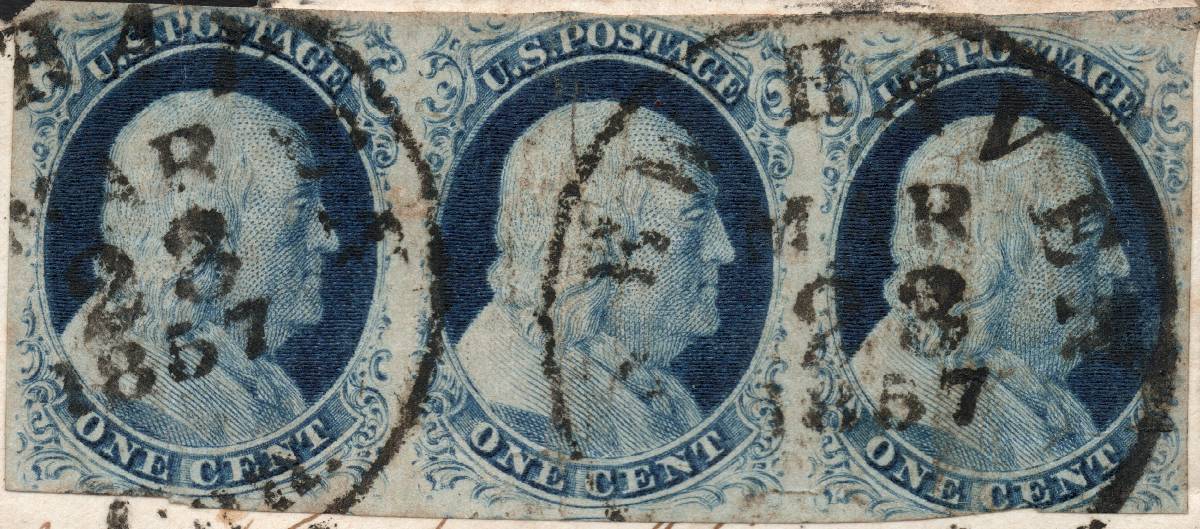
interesting strip of three, US # 9 Type IV used to pay the 3¢ rate (under 3000 miles), Plated Position 87-89R1L. Relief B. Although a used strip of three, left stamp 87R1L wasn't canceled leaving it as mint NG, class C EC shift. 89R1L class D. Most likely entered mails in Bennettsville, SC from the CDS, Oct 18 or 19. A unique oddity from the right pane. Forty positions on the plate had only the top line recut, and among these 40 positions 89R furnishes a variety in late printings that is worthy of special mention, because such a stamp shows the top line recut, but a break in the bottom line. An examination of 89R1E (Early condition) shows that the bottom line was not transferred very deeply on the plate, and when the plate was altered this weak bottom line on 89R should have been recut. As the surface of the plate wore down in 1854 and 1855, parts of this bottom line disappeared. Thus in late impressions 89R shows the top line recut with a break in the bottom line. (See Figs.11-Q and 11-R). This stamp should be included in any specialized showing of the Type IV stamps.? In the Chronicle of the U.S. Classic Issues, Issue #58, dated May 1968, page 50, there appeared a most interesting article titled, Some Observations on the U. S. One Cent from Plate I Late by the eminent student Mr. Earl B. Oakley. He illustrates breaks in bottom lines on positions 30L, 50L, 67R, 90R, and 99R, in addition to 89RlL, all on late printings. 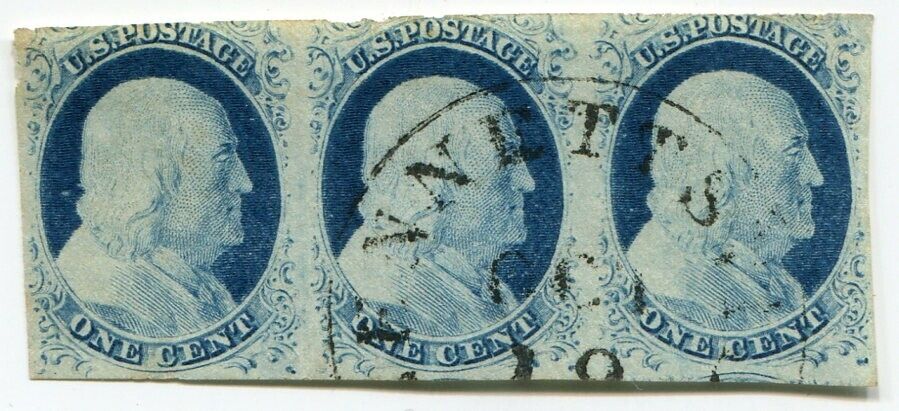 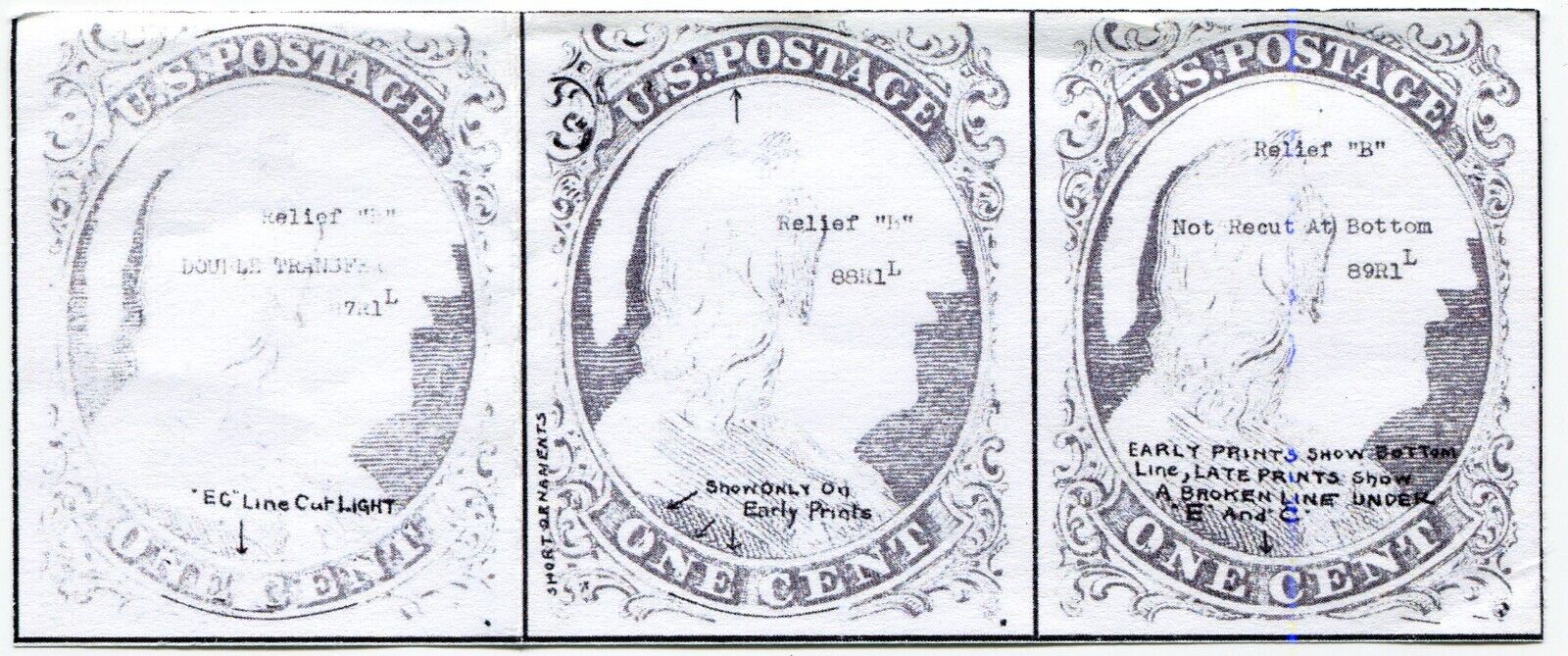 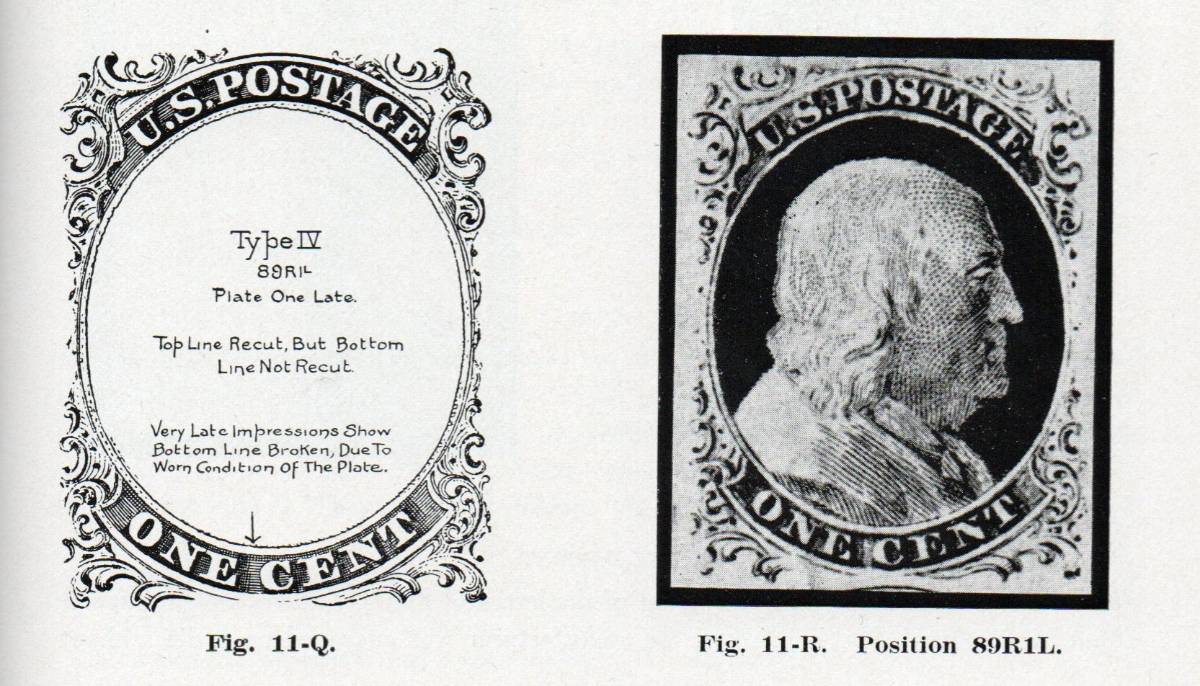 |
|
Send note to Staff
|
| Edited by Phade122 - 03/02/2025 9:28 pm |
|
|
Pillar Of The Community
United States
3520 Posts |
|
|
Phade122 - your platings of the two 1c strips of 3 on cover on the prior SCF page are correct. Good job.
On this page, 89R1L is always a very cool stamp. Years ago, I put together a progression of the break. The most difficult one to find was an early printing, where it is not broken. Those do exist, and are fun to look for. |
|
Send note to Staff
|
|
|
Pillar Of The Community
Canada
641 Posts |
|
|
Hello everyone! I have, again, a question. What do you use as references to determine color tints of 3c Washington? I personally use the Chase color on stampplating and I downloaded a pdf of 6 pages about these colors. But is that enough? Do you use something else? Thanks in advance.  |
|
Send note to Staff
|
|
|
Valued Member
United States
90 Posts |
|
|
Good day all, another strip, another day... USED light cancellation US #9 Type IV, plated using NEINKEN book. Plate position 51-71R1L The crack on 61R1L Relief B Class M is a extremely nice variety, though quite small & quite apt to be over looked. Located upper right corner, Also not recut on bottom. 51R1L Relief A, 71R1L also relief A. 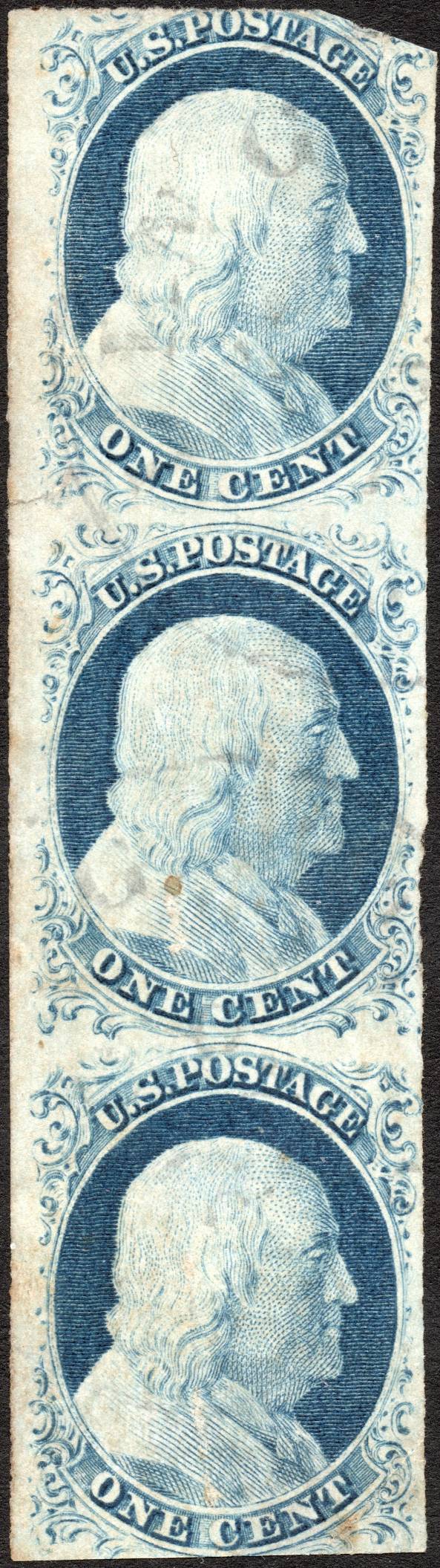 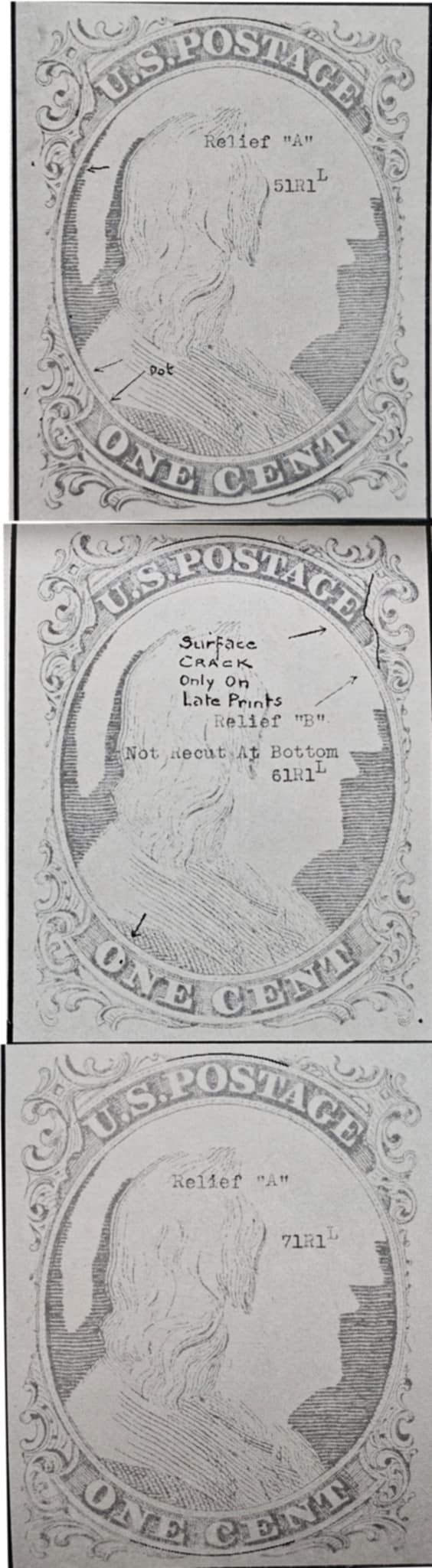 |
|
Send note to Staff
|
| Edited by Phade122 - 03/03/2025 8:15 pm |
|
|
Valued Member
United States
90 Posts |
|
|
Pillar Of The Community
United States
2230 Posts |
|
|
Quote:
What do you use as references to determine color tints of 3c Washington? Hello, Captain Stamp, To put it simply, there are no color references available in print or online that can be used to determine the colors of the U.S. 1851-57 3-cent imperforate stamps. The only reliable way to determine their colors is by comparing them "in person" to other stamps whose colors have been confirmed. There are too many variables with printed or online references, including scanner designs, and scanner and monitor settings, that make it impossible to confirm colors using online reference images. For this reason, unfortunately, no one can confirm the colors of the two stamps you posted above without seeing them in person. The colors in the Chase color chart on stampplating don't look like the true colors at all to me on my monitor. To me they all look strongly skewed toward magenta, especially the stamps in the claret color group. There are members contributing to this discussion who can examine your stamps through the mail to assess the colors. If you email me through SCF, I would be happy to mail you some free #11/11A color samples that you can keep. On page 208 of this topic I posted an image of eight different colors all scanned together, and the link is below. Although this image can't be used reliably to colorize stamps, some may find it useful for seeing the relative difference between the colors. On a related note referring back to your question, the terms color and tint mean different things. A tint of a color generally refers to a lighter "tint" of a color rather than a different color. Maybe I can expand on that in a different reply. Trust me though, a lot of stamp collectors who have been collecting for over 40 years including those over 60 years old in my stamp club mix up the terms "tint," "shade," and "color." https://goscf.com/t/72775&whichpage=208#809579 |
|
Send note to Staff
|
|
|
Pillar Of The Community
Canada
641 Posts |
|
|
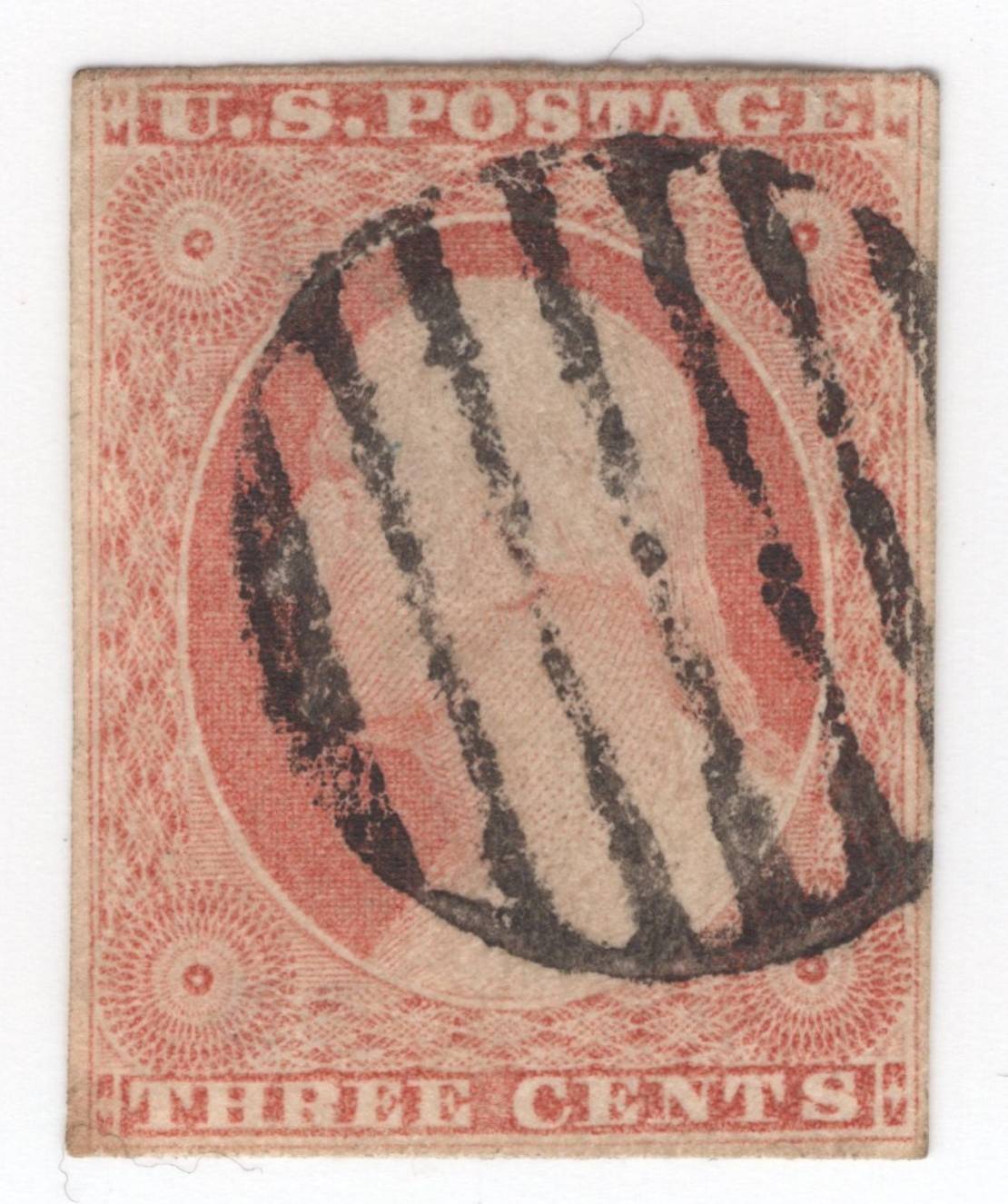
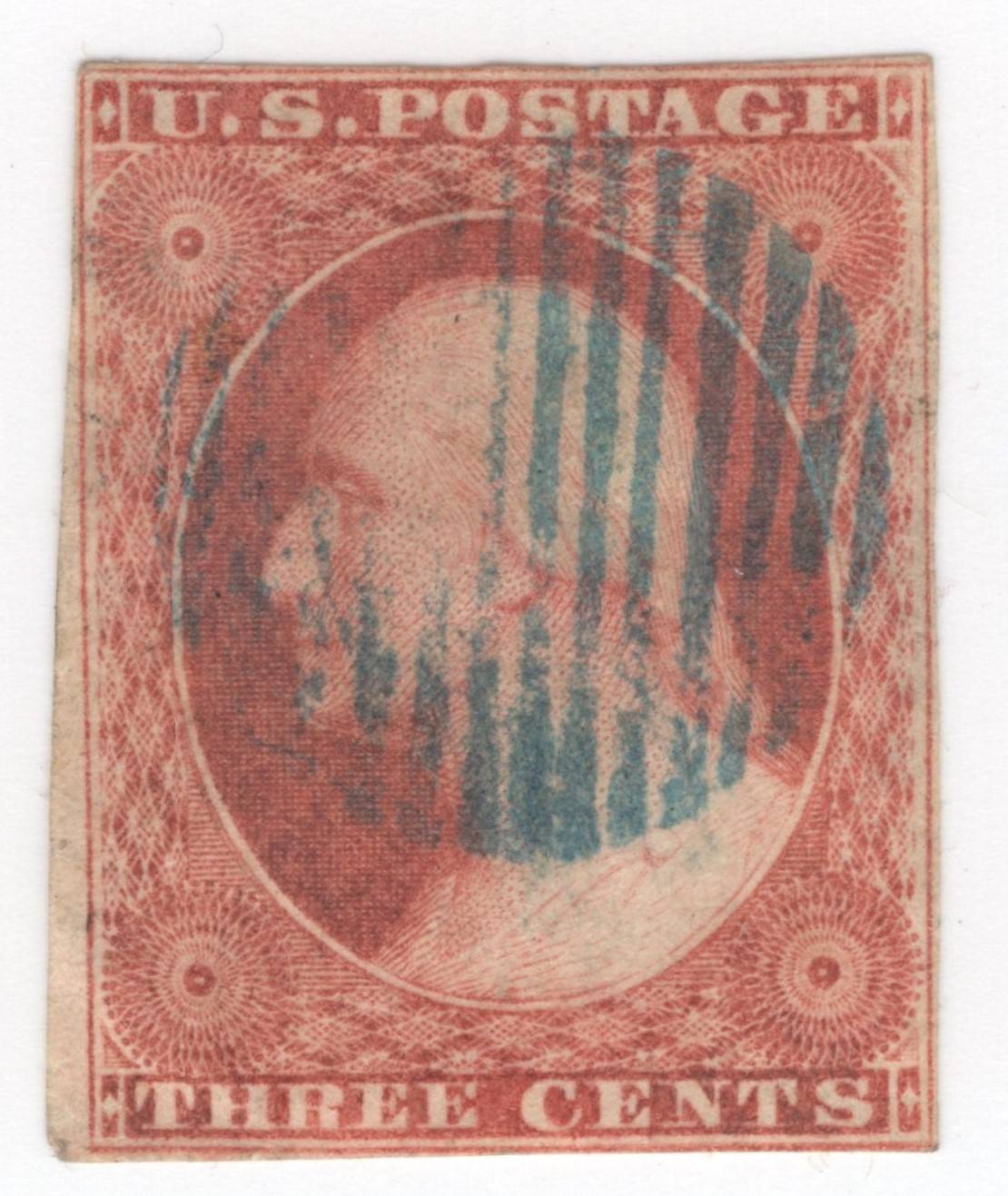
Thank you really much for the reply! These are some precious advice! But I have a question that is not about color. Am I right about the fact this #11a is A relief? 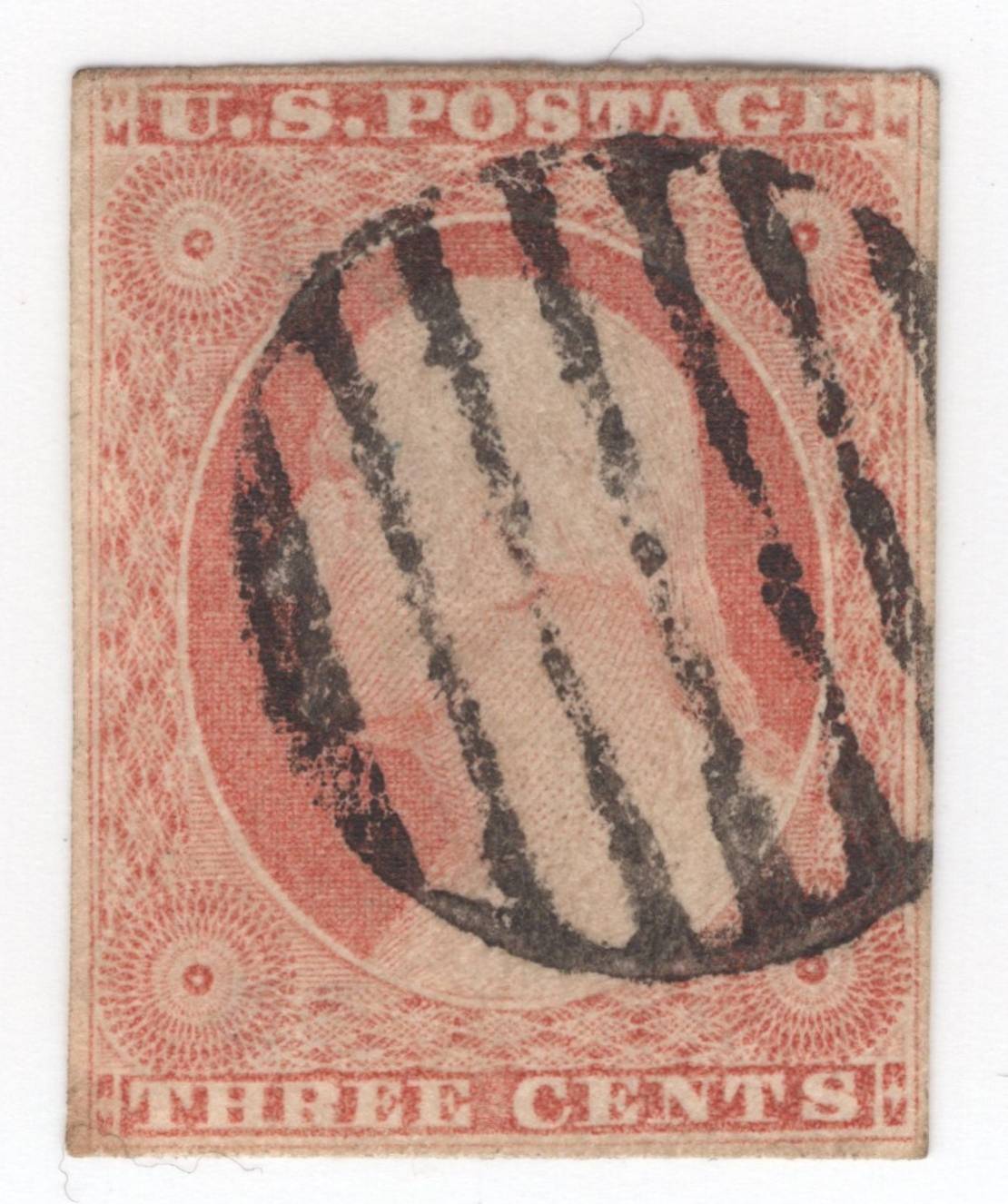 |
|
Send note to Staff
|
|
|
Pillar Of The Community
United States
2230 Posts |
|
|
. . . So if a painter adds some white paint to blue, they are tinting it to make it light blue. Adding black to a color makes is a darker shade. However, for convenience, specialists of stamp colors usually use the term shade to refer to both paler and deeper versions of a color. The webpage that I originally downloaded the below image from is no longer online, so I can't credit it, although other websites are now using it.  |
|
Send note to Staff
|
|
|
Pillar Of The Community
United States
2230 Posts |
|
|
Hi Captain Stamp,
Yes. The last stamp you posted with the grid cancel on the right side is an A relief. You're getting quite good at this!
I just plated it. |
|
Send note to Staff
|
| Edited by Classic Coins - 03/03/2025 10:31 pm |
|
|
Valued Member
United States
90 Posts |
|
|
Beautiful strip of 3 US # 7 Type II on cover. Plated 46-56-66L2 Relief B,A,B Black CDS AUG 2 1856 Knoxville,Ten Addressed to, Mrs Harris Elizabethtown NJ what an interesting strip Var, Scarce as this didn't occur on any of the other plate's giving it's own identity amongst the rest. There are two varieties on the plate which are rather similar, but originate from different causes. The irregular line in the margin between 46L2 and 56L2, Fig.13-L was caused by a small thread being caught between the roller and the plate." The fine jagged line between 48R2 and 58R2, Fig.13-S, is a fine surface crack. Most impressions of these positions do not show this surface crack. It is only known on very late impressions. Similar in origin to the 46L2-5612 line, is a small curl found in the lower left corner part of 61R2. 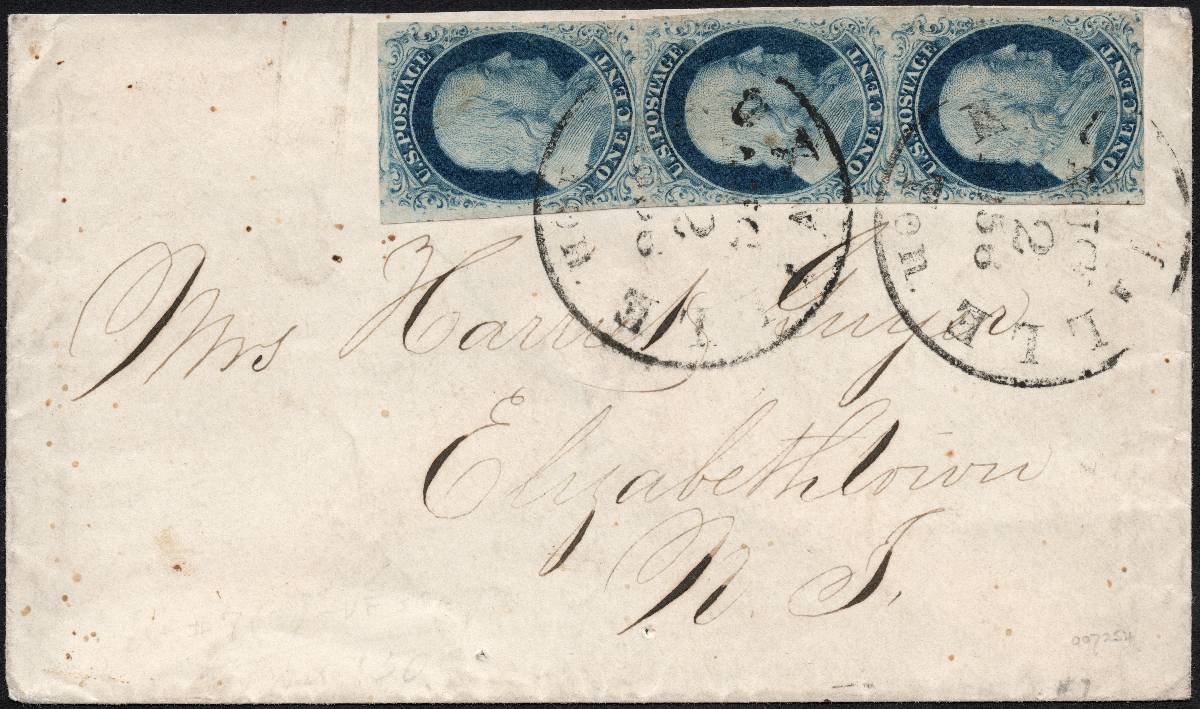 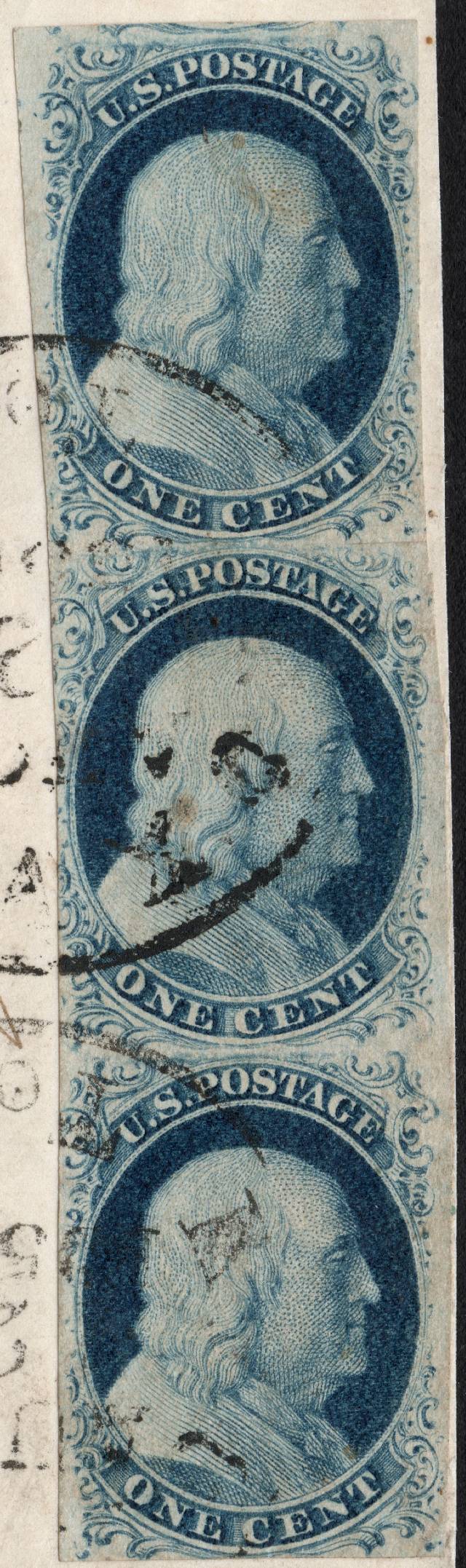 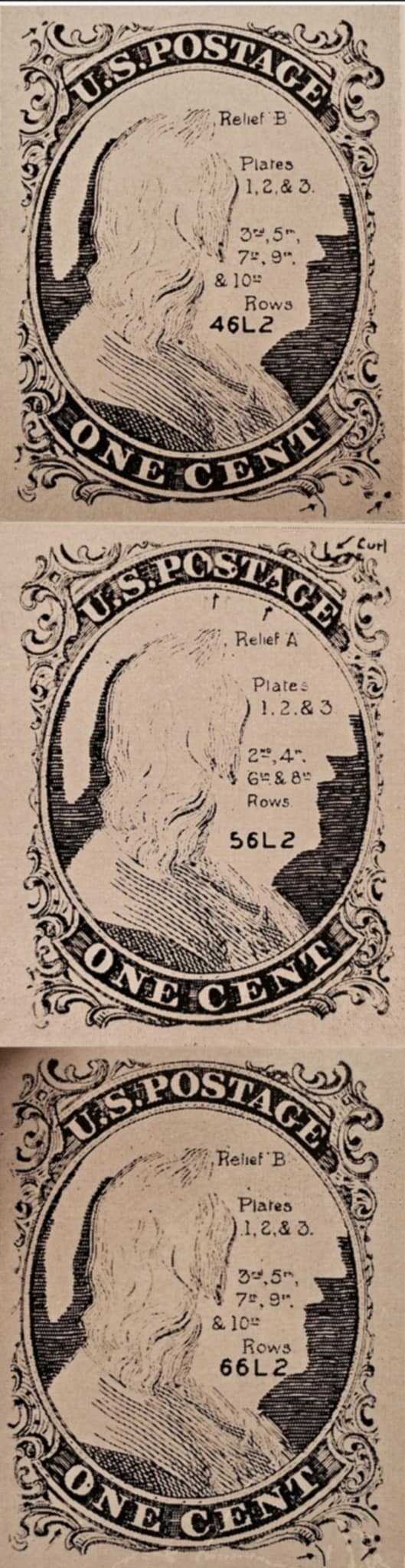 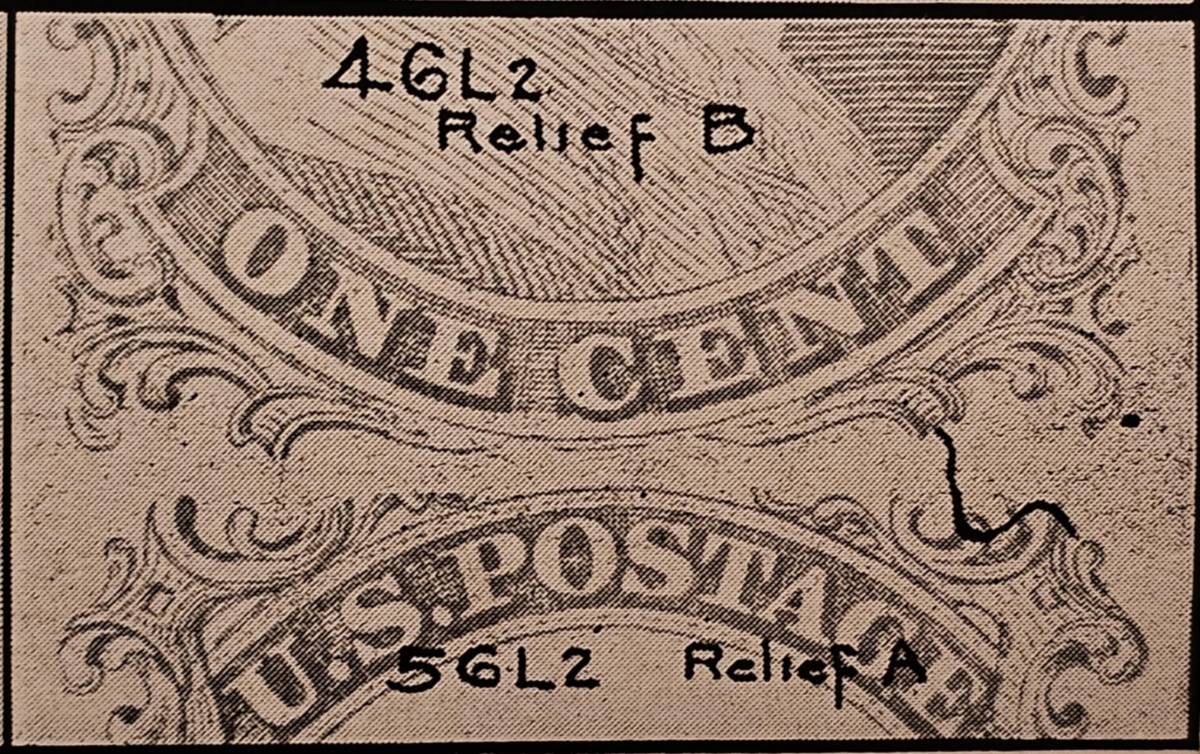 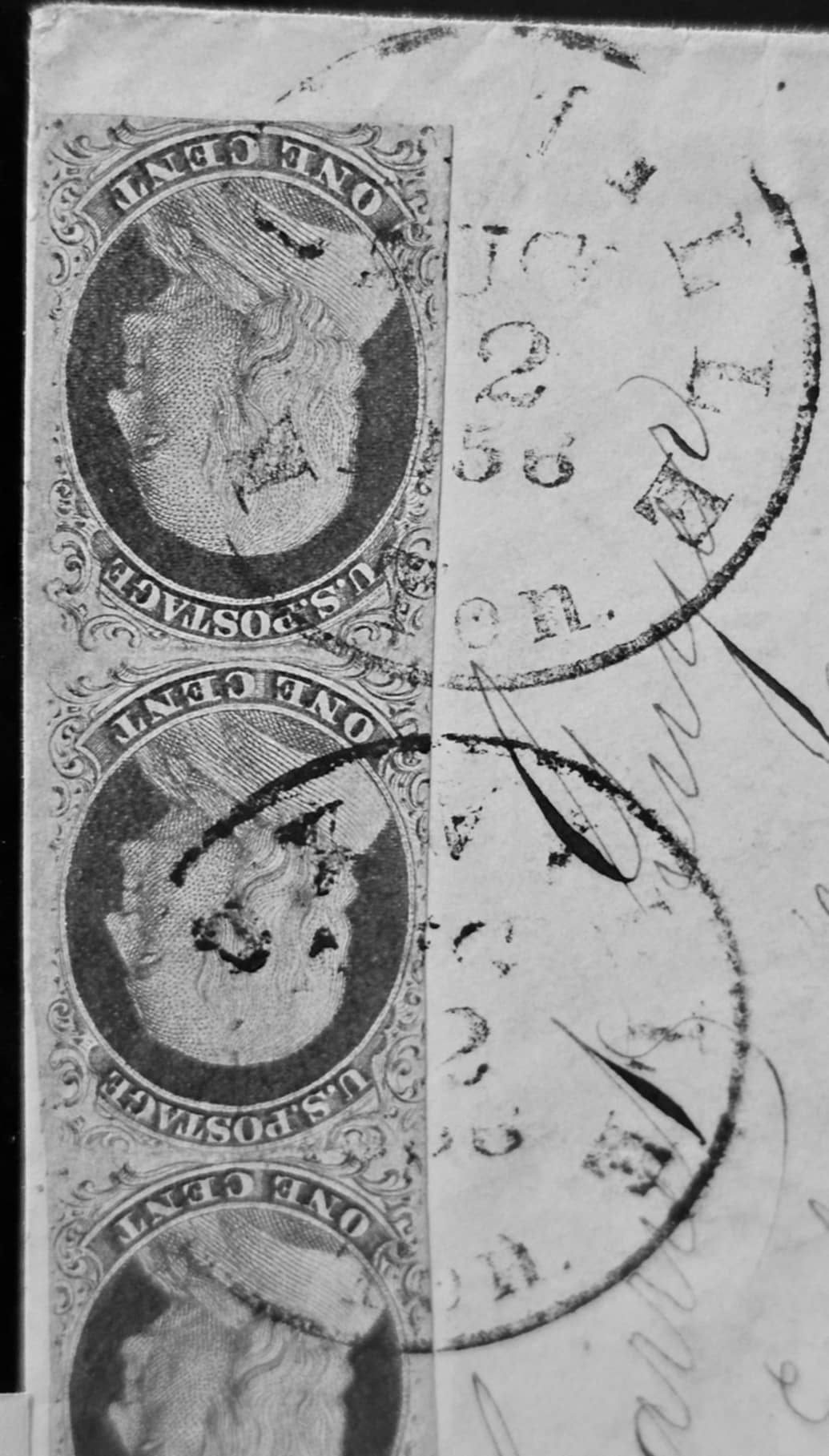 |
|
Send note to Staff
|
|
|
Pillar Of The Community
United States
1105 Posts |
|
|
Pillar Of The Community
United States
1105 Posts |
|
|
Could this be 79R1E or perhaps 79R1i. I'm leaning toward the 1E plate. Relief A and no inner lines is all I can see. There is a guide dot on stamp above. Would it be fair to say the cancel on this is NYDM 51-1 in black which was first used in 1851? If so, does that help the cause that this is position 79R1E? 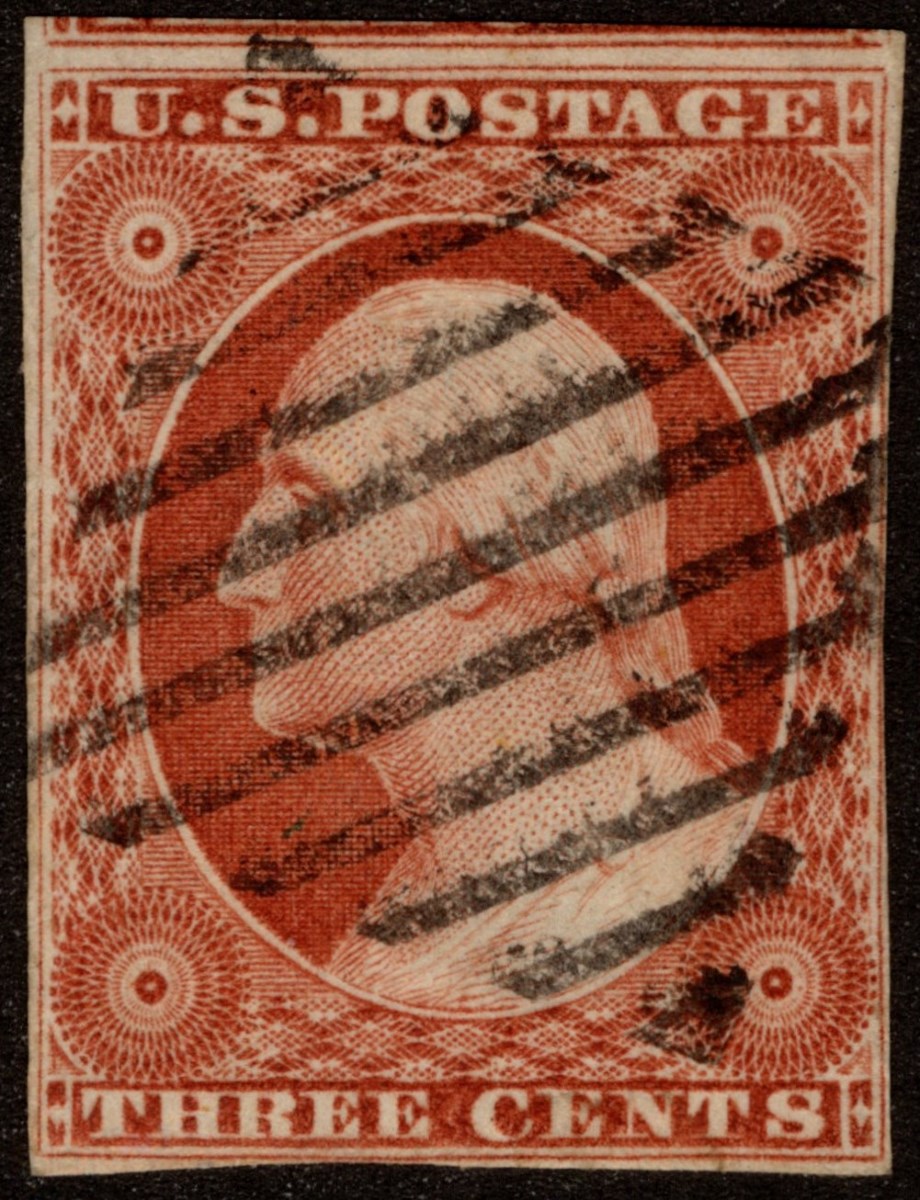 |
|
Send note to Staff
|
| Edited by NicholasC - 03/03/2025 11:54 pm |
|
|
Valued Member
United States
90 Posts |
|
|
Strip of three US # 24 type V Relief F. Plated 98-99-100L7 Red CDS BOSTON Mas Dec 20 18?? Canceled and Tied by 7 bar Black grid PAID. Addressed to Rev A, Putnam Roxbury Mas It's worth noting what seems to be a new found Discovery of 99L7 which hasn't been documented till now is a plate flaw in the (S) of US. there is a separation on the top portion of the (S) THE PLATE 7 "O' CURLS The "O curls designate a small minor curl variety found on seven positions in the right pane of Plate 7 and one position in the left pane. The best example is 94R7, Fig.78423. This small curl occurs on this position directly under- the "o" of ONE, hence its name. This curl first made its appearance on 94R7, on which position it is the most pronounced, it was repeated on 53R, 93R, 52R, 92R, 51R and on 91R7. It is interesting to note that in the left pane 60L7, Fig.1848, has the "O curl, while it does not appear on 100L7. Its origin and character are the same as the shoulder curls and it likewise proves in the same double manner the order of entry of the "F" relief. 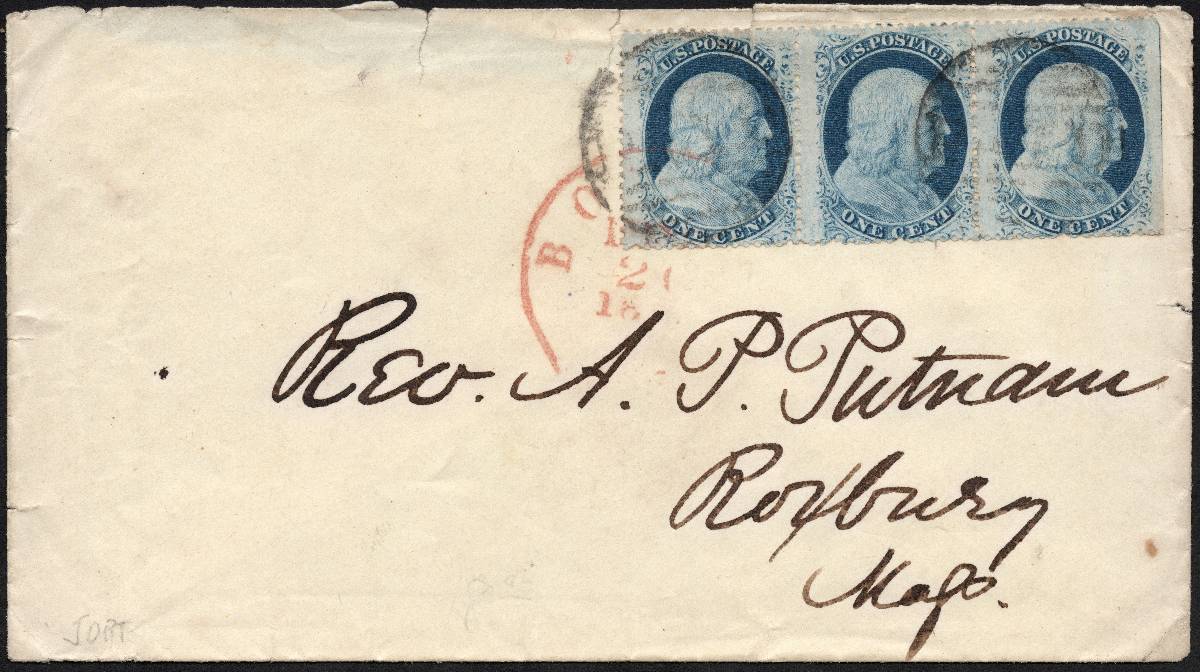 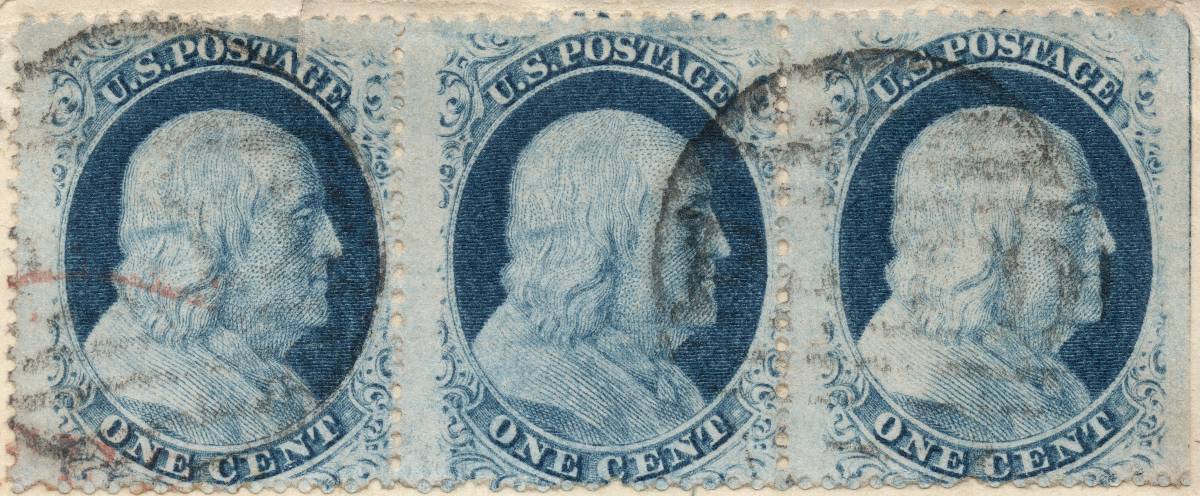 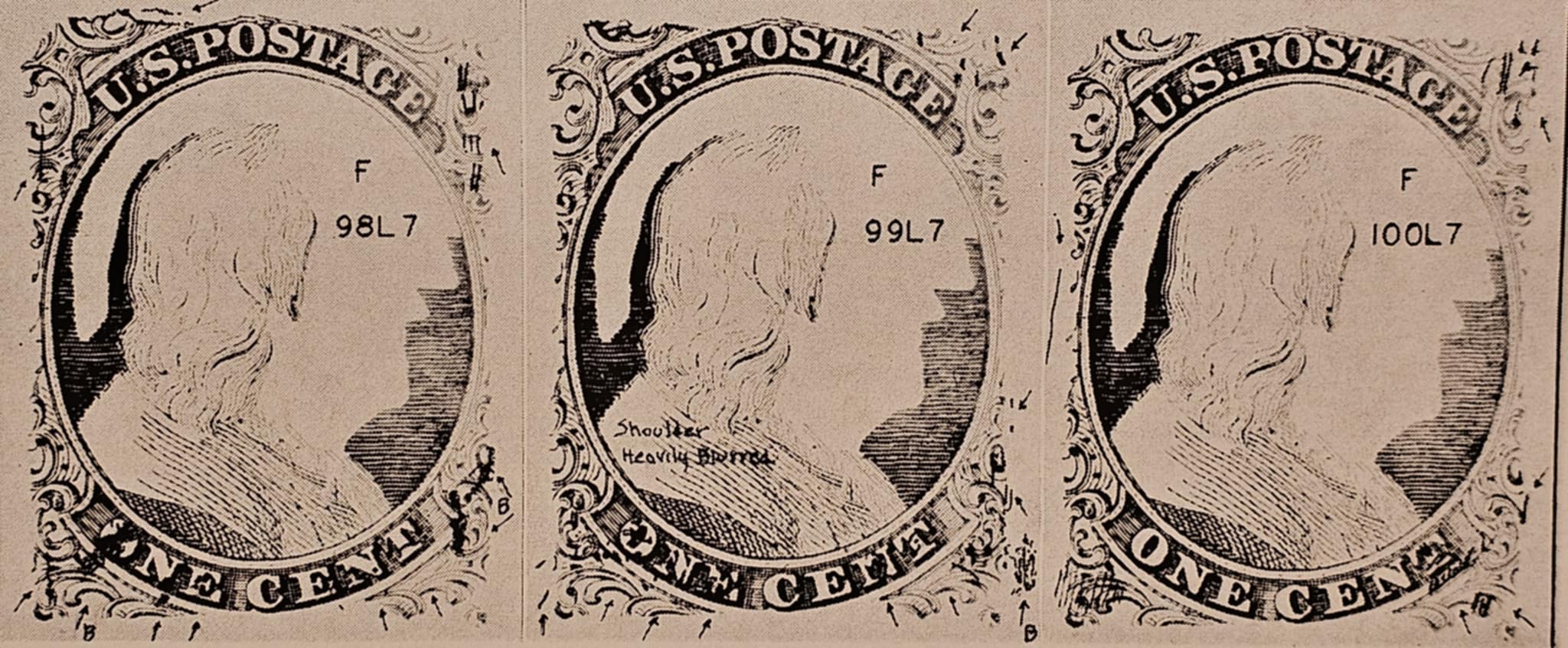 |
|
Send note to Staff
|
|
|
Replies: 3,821 / Views: 252,843 |
|




 Posted 03/02/2025 6:27 pm