Quote:
I will be interested in how you figured it out though.
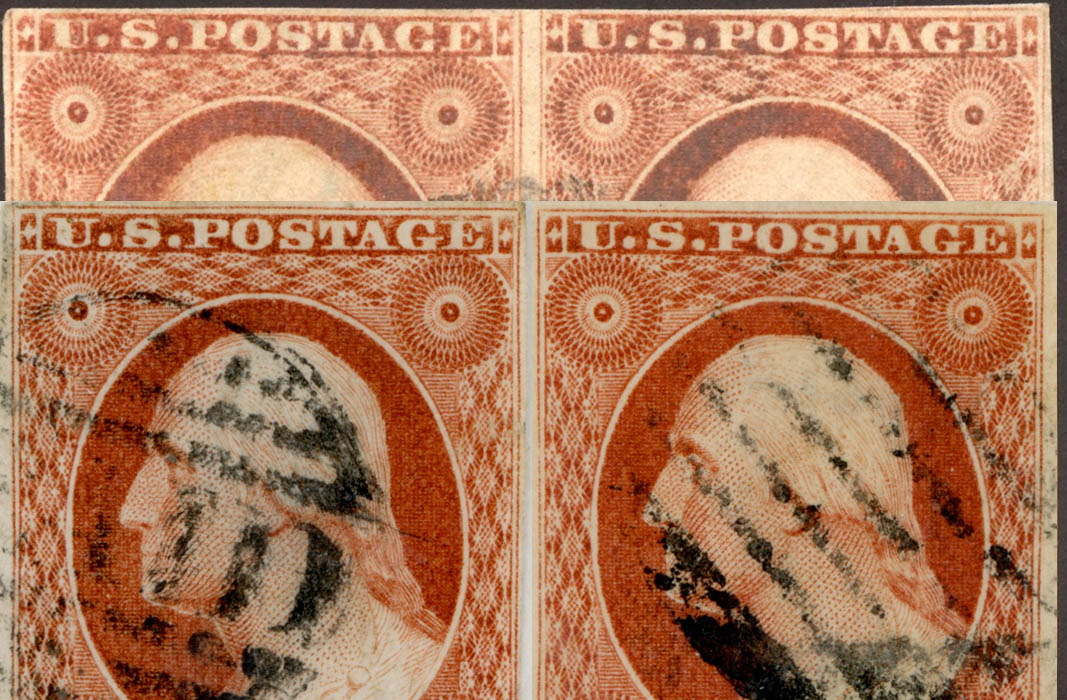
When I initially downloaded the Chase plating print photos years ago, the first thing I did was open all 26 images in an image editor and reduce the image size to 10 percent of the original size in the vertical dimension only, and save them separately in that format.
Everyone plates differently. I focus heavily on the side frame lines. To simulate examining the side frame lines from a low angle to see the curves, I compress an image of the stamp to 10 percent vertically, and save it.
For the Sacramento pair, I narrowed it down to plate 2L or 3 based on the recut diamond blocks, and the heavy oxidation (which eliminated the OB plates for me).
I naturally started with L2L, and displayed the compressed Chase L2L image on the top half of my computer screen, and the compressed Sacramento pair on the bottom half.
Once I had the images up, I started scrolling down the left column of the L2L print, starting at top left, looking for the distinctive left inner frame line of the left stamp, which is heavy most of the way, but has a distinctive break in it. Since I started in a very fortunate place, it literally took me about 10 seconds to find a strong candidate for the left stamp of the pair at the eighth position I checked (71L2L). I stopped scanning immediately, and compared the remaining frame lines of both stamps.
At this point I was 99 percent certain of the match, and spent another four or five minutes checking the other diagnostics, including comparing with the images on Stamp Smarter and stampplating.com.
Here is the compressed image of the 71-72L2L pair, with the image size increased by 200 percent. There are some useful bends in the outer frame lines at the bottom left and top right of the right stamp as well.



 Replies: 3,821 / Views: 252,884

 Posted 06/16/2020 8:43 pm


 ] also but I just don't think it can be those two.