| Author |
 Replies: 831 / Views: 75,835 Replies: 831 / Views: 75,835 |
|
|
|
Valued Member
United States
342 Posts |
|
|
A friend pointed this nice piece out to me on ebay and now I got myself a Christmas present! I wasn't planning to get myself anything this year. Silly me. 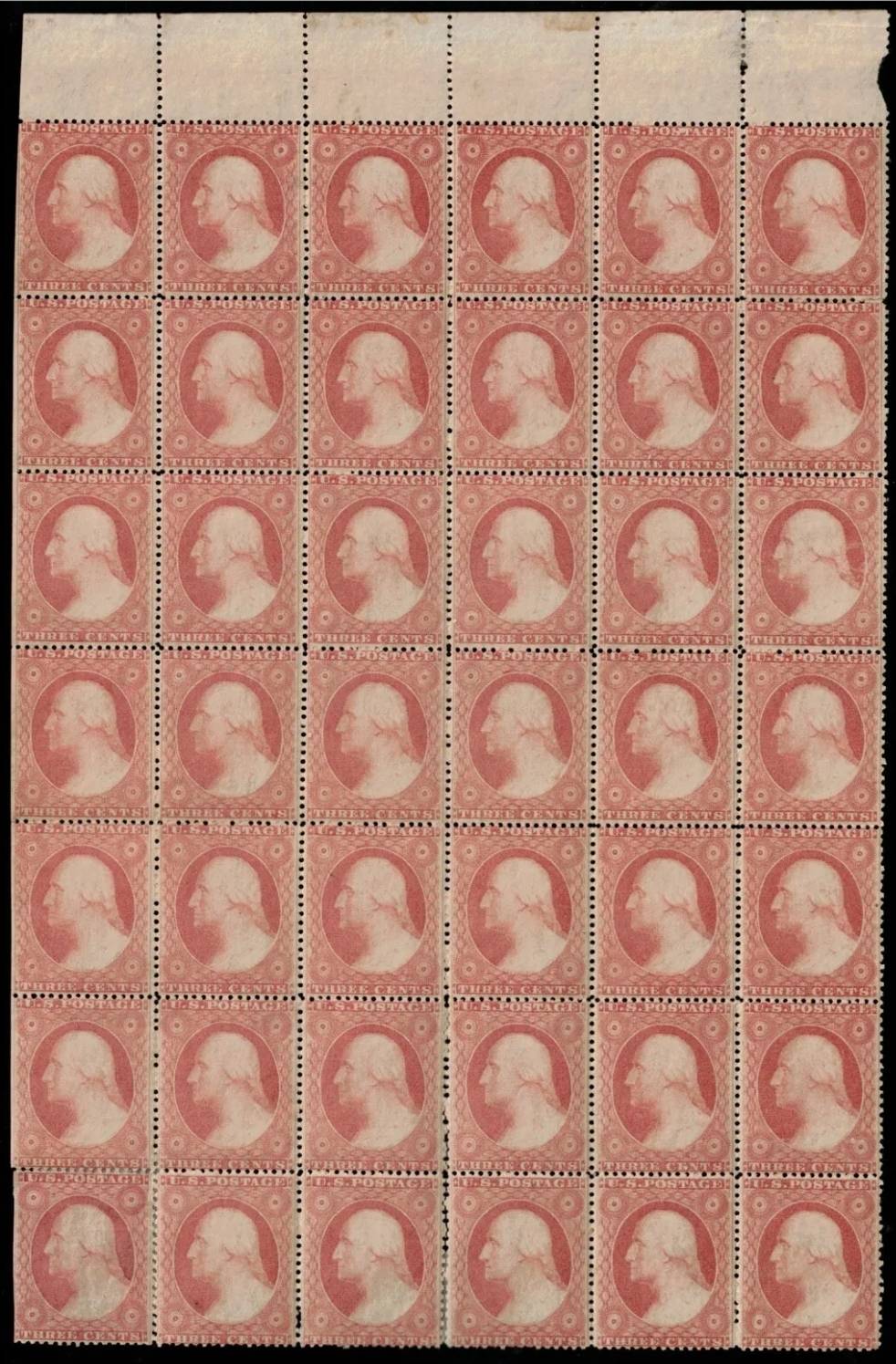 |
Send note to Staff 
|
Stan Shepp |
|
|
Valued Member

United States
356 Posts |
|
|
Merry Christmas to you and everyone else on the forum! What a wonderful find....and present. |
|
Send note to Staff
|
|
|
Valued Member
United States
342 Posts |
|
|
Valued Member
United States
60 Posts |
|
|
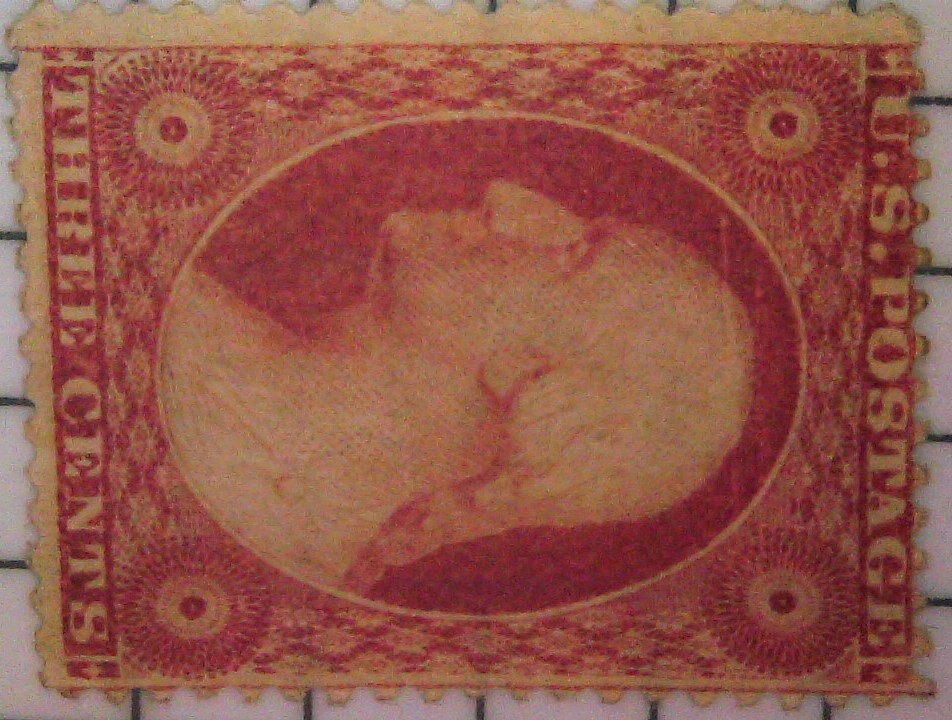 My guess is that this is a Scott 26, type III. What confuses me is that the left side has an extended frame line, and the right side has an extended inner line. I looked at other examples on this thread, and found similar stamps, so perhaps it is normal? |
|
Send note to Staff
|
|
|
Pillar Of The Community
United States
636 Posts |
|
|
Hi sandman --
You are correct that your stamp is a Scott #26.
I think what might be confusing you is that the LFL is cut too close to the design -- actually touching the design for its entire length -- and leaving no white space between the LFL and the design. Alternatively, on the right side of the stamp -- the RFL is far from the design -- with a fair amount of white space between the design and the RFL.
This is a classic #26 -- in fact -- there are no 26A's where the LFL is that perfectly straight and that close to the design.
When TCC made the plates for the #26 stamps -- they basically took a straight edge and recut the frame lines in one swoop from top to bottom. Whereas on 26A's the recutting was done freehand "stamp by stamp".
Is where things can get very confusing is on plates 9 and 15 -- where TCC started off going "stamp by stamp" -- and at some point, then decided it was too much work and finished off the plates by recutting the frame lines with a straight edge.
Lastly -- there is not an "extended inner line" at the right side of your stamp -- rather the line you are seeing is the recut RFL.
Hope this helps.
Regards // ioagoa
|
|
Send note to Staff
|
|
|
Valued Member
United States
60 Posts |
|
|
Pillar Of The Community
United States
1831 Posts |
|
|
Is this possibly a 26A - I was assuming it is a bottom row 26, but close inspection made me ask. Thoughts? 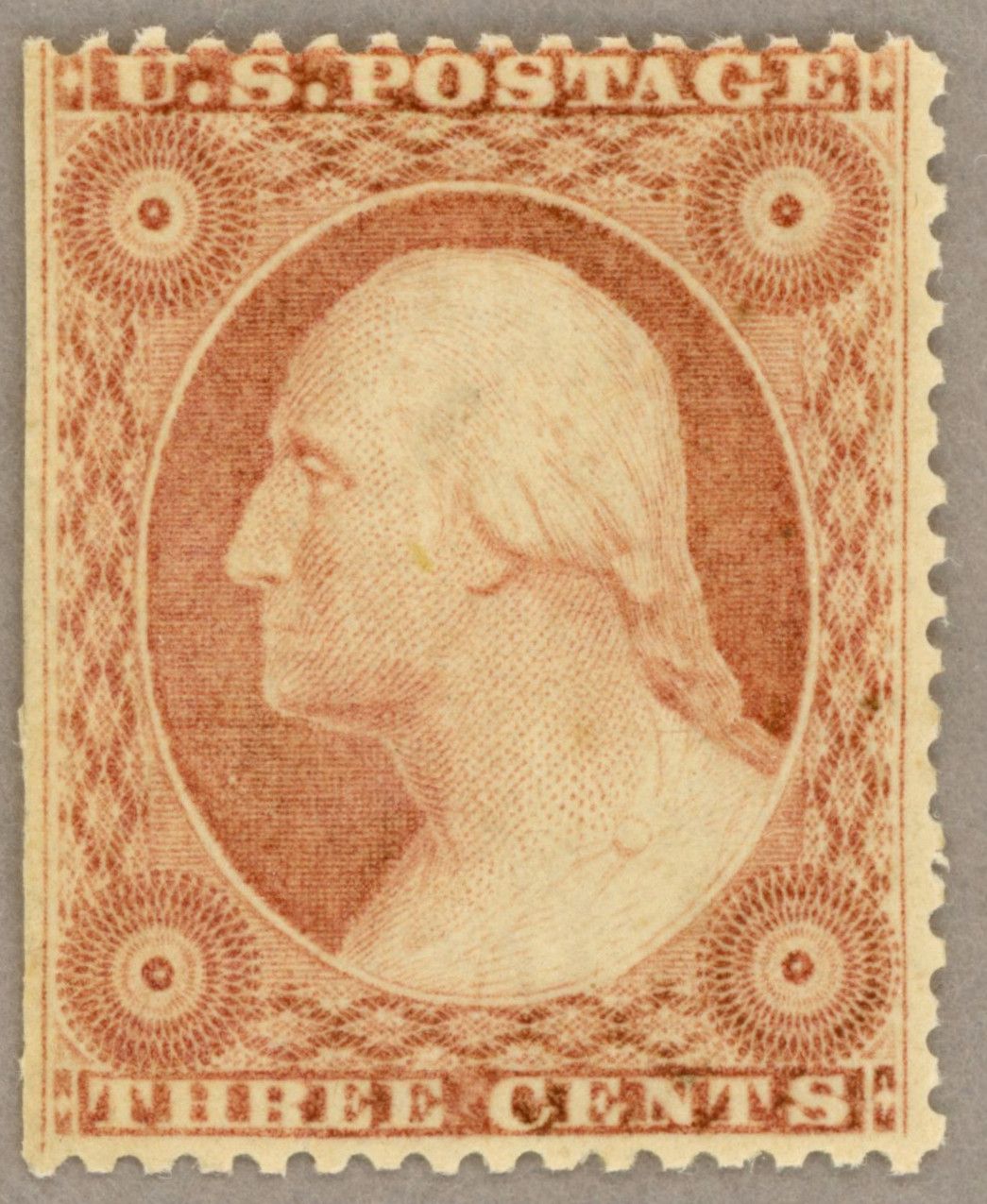 |
|
Send note to Staff
|
|
|
Valued Member
United States
327 Posts |
|
|
Pillar Of The Community
United States
1831 Posts |
|
|
The frame lines at the top seem to come to a stop. Is it just the way the stamp was cut? |
|
Send note to Staff
|
| Edited by rlsny - 01/06/2024 11:52 am |
|
|
Pillar Of The Community
United States
1831 Posts |
|
|
I've been staring at it for a while now and got out the most powerful magnifier, and I'm back to thinking it is a 26 - the appearance at the top is just due to the excess of fibers where the stamp was separated. I guess this comes out as: nevermind |
|
Send note to Staff
|
|
|
Pillar Of The Community
United States
636 Posts |
|
|
Hi RLSNY --
I am no expert on these 26 / 26A stamps -- but the bends in the side FL's -- and especially the RFL look like they were cut by hand (i.e., versus using a straight edge) -- which screams 26A. The bends really standout if you make a compressed scan at 10% of normal height.
One way to rule out the stamp being a bottom row copy -- is to ID the relief as anything other than an F10 (i.e., 10th row F).
In other words -- through relief ID, the elimination of it being a bottom row stamp would mean that there would have to be another stamp below it -- and in combination with the lower end points of the FL's would further confirm the stamp as a 26A.
Even if it is a bottom row stamp -- that obviously does not rule out it being a 26A.
All things considered -- the stamp looks like a 26A to me -- but again -- I am still a novice when it comes to the whole 26 / 26A subject matter.
Regards // ioagoa
|
|
Send note to Staff
|
| Edited by ioagoa - 01/06/2024 12:10 pm |
|
|
Pillar Of The Community
United States
1831 Posts |
|
|
Thanks for that. OK, I'm holding out a little hope for now. It also appears to be never hinged which is surprising to say the least. The plan was for this to go up for a 99c auction tonight. I may need to hold off on that. |
|
Send note to Staff
|
|
|
Valued Member
United States
327 Posts |
|
|
I've taken a deep dive into learning about the reliefs that make up the 26/26As. I'm definetly not an expert but feel confident this is either an E or F relief. Would need a better image to go beyond that, but an E Relief would confirm it as a 26A. |
|
Send note to Staff
|
|
|
Pillar Of The Community
United States
1831 Posts |
|
|
I would like to come to a conclusion on this stamp. Is there a specific area of the stamp I could blow up to 2400 dpi that would help? |
|
Send note to Staff
|
|
|
Valued Member
United States
327 Posts |
|
|
Here are the areas you would need to look at in detail. Ioagoa posted Celler's plating mats in another post of mine recently that point out the specific diferences.. My post has "F Relief" in the title. If it's a bottom row F Relief, it will prob need to be plated to confirm it is a 26A. I don't have anyway to do that yet. 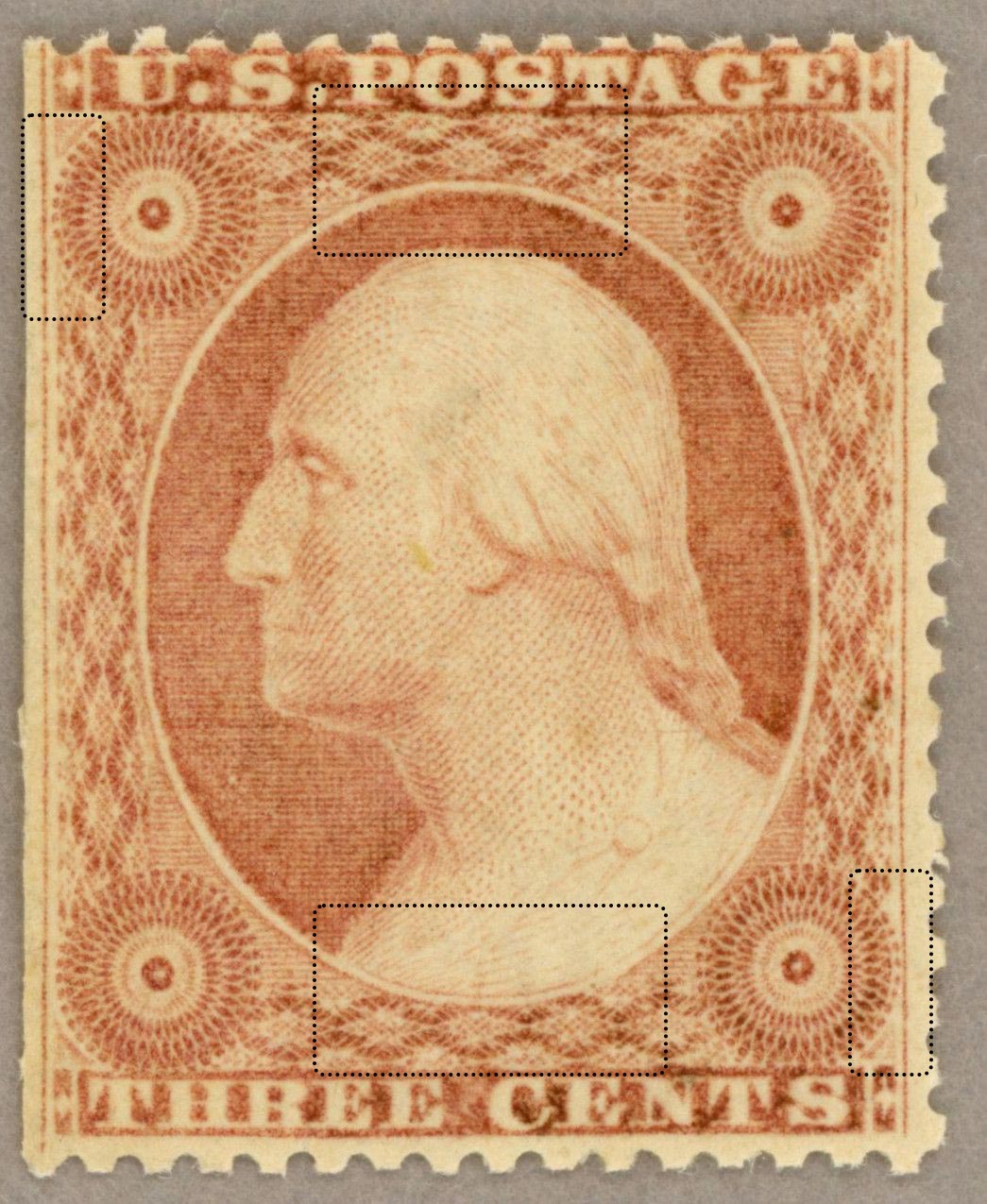 |
|
Send note to Staff
|
|
|
Replies: 831 / Views: 75,835 |
|




 Posted 12/16/2023 01:03 am


