| Author |
 Replies: 831 / Views: 75,827 Replies: 831 / Views: 75,827 |
|
|
|
Valued Member
United States
144 Posts |
|
|
I liked the Charleston SC cancel on this set of 3 Washington 3 cents. I am hesistant to state what type they are (Scott 11 or 25) because the perforations are not on all sides (they are completely lacking on top), and the vertical perforations between the middle and right stamp appear to not be fully punched. Nonetheless I think it's neat to look at. 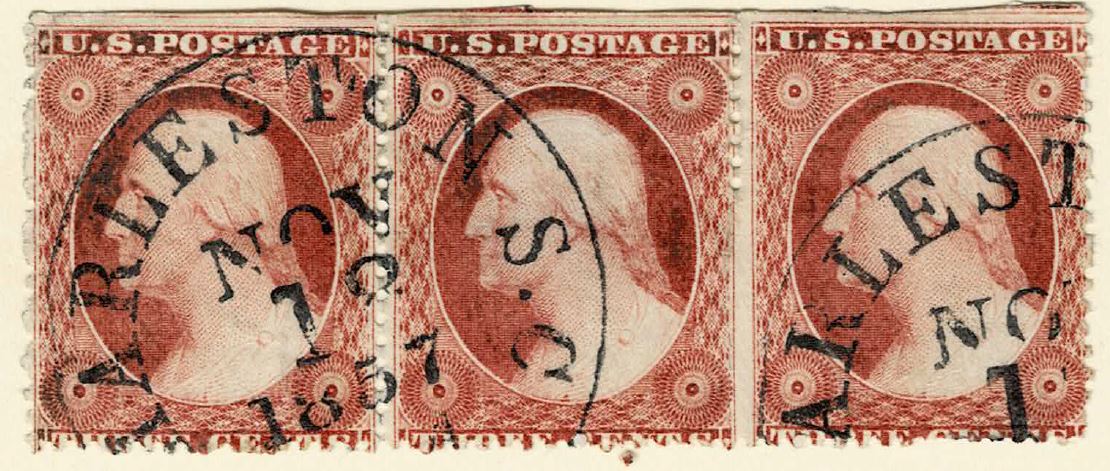 |
Send note to Staff 
|
|
|
Pillar Of The Community
United States
3520 Posts |
|
|
Those are #25's scissor separated at top.
edit: I should add that this is Nov 1857, and February 28, 1857 was the first government issue perforated 3c stamp. They weren't really prolific at perforating stamps quite yet, and you can see this in your strip with the blind perforations (or missing) between the right two stamps vertically. It's an interesting item for that reason. Also the fact that someone scissor separated it at top -- where it should have and probably did have some perforations. Scissor-separation is common; but given the timing and combined with the blind perfs make this kind of interesting from the early-perforation angle. |
|
Send note to Staff
|
| Edited by txstamp - 05/31/2024 8:34 pm |
|
|
Valued Member
United States
144 Posts |
|
|
Pillar Of The Community
United States
636 Posts |
|
|
Hi Oiman --
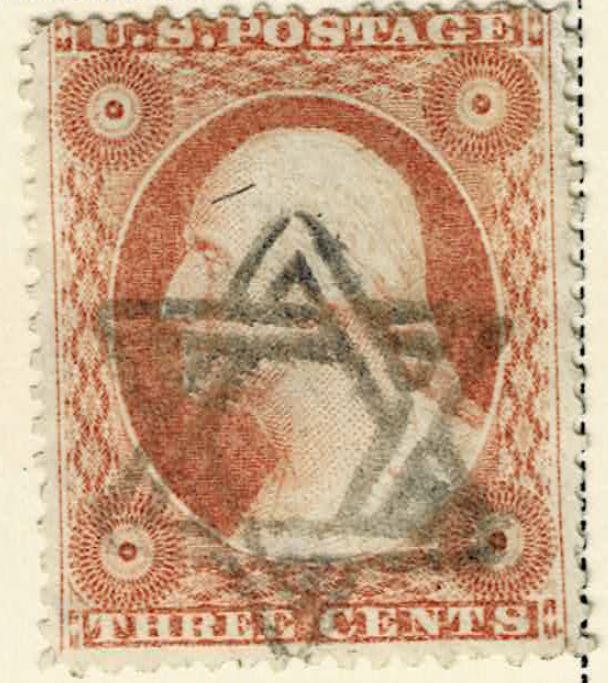
You are correct on both fronts -- the cancel on your stamp is the Chicopee 6-pointed star -- and the stamp is a Scott #26A -- sixth row relief F showing guide dot at lower right (GD is between the right frame line and the lower right diamond bock) -- nice stamp with a nice cancel.
Regards // ioagoa |
|
Send note to Staff
|
|
|
Valued Member
United States
10 Posts |
|
|
This stamp has me stumped. I believe it is from plate 7, yet no luck plating it so far. What jumped out at me when I snagged it at the latest show is the fine scratches, which pointed me to either plate 5 or 7, along with the ink film that generally covers the stamp. I checked the plating mats thinking that the fine scratches would be marked, but no luck. So, question is, am I right on plate 7 (or 5 for that matter). 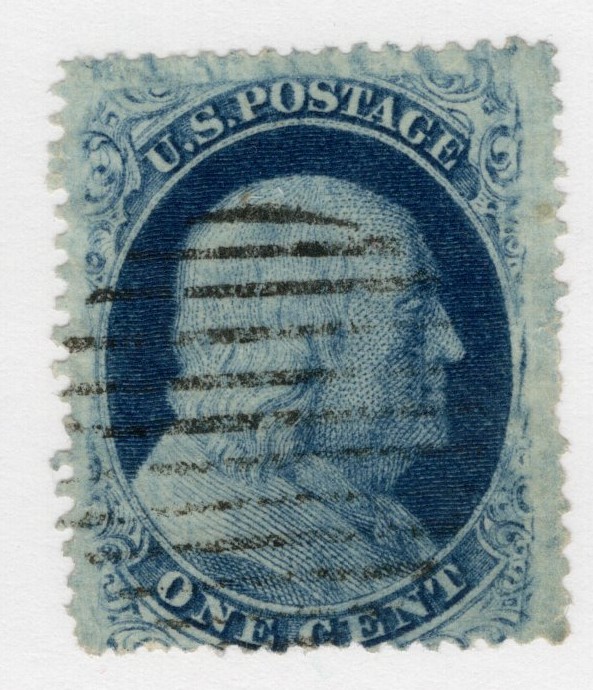 |
|
Send note to Staff
|
|
|
Pillar Of The Community
United States
1817 Posts |
|
|
Valued Member
United States
10 Posts |
|
|
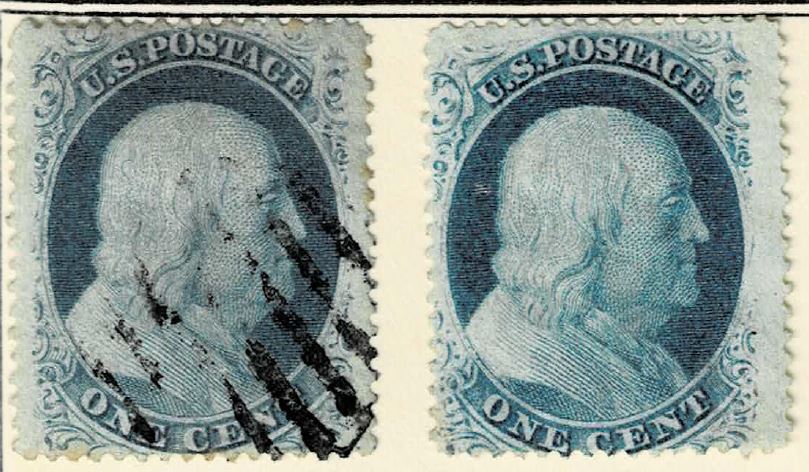
Just looked at the plating mat, and of course, perfect match. Thanks for the plating! Lesson learned, if I can't find it on the plate I think it is from, try the others.
|
|
Send note to Staff
|
|
|
Valued Member
United States
144 Posts |
|
|
I have this Scott 37 with a really crisp red cancel. I think it might be a carrier cancel but I have not yet identified this 100%. It's a nice cancel regardless 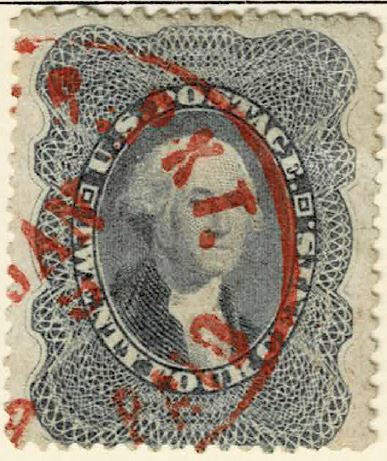 |
|
Send note to Staff
|
| Edited by Oiman - 06/06/2024 1:47 pm |
|
|
Pillar Of The Community

United States
1123 Posts |
|
|
That pretty red cancel looks like an Exchange Office Postmark, possibly "Boston Br. Pkt" meaning that the letter was carried from Boston to Europe on a British steamship. Here is an example of that cancel on-piece from a Heritage auction in 2012. 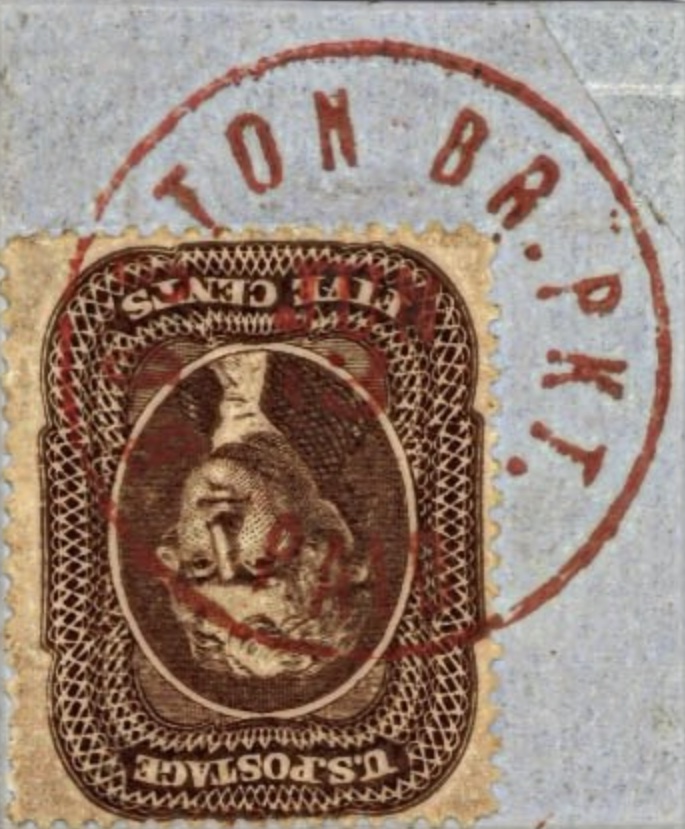 Richard Frajola has an amazing exhibit showing the evolution of markings on steamship packet mail between the USA and France from 1840 to 1875, including this cover with a postmark similar to yours ("Boston Am Pkt" means it was carried in an American steamship versus yours looks like BR not AM). 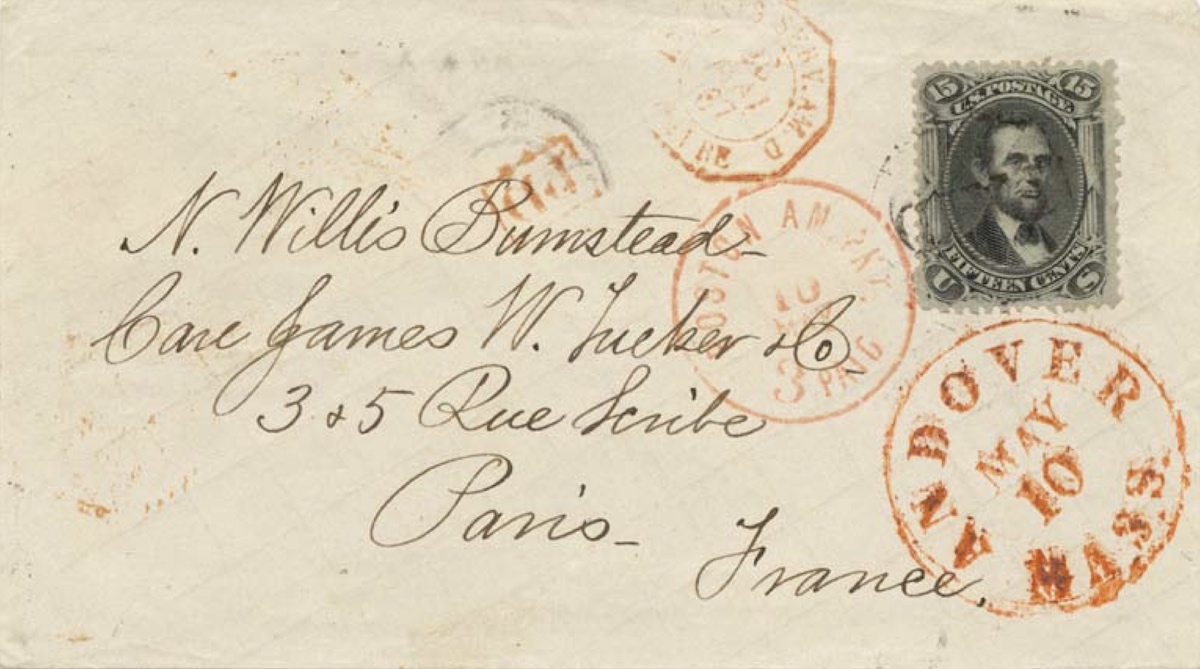 https://www.rfrajola.com/SWwestpex/SWTA.pdf https://www.rfrajola.com/SWwestpex/SWTA.pdfDuring the mid 1800s there were numerous postal treaties between the US, France, GB, etc. to define transatlantic postal rates, and how the postage fees paid would be split among the sending and receiving nations. Briefly the markings by the exchange office and other officials indicate how much postage was paid by the sender and/or how much postage is due in the receiving country. This is a deep topic that specialists (not including myself) spend years studying and I cannot speak about it in any detail except that I recognize the cancellation as an Exchange Office postmark. There is a "Detroit Am. Pkt" cover on ebay right now, also with a #37 like yours, but I think the first letter of your cancel starts with "B" not "D" hence Boston is more likely. 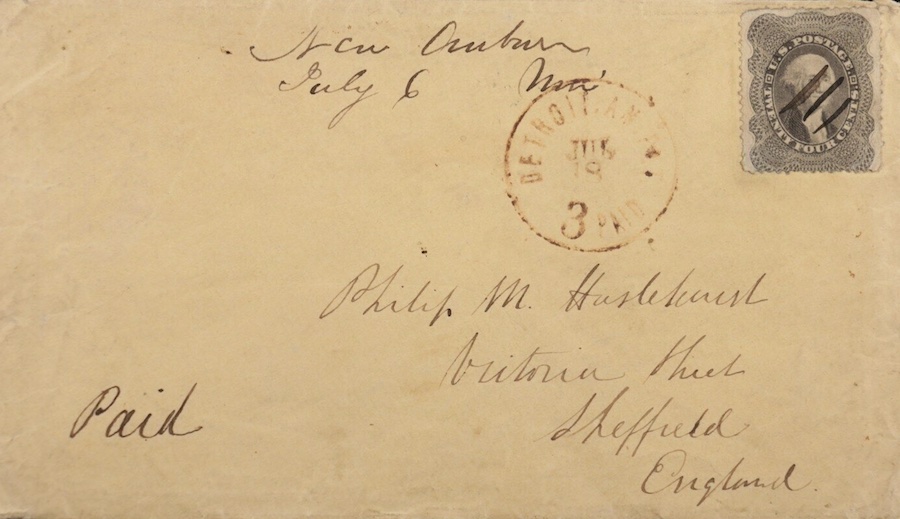 https://www.ebay.com/itm/333316791106 https://www.ebay.com/itm/333316791106There are some other threads on SCF to dive into, if interested, such as https://goscf.com/t/35627#301242 |
|
Send note to Staff
|
|
|
Valued Member
United States
144 Posts |
|
|
Oh, that's nice info. Thanks for the explanation. Pretty interesting how the stamp made its way back here if it did in fact go overseas |
|
Send note to Staff
|
|
|
Valued Member
United States
144 Posts |
|
|
Pillar Of The Community
United States
6664 Posts |
|
|
Pillar Of The Community
United States
3520 Posts |
|
|
Something that kind of blew my mind when I saw it, so I grabbed it - 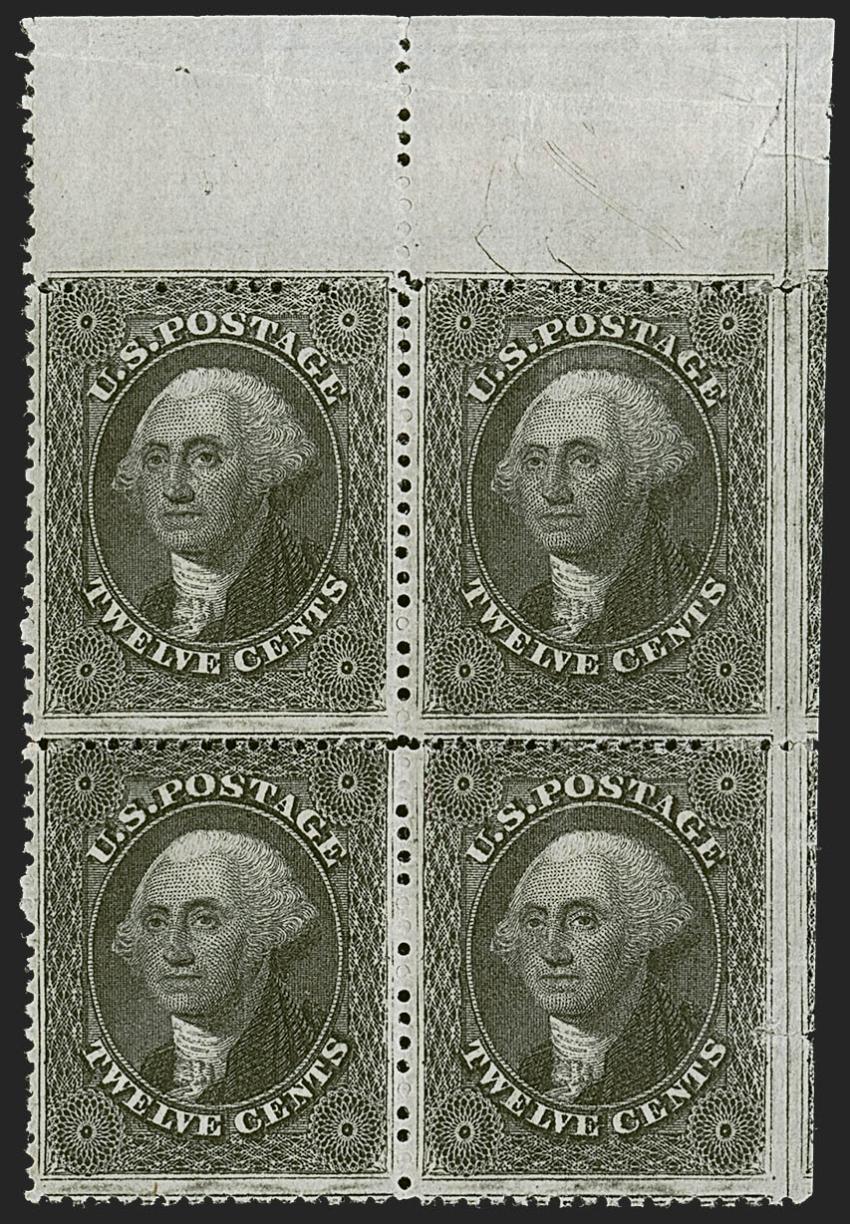 This unused OG block, is Scott 36B, the 12c Plate 3. It is positions 9-10/19-20L3, showing the centerline straddle. The centerline is not perforated. Plate 3 stamps are not known used prior to 6/1/1860. I have not noted that anyone has written about position 10L3 yet, but it is obviously a notable plate variety. The marks on it at the top, remind me of the tool marks from this revenue thread: https://goscf.com/t/86859Toppan Carpenter's care in making plates was seriously declining, to say the least. |
|
Send note to Staff
|
|
|
Valued Member
United States
10 Posts |
|
|
This one is defying plating so far, so would like a little help with it. It is an F relief, Scott 24. I've gone through the plating diagrams a few times with no luck. 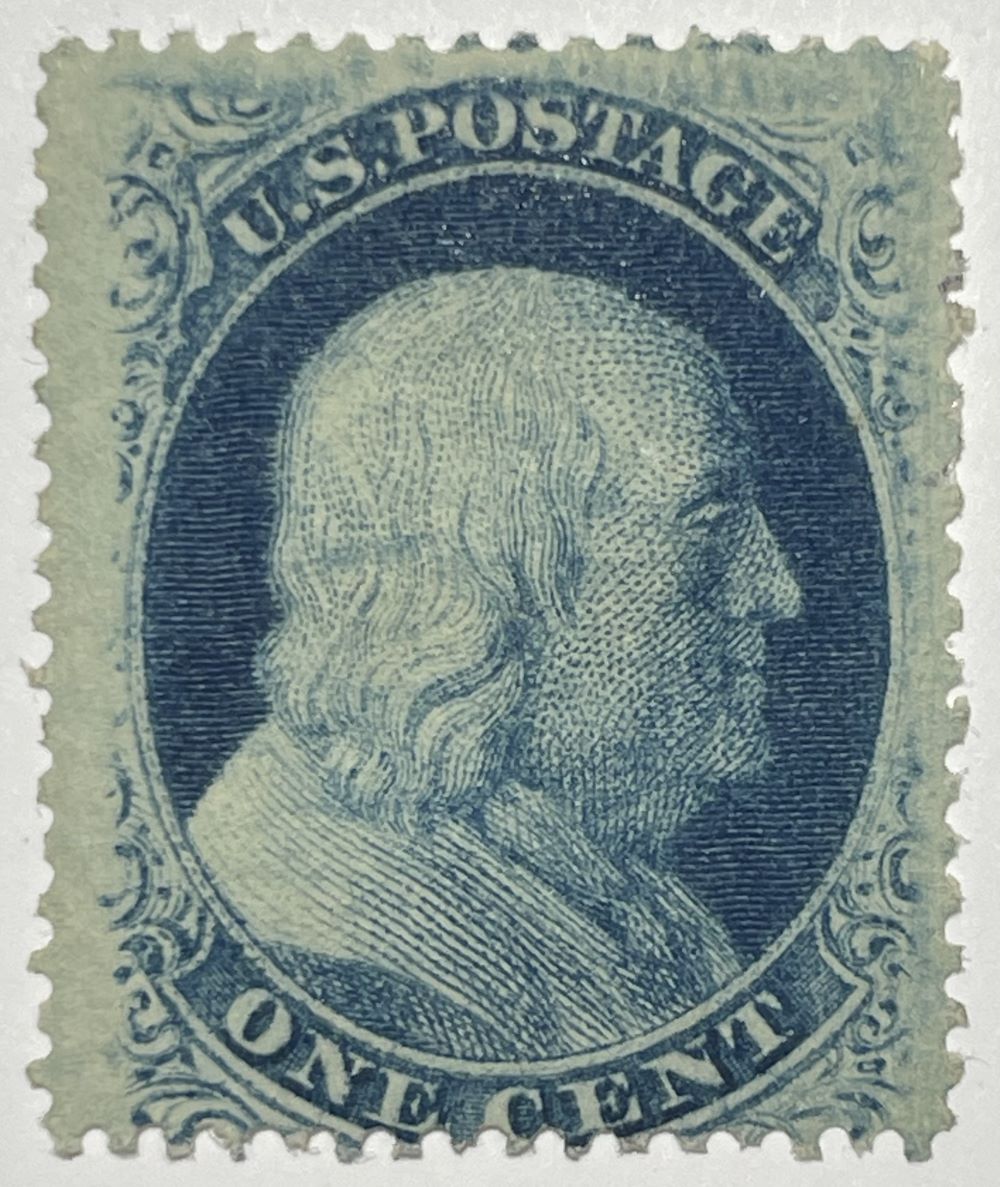 |
|
Send note to Staff
|
|
|
Pillar Of The Community
United States
1817 Posts |
|
|
Replies: 831 / Views: 75,827 |
|




 Posted 05/31/2024 7:39 pm