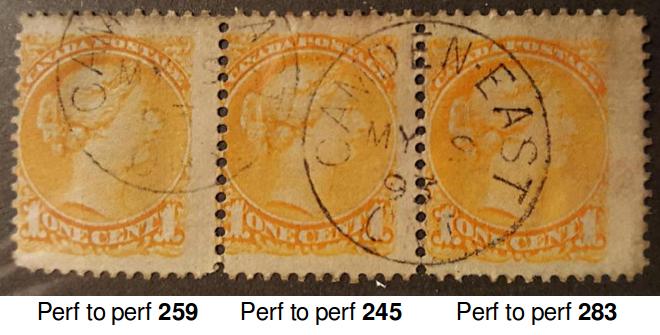
I acquired these in a small collection. I thought the best way to demonstrate thick soft paper was to show the 1c (Unitrade 35ix) beside its cousin the 37i, the scarce but easier-found dark rose (really a carmine shade to my eye) on thick paper. I used a sharpening tool on the front image to better represent what my eye sees. Lighting is incident, i.e. side light as indirect as I can get it, from an incandescent bulb (it's midnight here).
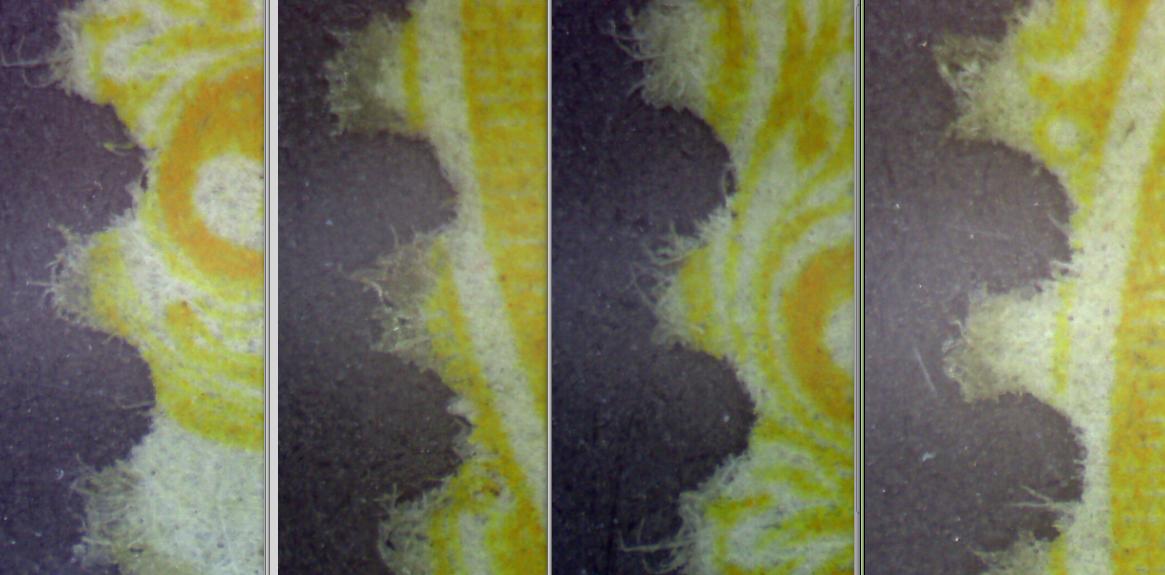
The first identifier one sees is the incomplete cutting of perfs, as though the perforator tore through the paper without cutting. Note how the perforations are not round.
The print impression is sharp. The shade of a 35ix is typically yellow orange, not deeper.
The thick soft paper was typically used in horizontal grain orientation, thus you would expect curl to be top/bottom using the "breath test". By eye, the direction of grain is not obvious, and there are some ragged fibres at the surface obscuring the grain.
Cancels can help in determining period of use, note both the Wellington Ont. "Gothic T" and Charlottetown star cancels are contemporary to 1871 or 72.





 Posted 07/24/2020 09:40 am