| Author |
 Replies: 69 / Views: 3,013 Replies: 69 / Views: 3,013 |
|
|
|
Pillar Of The Community
United Kingdom
8631 Posts |
|
|
The perforation differences for the 1L75 are noted because that was the only stamp that was issued with different perforations. There is no point in measuring perforations for stamps that were only issued with one perforation. They are not the same "stamp". They are the same "design". |
Send note to Staff 
|
|
|
Pillar Of The Community
Canada
2030 Posts |
|
|
Thanks dale
I understand some stamps where printed lighter for
Overprints/surcharges but most examples I've seen have been listed
Due to the fact that they may or may not actually receive the
Overprint/surcharge Giving them a different catalogue #
There are countless stamps that threw minor colour Variations make a drastic change In the identification
Process
(Not really a question here just me trying to wrap my head around why colour variations don't matter sometimes)
I'll take you advice and keep re-reading to understand better
|
|
Send note to Staff
|
|
|
Pillar Of The Community
Canada
2030 Posts |
|
|
But if the size and perforations don't match what is listed
I go with close enough? |
|
Send note to Staff
|
|
|
Pillar Of The Community

United States
814 Posts |
|
|
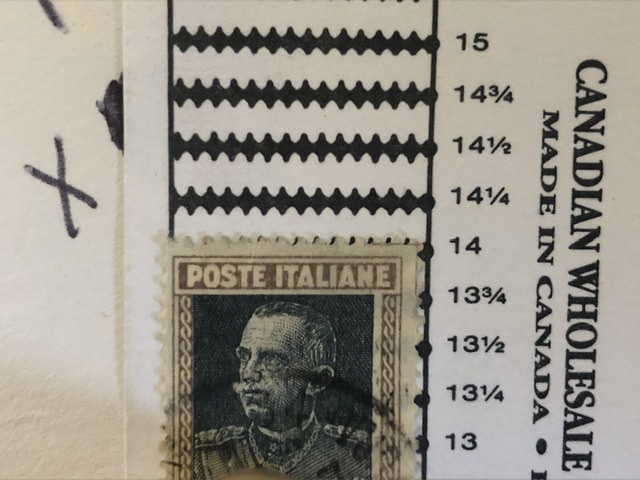
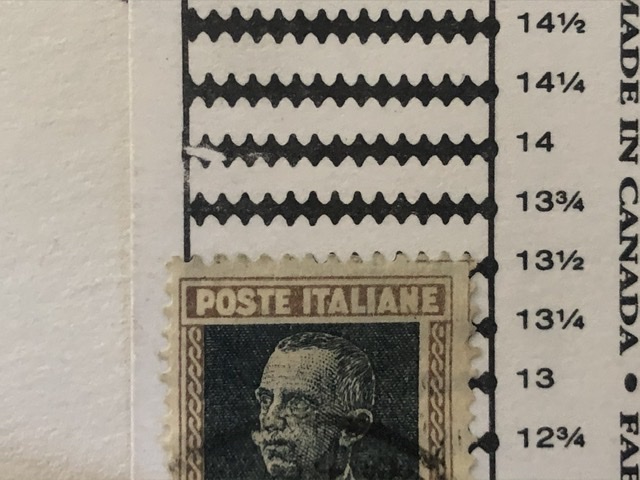
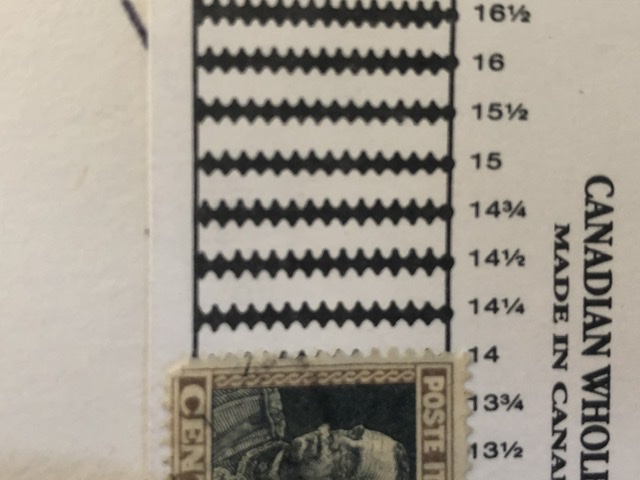
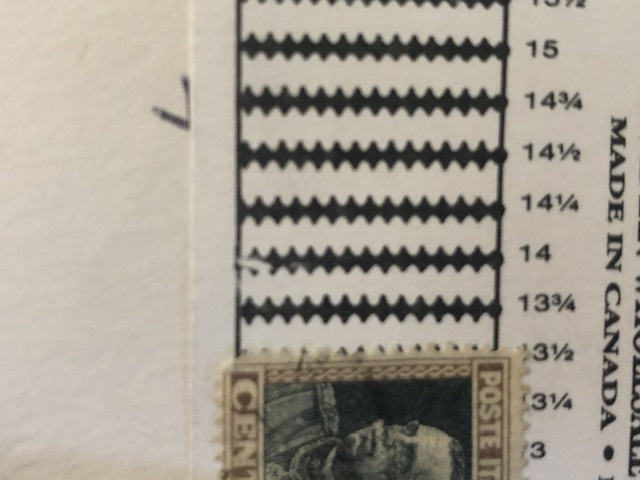
No. "Close enough" is no good. When you gauge the perf you should get a precise reading at some point: an exact match between the stamp and the gauge, which will match what's listed. Each tooth or hole of the stamp must fit neatly into one of the gauge's options. If it doesn't, you're probably not using the gauge correctly. And, from what I can see in your photos, your use of the gauge is sloppy, not accurate at all. Go to the front of your catalogue and read how to use your gauge. |
|
Send note to Staff
|
| Edited by EMaxim - 09/26/2020 10:41 am |
|
|
Pillar Of The Community
United Kingdom
8631 Posts |
|
|
Iimagine that, if you look at the notes to the catalogue, they will explain the approach to rounding perforation measurements up or down. The question is why you're bothering to measure designs and perforations where the catalogue shows no variations. Life's too short. |
|
Send note to Staff
|
|
|
Pillar Of The Community
United States
814 Posts |
|
|
Quote:
The question is why you're bothering to measure designs and perforations where the catalogue shows no variations. But, if you can't restrain yourself and insist on checking every stamp nonetheless, bear in mind that most of Scott's listed perfs are in ½ increments. And in my experience, Scott rounds downward: 14.26 will be listed as 14, 14.75 will be 14.5, etc. Perhaps that will help to put your mind to rest. |
|
Send note to Staff
|
|
|
Pillar Of The Community
Canada
2030 Posts |
|
|
Pillar Of The Community
United States
814 Posts |
|
|
Quote:
please only post questions about one stamp per thread Quote:
stop asking if you should ask about a stamp. Just ask your question using the best full sentence that you can, including a question mark (?) at the end. |
|
Send note to Staff
|
|
|
Pillar Of The Community
United States
814 Posts |
|
|
Why are you trying to gauge this stamp? Scott 192 is perf 14; end of story. |
|
Send note to Staff
|
|
|
Pillar Of The Community
Canada
2030 Posts |
|
|
A half rounded wow that would explain somethings
(seems excessive, and would make a huge difference
On some popular stamps )
But I guess on common ones It works
It only caught my interest cause the short time of print
And the noted changes from the same design A85
|
|
Send note to Staff
|
|
|
Pillar Of The Community
Canada
2030 Posts |
|
|
So Perf 14 end of story
Thanks again
Next time I'll only post one stamp and be as specific as I can about it
Properly not gonna have to ask to many perforation questions
Unless it's a popular stamp |
|
Send note to Staff
|
|
|
Valued Member
United States
424 Posts |
|
|
Quote:
I understand some stamps where printed lighter for
Overprints/surcharges but most examples I've seen have been listed
Due to the fact that they may or may not actually receive the
Overprint/surcharge Giving them a different catalogue #
What I was actually saying is that in the illustrations used in the Scott catalog to show stamps with overprints/surcharges, the image is not showing an actual true color image of the stamp. The stamp looks to be lightened so that the overprint stands out in the illustration for ease of identification. Look at other instances in your catalogs and you'll see a similar effect used. I'm sure it was someone using an image manipulation program to do that. In nearly all of the cases I checked in my own set of catalogs this has been done for the overprinted/surcharged stamps. If you go look at an actual picture of Italy EY3 you'll see what I mean. The stamp color matches that of the underlying issue. Dale |
|
Send note to Staff
|
|
|
Pillar Of The Community
Canada
2030 Posts |
|
|
For future reference would this be less sloppy And show a more accurate picture to someone Instead of the cover over method? 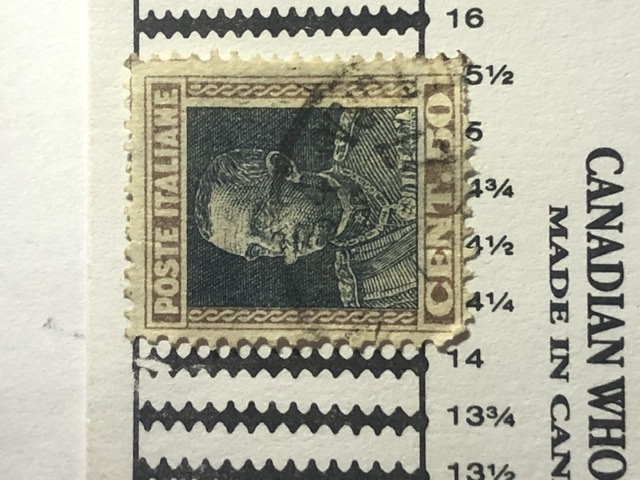 |
|
Send note to Staff
|
|
|
Pillar Of The Community
Canada
2030 Posts |
|
|
Thanks dale I see what you mean about the sir-charge standing out in the book There just seemed to be variations in the examples I have (The one with red overprint has a inverted watermark) I'm happy 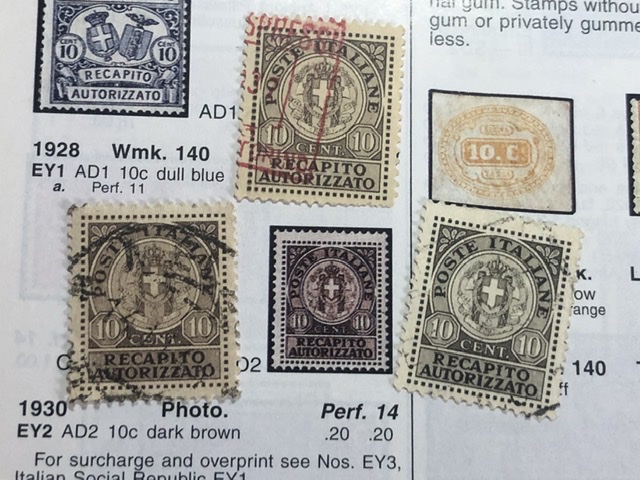 |
|
Send note to Staff
|
|
|
Bedrock Of The Community
12747 Posts |
|
|
A train left Bismark at 1341 hrs traveling 23.79 kilometers per hour and a airplane left San Fernando at 1009 hrs traveling North at 156.72 miles per hour...…………. |
|
Send note to Staff
|
|
|
Replies: 69 / Views: 3,013 |
|



 Posted 09/26/2020 10:13 am