Stamp Community Family of Web Sites
Thousands of stamps, consistently graded, competitively priced and hundreds of in-depth blog posts to read


Stamp Community Forum
 
Username:
Password:
Save Password
Forgot your Password?

This page may contain links that result in small commissions to keep this free site up and running.

Welcome Guest! Registering and/or logging in will remove the anchor (bottom) ads. It's Free!

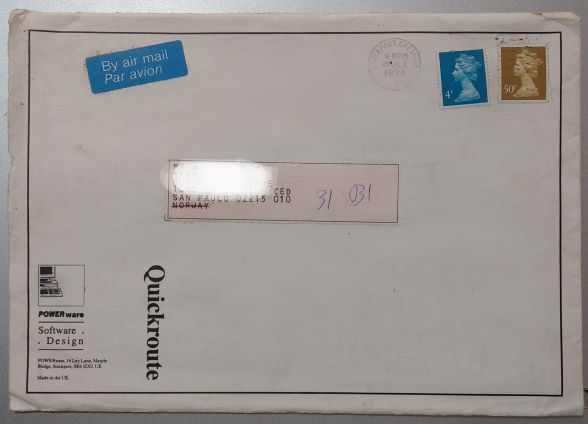
1994 - Cover From Uk.

 
To participate in the forum you must log in or register.
Author Previous TopicReplies: 6 / Views: 642Next Topic  
Valued Member
Brazil
63 Posts
Posted 12/10/2020   1:04 pm  Show Profile Bookmark this topic Add KanneWa to your friends list Get a Link to this Message
Good evening to all.
This is an envelope that I received when I made a purchase in 1994.
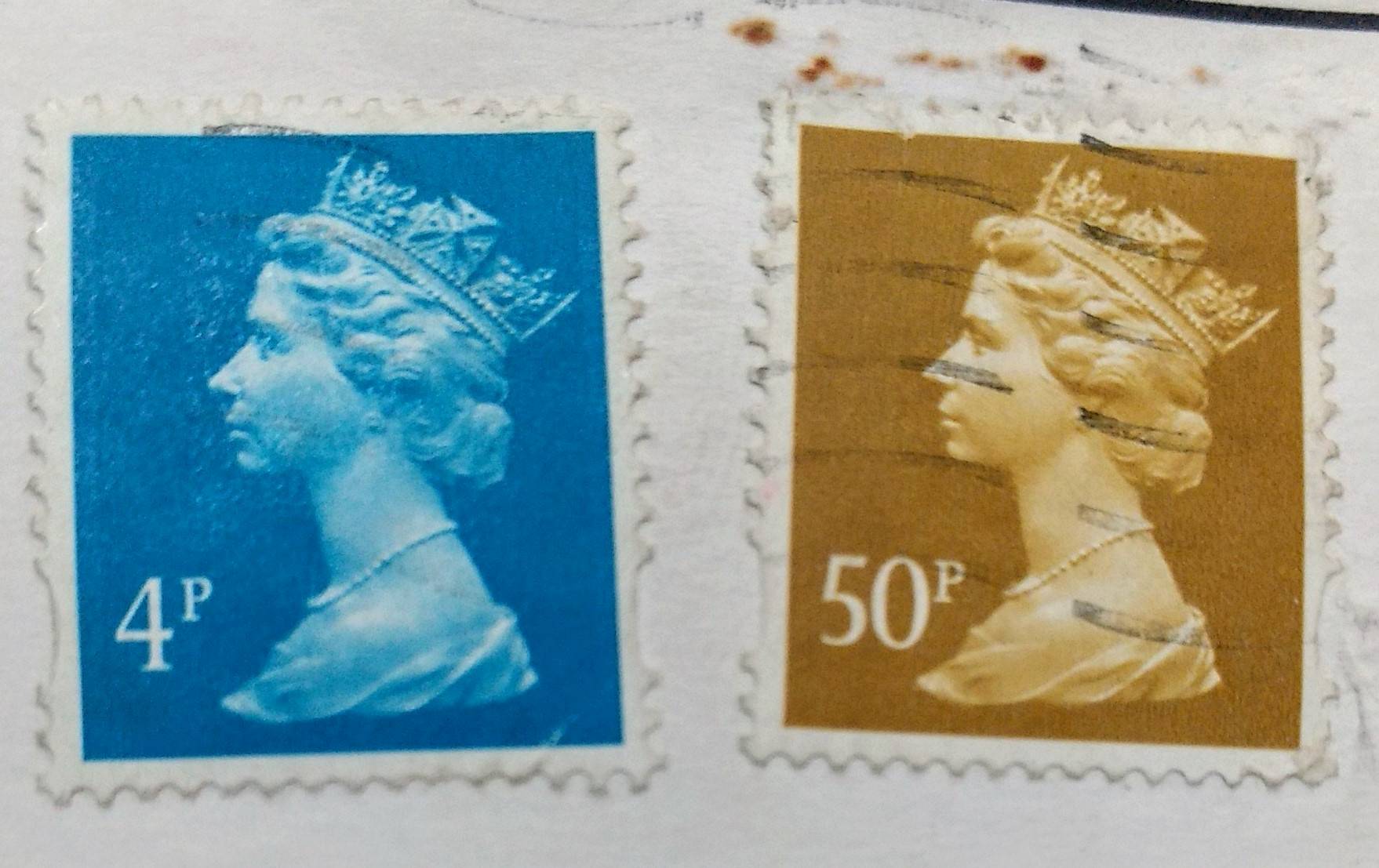
My question is about the cutouts that the stamps have on the two sides.
Looking at Scott I found (# MH202 - 4P)
and (MH233 - 50P). Would the cutout on the sides of the stamps be syncopated?

Could this envelope be of interest to specific collectors?

Wagner


Send note to Staff

Pillar Of The Community
Netherlands
6526 Posts
Posted 12/10/2020   3:00 pm  Show Profile Bookmark this reply Add NSK to your friends list  Get a Link to this Reply
These are common gummed sheet stamps with elliptical security perforations printed by Joh. Enschedé of Haarlem, Netherlands.
They will have two yellow fluorescent phosphor bars on each side. The only interesting bit might be to know what yellow phosphor it is and whether they have no, 4mm, or 2mm varnish bands under the phosphor bars.

These seem to have 4mm varnish bars, so AY2 phosphor bars.
Send note to Staff  Go to Top of Page
Edited by NSK - 12/10/2020 3:04 pm
Valued Member
Brazil
63 Posts
Posted 12/10/2020   5:33 pm  Show Profile Bookmark this reply Add KanneWa to your friends list  Get a Link to this Reply
Thank you very much NSK.

Can you tell me how I confirm that they have this varnish and phosphor bar ... ???
Send note to Staff  Go to Top of Page
Edited by KanneWa - 12/10/2020 5:35 pm
Bedrock Of The Community
Australia
38679 Posts
Posted 12/10/2020   6:30 pm  Show Profile Bookmark this reply Add rod222 to your friends list  Get a Link to this Reply
Hiding in plain sight.

Look at the 4p Blue, can you see the bar on the right hand side, top to bottom ?
Inspect each stamp. perhaps hold on an angle, and all shall be revealed.
Also, of course purchase a correct UV lamp.

It seems the blue has a bar each side.

Syncopated Perforation.
Syncopation :"a disturbance or interruption of the regular flow of rhythm"
Send note to Staff  Go to Top of Page
Edited by rod222 - 12/10/2020 6:36 pm
Bedrock Of The Community
Australia
38679 Posts
Posted 12/10/2020   6:56 pm  Show Profile Bookmark this reply Add rod222 to your friends list  Get a Link to this Reply
Varnish
Most tagging is not visible to humans, but some taggants, such as many of the phosphor bands on the Machin stamps, were mixed with varnish or other media that are partially visible to the unaided eye.

This varnish can become discolored or stained from exposure to the sun or from being soaked too long, making the band starkly visible. What you are seeing in such cases is not really the tagging but the varnish that holds it.

Collectors who wish to find tagging on stamps, as well as collectible varieties and errors in tagging, need to acquire and use a UV lamp.

Exercise maximum care when working with a UV lamp. Never look directly into the light coming from a UV lamp. It will not look very bright or ferocious, but looking into it could burn the corneas of your eyes. This is a painful and potentially serious condition that can cause permanent loss of visual acuity. It helps to wear glasses when using a UV lamp. Keep your hands away from the light too, because exposure to UV light can burn. Wear gloves and sunscreen if you will be working with a UV lamp for extended periods.The best way to check luminescence with a UV lamp is to arrange the stamps you wish to check by setting them out in a work area. The work surface itself should not be luminescent because that will overpower the luminescent properties of the tagged stamps.

Darken the room by turning off all the lights. Switch on the UV lamp. Make your observations quickly, and then switch off the UV lamp and turn on the ordinary lights. Working in short, concentrated spurts is better for your eyes and will help keep the UV lamp in good operating order for a longer period.

UV lamps are read-ily available in longwave, shortwave or combination models. Longwave models will detect fluorescent tagging. Longwave lamps are less expensive and will suffice for most stamp-related activities.

Shortwave lamps burn out more quickly and are considerably more expen-sive, but they are useful for detecting the after-glow of phosphorescent tagging. For U.S. stamps, you will need a shortwave lamp.

You can also use a UV lamp to distinguish certain types of forgeries and re-pairs. A longwave lamp is also useful in trying to determine paper types.

Many shortwave lamps come with filters that will allow them to be used for longwave operation. Combination models go from longwave to shortwave operation with a flick of a switch.

https://www.linns.com/news/postal-u...iolet-l.html
Send note to Staff  Go to Top of Page
Pillar Of The Community
Netherlands
6526 Posts
Posted 12/11/2020   04:26 am  Show Profile Bookmark this reply Add NSK to your friends list  Get a Link to this Reply
Most of what rod222 says is correct. You, however, should not confuse varnish with phosphor bars. The varnish bars were applied below the phosphor bars.

The coating of the paper allowed the paper to absorp the phosphor ink. This made the luminescent reaction to weak for the machinery to read the phosphor bars. Enschedé applied a varnish bar on each side to seal the paper. At first, these bars were 4mm wide. Later, they were 2mm wide, roughly the width of the unprinted side margins. More problem ensued with the strength of the luminescence and Enschedé changed the phosphor a little.

As rod222 describes, the phosphor bars tend to be visible when you hold the stamps at a slight angle into the light. The varnish coating below the bars shows up as a slight discouloration in the central part of each bar. The 4mm varnish bars extend onto the printed area and are better visible than the 2mm ones that cover just the unprinted area.

In your example of the 4p, it looks like there is a line almost touching the "4" in the value indicator. You see a similar line on the right that touches the Queen's tiara. My guess is these are the varnish bars. The phosphor bars are a little wider (4.75 mm.).

The change in the coating, the phosphor type and the more narrow bars all were ecological considerations, reducing the use of resources, chemicals, etc.
Send note to Staff  Go to Top of Page
Edited by NSK - 12/11/2020 04:28 am
Valued Member
Brazil
63 Posts
Posted 12/11/2020   9:14 pm  Show Profile Bookmark this reply Add KanneWa to your friends list  Get a Link to this Reply
rod222 and NSK, I thank both for the informations given.
I'll look for an ultraviolet lamp to buy.
I have another stamp, if I'm not mistaken, from Germany, which may have been made of fluorescent paper ... and I need to find out ....
Send note to Staff  Go to Top of Page
  Previous TopicReplies: 6 / Views: 642Next Topic  
 
To participate in the forum you must log in or register.

Go to Top of Page

Disclaimer: While a tremendous amount of effort goes into ensuring the accuracy of the information contained in this site, Stamp Community assumes no liability for errors. Copyright 2005 - 2026 Stamp Community Family - All rights reserved worldwide. Use of any images or content on this website without prior written permission of Stamp Community or the original lender is strictly prohibited.
Privacy Policy / Terms of Use    Advertise Here
Stamp Community Forum © 2007 - 2026 Stamp Community Forums
It took 0.14 seconds to lick this stamp. Powered By: Snitz Forums 2000 Version 3.4.05