Although we have discussed the validity of using RH White color examples for color identification, there is also a book called, "The Papers and Gums of United States Postage Stamps, 1847-1909". In that book there is Plate 20 which has some scans of Clay Papers that could be of interest.
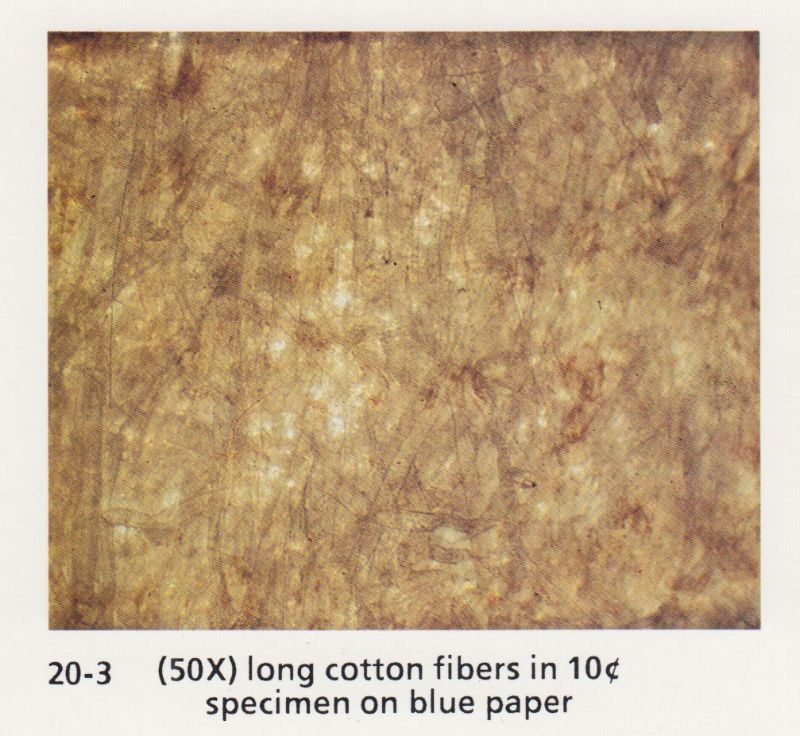
20-3 is listed as long cotton fibers in 10cent specimen on Blue Paper. The write-up adds, "depicts a 50X magnification of a suspected blue paper segment of a cancelled 10c. Some long fibers of cotton can be identified. The paper is not opaque. Light transmission is again shown to be far greater than that of the clay paper (20-6)":
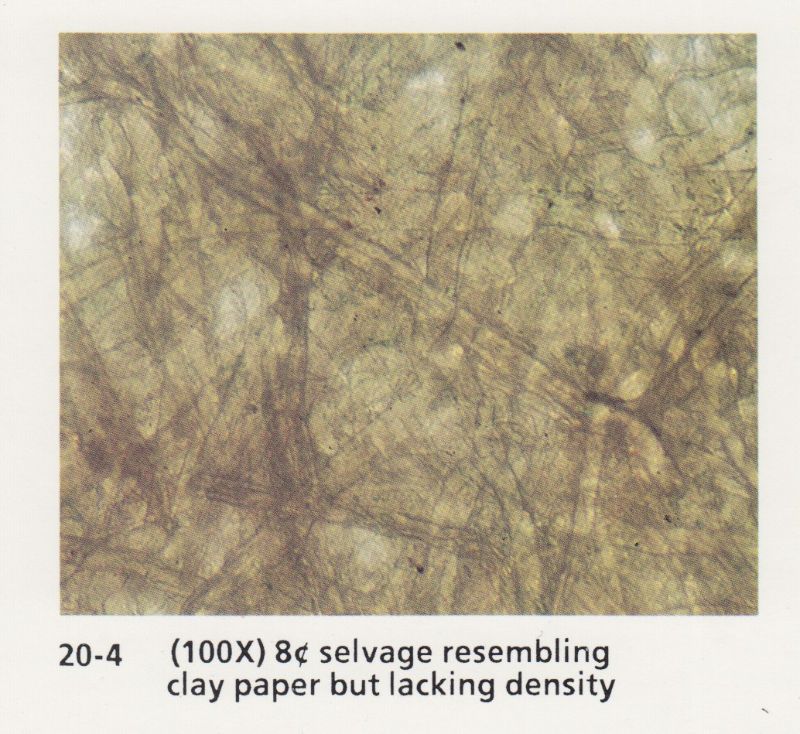
20-4 is listed as resembling clay paper. The write-up adds, "A piece of selvage of an 8c stamp, from a group of specimens thought to be on clay paper, is picture in 20-4. There is better light transmission and less density or filling between fibers than in 20-6... Despite the greenish-gray appearance of the inked selvage, it is not representative of a clay paper."
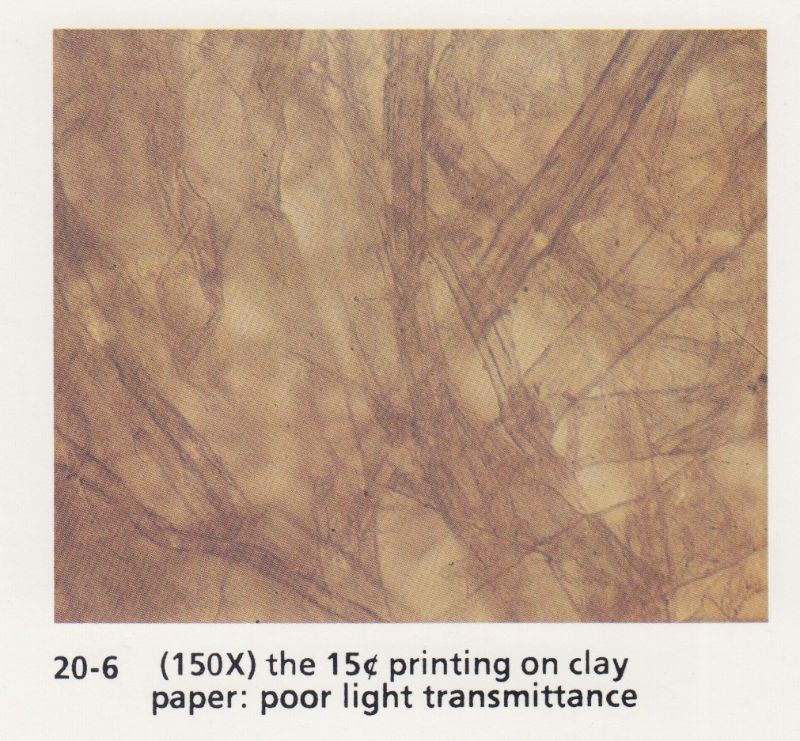
Lastly, 20-6 is a printing on clay paper. The write-up adds, "A striking example of a clay paper (margin of a certified stamp) is shown in 20-6. The background matrix is almost solid beyond the surface fibers. The fibers are large and characteristic of woody plants. Dominant features of clay papers: (1) the matrix is dense permitting minimal light transmission. (2) The mineral, clay filler gives the stamps a gray tone, particularly noticeable in the margins. (3) Watermarks do not show as clearly as they do on normal or blue papers."
I hope this adds a little to the discussion.





 Posted 12/28/2020 2:56 pm


